Indian Trade Barriers Halt Nepali Tea Exports, Threatening Industry and Livelihoods

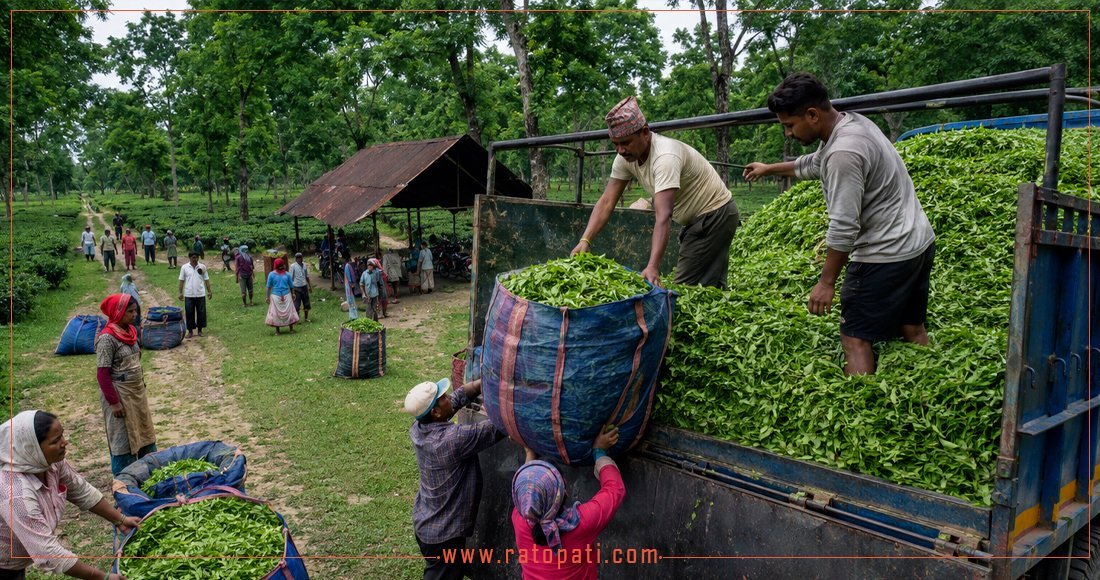
Kathmandu. Tea industries are starting to shut down due to policy and practical obstacles created by neighboring country India in Nepali tea exports.
Tea industries in Ilam and other areas of the eastern hilly districts have been forcibly closed just before the main tea season. Industry operators have stated that tea industries and processing activities in eastern Nepal are on the verge of complete closure due to policy and practical obstacles created in the Indian market.
Due to the policy and practical strictness adopted by neighboring country India in tea imports, the produced processed tea has been piled up in Nepali and Indian warehouses, leading Suryodaya Orthodox Tea Producers Association Nepal to close its affiliated orthodox tea industries from Asar 1. Similarly, as per the decision of 'Tea Alliance of Nepal', a joint organization of tea producers, industrialists, and stakeholders, and the Nepal Tea Producers Association, tea industries in Jhapa and other areas will also be completely shut down from Asar 4.
The entire Nepali tea sector has been pushed into the most severe crisis in history due to the halt in tea exports at the beginning of the main production season (peak season).
Suryodaya Orthodox Tea Producers Association Nepal (SOTPAN) has stated that tea industries are facing an extreme economic crisis. SOTPAN has reported that the purchase of green tea leaves and processing activities have completely stopped. According to SOTPAN, the new 'Standard Operating Procedure' (SOP) recently issued by the Indian Tea Board has become the main obstacle for businessmen who have been facing various hassles in Nepali tea exports for a long time.
In a press release issued by Govinda Prasad Ghimire, Chairman of the Federation of Nepali Exporters (FIN), it is mentioned that tea exports have been halted due to the Standard Operating Procedure implemented by the Indian Tea Board and the mandatory testing criteria for each consignment.
2 Lakh Kilos in Warehouse
According to Nepali exporting industrialists, due to the pretext of complex quality checks, more than 2 lakh kilograms of processed tea exported from Nepal and reaching the Indian market is currently held up in Indian warehouses. More than 10 lakh kilograms of processed tea are piled up unsold in the internal tea industries of Nepal.
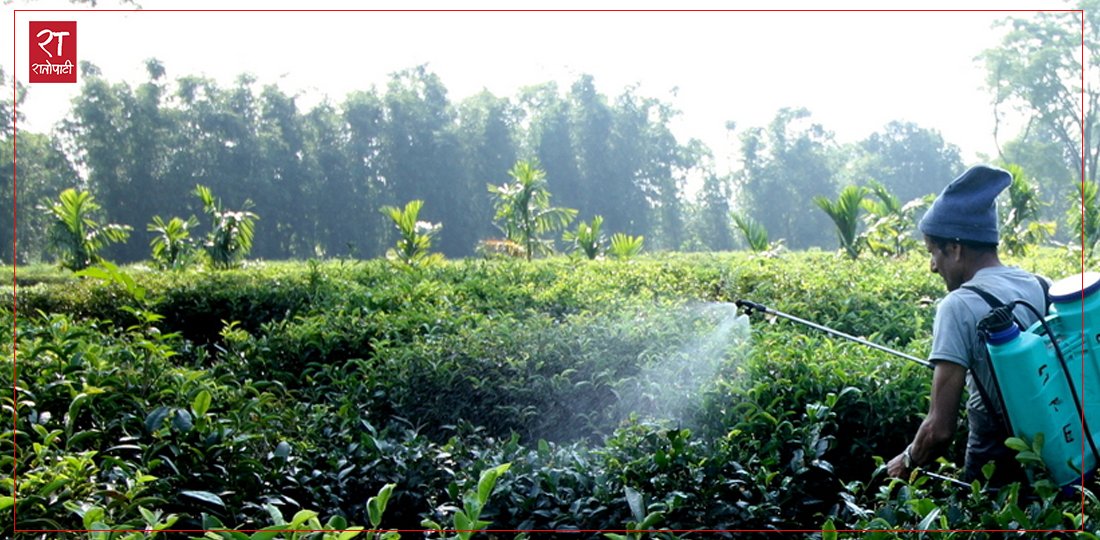
Industry operators say, 'The Indian Tea Board does not provide reports for tea samples taken for laboratory testing for months, and if minor weaknesses are found in the test report, the tea must be destroyed in Indian warehouses. Such impractical and unjust rules have been added, putting the Nepali tea sector at extreme economic risk.'
70 Thousand Workers and 15 Thousand Farmers Directly Affected
According to the National Tea and Coffee Development Board, the entire tea cycle has been disrupted due to the inability to export processed tea.
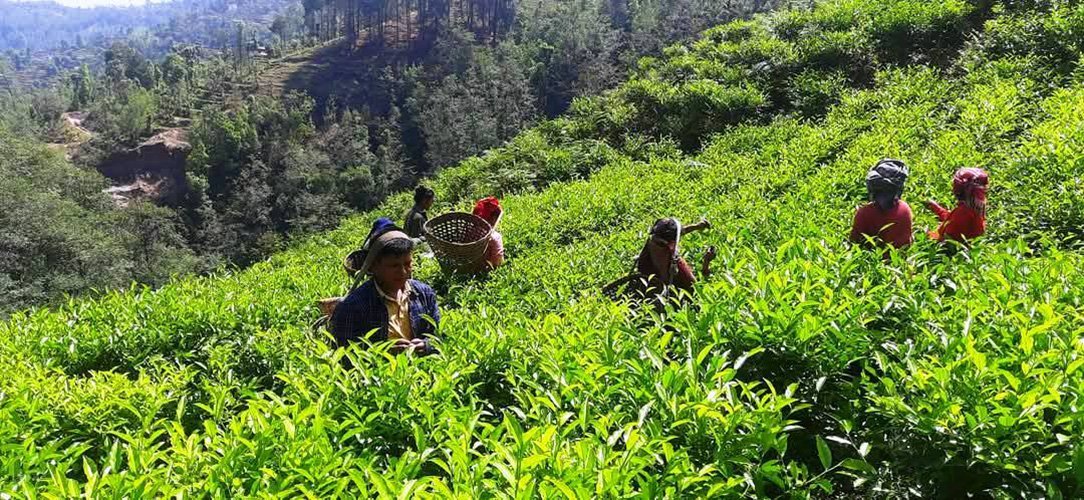
The main link in the cycle of workers plucking tea leaves, farmers selling to factories, factories processing and packaging for export, has been broken due to the halt in exports, directly impacting more than 70,000 workers and more than 15,000 tea farmers. A dire situation has arisen where industries cannot even pay farmers for green tea leaves. This has created a crisis in the livelihoods of farmers on one hand, and industrialists are under extreme economic pressure on the other. Due to the halt in exports, 83 tea factories in eastern Nepal are on the verge of closure.
The Board has stated that Nepal's tea sector is linked to the national economy and the livelihoods of millions of citizens. Currently, there are about 170 tea processing factories and 120 tea gardens, both small and large, in Nepal. Tea is cultivated in an area of about 20,000 to 20,500 hectares, producing about 26 million kilograms of tea annually. More than 99 percent of the total tea production comes from eastern districts like Ilam and Jhapa, while only one to two lakh kilograms of tea are produced annually in other districts. Since 86 to 90 percent of the total tea produced in Nepal is exported only to the Indian market, even a minor policy change in India has put the entire Nepali tea sector in a precarious state.
Major Problems Due to Disruption of the Entire Cycle
Dr. Deepak Khanal, spokesperson for the National Tea and Coffee Development Board, stated that since the tea sector is an interconnected cycle, the disruption of the main link of export has led to the closure of everything from gardens to factories. He mentioned that the Board's role is only coordination and admitted that efforts beyond the Board's capacity are necessary to solve the problem.
He stated that although the Board has repeatedly informed and drawn attention to the Ministry of Agriculture, Ministry of Industry, Commerce and Supplies, Ministry of Foreign Affairs, the Nepali Embassy in Delhi, and the Prime Minister's Office through formal and informal channels, this problem cannot be resolved in the long term without high-level diplomatic initiatives between the two countries.
To resolve the tea export deadlock and save the tea industry, which is the main backbone of livelihood in the eastern hilly region, the Federation of Nepali Exporters (FIN) has put forward a 5-point demand to the Government of Nepal. The Federation has demanded that the Ministry of Foreign Affairs and the Ministry of Industry should immediately convene an emergency meeting of the Nepal-India Commerce Secretary level or a technical committee to open tea exports, and that the Prime Minister and ministers should initiate diplomatic dialogue directly with their Indian counterparts to restore tea exports to their previous state.
Similarly, for a long-term solution, India should automatically recognize the certificate issued by Nepal's Department of Food Technology and Quality Control, a mutual recognition agreement should be made between the two countries, immediate special budget and investment should be announced to upgrade Nepal's central laboratories to an international standard recognized by the Indian Tea Board or FSSAI, and necessary relief should be provided to protect the tea industries and farmers in crisis, along with facilitation in finding alternative markets.
The Ministry of Foreign Affairs has stated that it is coordinating the necessary actions. The Ministry stated that positive coordination is ongoing with the Nepali Embassy in India, the Indian Embassy in Nepal, and other relevant bodies.
This specific news has been automatically translated by AI. As a result, there may be some inaccuracies or language errors.