Farmers Face Severe Chemical Fertilizer Shortage Across Nepal

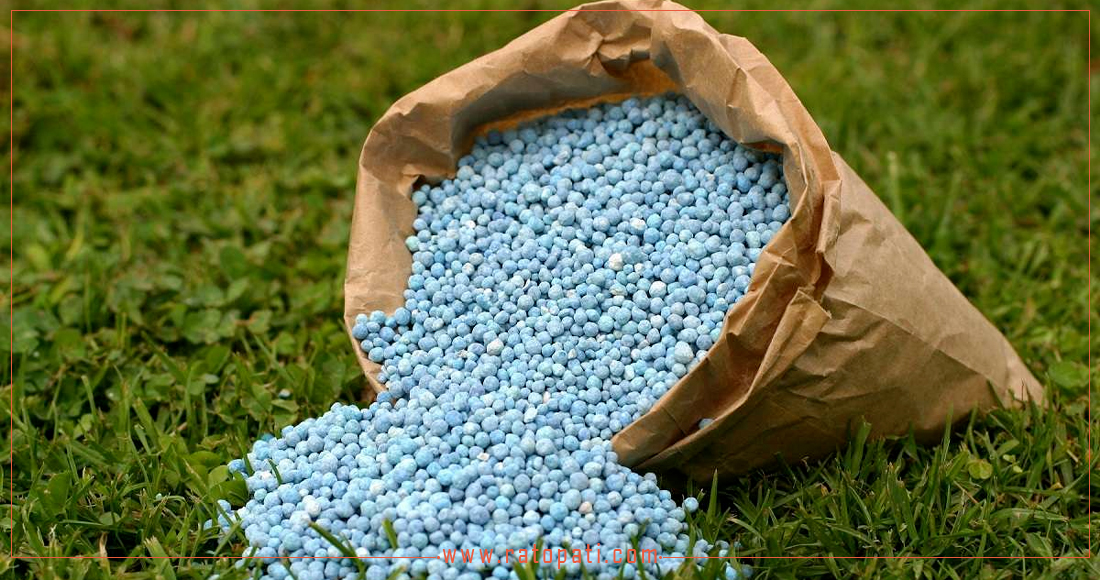
Kathmandu. The lock placed by farmers at the ward office in Raniganj, Lalbandi-17, Sarlahi, demanding fair distribution of urea fertilizer has not been opened even by Wednesday. This is not just a representative incident of Sarlahi. Farmers are in great trouble due to the severe shortage of chemical fertilizers across the country during the main farming season (paddy planting and weeding season). From the fragrant fields of the Terai to the terraces of the hills, farmers are forced to wander without urea, DAP, and potash fertilizers at this time. Even though farmers line up from 4 am at local agricultural depots, they have to return empty-handed with the answer 'no fertilizer' after hours. The inability to apply fertilizer on time has caused the paddy planted in the fields to turn yellow, and farmers are worried that this will lead to a significant drop in production. In some depots, due to the scarcity of fertilizer and a large number of farmers demanding it, clashes have occurred, necessitating the distribution of fertilizer under police supervision, while most depots are closed due to fertilizer shortage. 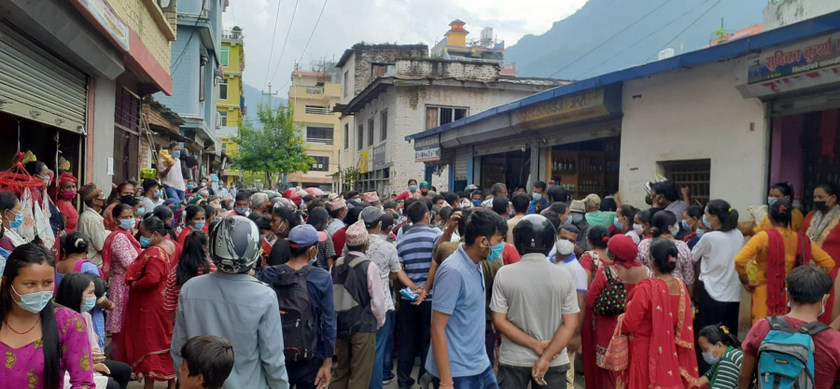
The subsidized fertilizer distribution management system shows the stock and import status of chemical fertilizers in the country. According to the system's details, the Agricultural Inputs Company Limited (KACL) currently has 20,325 metric tons of urea, 28,000 metric tons of DAP, and 5,000 metric tons of potash in stock. Similarly, the Salt Trading Corporation (STC) has approximately 26,000 metric tons of urea, 28,750 metric tons of DAP, and 5,000 metric tons of potash in stock. During transportation (in-route), KACL has 1,223 metric tons and STC has 419 metric tons of urea coming, while KACL has 648 metric tons of DAP and KACL has 117 metric tons and STC has 548 metric tons of potash on the way.
- How is the contract awarded? Why don't more suppliers come to Nepal?
According to Dr. Ramkrishna Shrestha, Chief of the Agricultural Inputs Company Limited, the process of chemical fertilizer supply in Nepal is based on the budget approved by the Ministry of Finance and international market prices. Based on the received budget, a yearly supply plan is made by allocating 70 percent to the Agricultural Inputs Company and 30 percent to the Salt Trading Corporation. After the 30-day e-bidding process called according to the Public Procurement Act and Regulations, technical and financial evaluation, notice of intent, contract, and LC opening are completed, suppliers are given 107 days for transportation. 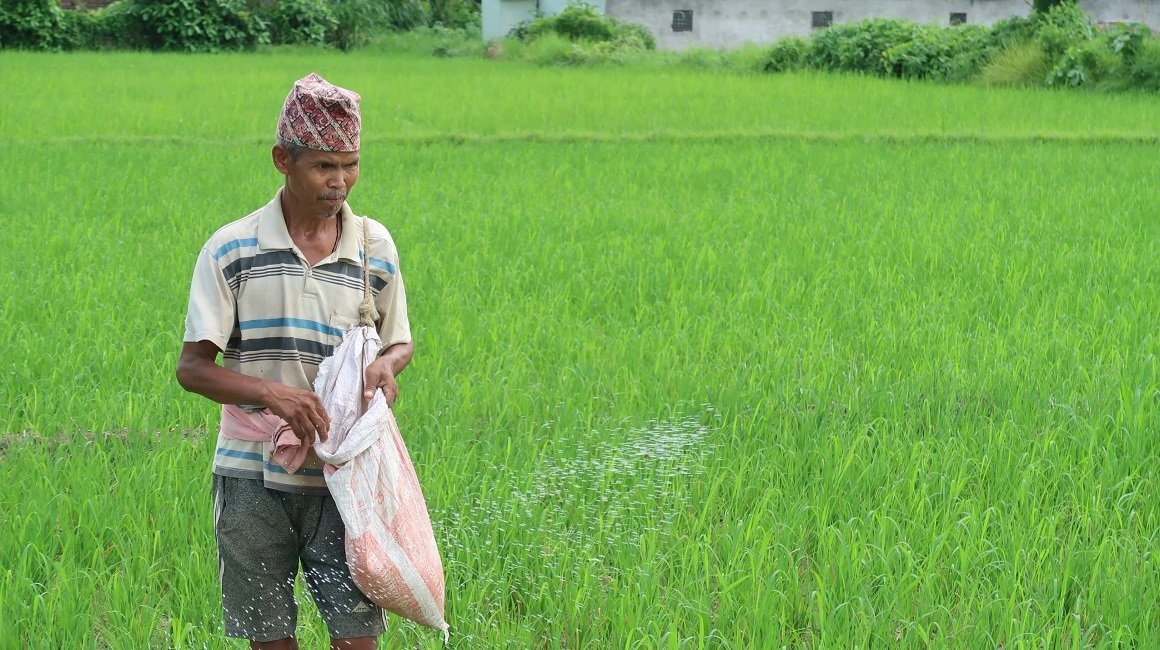
Due to Nepal's small market (purchase of 20-30 thousand tons), the provision of 5 percent TDS deduction, and multi-stage transportation, international companies are not attracted. Due to complexities such as large ships not being able to dock at Kolkata port, requiring goods to be transferred by small boats, paying millions of rupees in demurrage due to delays, and not getting railway racks on time, currently, mainly three companies, Indian Potash Limited (IPL), Aditya Birla, and Sun International (Dubai), are participating in the bidding. Fluctuations in the international market price of chemical fertilizers also seriously affect the bidding process. 'For example, when the price of urea, contracted at $408 per metric ton, increases to $1,060, and DAP, which costs $700, reaches $1,100, suppliers find it easier to forfeit their deposit and break the contract rather than bear the loss. Also, the strict penalty rule of 0.05 percent per day on the entire contract amount for even 1 percent of undelivered fertilizer within 107 days makes foreign companies hesitant to take the contract. Currently, legal action has been initiated against two companies for not supplying fertilizer on time, and there is a risk of only one company remaining in practice,' said Dr. Shrestha. 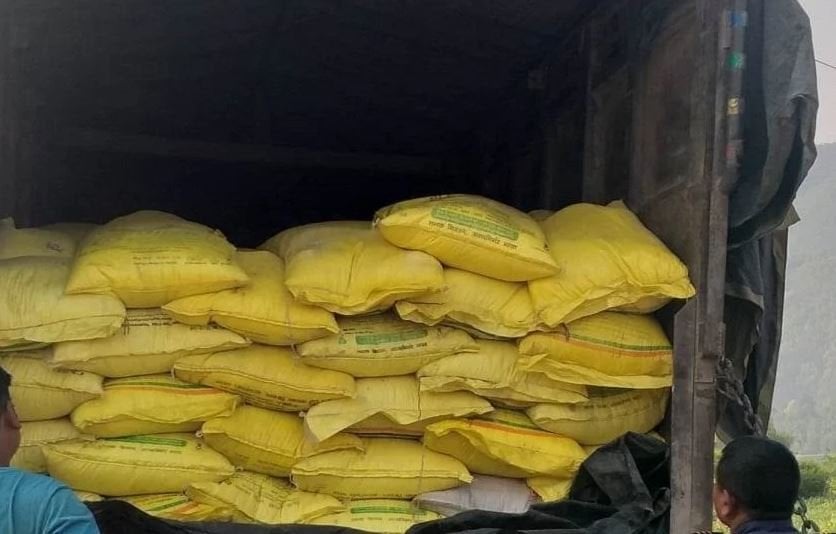
Amidst global market uncertainty, the G2G agreement with the Indian government guarantees 100 percent fertilizer supply. Under this, DAP will arrive by the second or third week of Shrawan, followed by urea fertilizer. Although the budget of 32.46 billion rupees received for this year is estimated to allow the import of only a maximum of 365,000 metric tons due to high prices, the company has moved forward with the bidding process for a total of 482,500 metric tons in various phases, of which 222,000 metric tons have already arrived in Nepal, and 60,000 metric tons are on their way. According to statistics, both import and distribution have increased significantly this year compared to last year. Last year, 472,287 metric tons of fertilizer were imported and 455,940 metric tons were sold, while this year, imports have increased to 561,493 metric tons, and more than 546,000 metric tons of fertilizer have been distributed.
- Disparity in Demand and Consumption Status
The demand and consumption status of chemical fertilizers in Nepal has been found to be very uneven. Although the country requires 1.737 million tons of chemical fertilizer annually based on technical recommendations, Dr. Shrestha states that 800,000 tons annually can meet the overall demand when considering soil health and balanced use. Currently, 80 percent of the available fertilizer is consumed only in the Terai region, of which the eight districts of Madhesh Province account for about 29 percent of the total consumption. The tendency to use 3 to 5 times more fertilizer than necessary in some areas without recommendation also increases artificial shortages and pressure in the market. 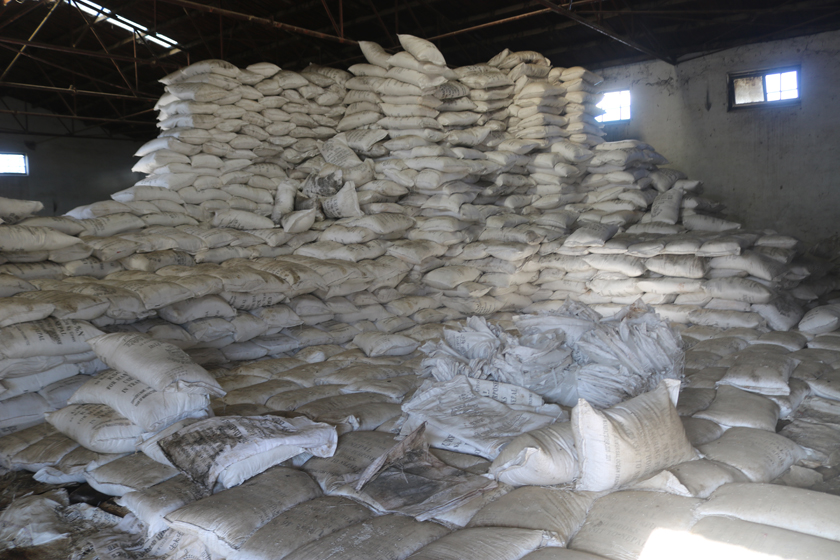
Although the government has integrated over 14,000 dealers and cooperatives across the country into a digital software system to make fertilizer distribution systematic and transparent, its implementation appears weak. Although the rule requires cooperatives to enter the details of which farmer received how much fertilizer after taking it, the entry of details is delayed in rural areas due to lack of internet, electricity, and access to technology. Due to the technical arrangement that prevents the system from picking up new fertilizer until the details of the previous lot are entered, the government has recently made the distribution easier by adopting some flexibility in this rule, as cooperatives could not take fertilizer even though it was available at the depot. To get rid of this long-term problem of chemical fertilizers, experts have emphasized focusing on organic and biological farming. Uddhav Adhikari, coordinator of 'Campaign for Food Agriculture', has suggested the government increase investment in organic fertilizer production instead of chemical fertilizers. He believes that by increasing the production of organic fertilizers within the country by reducing dependence on chemical fertilizers to protect soil and human health, national capital will be saved from going abroad, and demand for chemical fertilizers will gradually decrease if production-based subsidies are provided. Similarly, agricultural expert Dipesh Nepal also stated that farmers cannot escape the vicious cycle of chemical fertilizers because the government has not given the necessary priority and ownership to organic and biological farming.
This specific news has been automatically translated by AI. As a result, there may be some inaccuracies or language errors.