Author Reflects on AI's Impact on Coding and Writing

Long before billion-dollar AI companies took control of software development, I was painstakingly learning to 'code' on computers. This was in the mid-2000s. I was a child with unrestricted access to my home computer. With the help of a basic 'text editor', I learned to build websites. I started with simple ones and gradually became capable of building complex websites. I could do the work from start to finish myself. My work might not have been as amazing and beautiful as I imagined, but I would accept it and move on. I knew I was learning a new skill. Even when I had to abandon a task after spending hours on the computer 'debugging' code and poring over related software development documents, I didn't feel like time and energy were wasted. That too was part of my learning. Looking back now, all those activities seem pointless and strange. Nowadays, anyone can build an attractive-looking 'application' in minutes with the help of OpenAI's 'Codex' or Anthropic's 'Cloud Code'. Those who dropped out of school are earning millions from 'AI startups'. To be frank, my educational journey was certainly not very effective or efficient. I used to try many things alone. I tried to learn based on various self-created curricula. Curiosity kept me motivated, and the desire to understand kept me engaged. In that process, I started to like thinking in a particular way. That not only taught me four years of computer engineering but also prepared me for various types of software development work.
Those were all by-products of my thought-building process. Every writer can go through a transformative process of writing. They start writing with one idea but can end up with something completely different.My story of learning to write and becoming a writer is similar. Initially, when I became bored with the subject I was studying, I felt like writing about it. I felt like something was missing in the ongoing debate at that time. I saw people blindly believing in 'Silicon Valley' and technology and discussing it with excessive optimism. On the other hand, I had a critical understanding of Silicon Valley. I felt a deep gap between my understanding and that of most people. That's when I started writing. I have published thousands of words of my writing. Countless words have also ended up in the trash heap in my room without being published, but I never felt that those countless discarded words were wasted. Those were all by-products of my thought-building process. Every writer can go through a transformative process of writing. They start writing with one idea but can end up with something completely different. Writing is never just uttering a few words. Writing is about discovering your values and beliefs. It is also about convincing yourself that it is okay to fight for those values. The experience I have had in both writing and coding feels invaluable to me. Sometimes I feel like someone who escaped on the last helicopter from Saigon during the Vietnam War, having learned on my own before AI even existed.
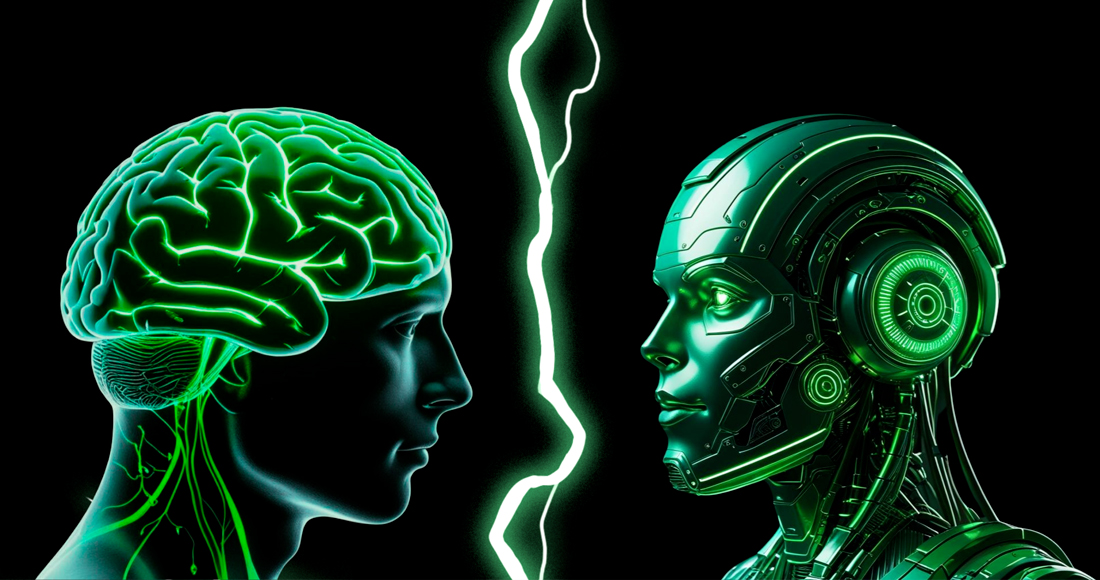
In the past, I was eager to adopt any new revolutionary change in technology as soon as it appeared. Today, I try to use AI as little as possible.Now, large language models developed recently have caused a major upheaval in both these fields. 'Vim-coding' has done the work of making all software development skills obsolete. Amazing code is generated by simply giving 'prompts' in plain language. 'Tech companies' that employ a large number of people for coding are now producing all the code using AI. The work of skilled coders is now only seen during minor editing and final preparation. Similarly, in the field of writing, low-quality content produced by AI, or 'slop', is spread everywhere. People are even afraid to use em dashes for fear of being accused of using AI. In the past, I was eager to adopt any new revolutionary change in technology as soon as it appeared. Today, I try to use AI as little as possible. I am afraid of 'cognitive offloading', which means entrusting the work that should be done by my own mind to other machines or systems. My fear is that I will develop a habit of giving the work that I should think about to the machine. For me, the main thing is my thinking ability or power. I don't want to develop a habit of entrusting such important work to others just to make daily tasks easier. For this reason, I am concerned about the youth growing up in the era of AI dominance. I fear that by presenting AI as something very mysterious and grand, they might consider technology to be supreme. I suspect that opaque tech companies, which they don't understand well and have no control over, might be deceiving them and teaching them wrongly. What will happen if our young people don't understand how technology works or consider it unnecessary and take it for granted? What if they cannot think about its problems and how to fix them? What will their relationship with technology be like in such a situation? How will it shape their relationship with the world?
According to researchers, even a few minutes of using an AI 'chatbot' can negatively affect our cognitive abilities.We have reached a world where AI companies are trying to turn intelligence itself into 'utility' or a commodity. They are privatizing thought, thinking, and contemplation. In such a situation, using less technology can also be a way to protect our freedom of thought and contemplation, or rather, the universality of cognition. On a personal level, it means preserving the ability to think. It also means keeping our own minds active by preventing software that works on probabilities from taking charge of our sensitive decisions. And this is very important. According to researchers, even a few minutes of using an AI 'chatbot' can negatively affect our cognitive abilities. Viewed collectively, this is a political matter. It is also a kind of fight against the system where AI companies are infiltrating every sector of our society and accumulating immense wealth by reducing our dependence on them. It is also a struggle against the process of making the world uninhabitable, bad, and unequal. As I write this article, we are in the midst of an AI 'bubble'. Billions of dollars are being planned for investment in 'data centers'. Large tech companies and corporations are showing unprecedented revenue figures. They are preparing to invest even more in AI by laying off a large number of workers. Even workers who are currently employed are forced to use AI to the maximum extent possible to remain competitive. People are now even having AI write their wedding vows. Many people have fallen in love with AI. In a short time, AI and its perversions have become frighteningly normalized. In this context, announcing that I will use AI as little as possible might sound foolish to people. It might even seem contradictory. Today, the numerous pieces of information coming out about the AI industry make us question AI even more, whether it's the cunning activities of AI company heads, financial concerns, frightening environmental consequences, or the negative impact on the workplace!
In today's era, when large corporate companies have made efficiency and convenience a tool to fulfill their greedy ambitions, choosing less efficient and inconvenient methods ourselves can also be a sacrifice made for the protection of humanity.Despite all this, the whole world is immersed in the intoxicating story of AI success. So much money and power are concentrated in this field that trying to challenge it feels as arduous and discouraging as defying God's authority. But I feel deep down that I am thinking correctly. I know that I will have to spend my days surrounded by the many flaws visible in my own work. I also know that the discussions and stories of AI's success will loom over my head like monuments, intimidating me. I know I am not a very good 'coder'. I haven't learned all the latest 'coding tools'. Yet, I still code sometimes. I also know that I am not a very good writer. While writing and rewriting this article you are reading, I could have prepared hundreds of books using AI prompts, but I am writing it myself. In today's era, when large corporate companies have made efficiency and convenience a tool to fulfill their greedy ambitions, choosing less efficient and inconvenient methods ourselves can also be a sacrifice made for the protection of humanity. It becomes the price paid for building human character. I want to choose the path of becoming the person I envision myself to be. One who stands with deep roots in this world. One who wants to live by their own desires and principles. I feel that the path I have chosen will help me on that journey. Of course, I will have to lose some things by taking this path. If I were to transform myself mechanically, I might be progressing in an AI startup today, but I am well aware of the values I hold. And I know that what I have to lose is natural. Walking the path I have chosen, I naturally have to give up some benefits. That is the price of my choice. (From The Guardian)
This specific news has been automatically translated by AI. As a result, there may be some inaccuracies or language errors.



_s4UAz3GPxQ.jpg)