Nepal's Churpi Becomes Major Export Item, Government Unveils Strategy

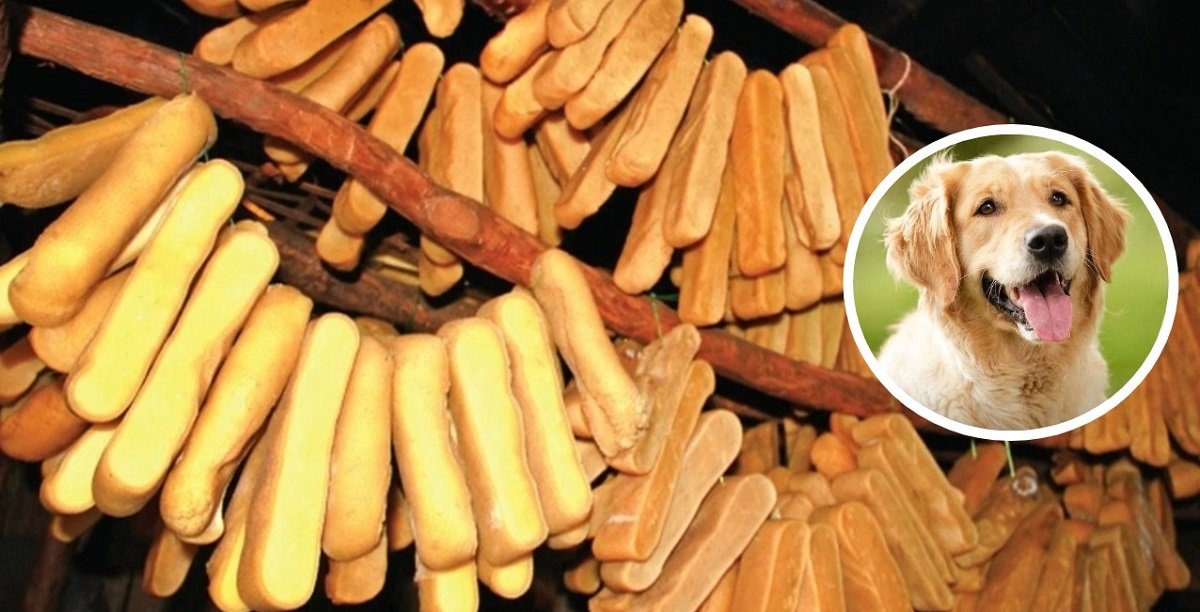
Kathmandu. Nepal's churpi is today established as the most beloved and healthy food (dog chew) for pet dogs in various countries around the world. This unique product, once limited to shepherds' bags, has now become a major exportable item earning foreign currency for Nepal's economy.
As the demand for Nepali churpi has rapidly increased in the global market, especially in America and Europe, the government has put forward a new strategy to develop it as a major exportable item of Nepal.
The Ministry of Industry, Commerce and Supplies has recently approved and implemented the 'Churpi Export: National Strategic Action Plan (2083-2088 BS)'. This plan analyzes the state of churpi from its history to the present in detail and aims to take exports to greater heights in the next 5 years.
Journey from Human Snack to Dog Food
In the early 2000s, the concept of developing hard cheese (churpi) produced in the Himalayan region as a potential commercial product began after seeing dogs enthusiastically chewing it in the United States.
Export of churpi, which was only 276 metric tons in the fiscal year 2071/072, has reached 2,610 metric tons by the fiscal year 2081/082. Similarly, the export value, which started at around 280 million rupees, has increased to over 4.5 billion.
According to the report, in 2007, the production of Himalayan yak churpi as a 'biological dog chewable food' was initiated through the joint initiative of Manram Himalayan Handicraft Nepal and Himalayan Pet Suppliers, USA. They unveiled it under the name 'Himalayan Dog Chew' at the International Pet Fair held in Seattle, Washington, USA in September 2007. It became extremely popular there and sold out within a short time. This historic event marked the entry of traditional Nepali churpi into the global pet industry.
Over time, it was modified by removing the sweetness that could harm dogs, as a safe and natural alternative to artificial dog chews made of rubber.
Current State of Production and Dominance of Koshi Province
According to the data of the Nepal Churpi Business Association, more than 2 million kilograms of churpi are currently produced annually from the hilly and mountainous districts of Nepal. Of this, the largest share, i.e., 80 percent, is produced in Koshi Province alone. Most of the churpi produced here is exported to Europe and America.
Traditionally, churpi is made by separating the fat from the milk of yaks, cows, and buffaloes, using appropriate substances to curdle it, separating the whey, and then shaping the remaining solid part into a specific size and drying it in the sun or a dry place to make hard churpi. If stored properly, it can remain safe for up to 20 years.
Significant Growth in Churpi Exports in One Decade
Export of churpi, which was only 276 metric tons in the fiscal year 2071/072, has reached 2,610 metric tons by the fiscal year 2081/082. Similarly, the export value, which started at around 280 million rupees, has increased to over 4.5 billion.
In the fiscal year 2071/072, a total of 276 metric tons of churpi were exported, from which Nepal earned 280 million rupees. A decade later, by the fiscal year 2081/082 (2024/25), its export volume has increased to 2,610 metric tons. From this, Nepal has earned foreign currency of over 4.51 billion rupees. Looking at the data of the last five years, the annual growth rate of churpi export is approximately 19.07 percent.
Annual Churpi Export Status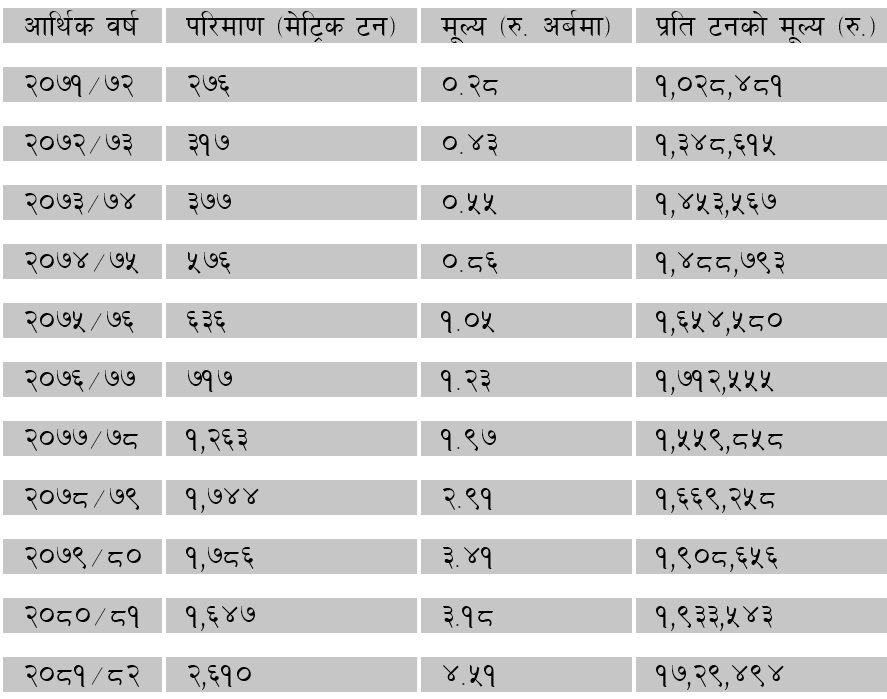
Source: Trade and Export Promotion Center
To Which Countries is it Exported?
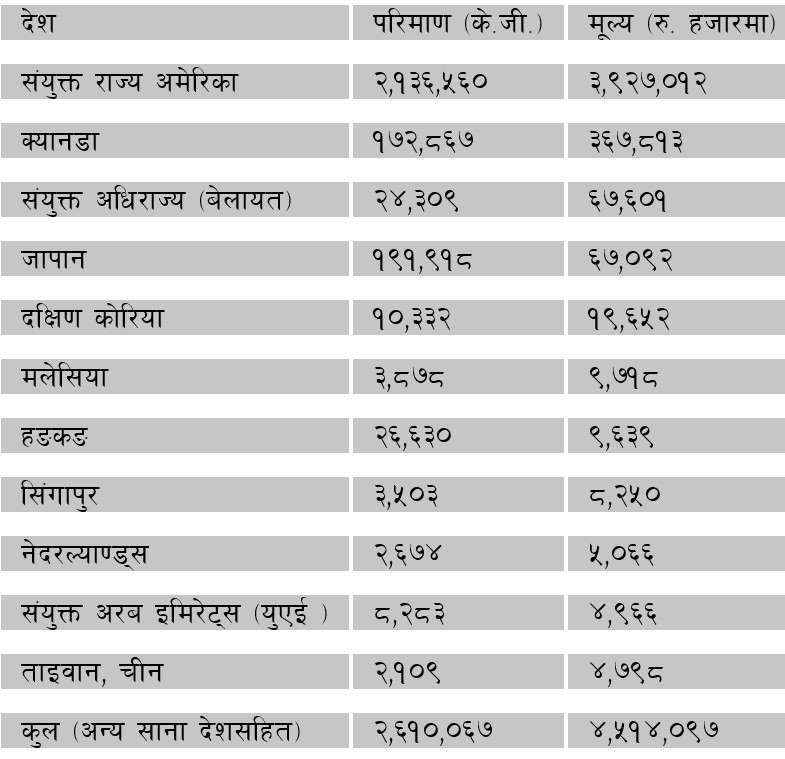
The largest buyer of Nepali churpi in the global market is the United States of America. According to the latest data, churpi worth approximately 3.92 billion rupees is exported to America alone. Besides this, there is high demand in Canada, the United Kingdom, Japan, South Korea, Malaysia, Singapore, and European countries (Netherlands, France, Spain, etc.).
Major Destinations for Nepal's Churpi Exports in the Last Fiscal Year 2081/082
Source: Trade and Export Promotion Center
Challenges Along with Opportunities
Despite the high potential of the churpi business, this sector is facing serious challenges. The ministry stated that the churpi business is being affected by factors such as shortage of raw materials, climate change, and lack of technology.
Lack of technology, most production is limited to small and old processing units. The ministry stated that modern technology, quality control, and large-scale production capacity are weak.
As the younger generation is attracted to alternative employment (including foreign employment), traditional animal husbandry is declining. This has led to a shortage of raw materials.
Similarly, climate change, rising temperatures, irregular snowfall, and degradation in the quality of grazing areas are making animal husbandry difficult in the Himalayan region.
Lack of technology, most production is limited to small and old processing units. The ministry stated that modern technology, quality control, and large-scale production capacity are weak.
Due to the absence of a separate HS code for churpi in international trade (it is classified under dog or cat food), it is difficult to obtain accurate trade statistics.
4 Main Goals of the Strategic Action Plan
To overcome these challenges and increase exports, the government has set 4 main objectives in the 5-year strategic action plan.
1. Strengthening milk production and collection systems: Providing support to farmers in advanced animal husbandry technology, animal health services, and breed improvement. Providing special incentives for yak, cow, buffalo, and chauri farming.
2. Enhancing production capacity and quality: Modernizing production technology. Providing technical and financial assistance to churpi industries to obtain international quality certifications.
3. Expanding and diversifying international markets: Branding Nepali churpi as a unique Nepali product and registering it in the international market with geographical indication (GI tag). Exploring markets in Middle Eastern countries besides America and Europe.
4. Policy and institutional strengthening: Making diplomatic efforts to obtain a separate HS code for churpi internationally. Upgrading laboratories to meet export-related SPS standards.
The ministry stated that for the successful implementation of this strategic action plan, programs will be advanced through regular budgets in coordination with the Nepal Trade Integration Strategy (2079/80-2084/85). It will be moved forward with the joint coordination of the federal government, provincial governments, local levels, and the private sector (producers, cooperatives, and exporters).
This specific news has been automatically translated by AI. As a result, there may be some inaccuracies or language errors.

_s4UAz3GPxQ.jpg)