Government Launches Citizen-Centric Public Service Training to Improve Front Desk Services


Kathmandu. The first place where ordinary citizens feel the presence and behavior of the government is the 'front desk' of government offices. That is, the inquiry and registration section. The common fate that citizens often face when going to public bodies for service is the rude speech of employees, indifferent faces, and the compulsion to run from one room to another.
Employees who have been working in this sensitive place for a long time have always been under the pressure of workload, unmotivated, and in some cases, insensitive to citizens, raising questions about the image of the entire government.
To address this sensitivity, the government has launched the 'Citizen-Centric Public Service Training' campaign for the first time. It is expected to change the 'face of the front desk', which is considered the first door of government service delivery.
This training, which has been started under the government's 100-point priority programs, is different from all previous ones and is 'human-centric'.
In the past, the state's investment was focused only on improving administrative structures, physical infrastructure, and technology. This time, the Ministry of Land Management, Cooperatives, Federal Affairs and General Administration has stated that emphasis has been placed on improving the conduct of human resources deployed at the forefront of service delivery.
The details of three thousand 204 employees working at the front desk have been collected. In the first phase, the ministry has provided training to a total of one thousand 20 employees, including 660 at the assistant level and 360 at the officer level, working at the front desks of various ministries and departments under the federal government.
This training has been intensified through the Nepal Administrative Staff College and the Local Development Training Academy since May 5, informed Joint Secretary Ekdev Adhikari of the ministry.
"The front desk is the first place citizens encounter as soon as they step into the office. However, in the past, the employees sitting at this desk were always in a double bind: on one hand, the crowd and pressure from service recipients, and on the other hand, the pressure from superiors," said Joint Secretary Adhikari. "They did not receive any orientation on this, nor any motivation to work."
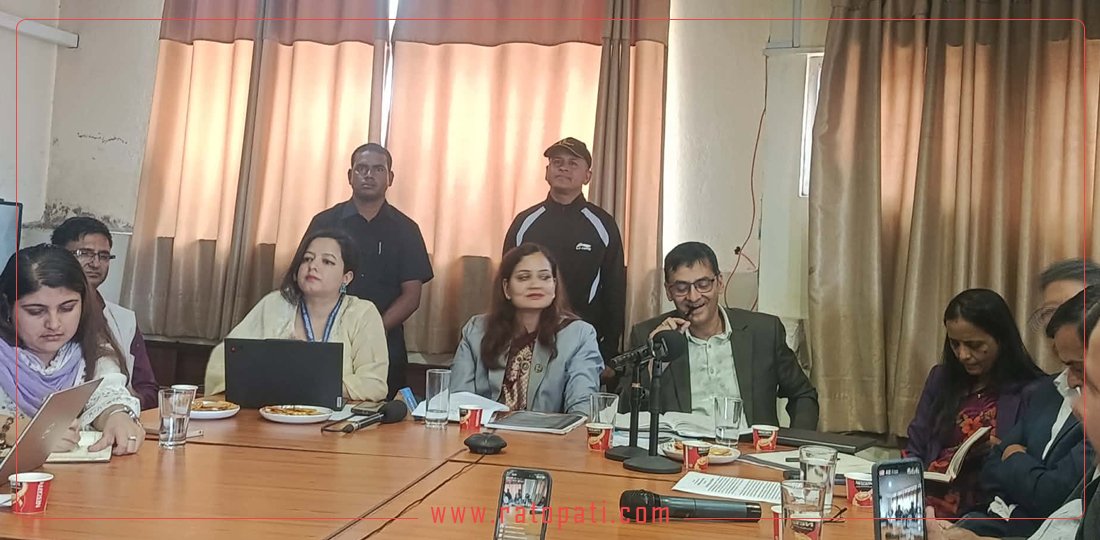
Adhikari, head of the Administration Reform Division under the ministry, informed that training has been started for employees by preparing a curriculum and training methods that are effective at a minimum cost. The ministry believes that this three-day training, focused on front desk employees and human-centric, will prove effective.
"Our efforts and investments so far have been more focused on improving the physical decoration, equipment, or work environment of the office," he explained the strategy and rationale of the training. "Teaching how to remain calm amidst crowds and how to communicate effectively with service recipients and supervisors, this three-day training is expected to boost employee morale and bring about a significant positive change in citizens' perception of the government."
What is being taught?
Although the training is short, its scope is very broad and practical, according to the ministry. It includes more behavioral improvements and the use of modern technology than traditional administrative knowledge.
Special emphasis has been placed on improving the daily behavior and conduct of employees, including politeness, gratitude, empathy, and promptness towards work towards citizens. To strengthen the relationship with service recipients, communication and interpersonal skills will be taught, including body language, telephone etiquette, as well as the limited use of modern social media like email and WhatsApp, and the art of actively listening to and understanding service recipients.
Similarly, employees will be taught practical methods for coping with the constant mental pressure at the front desk, including managing actual workload, conflicts and complaints, controlling emergency crowds, and self-stress management.
The training emphasizes the latest technology and social inclusion. It includes technical knowledge on how to use artificial intelligence (AI) to make service delivery more effective and faster.
Furthermore, awareness will be raised on how to treat every segment of society with respect from the perspective of gender equality, disability, and social inclusion. Employees will also have to prepare their own personal action plans and commitments with a service-oriented mindset to bring about sustainable improvement after returning to their workplaces.
To develop professionalism among government employees, experienced trainers and managers from prestigious banks, financial institutions, multinational companies, and hotels that provide excellent service in the private sector will be invited as experts.
The government has linked this to the main performance indicator in the 100-point program. According to Joint Secretary Adhikari of the ministry, the performance of each employee will now be evaluated based on this indicator. To encourage front desk employees who perform excellently, it can be done through their performance evaluation.
According to the ministry, office chiefs are being made responsible to check what changes, if any, have occurred in the behavior of employees who have returned to their workplaces after training. For this, feedback will be taken from both service recipients and office chiefs through digital means, and a strategy of surprise inspections and monitoring from the center is also being planned.
The target is to physically train one thousand 20 people at the federal level by the end of Asar. However, there are challenges of time and resources to include thousands of employees across the country physically.
Therefore, Joint Secretary Adhikari said that work is underway to prepare a curriculum to transform this entirely into an 'online format' from the next fiscal year.
He said that a system will be established where passing this course will be mandatory to sit at the front desk. Preparations are also underway to expand this successful experiment of the federal government to the provincial government's good governance centers and local levels, and to offices at the municipal and district levels across the country soon.
This specific news has been automatically translated by AI. As a result, there may be some inaccuracies or language errors.