Madhesi Youth Leaders Plan New Political Party Amidst Discontent

Kathmandu. As unity among parties could not be achieved due to the personal interests or stubbornness of party chairpersons, young leaders from the Madhes region have started working on forming a separate political party.
Sources indicate that preliminary discussions have already begun with the aim of establishing a new alternative party in the Madhes region.
It is claimed that the proposed new party will include disgruntled young leaders from Janata Samajwadi Party (JSP) Nepal, Rastriya Mukti Party Nepal, Janamat Party, Nagarik Unmukti Party, Janata Pragatisheel Party, Terai Madhes Loktantrik Party (Tamalopa), as well as some dissatisfied Madhesi young leaders affiliated with the Nepali Congress, CPN (UML), and CPN (Maoist Centre).
Previously, the Federal Democratic Front led by JSP Nepal's patron Mahanta Thakur had decided to unite all affiliated parties, but the unity efforts failed as top leaders refused to give up their respective positions and prestige. With the parties unable to unite, young leaders from the second and third tiers of these parties are now preparing to form a separate organization. A leader from JSP Nepal, involved in the groundwork for forming the new organization, stated, 'Not only young people from Madhes-centric parties but also young people affiliated with parties like Congress, UML, and Maoist are participating in this campaign. Former ministers, members of parliament, and office-bearers of various parties are also active in forming the organization.'
Regarding this matter, Rastriya Mukti Party's General Secretary Keshav Jha expressed ignorance. He stated that while it is natural for young people to feel dissatisfaction and suffocation due to the developing political situation, he does not believe there are any concrete preparations underway to form a new organization immediately. 'It is unfortunate that unity among Madhes-centric parties could not be achieved, which has led to anger and dissatisfaction among the youth,' Jha said. 'Informal discussions may have occurred among some youths, but I do not believe a separate party will be formed right away.'
However, sources suggest that the groundwork for forming the new party has reached its final stage. Preparations are underway to announce the party before the local and provincial elections scheduled for 2084, with all current processes being kept confidential.
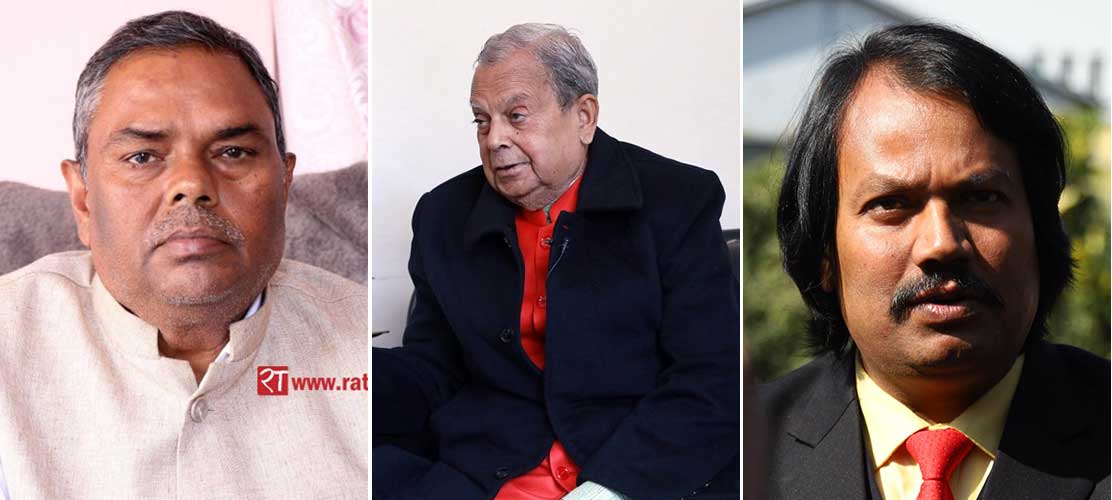
Recently, after the unity efforts between JSP and Lospa, the unified party has been named Janata Samajwadi Party (JSP) Nepal, with Upendra Yadav as chairman and Mahanta Thakur as patron. However, due to the repetition of old faces in the party's central committee, extreme dissatisfaction has grown among young leaders. A young leader lamented that despite hopes for a change in the parties' working style after the Janji movement, the situation remains the same. He claimed that even though Madhesi parties had a weak presence in the elections, the leadership has not learned its lesson, and if this situation continues, the existence of these parties will be in crisis in the upcoming local and provincial elections.
Young people accuse Madhesi parties of being focused only on government formation and power struggles in the Madhes province, despite their weak performance in elections. JSP Nepal and Janamat Party appear active in the race to form a new government in collaboration with UML, after toppling the then-government led by the Nepali Congress.
Within the Janamat Party, a dispute arose over ministerial selection, leading Chairman Dr. CK Raut to decide to withdraw from the government, yet the ministers have not yet resigned. 'What can the youth of Madhes expect from such unstable parties?' the young leader questioned. 'In reality, this is the time to focus on strengthening the organization and public interest issues, but parties like JSP Nepal and Janamat Party are only entangled in power-sharing and the race for chief minister positions. We have concluded that this has caused widespread disappointment among Madhesi youth and created a compelling situation to seek alternatives.'
This specific news has been automatically translated by AI. As a result, there may be some inaccuracies or language errors.