Bagmati Province Government's Powdered Milk Plant Remains Unoperational for 2.5 Years

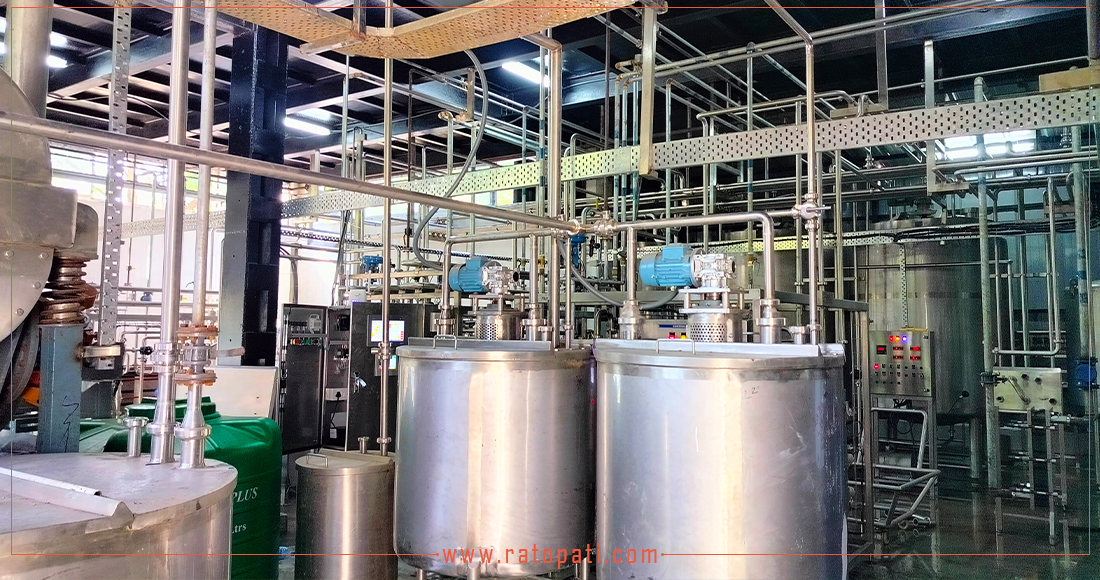
Hetauda. The powdered milk plant, built with the investment of the Bagmati Province government, has been in limbo for 2.5 years. Despite the Bagmati government investing approximately 47 crore rupees in its construction in Sisaughari, Hetauda-10, the plant has not been able to become operational. Delay in deciding the operational modality has limited the project, which involved crores of rupees in investment, to trial production. The province government had established the industry with the aim of solving the 'milk holiday' problem faced by farmers during peak milk production, converting surplus milk into powder and butter to ease market management, and adding value to dairy products. However, even though the industry construction is complete and trial production has begun, it has not been able to deliver expected results due to the lack of a permanent operational structure. According to Hemraj Paudel, Vice-Chairman of the Dairy Development Board, Bagmati Province, the operational modality should have been prepared before industry construction; instead, the physical structure was built first, and then the operational model was sought. He admits that this is why the industry is facing operational complexities. 'The operational modality should have been prepared first, but here the factory was built first, and then the study on how to run it began. Now we have prepared the operational procedures, financial analysis, market study, operational model, and province-level dairy policy. We are now in the implementation phase of the decision,' Paudel said. According to him, the board is working to improve past weaknesses and make the industry operational. He stated that the board is trying to make the industry operational by managing the problems. He mentioned that the board has prepared the necessary procedures for operating the factory and submitted them to the Ministry of Agriculture and Livestock Development. He added that the process of getting the procedures approved by the cabinet through the ministry is underway. According to Vice-Chairman Paudel, the possibility of operating under a Public-Private-Partnership (PPP) model was studied in the initial phase, but it was concluded that this model is legally impossible because the federal cooperative act does not allow cooperative institutions to invest in companies. One reason for the delay in the decision-making process, even after the procedures were prepared, is the fire that occurred during last year's protest, which the board also cited. He stated that some important documents submitted to the ministry were destroyed in the fire, necessitating the redrafting and resubmission of the process. 'The procedures were prepared in Shrawan, but some documents were burned in a fire during the protest. Later, we redrafted them based on the old draft and submitted them to the ministry,' he said.
- Four Modalities to Run the Industry
_zYMCV0ok66.jpg) According to him, the board has recommended to the government for decision, including the possibility of the province government operating it itself, a specialized cooperative model, a G2G model with DDC, and handing it over to the private sector. 1. Province Government Operates Itself The board studied the possibility of the province government operating the industry itself as the first option. However, it was concluded that this option cannot be implemented immediately due to the lack of necessary manpower, organizational and management (O&M) structure, operational budget, and source for purchasing raw materials. Skilled manpower such as dairy engineers, dairy technologists, lab experts, and technical assistants are required to operate the factory, but the government has not yet approved the staffing for such positions. The board also stated that the budget required for milk purchase, firewood, energy, and daily operational expenses is not available. 'We do not have the necessary staff to run the industry. There is no source for operational expenses. There is no budget to purchase milk. The board cannot operate the industry on its own without these basic arrangements,' Paudel says. 2. Specialized Cooperative Model The option of forming a province-level specialized cooperative and handing over the industry's operation has also been discussed. The board also studied a powdered milk industry operated by a cooperative in Koshi Province. However, this option also appears difficult to implement immediately as specialized cooperatives have not been formed by milk cooperatives in Bagmati Province. According to Vice-Chairman Paudel, the government does not form cooperatives; cooperatives must organize themselves, but since no such initiative has been seen so far, this model has not become practical. 3. Close to Agreement with DDC on G2G Model After concluding that the province government cannot operate it itself, the board has proposed the Dairy Development Corporation (DDC) to operate the industry as a second option. The board has stated that discussions have been held with DDC multiple times and that the corporation is positive about operating it. The trial production work is currently being carried out with the technical support of DDC. According to the board, operating under a government-to-government (G2G) model ensures transparency, avoids accusations of favoritism towards the private sector, and allows for the utilization of DDC's experience and skilled manpower, making this option the most practical. 'Negotiations with DDC have been ongoing for a long time. They are ready to operate. However, this is not a permanent transfer. Discussions are underway for a short-term management model where the province government will operate it by paying royalties as deemed necessary,' Paudel said. According to board sources, DDC wanted to operate the industry with minimal liability, but the province government has maintained its stance that it cannot transfer assets worth a large investment for free. Therefore, efforts are being made to find an agreement on the condition of paying royalties. 4. Economic Challenges in Handing Over to Private Sector Although the option of handing over the factory to the private sector for operation has been discussed, this model appears complex due to economic and legal challenges. The total investment in the industry is estimated to reach around 50 crore rupees. In such a situation, the board's analysis estimates the annual depreciation alone to be around 10 crore rupees. It appears difficult for private companies or cooperative institutions to bear this cost, revenue, and tax burden. Even if the private sector wants to operate, they have demanded special tax exemptions and economic concessions. However, the board's conclusion is that such a decision would be politically and policy-wise complex.
According to him, the board has recommended to the government for decision, including the possibility of the province government operating it itself, a specialized cooperative model, a G2G model with DDC, and handing it over to the private sector. 1. Province Government Operates Itself The board studied the possibility of the province government operating the industry itself as the first option. However, it was concluded that this option cannot be implemented immediately due to the lack of necessary manpower, organizational and management (O&M) structure, operational budget, and source for purchasing raw materials. Skilled manpower such as dairy engineers, dairy technologists, lab experts, and technical assistants are required to operate the factory, but the government has not yet approved the staffing for such positions. The board also stated that the budget required for milk purchase, firewood, energy, and daily operational expenses is not available. 'We do not have the necessary staff to run the industry. There is no source for operational expenses. There is no budget to purchase milk. The board cannot operate the industry on its own without these basic arrangements,' Paudel says. 2. Specialized Cooperative Model The option of forming a province-level specialized cooperative and handing over the industry's operation has also been discussed. The board also studied a powdered milk industry operated by a cooperative in Koshi Province. However, this option also appears difficult to implement immediately as specialized cooperatives have not been formed by milk cooperatives in Bagmati Province. According to Vice-Chairman Paudel, the government does not form cooperatives; cooperatives must organize themselves, but since no such initiative has been seen so far, this model has not become practical. 3. Close to Agreement with DDC on G2G Model After concluding that the province government cannot operate it itself, the board has proposed the Dairy Development Corporation (DDC) to operate the industry as a second option. The board has stated that discussions have been held with DDC multiple times and that the corporation is positive about operating it. The trial production work is currently being carried out with the technical support of DDC. According to the board, operating under a government-to-government (G2G) model ensures transparency, avoids accusations of favoritism towards the private sector, and allows for the utilization of DDC's experience and skilled manpower, making this option the most practical. 'Negotiations with DDC have been ongoing for a long time. They are ready to operate. However, this is not a permanent transfer. Discussions are underway for a short-term management model where the province government will operate it by paying royalties as deemed necessary,' Paudel said. According to board sources, DDC wanted to operate the industry with minimal liability, but the province government has maintained its stance that it cannot transfer assets worth a large investment for free. Therefore, efforts are being made to find an agreement on the condition of paying royalties. 4. Economic Challenges in Handing Over to Private Sector Although the option of handing over the factory to the private sector for operation has been discussed, this model appears complex due to economic and legal challenges. The total investment in the industry is estimated to reach around 50 crore rupees. In such a situation, the board's analysis estimates the annual depreciation alone to be around 10 crore rupees. It appears difficult for private companies or cooperative institutions to bear this cost, revenue, and tax burden. Even if the private sector wants to operate, they have demanded special tax exemptions and economic concessions. However, the board's conclusion is that such a decision would be politically and policy-wise complex. - Millions of Liters of Milk Processed in Trial
- Decision Still Awaiting Cabinet Approval
This specific news has been automatically translated by AI. As a result, there may be some inaccuracies or language errors.

_bsx4jxibxx_utGr3H06yP.jpg)