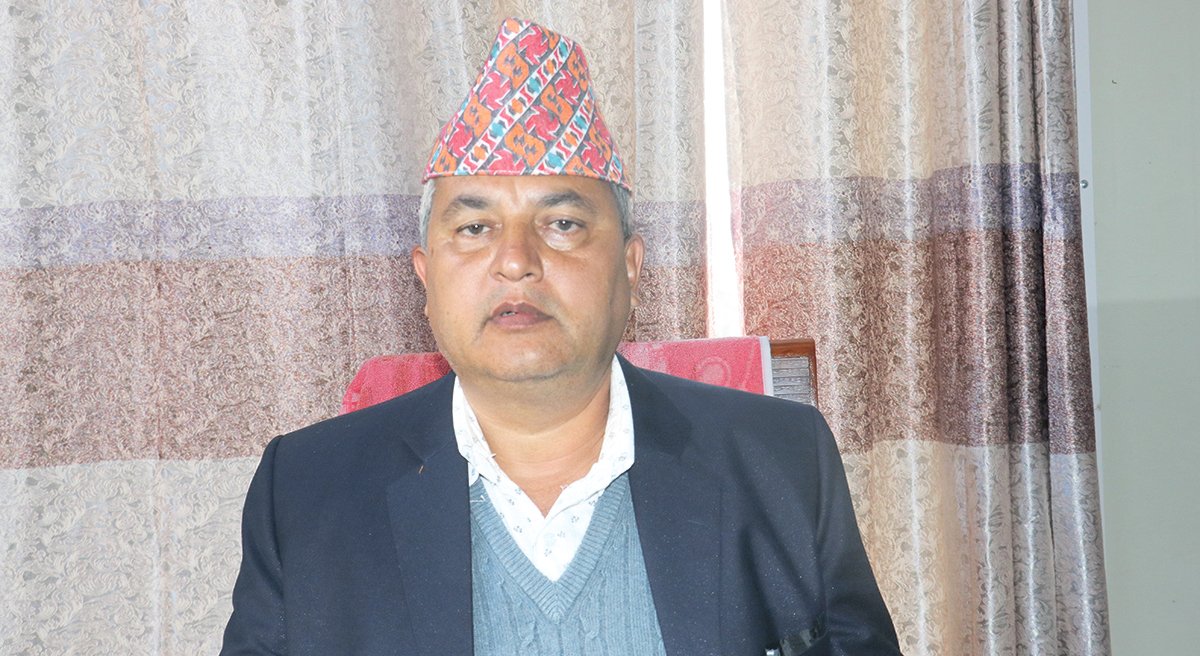
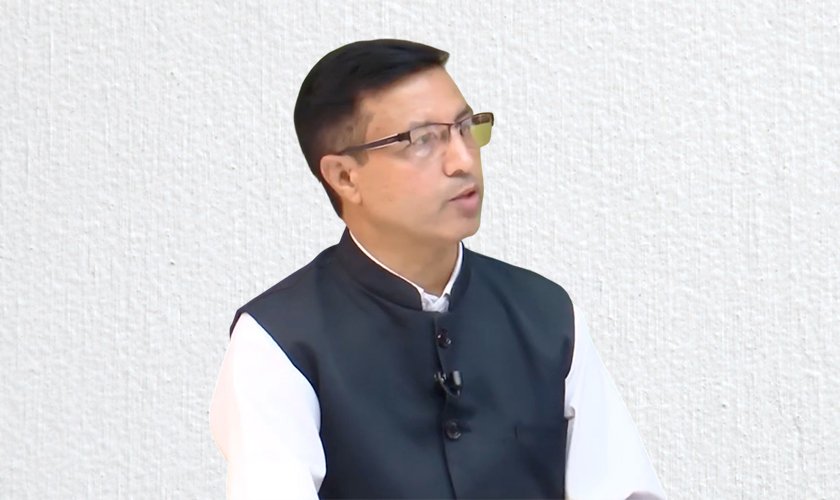
Ward Chairman Ramkumar KC Discusses Seven-Story Building Demolition and Squatter Settlement Management


The government has intensified its campaign to remove structures in squatter settlements and demolish buildings that violate standards. In this context, an interview based on a conversation between Amrit Chimariya and Ramkumar KC, Ward Chairman of Kathmandu Metropolitan City Ward No. 10 and Coordinator of the Social Development Committee, regarding the bulldozer action on the famous seven-story building in Anamnagar, Kathmandu Ward No. 10, and the management of squatter settlements in Kathmandu, is presented here-
- Why was it necessary to demolish the famous seven-story building located on the bank of Dhobi River in Anamnagar in your ward? What is the main reason for this?
Actually, the land for that building had a land ownership certificate and the map was passed, but the main problem was the standard. The building owner had obtained map approval for only 5 floors, but constructed 7 floors. After finding that structures were built beyond the approved map and the specified standards were completely violated, we had to use the bulldozer. It appears that after obtaining the completion certificate, additional structures were added in violation of standards. Specifically, the north-west part of the building and the area outside the stairs were encroached upon in violation of the map. These have now been removed by the federal government and the metropolis.
- Why couldn't this building be stopped earlier? It is heard that you tried to stop it before, what is the reality?
Yes, this was during my first term. I became ward chairman after the election in 2074 BS. This is my second term. Around 2076 BS, I tried hard to stop the concreting of this building. But the building owner was very clever. When we tried to stop the work during the day, they started concreting at 9 PM and finished it by 4 AM. At that time, structures were erected overnight by running machines in a way that shook the entire neighborhood. We had also taken measurements and marked it at that time, but the work could not proceed due to various pressures and lack of cooperation.
- What kind of pressure came when you tried to stop the work at that time?
The challenge at that time was quite big. When we sought help from the police and administration, we did not receive any help from anywhere. We did not get the necessary support from the then Metropolitan Police Chief and representatives. The building owner threatened us by bringing Maoist people and armed 'shooters'. When they worked at night and the security agencies turned a blind eye, we could not do anything alone. The metropolitan police were not as active and independent as they are now.
- How was it possible now?
In the past, the network of settings was very strong, which made it difficult to stop unauthorized activities. But now the situation has changed. It was easier to work due to the strong determination shown by the then Metropolitan Police Chief Raju Pandey and the then Mayor and current Prime Minister Balen Shah when they were in the metropolis. Now that Balen is the Prime Minister, there is coordination between the federal government and the metropolis. The bodies that did not support us before are now coming forward and working. Now there is also confidence that the metropolis will complete the work according to the policies it has passed.

- How is the coordination between the metropolis and the federal government going on in the management of squatter settlements and the removal of unauthorized structures?
Currently, the federal government and the metropolitan city are moving forward together. In some places, the federal government gives instructions, and we provide metropolitan police and technical support for its implementation. Under this campaign, unauthorized structures on the banks of rivers are being removed. For example, some structures have been removed in the UN Park area and Buddhanagar area. Wherever standards have been violated, the metropolis has shown its presence.
_6gPWOuehxP.jpg)
- You are also the coordinator of the Social Development Committee of the metropolis. What kind of work is being done through the committee for those displaced from squatter settlements?
Since I am also the coordinator of the Social Development Committee, we are paying special attention to the human aspect. The metropolis itself is arranging food for the people kept in the holding center. We are providing nutritious food for pregnant women, toys for small children, and other necessary materials from the social development budget. We have not forgotten human sensitivity while enforcing the law.
- In some places in Buddhanagar and UN Park areas, only half of the structures seem to have been demolished, what is the reason for this? Is there any discrimination?
What happened there is that some structures are under the jurisdiction of the federal government. The metropolis only reports and sends metropolitan police. We go to the places where the federal government orders demolition. In some places, there might be a dispute over measurement or compensation. But our policy is clear—no one who violates the standards will be spared. The bulldozer campaign that started in Ward No. 10 when Prime Minister Balen was the mayor then has now spread across Kathmandu.
This specific news has been automatically translated by AI. As a result, there may be some inaccuracies or language errors.