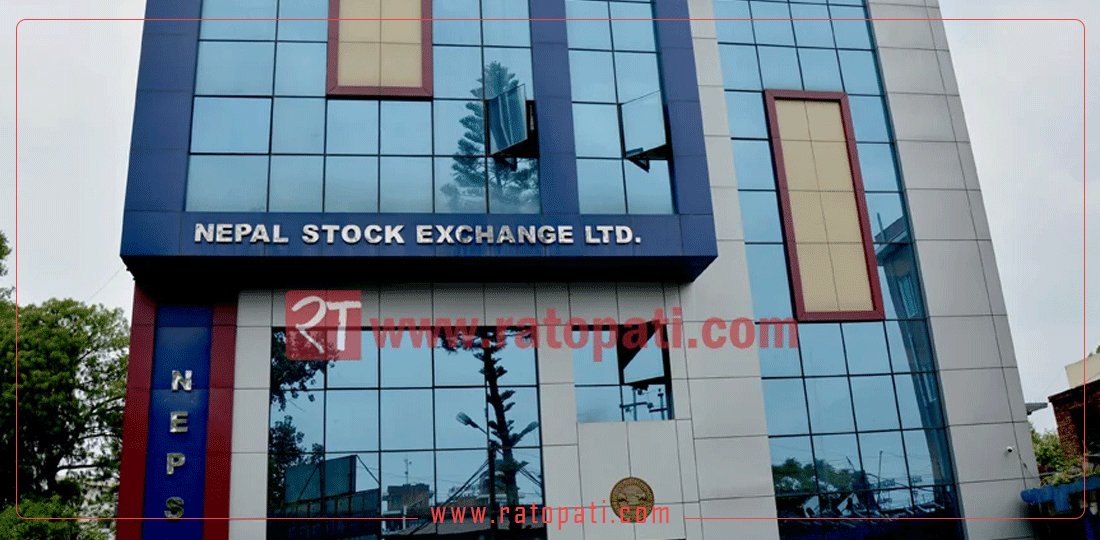
Private Sector Urges Rastriya Swatantra Party to Create Investment-Friendly Environment


Kathmandu. The private sector representatives have urged the ruling party Rastriya Swatantra Party (RSP) to create an investment-friendly environment, citing the lack of such an environment in the country.
At a dialogue program organized by RSP on Sunday with the private sector, businessmen demanded the announcement of a special package to create an investment environment within the country, expressing high hopes from the government close to a two-thirds majority.
At the program attended by RSP Chairman Rabi Lamichhane, Ncell Chief Executive Officer (CEO) Michael Foley said that Nepal's telecom infrastructure is very weak. He clarified that Ncell is ready to invest further if a suitable environment is created in Nepal. He stated that due to weak infrastructure, the ability to compete at the international level has decreased, and Ncell has not been able to attract sufficient investment. He urged RSP to facilitate investment, stating that government obstacles are causing problems in attracting foreign direct investment.
According to Foley, extensive investment is necessary in fundamental aspects such as 5G, fiber network, data center, international connectivity, and satellite connectivity in Nepal. He said that hundreds of millions of dollars in investment will be mandatory if the goal is to target areas like central bank digital currency, crypto, AI, computer services, digital services, and blockchain. He committed that Ncell is ready for large investments to address current infrastructure problems, build new capacity, and achieve data center goals in collaboration with the government.
Similarly, industrialist Varun Chaudhary said that the private sector has high expectations from the current government, which is close to a two-thirds majority. He pointed out that although foreign investors are positive about Nepal's hydropower, airport, infrastructure, information technology, and tourism sectors, there is a lack of a suitable environment to attract them. For this, he said it is necessary to improve Nepal's international image and emphasized the need to provide necessary facilities and an environment of trust to investors and to attract foreign investment through various incentive packages.
Another industrialist, Kishore Pradhan, said that the government should implement a multi-rate system for Value Added Tax (VAT) in the upcoming budget. He accused that this issue, which has been raised for many years, has not been implemented due to the non-cooperation of the bureaucracy. Stating that it is now possible to implement a multi-rate system with the development of information technology, he said that it is not appropriate to impose a single 13 percent rate on all goods. He demanded from the government, on behalf of the Federation, to implement multi-rates to remove the situation where the public has to pay 13 percent tax when buying sarees.
Deepak Malhotra, a businessman and Vice President of the Nepal Chamber of Commerce, said that although the goals set by RSP of increasing per capita income to $3,000 within seven years, creating a $100 billion economy, and achieving high economic growth are ambitious, they are achievable. However, he said that cooperation with the private sector is necessary for this. Emphasizing the need to bring informally transacted business into the formal economy, he suggested reducing customs duty, income tax, excise duty, and various fees. His argument was that businesses will come into the formal sector only if the tax rates are reduced and the system is made simple and attractive.
At the program, Chandra Dhakal, President of the Federation of Nepalese Chambers of Commerce and Industry, Ganesh Karki, President of the Independent Power Producers' Association of Nepal (IPPAN), and others said that the dialogue held by RSP with the private sector has boosted morale somewhat and demanded policy reforms to increase investment.
This specific news has been automatically translated by AI. As a result, there may be some inaccuracies or language errors.
_Lc2GX1hZa3.jpg)
_wjYl7c9cM2.jpg)