
Budhigandaki Hydropower Project: A Decade of Stagnation and the Path to Realization

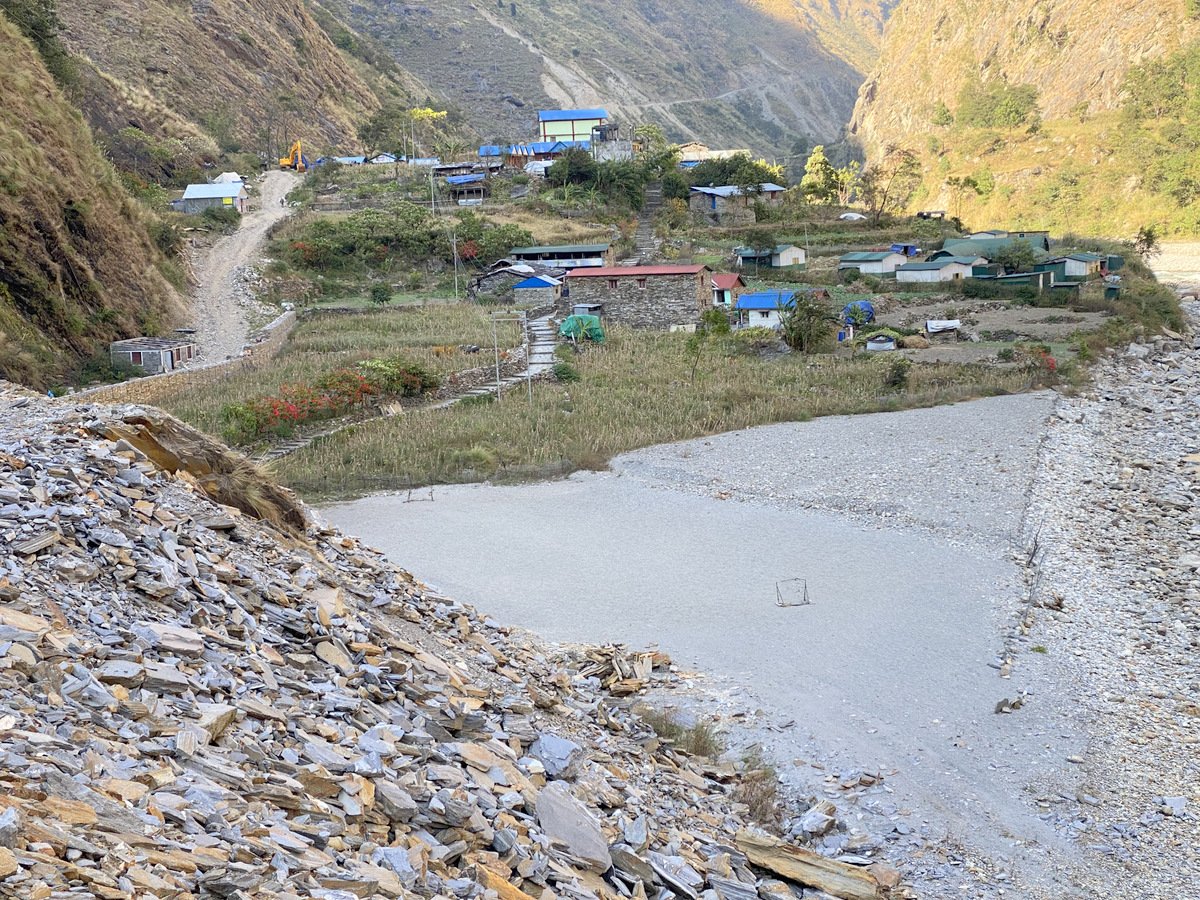
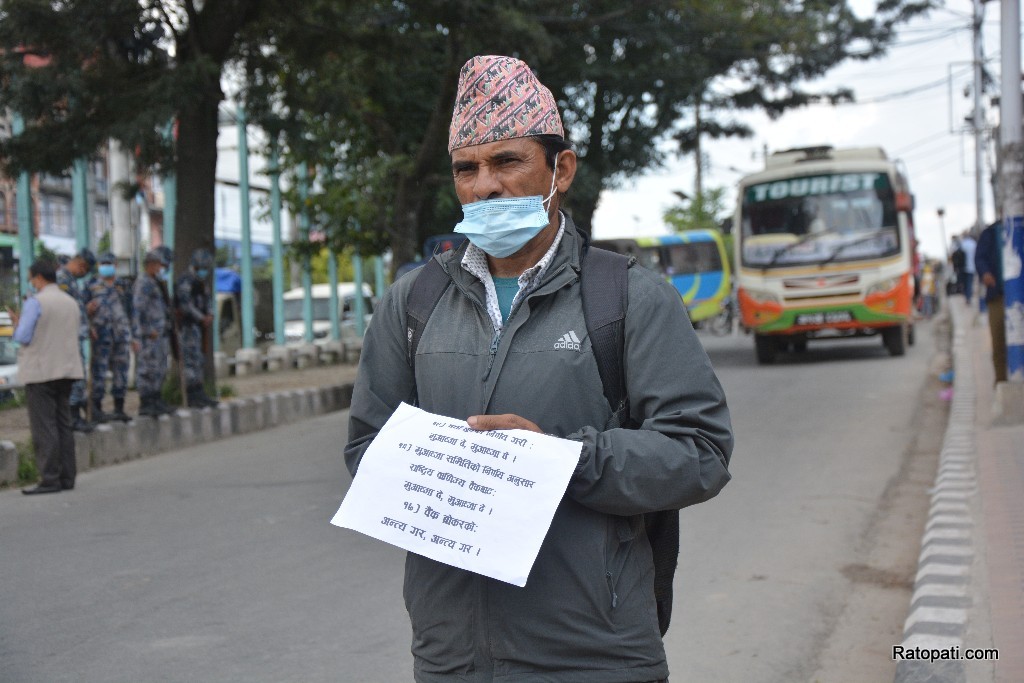
Kathmandu. It has been over 10 years since thousands of locals from Dhading and Gorkha left their ancestral homes. The residents of Dhading and Gorkha surrendered everything with the hope that the Budhigandaki Hydropower Project would be built, creating a 'massive lake that would change the face of the country and illuminate the nation'.
However, years after the locals provided their land, the project has yet to be built. Even the project's modality has only recently been finalized.
The project has already distributed approximately 43 billion rupees (nearly 95 percent of the compensation) for land and structures in the inundation area. More than 50 billion rupees have already been spent from the state treasury in the name of preparatory work.
But, ironically! Where vast amounts of water should have been collected to generate electricity, only disappointment and the murky waters of politics have been flowing so far. The locals left their homes, but the state has not even been able to dig the foundation of the project.
The only large reservoir project currently operating in Nepal is Kulekhani. Through its first, second, and third (cascade) phases, it is producing a total of 106 megawatts of electricity. This is also known as Nepal's 'power backup'.
_6XrgQbrljb.jpg)
However, this fate is not unique to Budhigandaki. The situation is similar for the 835 MW Dudhkoshi Reservoir Project, the 750 MW West Seti Hydropower Project, the 410 MW Nalgad Hydropower Project, and the 756 MW Tamor Reservoir Project.
Similarly, the status of other reservoir and semi-reservoir projects, including Sunkoshi-2 (1110 MW), Sunkoshi-3 (683 MW), Pancheshwar Multipurpose Project (6480 MW), Karnali Chisapani (10,800 MW), Upper Seti (104 MW), and Arun-4, is the same.
For some, the Detailed Project Report (DPR) has not even been prepared, while for others, there is no clue about the investment modality. The government had labeled Budhigandaki as a National Pride Project and placed it at the top priority. Yet, why has this project not moved forward by even an inch for 10 years?
However, the current government has shown interest and prioritized the project. The national commitment paper for governance reform released by the government also includes a commitment to accelerate the project. Furthermore, Speaker DP Aryal is showing interest by holding 'back-to-back' discussions with the Finance Minister and others regarding this project.
Although the project is technically excellent and beneficial for the country in the long term, private sectors or investors hesitate to invest due to a lack of sufficient returns. To bridge the investment gap, the government is preparing to move the project forward by providing 'viability gap funding' in the form of grants, concessional loans, or capital support.
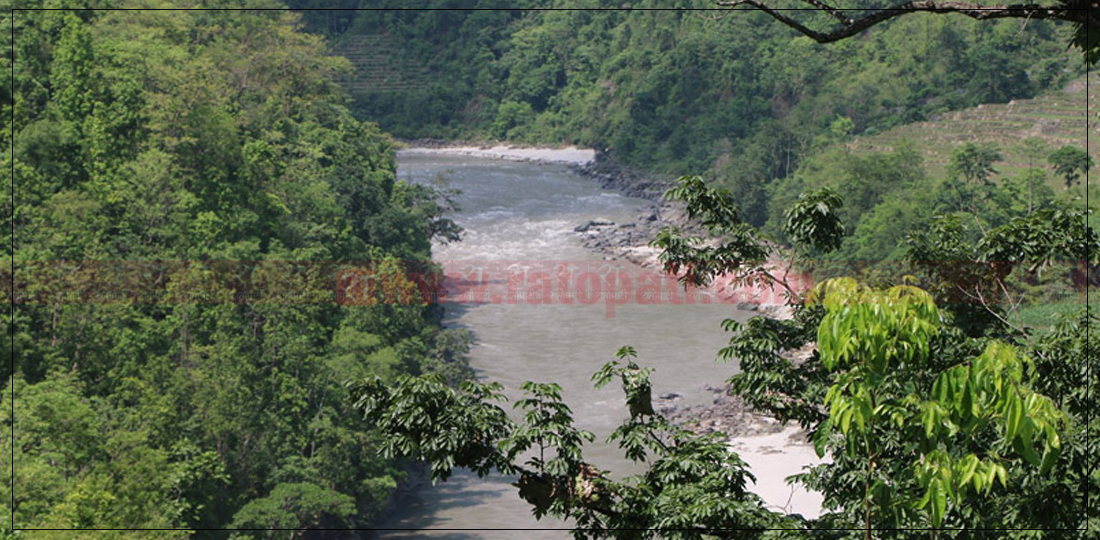
Since this is a reservoir-based hydropower project, it is not in a position to make an immediate profit. While there are many other benefits, it does not appear profitable based solely on electricity purchase and sales. The cost of the project is very high.
The construction period is long (with no return on investment for 15-25 years) and rehabilitation takes time. As a result, private investors consider this a high risk. In such a situation, since profits from such essential projects for the country come late, the government is set to provide a portion of financial assistance.
According to Nepal's Public-Private Partnership and Investment Act, 2075, the government can arrange 'viability gap funding' for projects that are beneficial in the long term but do not provide sufficient financial returns in the short term and are important in terms of national infrastructure. It appears the government is preparing to arrange 'funding' based on this.
When the government takes the risk, it seems easier to attract institutional investments from banks, insurance companies, the Employees Provident Fund, the Citizen Investment Trust, and the Nepal Electricity Authority. It is difficult to move forward with projects like Budhigandaki and Dudhkoshi without 'viability gap funding', but 'viability gap funding' alone is not the solution.
Experts argue that large hydropower projects should not be weighed solely on a purely commercial scale of profit and loss.
Former Secretary of Energy, Water Resources and Irrigation, Devendra Bahadur Karki, says that since large projects like Budhigandaki are not immediately profitable, it is essential for the government to provide 'viability gap funding' (VGF).
He stated that the private sector seeks immediate returns when investing in projects. According to him, there is no situation where the private sector can make a profit by building such large reservoir projects at the PPA rates currently offered by the Authority.
Former Secretary Karki says, 'Either the PPA rate must be increased significantly, which is not possible. Therefore, the government should build it by investing 100 percent itself. If not, if we are to go for the PPP model, the government must provide the money that is lacking to make the project viable as a grant.'
Similarly, Ganesh Karki, President of the Independent Power Producers' Association, Nepal (IPPAN), also says that Budhigandaki should not be viewed only through the lens of profit and loss. He emphasized that since this is a multipurpose project, the government must complete the construction on time by filling the gap through 'viability gap funding'.
'If you calculate it solely in terms of earning money by selling electricity, this project may not seem viable,' says President Karki, 'But this is a multipurpose project. It provides multidimensional benefits in sectors like irrigation and tourism. Since this is a fully government project, the government should invest, and since the government also manages the PPA rate, the state should provide concessions.'
President Karki expressed serious concern over the extreme delay in the project's construction. He pointed out the risk that the project's cost will increase significantly if it takes 10 years just to finalize the construction modality.
'The longer it takes, the more the project's cost increases. If the work is not finished on time, it could become as expensive as the Upper Tamakoshi,' said President Karki, 'Billions of rupees collected from taxes on petroleum products from consumers are also available. Land acquisition has already been completed. Therefore, we must now focus on completing the project on time at any cost.'
- Commercial profit calculations and stalled investment
The main reason why the Budhigandaki reservoir project has not moved forward by even an inch so far is the financial profit and investment model. This large 1200 MW reservoir project does not appear immediately profitable from a purely commercial perspective.
Seeing no possibility of making a quick profit (return) by investing billions of rupees and just selling electricity, the private sector or foreign investors could not dare to invest immediately, which has led to a long-standing lack of investment. The project could not move forward as the investment modality was not determined.
On the other hand, unstable politics is also an obstacle. This project faced problems every time the power equation changed. Due to such frequently changing governments, a game of giving the project to a Chinese company and then taking it back continued.
In the meantime, rumors of massive corruption in the project were spread. The project also remained in limbo as it took time to resolve issues like compensation. The government was also not in a position to build it with sole investment.
_pYE1dg8yCA.jpg)
When looking for other investors, investment could not be raised as there was no situation for immediate profit, which caused the project to be entangled for decades. The government remained confused for a long time about the financial investment framework (modality) regarding who would invest, how to raise it, and how to ensure profit.
This project, which has been a prisoner of indecision for years, now has the path cleared to move into the construction phase. After a long tug-of-war, the project's financial investment framework has come into implementation. The financial investment framework of the project has already been approved by the meetings of the then Council of Ministers.
Finally, with the Ministry of Energy, Water Resources and Irrigation sending a letter to the project promoter 'Budhigandaki Hydropower Company Limited' regarding the approval of the investment framework, the legal and financial path for the project has been set.
Point number 224 of the budget speech for the current fiscal year also clearly stated that this project would be built under the Public-Private Partnership (PPP) model. The Ministry of Finance has also given its consent to its investment framework.
- Cost of 406 billion and the mathematics of investment
The basic cost of this project, which will be built on the border of Dhading and Gorkha, is estimated at 2.77 billion dollars (approximately 374 billion rupees). The construction period of the project is set at 8 years. Including 32 billion rupees in interest during the construction period, the company projects the total cost of the project to reach 406 billion rupees.
According to the approved modality, the ratio of debt and equity will be 70:30 percent. The Government of Nepal will have 80 percent share ownership and the Nepal Electricity Authority will have 20 percent in Budhigandaki Company Limited. There is a plan to reduce the debt burden by issuing shares to the public in the final phase of construction.
The government will have to invest a total of 248 billion rupees, including 97.47 billion for equity and 150 billion as a concessional loan. The 45 billion rupees spent so far on compensation and other areas have already been converted into the government's share investment. The Electricity Authority will invest 24.37 billion rupees.
To raise the remaining amount, it is said that an 'Energy Bond' of 30 billion rupees will be issued with the government's facilitation, which will be purchased by banks, insurance companies, and public funds. A loan of 104 billion rupees will be taken from banks and financial institutions. Investment will be raised through co-financing from institutions like the Employees Provident Fund, Citizen Investment Trust, Social Security Fund, HIDCL, and Nepal Telecom. In addition to this, billions of rupees collected from the infrastructure tax levied on petroleum products from consumers are also a major source for this project.
- More indirect benefits than electricity sales
Energy sector experts say that a reservoir project should not be compared only with the money earned from selling electricity. Former Energy Secretary Devendra Bahadur Karki says that the project has many multidimensional and indirect benefits.
He pointed out that the biggest thing is energy security. 'While we have a situation where thousands of megawatts of our electricity go to waste in the monsoon, we are forced to buy electricity from India or implement unannounced load-shedding in the winter,' said Karki, 'A small Kulekhani built during the Panchayat era is acting as a battery. Now, large reservoir projects like Budhigandaki are the only alternative to meet the winter demand.'
He said that besides electricity generation, the massive lake to be built in Budhigandaki will bring a huge revolution in tourism, fisheries, and the local economy. He said, 'After the lake is built there, it can become a bigger tourist destination than Pokhara. New cities can be built around it. On the other hand, there is a huge benefit of flood control and irrigation in the lower coastal areas, which India can also benefit from, and we can bargain on that.'
Karki reiterated that Budhigandaki should not be compared only with the money earned from selling electricity. According to him, if the government invests and completes the construction, Budhigandaki will be an irreplaceable solution like a giant battery to end the compulsion of wasting electricity in the monsoon and buying from India or load-shedding in the winter.
Mentioning that 50 billion in compensation has already been distributed for the National Pride Project, he added, 'Now we cannot say we won't build this. Even if it is at break-even (profit-loss equal), this project must be built. There is no option to turn back.'
On the other hand, IPPAN President Karki also said that although the Budhigandaki project looks expensive when looking at the immediate financial mathematics, its long-term impact will be a 'game-changer' for Nepal's economy.
The government started it as a National Pride Project in the fiscal year 2069/70, aiming to complete the project in the fiscal year 2083/84. The Council of Ministers meeting held on 2079 Chaitra 24 decided to build the project through domestic investment in a company model. Accordingly, work has been moved forward by establishing a company with the majority of the government's share ownership.
The company estimated the project cost at 310.47 billion rupees when providing Viability Gap Funding (VGF) and 398.02 billion rupees without VGF.
With the DPR and tender documents ready and the investment modality of this project finalized, there is no room for excuses in construction now.
This specific news has been automatically translated by AI. As a result, there may be some inaccuracies or language errors.
_CuZWldRsJU.jpg)



_Hd6sr8PGgB.jpg)