Redefining Education: A Blueprint for Nepal's Future


Education is the cornerstone of human life. It determines an individual's consciousness, mindset, behavior, and future. Since ancient times, great philosophers, scientists, and thinkers have described education as the primary tool for life transformation. However, in the context of today's changing world, rapid technological development, and socio-economic challenges, education should not be limited to books. Especially in the context of Nepal, it is essential to make the education system timely, practical, and inclusive.
First and foremost, today's education must be practical and life-oriented. In Nepal, there is still an overemphasis on theoretical knowledge, which leads students to pass exams but remain incapable of facing real-life challenges. For example, students study science but cannot apply it in daily life. Therefore, the education system must prioritize 'learning by doing.' Technical and vocational education needs to be integrated from the school level.
Second, education must be skill-oriented. A major problem in Nepal is unemployment, one cause of which is the imbalance between education and employment. Many youths obtain higher education but lack the skills required in the market. Therefore, a curriculum that develops skills in areas like information technology, agriculture, tourism, entrepreneurship, and handicrafts is necessary. If students learn a professional skill alongside their studies, they can become self-reliant, and the rate of migration abroad may decrease.
Third, education must be focused on ethics and character building. Problems like corruption, violence, and intolerance are rising in today's society. The root cause is a lack of moral education. Merely acquiring knowledge is not enough; the consciousness to use it correctly is also necessary. Therefore, schools must foster values like discipline, responsibility, cooperation, empathy, and patriotism in students. Education should produce good citizens, not just certificate holders.
Education should be based on research and creativity. The current education system promotes rote learning, which suppresses students' creativity and independent thinking.
Fourth, education must be technology-friendly. This is the digital age, where information technology has influenced all sectors. In Nepal, the use of online education, digital materials, and smart classrooms is increasing, but access remains limited in rural areas. Therefore, the government must invest in digital infrastructure and provide training to teachers and students for the effective use of technology. This makes education more effective, engaging, and accessible.
Fifth, education must be inclusive and provide equal access. Nepal is a country with diverse languages, cultures, and geographical conditions. Many children are still deprived of education, especially those in remote areas, Dalits, indigenous groups, and poor communities. Therefore, the education system must provide equal opportunities to all. It is necessary to include all sections through education in the mother tongue, scholarships, free education, and special programs.
Sixth, education should be based on research and creativity. The current education system promotes rote learning, which suppresses students' creativity and independent thinking. Students should be encouraged to ask questions, bring new ideas, and conduct research. This increases the potential for innovation and new inventions, contributing to the country's overall development.
Today's education should not just be a means to obtain a certificate, but a process of transforming life.
Seventh, education should be linked to national needs and identity. In the context of Nepal, agriculture, tourism, water resources, and cultural heritage are key sectors. The education system should prepare a curriculum prioritizing these areas. For example, the use of modern technology in agriculture, tourism management, and studies related to hydropower development can be encouraged. This directly contributes to the country's economic development.
Finally, the role of the teacher is extremely important. To improve the education system, qualified, motivated, and skilled teachers are needed. Teachers should be provided with regular training, fair remuneration, and respect. Teachers are the backbone of education, building the future of students.
In conclusion, today's education should not just be a means to obtain a certificate, but a process of transforming life. In the context of Nepal, it is essential for education to be practical, skill-oriented, ethical, technology-friendly, inclusive, and research-based. Only such an education system can produce capable, self-reliant, and responsible citizens who help move the country toward prosperity and development. Therefore, the time has come: we must redefine education not just as a subject of study, but as the foundation for building the future.
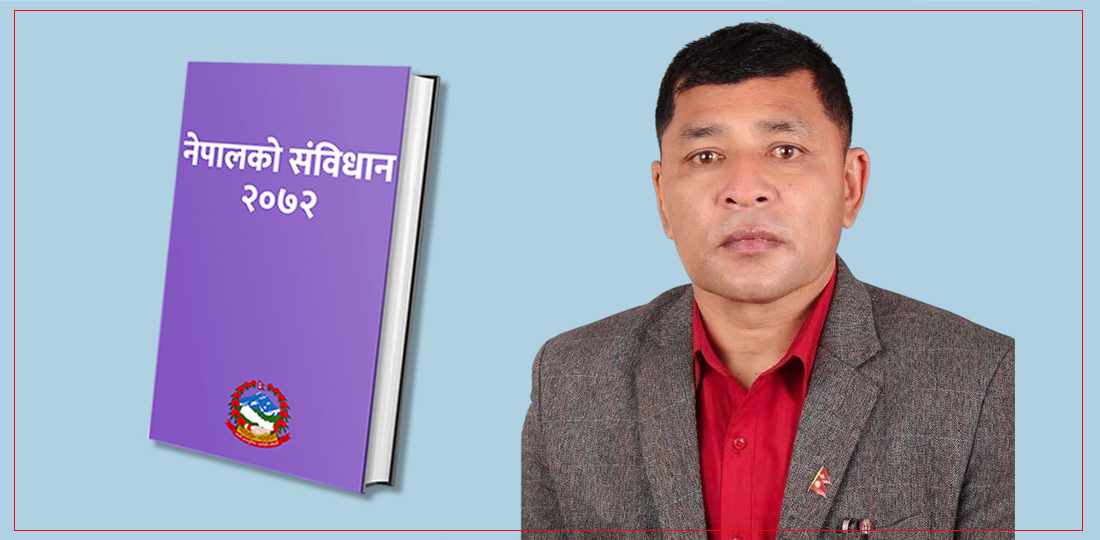
(The author is the Chairman of 'Chaitanya Pathshala' in Dhangadhi, an institution practicing balanced and practical education that integrates learning with values.)
This specific news has been automatically translated by AI. As a result, there may be some inaccuracies or language errors.


-education-and-sport_c0BHyFjlfq.jpg)