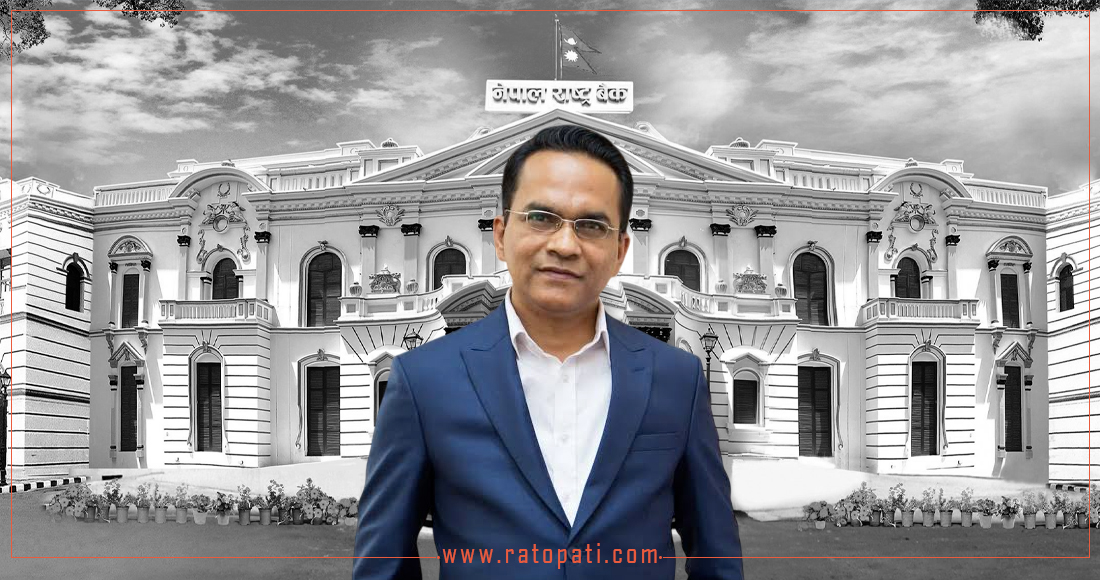
NADA President Surendra Uprety Discusses Hopes for New Government, Sector Challenges, and EV Transition
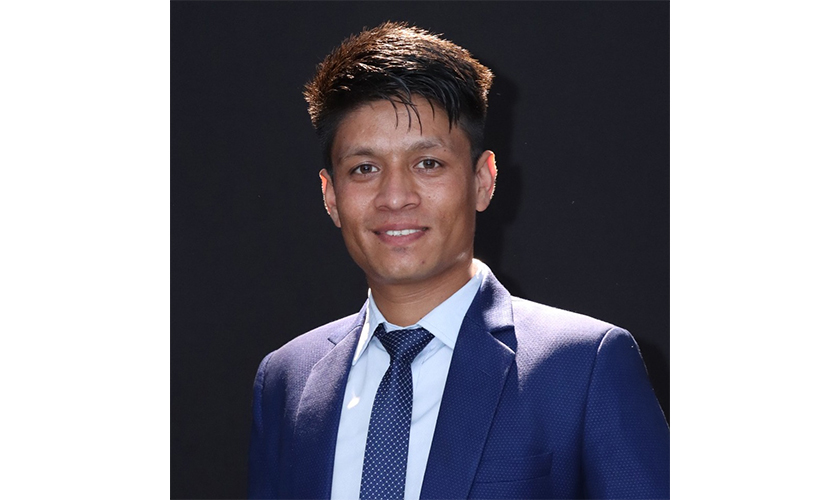

Kathmandu. A new government is being formed under the leadership of RSP's senior leader Balen Shah. The automobile sector also appears very optimistic about the government that has received a mandate of nearly two-thirds majority.
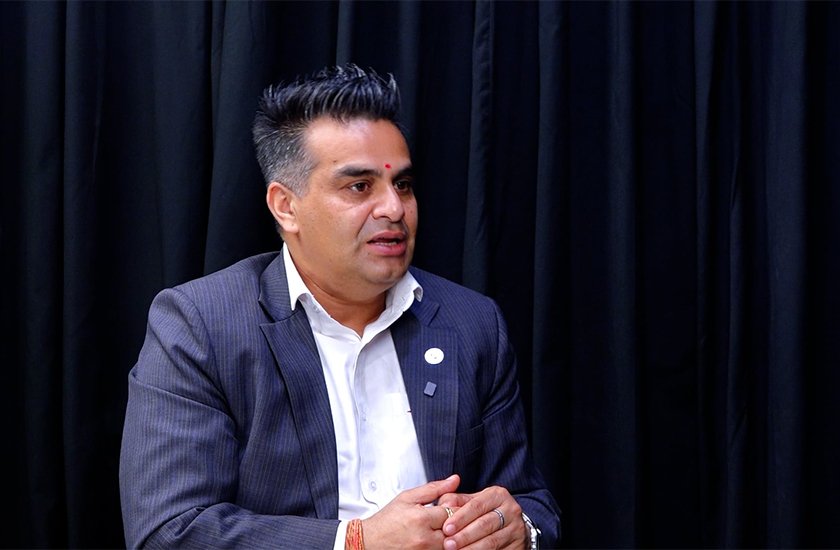
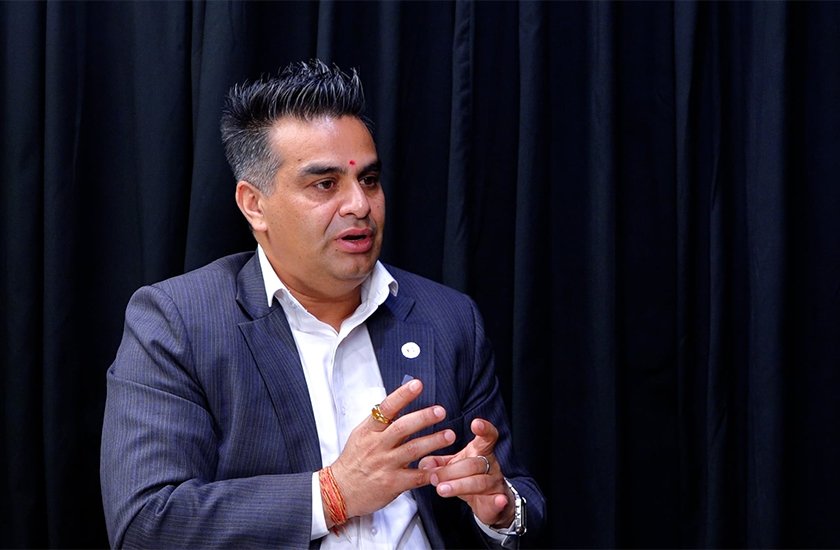
What expectations does the automobile sector have from the new government? How is the auto business faring in Nepal? This interview focuses on these topics with the newly elected President of the NADA Automobiles Association of Nepal, Surendra Uprety, is an edited excerpt:
The recently concluded elections in the country have given the Rastriya Swatantra Party (RSP) nearly a two-thirds majority, ensuring the formation of a strong and stable government. How does the automobile sector view this new political landscape following a long period of political transition and economic stagnation?
The formation of a strong government with a clear majority after a long period of instability is extremely encouraging for the private sector. In the past, frequent government changes caused policy instability, hindered capital expenditure, and prevented the economy from gaining momentum. We trust that the new government will have a clear vision and youthful energy, ensuring policy stability for at least the next five years. We businesspersons are not just petitioners to the government; we are co-travelers in the nation's economy. Therefore, we are very optimistic that the new government will correctly evaluate the contribution of the automobile sector to the country's GDP, employment, and development, and will move forward hand-in-hand with us.
You have been unanimously elected as the President of NADA, coming from a background in the spare parts business, a first in NADA's 50-year history. What is your plan to advance NADA during your two-year tenure?
I have been unanimously elected because all members trusted me as a person capable of raising a common and strong voice; this is a great responsibility for me. My tenure will primarily focus on two things: organizational strengthening and changing the state's perspective towards the automobile sector. NADA is not just an association for big vehicle sellers; it is a common platform for over 2800 small and large businesses spread across all seven provinces.
We will move forward with ideological unity. Furthermore, my main plan is to work with concerned bodies for road safety and organized transportation, alongside protecting business interests. I aim for every action we take to enhance the dignity of the entire automobile sector and make our role in the economy more effective.
For some time, ideological differences and dissatisfaction have been observed within NADA between small parts dealers and large vehicle sellers. In such a situation, how will you balance and unite all factions under one roof?
The automobile sector is a large ecosystem, connecting businesses ranging from helmet sellers to heavy equipment importers. The demands raised by small and component businesses are purely technical in nature, and there might have been some shortcomings in addressing their concerns by the organization in the past. However, no business friends have moved away from NADA; they are still within NADA.
My executive committee has representation from all sectors, and this is strong teamwork. I commit to listening to and resolving everyone's legitimate demands. My primary duty will be to move forward by making the organization balanced and inclusive, ensuring everyone feels a sense of ownership without sidelining anyone.
The arson and looting at automobile showrooms during the recent 'Genji' agitation last Bhadra still cause fear among businesspersons. Why has such a negative perception developed towards the automobile sector among the general public and the state, and what role will you play in dispelling this?
That unfortunate incident was primarily caused by a lack of understanding and a wrong narrative. This problem arose because we interpreted automobiles merely as a means of luxury. In reality, owning a vehicle is not just a hobby; it is an essential necessity. The country cannot function without ambulances to carry the sick, tractors for farmers, school buses for students, or dozers or tippers for development construction.
Vehicles are the engine of development and prosperity. We must make society and the state understand that modern life is impossible without automobiles. We will conduct public awareness programs to establish the narrative that this is not a luxury but an indispensable necessity, and we will also pressure the state to change its view of this sector.
Globally, there is discussion about Electric Vehicles (EVs), and demand is increasing in Nepal too, but the lack of infrastructure and the issue of displacing petroleum vehicles seem complex. How does NADA plan to balance this?
Promoting electric vehicles in Nepal is a positive step, but we must not forget the ground reality. 100% electrification overnight is impossible. The share of electric vehicles in two-wheelers is still very low, and suitable EV technology and adequate charging infrastructure are not yet ready for large commercial vehicles (trucks, buses, tippers). This is a process of gradual transformation.
Attempting to displace petroleum vehicles immediately could severely impact the transportation and construction sectors. Therefore, both electric and petroleum vehicles must be advanced in a balanced manner alongside infrastructure development. NADA has been advising the government to focus on infrastructure construction and introduce technology-friendly policies.
Businesspersons often complain that the state views the automobile sector only as a 'revenue collection tool' or a 'cash cow.' What improvements do you expect in the new government's upcoming policies and tax system?
Yes, this state perspective is the biggest challenge. When revenue pressure mounts, customs duties and taxes on vehicles are increased. This is not just a burden on vehicle dealers but imposes the cost of inflation on the general public buying vehicles. Businesses are facing significant problems due to a cumbersome tax system and a lack of inter-agency coordination. We expect the new government to abandon the notion of considering automobiles as a 'non-productive' sector. They should introduce a stable and systematic tax policy so that businesses can invest confidently for at least five years. The new government must take the lead in removing cumbersome processes and creating a transparent and business-friendly environment.
The process of opening assembling industries for vehicles and parts within Nepal has begun, but how do you view the problems and potential faced by such domestic industries?
There is huge potential for automobile assembling and spare parts production in Nepal. We have already moved significantly towards self-sufficiency in two-wheelers. Items like lubricants, batteries, helmets, and tires have started being produced in Nepal. However, the irony is that many goods produced in Nepal still do not receive the 'Nepal Quality Mark,' and there is a compulsion to travel to India for quality measurement.
The state must introduce policies that protect domestic industries. If a modern lab for quality certification is established within the country and incentives are provided to import-substituting industries, this sector can create thousands of jobs in Nepal. We have full faith that the new Finance Minister will work by considering industrialists and businesspersons as co-travelers in national development, rather than competitors.
Video/Photo: Manoj Khadka/Ratopati
This specific news has been automatically translated by AI. As a result, there may be some inaccuracies or language errors.

_U03YF8YfM3.jpg)