Monetary Policy Expected to Address Private Sector Concerns Amidst Economic Slowdown
Kathmandu. Although the country's external sector is strong, the domestic economy is still sluggish. Economic activity has been in recession since the 'Gen Z' movement. Economic activity has not increased due to slow demand for goods and services in the market.
There is money in the bank, and interest rates are also low, but businessmen are not able to borrow due to the recession in the market. Shops are closing down, and existing industries are not operating at full capacity.
The economic census conducted by the National Statistics Office also indicates that more than 38,000 business establishments and businesses have closed down. However, the external economy appears to be strong. According to Nepal Rastra Bank's data, remittances worth 19 kharba 16 arba rupees have entered the country in the first 10 months (Shrawan to Baishakh) of the current fiscal year.
Although there were speculations that remittances entering Nepal would be affected due to the impact of the war in Gulf countries, the data shows that there has been no such impact. In the same period last fiscal year, 17 kharba 23 arba rupees had entered the country.
As a result of the high rate of remittance growth, foreign exchange reserves have had a positive impact. As of Baishakh, foreign exchange reserves have reached 37 kharba 4 arba 55 crore rupees.
This is an increase of 10 kharba 26 arba rupees, or 38.3 percent, compared to the end of Asar last year. The total foreign exchange reserves at the end of Asar 2082 were 26 kharba 77 arba 68 crore rupees.
The central bank claims that foreign exchange reserves for 10 months are sufficient to cover the import of goods for 22.6 months and the import of goods and services for 19.2 months. The central bank's target was to maintain foreign exchange reserves sufficient to cover imports for at least 7 months this year. Similarly, the inflation rate has also started to increase continuously in recent months. According to this, the average inflation rate in Baishakh was 5.04 percent.
According to the Department of Customs, in 11 months (Shrawan to the end of Jestha), imports increased by 15.16 percent to 18 kharba 94 arba 9 crore 88 lakh rupees worth of goods. Exports also increased by 12.28 percent to 2 kharba 77 arba 96 crore 72 lakh rupees worth of goods.
The government is also making policy reforms to boost the morale of the private sector, which has declined, to make the market dynamic. The budget for the upcoming fiscal year (2083/084) has also been brought in a private sector-friendly manner. However, it can be assumed that the private sector is still hesitant to invest. More than 13 kharba rupees of investable funds are piled up in banks and financial institutions. The average loan interest rate of banks is 6.9 percent, and the maximum deposit interest rate is 5.1 percent.
The private sector has not been able to take advantage of this liquidity and low interest rates in the real estate and stock markets. The main reason for this is the weak morale of the private sector, which has not created an environment for further investment.
As investable capital piles up in the banking system, interest rates have continuously declined. Nepal Rastra Bank is still forced to raise funds from the market through deposit collection bids and fixed deposit facilities.
According to the central bank, loans worth more than 59 kharba 13 arba rupees have been disbursed so far. Similarly, in the first 10 months of the current fiscal year, loans disbursed to the private sector by banks and financial institutions increased by 5.7 percent to 5809 arba 71 crore.
In the same period last year, such loans had increased by 7.3 percent. Deposits in banks and financial institutions have increased by 9.4 percent to 7949 arba 28 crore.
- Private Sector Expectations from Monetary Policy
In such a situation, the central bank is preparing to bring the monetary policy for the upcoming fiscal year. Since the budget has been brought in a private sector-friendly manner, the private sector demands that the monetary policy to be brought by the central bank should also be in line with it.
The central bank had sought suggestions for the monetary policy from the private sector by Asar 5. Accordingly, the private sector is submitting suggestions. In recent times, the private sector has been giving more importance to the monetary policy than the budget.
The monetary policy is the main tool for the implementation of the budget brought by the government. The main responsibility for the implementation of the programs in the banking and financial sector announced by the government through the budget lies with the monetary policy. The government says that the monetary policy will guide the goal of achieving 7 percent economic growth and keeping inflation within 6 percent.
The Confederation of Nepalese Industries has suggested to the central bank to bring a monetary policy that will make the domestic economy dynamic. The Confederation has stated that the overall indicators of the external sector are encouraging and strong, but the domestic economic activities have been out of rhythm for a long time and this needs to be considered.
Confederation Chairman Birendra Raj Pandey said that the upcoming monetary policy should focus on three aspects. He said that the policy should be brought to increase economic activity by boosting the current low market demand, improve monetary policy practices, and reform the structure of the central bank.
He said, 'The monetary policy should be brought to gradually reduce the limit of directed loans on a percentage basis, implement the working capital guideline on a sectoral basis, modernize the interest rate determination system, and extend the time limit for the classification and blacklisting of collateralized loans.'
Pandey said that a special loan facility should be established for startups associated with the government's Enterprise Facility. He said that the monetary policy should be brought in a way that boosts market demand and investor confidence and helps in economic recovery.
Similarly, the Nepal Chamber of Commerce has suggested making the upcoming monetary policy investment, production, and private sector-friendly. The Chamber has stated that the monetary policy should be brought in a way that solves the problems seen in the banking and financial sector and creates a conducive environment for businessmen.
The Chamber has specifically urged to bring a policy that disburses more than 20 percent of loans to achieve an economic growth rate of 7 percent. The Chamber has urged to give special priority to expanding economic activities through the monetary policy, stating that the country's economy has been continuously sluggish for the past five years, industries, trade, construction, tourism, and service sectors have not been as dynamic as expected, and the morale of the private sector has been weakening.
The Chamber has demanded to make single-digit interest rates a permanent policy, keep the bank rate at 5 percent, limit the spread rate to 3.5 percent, and immediately abolish the working capital loan directive 2078 and provide working capital easily to businessmen.
The Chamber has demanded that the implementation of the existing laws related to money laundering should be made practical and business-friendly. The Chamber suggests that a practical approach should be adopted regarding the source of assets from before 2064, as the documentation of assets acquired before 2064 has not been systematized within the state mechanism.
Chamber President Kamlesh Kumar Agarwal said that the monetary policy should not be limited to price stability but should focus on production, investment, employment, and economic recovery. He pointed out the need for a policy that restores the confidence of the private sector.
He said, 'The monetary policy should be brought in a way that provides easy financial access for working capital loan directives, loan renewal processes, collateral valuation, foreign exchange facilities, digital banking, small and medium enterprises, manufacturing industries, tourism, agriculture, and export sectors.'
Similarly, Senior Vice President of the Federation of Nepalese Chambers of Commerce and Industry, Surendra Krishna Vaidya, said that in the current situation, it is necessary to facilitate loan renewal for businessmen according to the audit report. He emphasized the need to improve the working capital loan guideline and liberalize loan disbursement in the real estate and housing sectors.
He said, 'The central bank needs to bring a monetary policy that makes the current economic situation dynamic. A private sector-friendly policy should be brought that facilitates the implementation of the provisions brought by the government in the budget.'
Vaidya said that the monetary policy should not be limited to price stability but should focus on production, investment, employment, and economic recovery. He pointed out the need for a policy that restores the confidence of the private sector.
Similarly, Chairman of the Housing and Development Federation, Vishnu Ghimire, said that the real estate sector should be given facilities similar to industries. He demanded that the loan-to-value ratio for real estate loans should be increased to 80 percent.
Suggesting that loans should be rescheduled and the loan period should be increased from 20-25 years to 35-40 years, Chairman Ghimire demanded that agricultural income should also be recognized as a source of income for loans.
- Premium Control and Investment Demand
Immediate Past President of the Nepal Chamber of Commerce, Rajendra Mall, complained about the discrimination in the premium rate charged on the bank's base rate. He emphasized that the upcoming monetary policy should remove such discrimination.
He said that small and medium-sized enterprises have to pay a premium of 2-3 percent, while large industries pay less, and this should be reduced to a maximum of 1 percent. He demanded that loans of up to 80 percent should be provided for real estate, similar to vehicles, and that Nepali hospitality brands should be allowed to invest abroad.
He said, 'A monetary policy is needed that makes real estate transactions easy and the economy dynamic. The private sector-friendly policy in the budget should be incorporated in a way that it can be easily implemented by the monetary policy.'
Former President of the Federation, Bhawani Rana, said that the monetary policy should be able to help implement the goals set by the budget. She clarified that the policy should complement the budget to remove the widespread fear and sluggishness in the private sector.
Chairman of the Independent Power Producers' Association of Nepal (IPPAN), Mohan Dangi, said that a policy should be brought to increase the share of total investment in the energy sector to 20 percent. He emphasized that the monetary policy should address the issue of capitalizing IDC. He said, 'The budget has included many issues in the energy sector. It is necessary to bring a monetary policy that increases investment in it.'
Chairman of the Hotel Association Nepal (HAN), Binayak Shah, said that although the hotel sector has been recognized as an industry, it needs to be implemented. He demanded that the electricity tariff of 15-16 rupees per unit paid by hotels should be reduced to 7-8 rupees, similar to industries. He emphasized that the monetary policy should be not only tight but also investment-friendly and practical.
Similarly, Chairman of the Federation of National Business Associations of Nepal, Manoj Babu Shrestha, said that to achieve the goal of 7 percent economic growth set by the government in the budget, the scope of investment needs to be significantly increased. According to him, to achieve 7 percent economic growth, it is necessary to increase investment by at least 20 to 25 percent.
Shrestha said that a monetary policy is needed to ensure that the excess liquidity (investable funds) in banks reaches the private sector. He said that arrangements should be made for small and medium-sized enterprises to get loans easily.
Chairman Shrestha also stated that the monetary policy should address the problems of businessmen who have fallen into the blacklist for being unable to repay loans. He said that by studying the situation of blacklisted businessmen closely, they should be provided with refinancing facilities to revive their businesses.
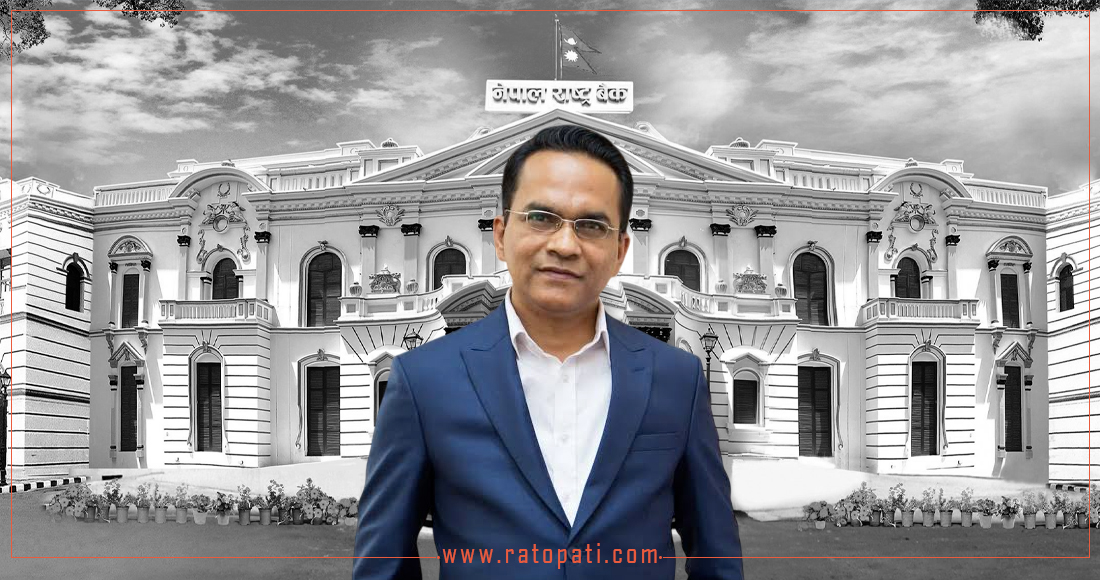
Nepal Rastra Bank Governor Dr. Bishwanath Poudel, accepting the suggestions given by the Confederation and the Chamber, said that the upcoming monetary policy will address the expectations of the private sector. He clarified that the central bank is committed to economic growth, investment expansion, and the development of the private sector.
'We want economic growth. We will continue to make necessary policy reforms for the country's economic development, investment expansion, and the creation of a business-friendly environment,' he said. He said that by addressing the reasonable suggestions from the private sector as much as possible, investment and business will be made easier through fiscal policy and arrangements.
This specific news has been automatically translated by AI. As a result, there may be some inaccuracies or language errors.
_cvUCBlwFTZ.jpg)