Saptari-2 Constituency in Nepal Continues Trend of Rejecting Incumbents, C.K. Raut Fails to Secure Second Term

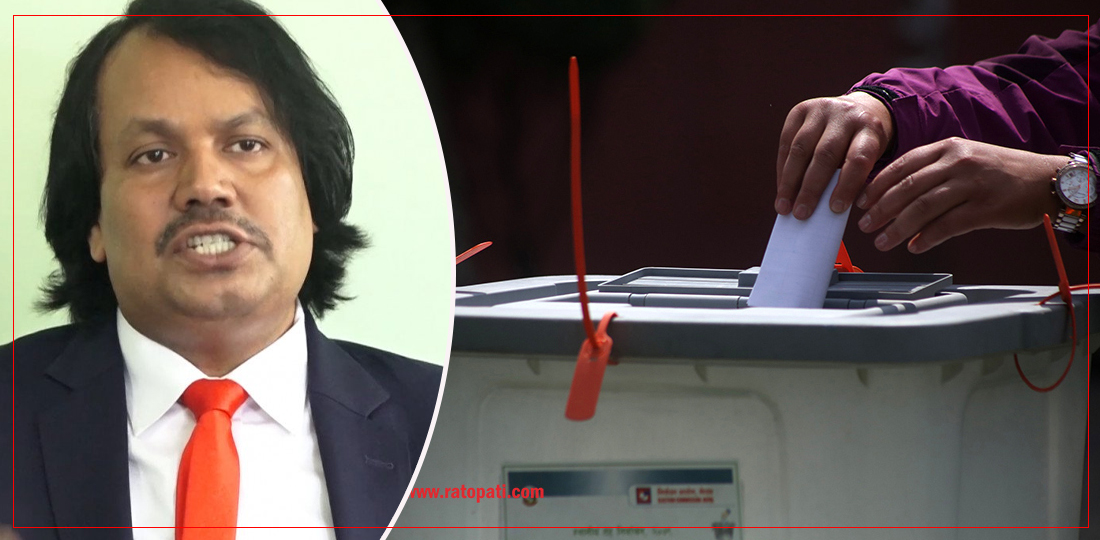
Kathmandu. The constituency of Saptari-2 under the House of Representatives has a history where no candidate has managed to secure a continuous term as a Member of Parliament. This time, that history has repeated itself.
In the 2079 elections, Dr. C.K. Raut, Chairman of the Janmat Party, was elected from this constituency. He had defeated Upendra Yadav, Chairman of JSP Nepal, in the previous election.
This time, C.K. Raut also contested from Saptari-2. Raut, who wished to secure a second term as MP from that constituency, finished in third place.
Ramji Yadav of the Rastriya Swatantra Party was elected from that constituency, while Umesh Yadav, a leader of the Janata Samajbadi Party Nepal, finished second.
In the 2074 elections, Upendra Yadav, Chairman of the Janata Samajbadi Party Nepal, was elected from Saptari-2. In 2079, Yadav contested from the same constituency hoping to secure a second term as MP. Yadav was defeated in that election. Yadav was defeated by Janmat Party Chairman Raut.
Saptari-2 is the constituency of the late Gajendra Narayan Singh. It is also the constituency of Ramraja Prasad Singh. It has also been the constituency of Congress leader Rameshwar Prasad Singh and Jaykrishna Goit, who was involved in the armed movement. No leader from this area, associated with such historical figures, has won the election more than once.
Although the late Gajendra Narayan Singh won elections in 2038 (referendum), 2043 (National Panchayat), 2048 (parliamentary election), and 2051 (mid-term). Singh was defeated in the 2056 election in that constituency. Ramkumar Chaudhary of the Congress was elected by a margin of 17 votes.
According to Shailesh Chaudhary, who worked with Gajendra Narayan Singh at that time, Gajendra Narayan Singh was defeated in a 'conspiracy'. Chaudhary stated, 'National/international forces were also against him.'
In the Constituent Assembly election held in 2064, Mahesh Yadav was elected from that constituency on the ticket of Gajendra Narayan Singh's party, Nepal Sadbhavana Party. Subsequently, in the second Constituent Assembly election held in 2070, Umesh Yadav, a leader of the then CPN (Maoist Centre), was elected.
In the House of Representatives election held in 2074, Umesh Yadav was defeated by Upendra Yadav in that constituency. In other words, Umesh Yadav also failed to secure a second term from that constituency.
Chairman Raut, who won the election in 2079, contested from Saptari-2 this time with enthusiasm, but finished in third place, securing nine thousand eight hundred eighty votes.
Currently, Ramji Yadav of RPP has won by securing 28,404 votes. Just as Gajendra Narayan Singh lost the election in 2056, others who sought re-election from this constituency have faced a similar fate.
In 2056, Gajendra Narayan Singh was the Minister for Local Development. Despite this, he was defeated. According to Bikash Tiwari, who worked with Gajendra Narayan Singh for a long time, Saptari-2 is a place where the public has tested its leaders repeatedly. He concluded that the people of that area have never trusted leaders who became ministers, joined the government, or got close to power.
Voters in this constituency did not want to re-elect Upendra Yadav, who fought for Madhes identity along with development in Saptari. Although Chairman Yadav of JSP Nepal worked in many areas in Rajbiraj, such as hospitals, colleges, medical colleges, and road networks, he failed to win the trust of the voters because he was entangled in power for a long time.
Umesh Yadav, the then Maoist leader who won the election in 2070, also became a minister. As the Minister for Irrigation, he did a lot of work in Saptari. Nevertheless, he was defeated in the 2074 election in that constituency.
Chairman Raut of the Janmat Party, who won the election in 2079, did not keep his party far from power even though he himself did not join the government. He accomplished very important work in Saptari through the center and the government. He initiated various plans, but the people there did not show faith in him during the election.
Gajendra Narayan Singh was a leader who constantly struggled for federalism, republicanism, and the liberation of Madhes, and always raised issues of citizenship and language. Upendra Yadav, C.K. Raut, and Umesh Yadav followed in his footsteps. However, the voters of Saptari-2 have prevented any leader from being re-elected consecutively. This trend has continued even now.
This specific news has been automatically translated by AI. As a result, there may be some inaccuracies or language errors.