Government Prepares to Introduce 'Sunset Law' to Expedite Infrastructure Development

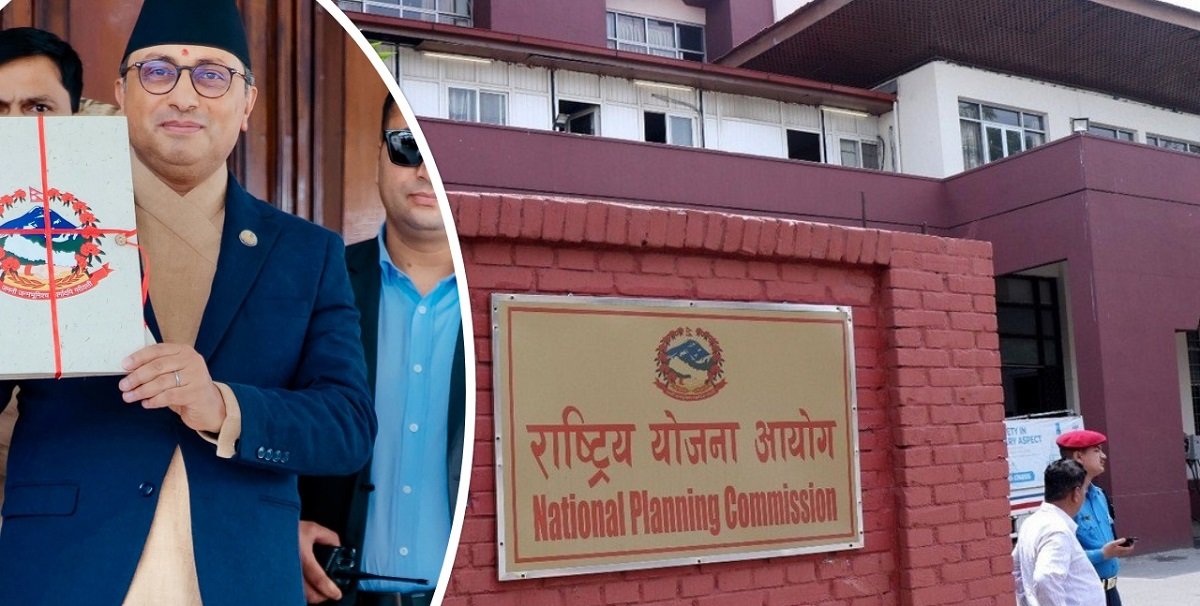
Kathmandu. The government has intensified its efforts to bring a 'Sunset Law' to address the procedural and legal obstacles that have been hindering Nepal's infrastructure development for years.
Finance Minister Swarnim Wagle announced in the upcoming fiscal year (2083/084) budget statement that this law will be introduced to accelerate development construction. He also stated that it will be registered in the House of Representatives soon.
Following the government's announcement, the National Planning Commission has already prepared a draft of the Sunset Law, which will automatically be repealed after its expiry to speed up development construction. This law, intended to remove obstacles caused by existing legal provisions in development projects, is currently undergoing consultation with stakeholders.
According to Arjun Jung Thapa, a member of the National Planning Commission and former secretary, this law primarily aims to 'break' administrative delays and legal complexities during project construction.
What is 'Sunset Law' and its Necessity?
'Sunset Law' is a legal provision that has a specific time limit. When this law is enacted, a definite expiry date is set, and after the expiry of that period, the law automatically becomes defunct or inactive unless the legislature (parliament) decides to extend it.
According to Thapa, this law is being introduced to be effective for only 10 years. After that period, the law will automatically become inactive.
Thapa said, 'This law will remain in effect only if the upcoming parliament feels the need for it and renews it; otherwise, its existence will automatically end.'
Presenting the budget statement, Finance Minister Wagle had prioritized removing development obstacles through the Sunset Law. This law is expected to cover a significant portion of policy reforms in the budget.
This law is primarily being introduced to address and effectively resolve temporary crises, pandemics, or economic downturns that the country may face. Additionally, this provision is considered useful for testing the effectiveness of new policies, automatically repealing old and irrelevant laws to reduce legal and administrative burdens, and controlling wasteful government spending through regular review of government programs.
In Nepal, some provisions of existing laws such as the Land Acquisition Act, Guthi Act, Forest Act, Environment Act, and Electricity Act are not development-friendly, causing large projects to remain stalled for decades. Therefore, a Sunset Law is necessary, according to Thapa.
'We are not trying to break the rules, but there are some provisions in the existing laws that make the decision-making process very long and complex. This special act is being introduced only to untangle those knots,' Thapa said.
Key Provisions of the Proposed Law
Presenting the budget statement, Finance Minister Wagle had prioritized removing development obstacles through the Sunset Law. This law is expected to cover a significant portion of policy reforms in the budget. The government appears to be using this as a weapon to end the practice of files related to project implementation, such as tree cutting, land compensation, and environmental impact assessments, being stuck in ministries for months.
Some revolutionary provisions included in the draft are expected to discourage the tendency of bureaucracy to cause delays. According to Thapa, the draft sets a deadline of three months for relevant bodies to make a mandatory decision on applications for projects falling within national parks or forest areas (e.g., Arun III Hydropower Project) after they are submitted for approval. 'The practice of keeping files pending for years will now end. Whatever decision is to be made must be made within three months,' Thapa clarified.
According to the National Planning Commission, the drafting of this law has been completed and it will be brought to a concrete conclusion by next Friday. After the draft is prepared, the process of taking it to the cabinet and then to parliament will begin.
Similarly, the draft mentions ending local obstructions to construction materials. If a project mentions the source of stones, gravel, and sand in its environmental impact assessment report, local levels or any other body will not be allowed to obstruct the extraction of such materials.
This will ensure that projects do not face a shortage of necessary construction materials.
Furthermore, provisions have been proposed in this law to take action against officials who unnecessarily hold up development project files or delay decisions. This is expected to make the bureaucracy more accountable towards projects.
According to the National Planning Commission, the drafting of this law has been completed and it will be brought to a concrete conclusion by next Friday. After the draft is prepared, the process of taking it to the cabinet and then to parliament will begin. Although the draft is kept confidential, Commission member Thapa states that there is no doubt that it will expedite development projects.
Challenges and Expectations?
However, activists working in the field of forest and environmental conservation have expressed concern that such a law could affect environmental balance. But the government claims that this law will only speed up the process, not violate rules.
The low rate of development expenditure in Nepal and the failure to complete large projects on time have been attributed mainly to legal obstacles. If this Sunset Law is effectively implemented, it is believed by the general public and investors that it will mark the beginning of a new era in Nepal's infrastructure development sector and open the door to economic prosperity.
Once this law is passed by parliament, it is expected that all legal hurdles in national pride projects, transformative projects, and other large infrastructure constructions will be removed.
This specific news has been automatically translated by AI. As a result, there may be some inaccuracies or language errors.