A Political Team's Journey Through Karnali and Far-West Nepal: Connecting with the People

I am reflecting on those days after returning to Kathmandu, having spent a month sharing joys and sorrows with the people living in the rugged terrain of Karnali and the Tharu settlements of the Far-West. Although several public campaigns have been conducted from West to East before this. Under the slogan 'Let's go to the people, let's serve the people,' this time we embarked on a journey with a program planned from Tanahun, Pokhara in Kaski, all the way to the Far-West.
The central team of the Socialist Communist Party Nepal was mobilized for the campaign under the leadership of General Secretary Purna Bahadur Singh 'Samarjang'. The decision was made to inaugurate the campaign among the public by felicitating martyr families with warm clothing and distributing educational materials to students at Manne Dunga Secondary School in Kushe, Jajarkot. This time, we were implementing a plan to make the campaign people-centric.
Our team, consisting of Purna, Ashok, Binod, Madhav, Usha Rana, Kushal, and Akriti, left Bhaktapur early in the morning on the 18th. Sacks of books from the Pushpa Lal Marxist University were also loaded onto the vehicle. After loading additional supplies via Sarojji at Swayambhu, our journey proceeded towards Dhading via Sitapaila and Chhatre Deurali.
We reached Dharke before the morning fog cleared. After having lunch at 'the old Gopal's Hotel' in Malekhu, we met the veteran farmer leader Vijay Dai from Tanahun in the afternoon and headed straight for Pokhara. From Pokhara, we took the Pushpa Lal Mid-Hill Highway, passing through Kusma in Parbat, and reached Baglung Bazaar. Our goal of reaching Rimna in Jajarkot on the first day was postponed in Baglung.
_QB37aGAKck.jpg)
The route from Baglung westward along the Pushpa Lal Mid-Hill Highway was new to me. We traveled through Bihukot, Galakot, Burtibang, Nisi, and the Dhorpatan Hunting Reserve, reaching Patihalna hill at an altitude of about 3500 meters, where we befriended the cold. Patihalna is the tri-junction of Baglung, Rolpa, and Rukum East. The peak of that hill, surviving the extreme cold, seemed to be sustained by just a small roadside hotel despite being a tourist area.
The natural beauty was inspiring everyone to be creative. Some friends were posting couplets about the cuckoo's cooing, calling it 'the melodious chirping tune of the Danphe, Monal, and Cuckoo.' Throughout the journey, this was referred to as 'Chyar Sahitya' (Chirping Literature). The streams flowing from the high hills had turned into ice.
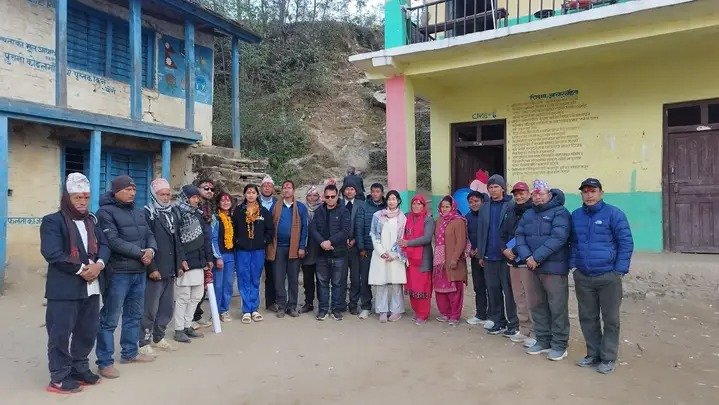
As we headed west from Patihalna Lake, we reached Lukum, Kankri in East Rukum, and then the district headquarters, Rukumkot. Kamal Daha in the district headquarters was a famous pond. Our friend Hiramani Rawal was waiting to welcome us in Muskot, the headquarters of West Rukum.
Squeezing into the vehicle, we had tea in Machhmi, Hasibang, and Chibang. In Chibang, I asked a 14-15-year-old girl serving tea while carrying a baby on her back: 'Brother or sister?' She shyly replied, 'He is my son.' Child marriage has still not stopped in Karnali. Upon reaching Simli, we had a chance encounter with the Sani Bheri river. We bid farewell to the Mid-Hill Highway and took the unpaved road via Mega, Garaela, saying goodbye to West Rukum, crossed the Thuli Bheri bridge at Rimna, and entered Jajarkot.
We finally reached Rimna, where we were supposed to stay the previous day. We were guests at Purna Ji's relative's house in Pipe Aul. We also met Usha Mam's mother and brother there.
- The 'Putyaouro' Journey
The next morning, the team, carrying a goat for the 'Putyaouro' ritual, was heading north through the jungle via Pipekhola to the upper settlement. In the Magar community, there is a tradition of slaughtering a goat and hosting a feast when a grandson is born to the daughter's side. This is called 'celebrating Putyaouro.'
Usha Mam's mother had arranged the goat for the welcome of her grandson, Kushal. After crossing the stream, the watermill, and a small hydro project in Pipe, and climbing uphill through half the jungle, I said, 'I am ending my journey and returning.' Some friends insisted, 'Let's go as far as the place where the goat is being slaughtered.' I didn't have the courage to walk uphill for another hour. My body, which was shivering from the cold of the Bheri river when I left home, was drenched in sweat while climbing the slope in the Pipe jungle.
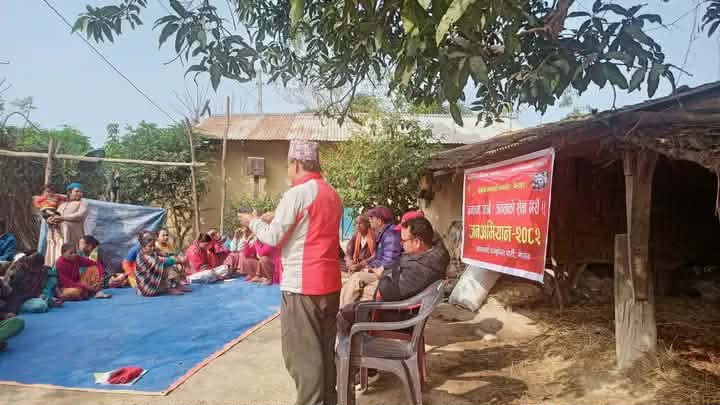
It felt like my blood sugar level had dropped. I left the team and returned downwards. Usha Mam's mother was preparing in the kitchen at the house. Navraj Guru, who was supposed to take us to Jajarkot, had not woken up yet. While drinking sweet tea made by the mother, we warmed ourselves in the sun and chatted after waking up Guru.
By the time the team returned in two or three groups after slaughtering the goat for Putyaouro, we had already eaten lunch. The stay became enjoyable and unforgettable for various reasons.
The next day, our journey went via the other side of Pipe, crossing the Jiula Khola bridge, through Raut village to Kalegaun, the birthplace of Maoist leader Shakti Basnet, and then via Syala to Thaple Khalanga. This is the district headquarters of Jajarkot. I had traveled from Pipe to Kushe Dogri five years ago with Purna Ji and Usha Mam. At that time, artist Agniraj Poudel 'Arap,' and brothers Mukunda Shrestha and Ushakiran Azad were also with us.
In Thaple Khalanga, Maya Didi and Harikala from the Martyr Mandal were waiting for us. After keeping the books from the Marxist University at sister Harikala's quarters, we proceeded by squeezing into the vehicle. Navraj's Scorpio vehicle, carrying all nine of us, moved ahead on a new route. We left Thaple Khalanga.
Bidding farewell to Thaple Khalanga, we proceeded as before via Garikhali, Kotkhola, Risang, Darneta, Bahunthana, Pokhara, Rangsi, near Dinga, and reached Nauli. In Nauli, we had previously eaten the famous yogurt here. Maya Didi was carrying corn rotis. This time too, we enjoyed the delicious yogurt and roti.
After crossing Nauli, we passed Panchkatiya Police Post, a historic front of the People's War, then Damdala, the end of Dhime, Malumela, Khurpakhola, and reached 'Lahare Taal' (Lahar Lake), which was formed by the Saru Gad being dammed last monsoon and which we had named during our journey, and stayed at the Martyr Mandal's house. The sisters and brothers of the Martyr Mandal were with us. We stayed there that night. We sat talking with Kumar Singh, the father of the Martyr Mandal, warming ourselves by the fire late into the night.
The next morning, Maya Didi said, 'The brothers like roti,' and prepared rotis for us. Those who wished had to eat corn roti, and those who didn't had to eat rice before heading uphill towards Manne Dunga Secondary School in Kushe 2. The sisters and brothers of the martyrs, Maya and Harikala, stayed at home.
We crossed the Saru Gad suspension bridge and reached the other side. Our vehicle headed towards Kushe 2 along the Rolakhola stream, a tributary of Chhaiyangad, via Tarechaur, Goya, Debri, Tapuchaur, Garikhet, Kalikadando, and reached Manne Dunga. As we moved past Nunyara, our vehicle could not climb the slippery uphill section of Bilkot, just like five years ago. We all got out of the vehicle. Throughout the journey, we kept raising the issue that the pace of development in Jajarkot had remained the same even after five years.
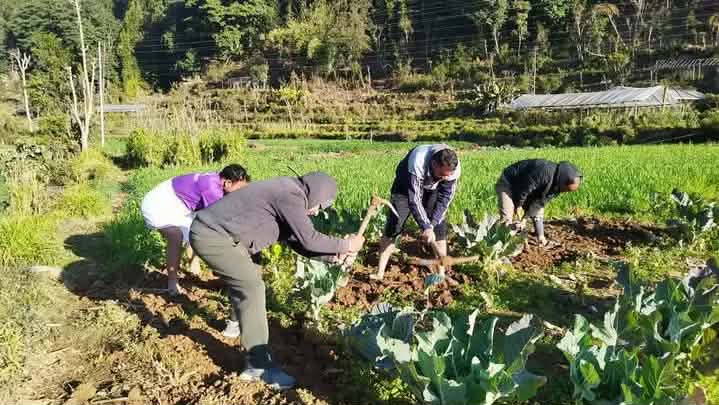
The condition was the same as five years ago, where we had to push the vehicle forward by putting stones in the potholes. Although the people of Jajarkot had elected people who became MPs and ministers repeatedly, the development status of the district remained morbid, dilapidated, and dire. The lives and daily routines of the people were equally grim. Every settlement was emptying out. The villages were nothing more than machines for giving birth to children for the cities, the hills, and the Arab countries.
Workers, oppressed people, and the families of martyrs and disappeared persons were all seen venting their anger against the state power, the party, and the leaders.
The vehicle dropped us off at the premises of Manne Dunga Secondary School, and we set off for Kathmandu. We were waiting for the Panchai Baja band, led by Comrade Radium, for the inauguration of the campaign. Benches had been arranged in the field. Students were engaged in activities in small groups. A few parents were also starting to appear.
Family members of the martyrs and disappeared persons of the People's War also began to arrive. The school children spontaneously started playing the deck and presenting their dances. We, meanwhile, started introducing ourselves to the school family.
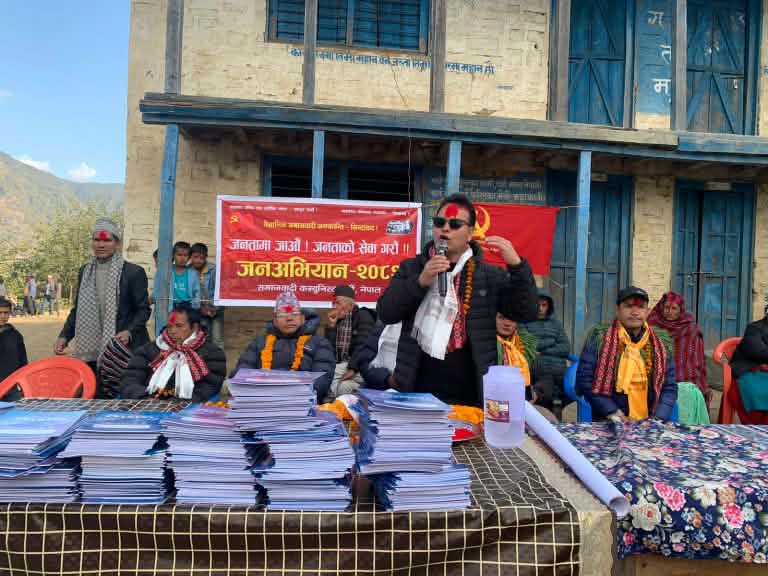
The program started around 2 o'clock. The public campaign was inaugurated with Kumar Singh, Tulsa Singh, Sher Bahadur Chalaune, Nandakali Singh, Maisala, Ram Bahadur Chalaune, and others from the families of martyrs and disappeared persons as witnesses, along with the dear ones and the public. Guests included Ward Chairman of Kushe 2, Man Bahadur Singh, School Headmaster Surendra Bahadur Singh, Haribhakta Nepali, Dhan Bahadur Singh, Bir Bahadur Hamal, and Bishnu Nepali.
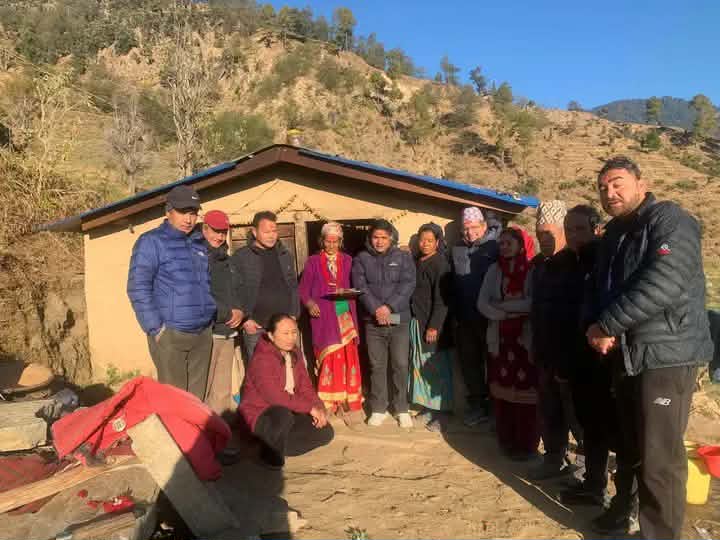
The program concluded with the distribution of warm clothes to the family members of martyrs and disappeared persons, and exercise books as gifts to the underprivileged students of the school.
On the evening of the 22nd, our team reached Dogri, Purna Bahadur Singh's home, via Gumthale, where his elder brother, sister-in-law, and nephews and nieces resided. This was a historic house from where parents sent their children off to war with a red tika during the People's War. It took us nearly two hours to reach Dogri from Manne Dunga via Gumthale in the evening. Purna Ji used to cover this route in one hour when he was a student.
Before heading towards Tamti from Dogri on the 23rd, we happily ate the roti and sisnu (nettle) porridge prepared by the sister-in-law. We decided to have breakfast from the hands of Tulsa, the mother of martyr Tufan. The martyr's mother Tulsa and the elder brother and sister-in-law bid us farewell emotionally after applying the red tika.
We proceeded via the downhill section of Talegaun, slippery bends, cliffs, and Kuineta. In between, we crossed Rolakhola, Dhawani Chhahara, Lahare Chhahara (Bhauta Chhahara), Maltakura Tarechaur, and Chhaiyang Khola to reach Tamti. Sister Harikala and Didi Maya of the Martyr Mandal had already arrived here from Batule the evening before. After bidding farewell to the school family, we became guests of sister Harikala in the evening. A goat brought from Pathibhara Phedi was slaughtered to welcome us. In the evening, the Ward Chairman, some teachers, and our team enjoyed the feast. Since I am practicing abstaining from meat and fish, arrangements were made for fruits, milk, and yogurt for me.
After dinner, we set out along the bank of the Chhaiyang Khola to meet the Saru Gad in Batule. The Saru Gad was to be our companion for the next few days as we proceeded along its banks via Dhulebato, Matela, Dule, Ranga, Nalphu, Lamti Khola, Dhungil, Thalah, Badaban, Chankhil, Managhat Jiula.
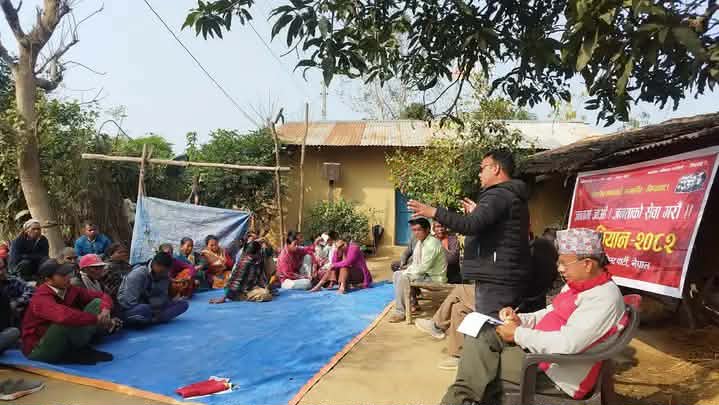
For the next few days, we planned to conduct some programs in the district headquarters Khalanga, based in Pipe. We had tea after reaching Khara Shivalaya. Then we headed towards Damar Bazaar and Kalabhir via Nahada, Baluwa, Mork in Shivalaya Rural Municipality, crossing the bridge to Syampi, Bhangetara, Ratamata, Chheda, crossing the Chheda bridge.
What was interesting was that after getting off the vehicle, a husband and wife who had traveled with us were looking for each other, and the wife for the husband. They were both together, but their entire bodies were covered in dust, so they couldn't recognize each other. After shaking off the dust, the husband recognized his wife who was standing right next to him. Laughter erupted among us.
After crossing Chhedapul, we reached Damar Bazaar. Akash Ji headed towards his home. We proceeded via Kalabhir, Aali, Bhurchaur, Kudu. Our journey reached Pipe Aul via Matela, Bohora, Zero Point, again Kalegaun, Rautgaun. Now we were guests at sister Padmakala's house in Pipe Aul for a few days.
Usha Mam left for Kathmandu with her children Kushal and Akriti. Manjit Ji returned home. We carried out political, ideological, and university work for a week, centering on Pipe.
The father of Deepak Rana, Ward Chairman of Bheri Na 1, Dhandabir Rana, turned out to be an old communist. He had also served as the headmaster of a local primary school. Saying, 'A laborer like me should have been born in North Korea,' he narrated stories of the Korean War and socialism there, as well as the revolutions in Russia, China, Cuba, and Vietnam. We were astonished by the labor and ideology of this man, who was around eighty years old.
No one was satisfied with the current political situation, but no one had a reliable alternative either. The day before leaving Pipe, Madhav Ji, Radium Ji, and I went via Rimna to Aathbiskot Municipality in Radi, West Rukum. When the People's War began, the then CPN (Maoist) had captured the Radi Police Post along with the Sindhuligadhi Post.
We took a picture with the hill where Man Bahadur Oli and Man Bahadur Rawal, who were killed by being thrown off a cliff by the state power fourteen days after the start of the People's War, sacrificed their lives, keeping the cliff in the background. It turned out that Man Bahadur Rawal's son was working as an engineer in Nalgaad Municipality.
After that, we went to Nalgaad Municipality, Dalli in Jajarkot, and reached Nalgaad Multipurpose Campus, where we discussed and took a picture with the Campus Chief, Lalit Bahadur Rawal. In Pipe, we met Comrade Yagya Bahadur Rana 'Vivek,' a People's Liberation Army soldier. He was living a simple farmer's life and weaving nets to fish in the Bheri himself. He was very concerned about the corruption among the leaders from the People's War era. In this way, we conducted a week-long political and ideological campaign centered in Pipe Aul.
On Magh 1, Radium Ji also had to return to Kathmandu. We said goodbye to Aul, keeping the love of Pipe in our hearts, and traveled via Chhedagad, Salyan, Chhinchu in Surkhet, reaching Mainapokhar in Bardiya. Mainapokhar became our center for a few days. In Nepalgunj, we had a warm meeting with veteran political analyst and ideological leader of the People's War, Narendra Jung Piter.
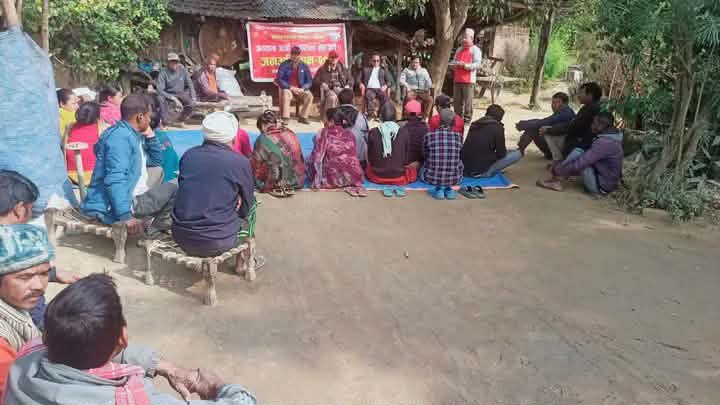
- In Tharu Settlements Too, In the Courtyards of the People
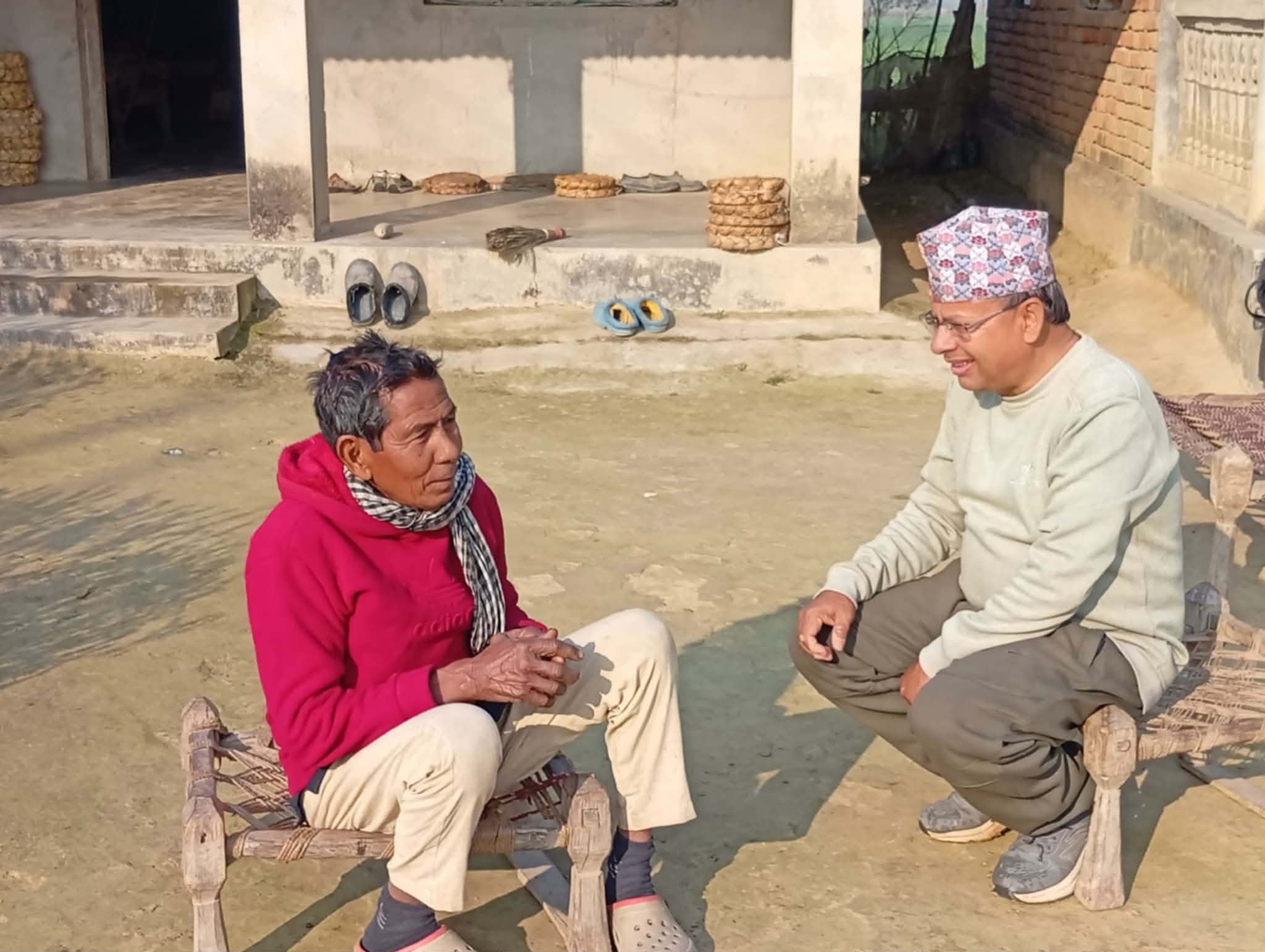
It was getting dark when we reached an ancient village in the central Tharu settlement of Kailali. Binod and I were taken by Bal Bahadur Pariyar to the house of Bhalmansa Phirulal Chaudhary in the middle hamlet of Joshipur 5, Simrana. The system in the Chaudhary community, where the Bhalmansa (leader, headman, mukhiya) is chosen from within their own caste/community and operates under their supervision and leadership for a fixed term, seemed like a living relic of primitive socialism.
We were guests at Phirulal's house, as the Bhalmansa had recommended another house for lodging and food for guests, but by coincidence, we had become guests at the Bhalmansa's own house. Phirulal's four-year-old grandson, who was busy in the fields with his mother and grandmother, soon came to the courtyard following his grandfather.
Lal Bahadur Dagaura, the father of Bhalmansa Phirulal Chaudhary, was the previous Bhalmansa of Simrana Middle Hamlet. Lal Bahadur served as the village head for seven or eight years. After his demise a few years ago, the community selected Phirulal as the Bhalmansa. This hamlet now has over 350 households. The Bhalmansa resolves all kinds of problems that arise in the village. This is the autonomous governance of the Chaudhary community.
The main job of the Bhalmansa is to settle disputes in the village and maintain social balance. The Bhalmansa has to look into matters ranging from child rights, hooliganism, theft, and disrespect to homicide. Phirulal, the Bhalmansa, shared some examples of the problems he has to solve. Complex legal issues that cannot be resolved locally are only then taken to government bodies.
This journey, including meetings and intimate conversations with hundreds of dear ones like Sahil, greatly helped in understanding the condition of the country and the people. Major upheavals occurred in the country, but the inner turmoil ignited for the people's food, shelter, and clothing was not found to be calmed.
Before concluding this brief account, I say: the series of the 'Let's go to the people, let's serve the people' campaign truly felt successful to some extent by reaching the doorsteps of the people. Revolution is necessary, mandatory, indispensable, and inevitable. Our readiness, activity, honesty, and transformation will measure its distance and magnitude.
This specific news has been automatically translated by AI. As a result, there may be some inaccuracies or language errors.