
US and Iran Reach Ceasefire Agreement, Details Emerge


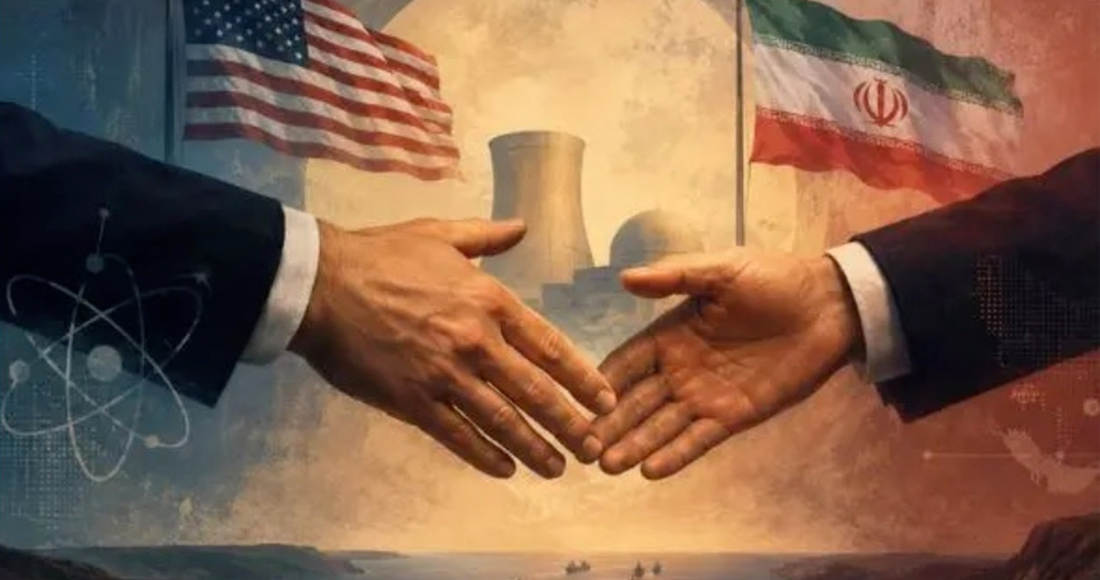
Washington DC. The recently concluded ceasefire agreement between America and Iran is being interpreted by US President Donald Trump and his supporters as a 'strategic victory'. However, the specific terms of this agreement have not yet been made public.
Questions are being raised about which commitments will be included in the preliminary Memorandum of Understanding to be signed on Friday and whether issues like Iran's nuclear program will be discussed only after the agreement is signed, but Trump's supporters have showered praise since Sunday.
US Vice President JD Vance claimed that a 'new era' has begun for the Middle East, considering the decline in oil prices following this announcement. He told Fox News, 'The President's work has created a real space for transformation in this region. I think we can confidently say that Iran will never build a nuclear weapon.'
US Secretary of State Marco Rubio linked this announcement to Trump's 80th birthday on Sunday. He wrote on X, 'America is fortunate to have a leader with incredible courage, remarkable strength, unique sense of humor, and unparalleled love for the country.'

Many Republican lawmakers have praised Trump on social media as the 'Deal-Maker-in-Chief'.
Congressman Robert Aderholt also supported Trump's claim, stating that this agreement with Iran will impose more restrictions on Tehran's nuclear program than the 2015 Joint Comprehensive Plan of Action (JCPOA). That agreement, from which Trump exited in 2018, was made by the administration of then-US President Barack Obama. Under that agreement, Tehran received sanctions relief in exchange for limiting its nuclear program.
Tehran has claimed for years that it is not building nuclear weapons. Aderholt said, 'Unlike the agreement under the Obama administration, this agreement will not allow Iran to continue uranium enrichment and stockpile components necessary to build nuclear weapons.'
However, there is no indication that any immediate commitment regarding Iran's nuclear program will be included in this memorandum of understanding. Both sides have said that the preliminary agreement will halt fighting on all fronts, including in Lebanon. US, Pakistani, and Iranian officials have also stated that traffic will resume in the Strait of Hormuz and the US naval blockade on Iran's ports will be lifted after the agreement is signed.
Meanwhile, Iranian officials have been saying for several days that the preliminary agreement will only be a 'starting point' for 60 days of negotiations, during which serious issues such as Iran's nuclear program and the future of the Strait of Hormuz will be discussed. Both sides have presented different views on when the US will start releasing frozen assets and lifting sanctions. US officials, however, have maintained that these actions will not happen immediately and will only occur after some commitments are fulfilled following the signing of the agreement.
US Senator Lindsey Graham, a long-time supporter of strong military action against Iran, also joined those celebrating this success on Sunday. However, he pointed out the difference in the flow of messages between the US and Iran. He wrote on X, 'I am a little concerned about this because Iran's perspective on the agreement seems different from what the US negotiating team claims.'

- Democrats Demand Clarity
Meanwhile, Democrats have been questioning whether US interests have increased since the war with Israel began on February 28. The Trump administration had stated its objective was to reduce Iran's military capability and dismantle its nuclear program. Trump and his top officials had also expressed hope that the war would promote regime change. But that did not happen.
Experts say that the hardline government has become stronger even with the assassination of the Supreme Leader Ali Khamenei and dozens of other officials. Mojtaba Khamenei, the son of Khamenei, has taken his father's place.
Speaking to NS Now on Saturday, Representative Seth Moulton criticized the terms of this memorandum of understanding as 'essentially a document of surrender from Donald Trump to Iran's Supreme Leader.' He said, 'That is, $100 billion in taxpayer money has already been spent in this war, 14 Americans have lost their lives, and we have reached an agreement that only opens the Hormuz which was already open before the war started? How is this a victory?'
House Foreign Affairs Committee's top Democrat, Representative Gregory Meeks, said on Sunday that Trump's 'war of choice was flawed and harmful to American interests.' However, he welcomed the renewed focus on diplomacy. But he demanded more clarity on any agreement.
He said in a statement, 'The American people deserve more than vague announcements or political rhetoric. They deserve security, clear answers, and confidence that this administration will not repeat the failures that led us into this unauthorized and costly war.'
- Possibility of Further War
Robert Malley, the chief negotiator of the JCPOA under the Obama administration, called the agreement to be signed on Friday 'a significant and welcome achievement' as it is expected to reopen the Strait of Hormuz. He wrote on X, 'But this MOU also clearly and shamefully condemns the war that preceded it, mainly because its main achievement is reopening the waterway that was closed only because of that war.'

He added, 'As for the issues to be addressed after the MOU – the future of Iran's nuclear program, the management of its enriched uranium, the scope of sanctions relief – these will almost certainly be left for later and will be even more difficult to resolve than before the war.'
Sina Toossi, a senior fellow at the progressive Center for International Policy think tank, made a similar assessment. He wrote on X, 'Make no mistake: if you had told the loudest supporters of this war that this would be the outcome in February, they would have been stunned. No regime change occurred. Iran did not surrender on many of its extreme demands. This is their worst-case scenario.'
And, due to the economic burden of the war, Trump's popularity has reached historically low levels. Although the decline in oil prices has given him a ray of hope, it remains to be seen whether the negative perception of the war will change. The 60-day deadline on some key issues will expire in August, when the US will enter the final campaign before the November midterm elections.
In an interview with The New York Times last Friday night, Trump said that he could restart the attack on Iran if a nuclear deal could not be reached by then. In return, he said that if the region paid him 20 percent of its revenue, he could make America the 'protector of West Asia'.
This specific news has been automatically translated by AI. As a result, there may be some inaccuracies or language errors.






_lDGafrwT3x.jpg)