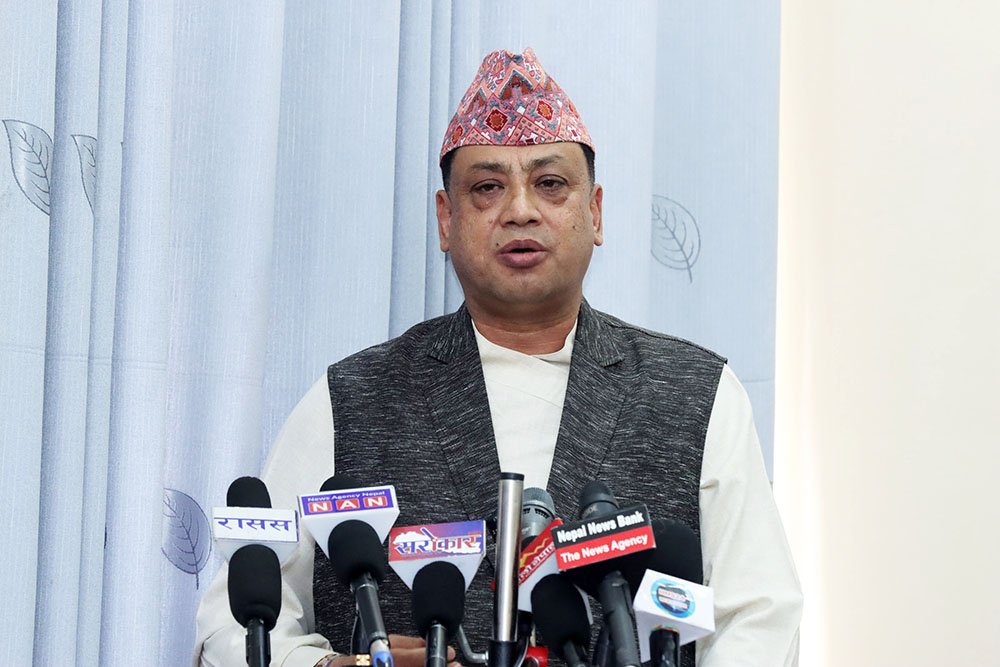
Internal Dispute Escalates in NCP, Senior Leader Jhalanath Khanal Expresses Strong Dissatisfaction

Kathmandu. Internal dispute has intensified in the Communist Party of Nepal (NCP), the second largest leftist party in parliament. Dissatisfaction has been mounting within the NCP, formed by the merger of the former CPN (Maoist Centre), CPN (Unified Socialist), and 25 other factions, regarding the leadership's working style, ideology, principles, and division of work.
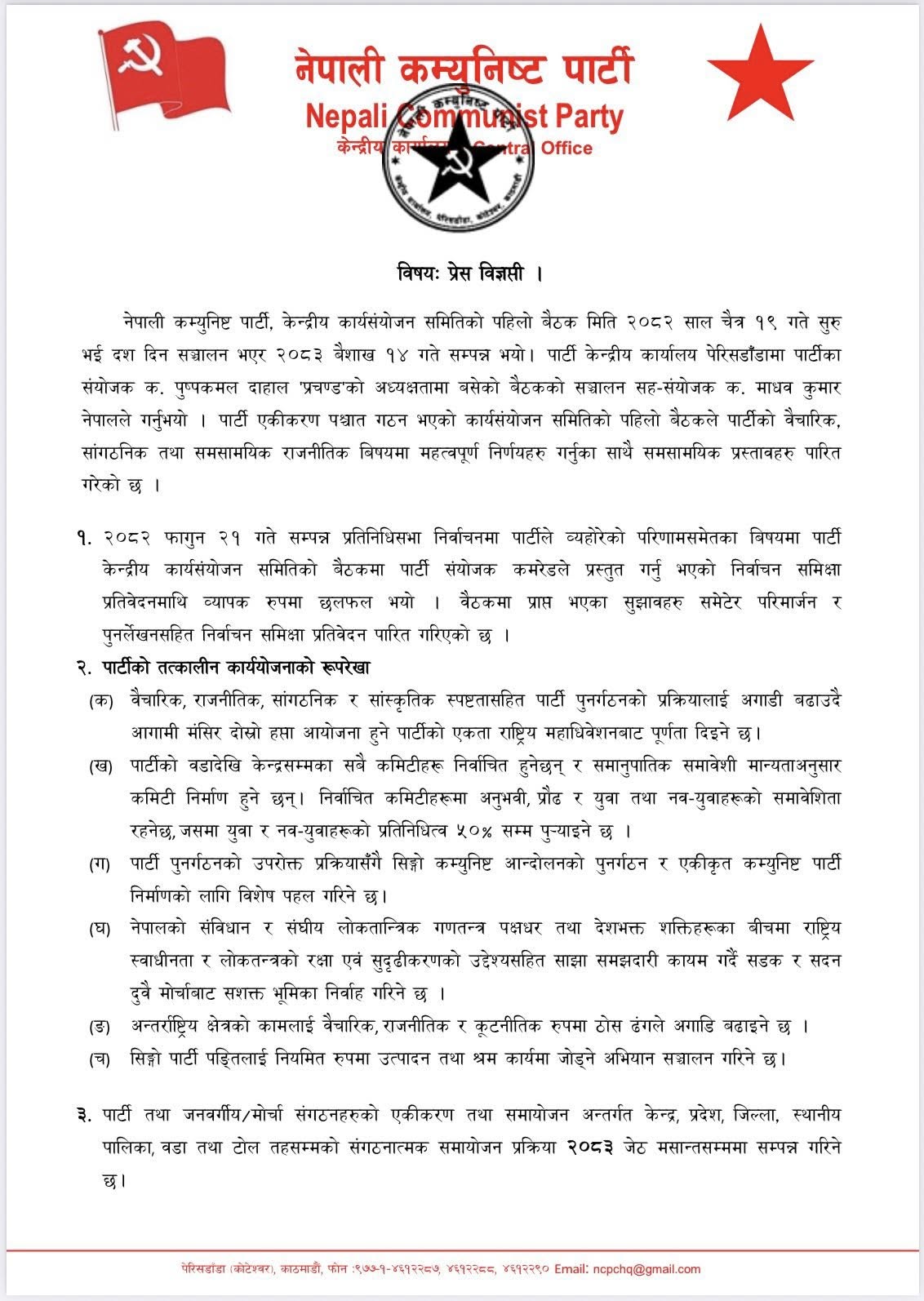
In the general elections held last February, it was reduced to the fourth position, winning 17 seats with eight lakh votes. Following the unexpected election results, the party, further weakened, called a central coordination committee meeting on Chaitra 19 to review the elections.
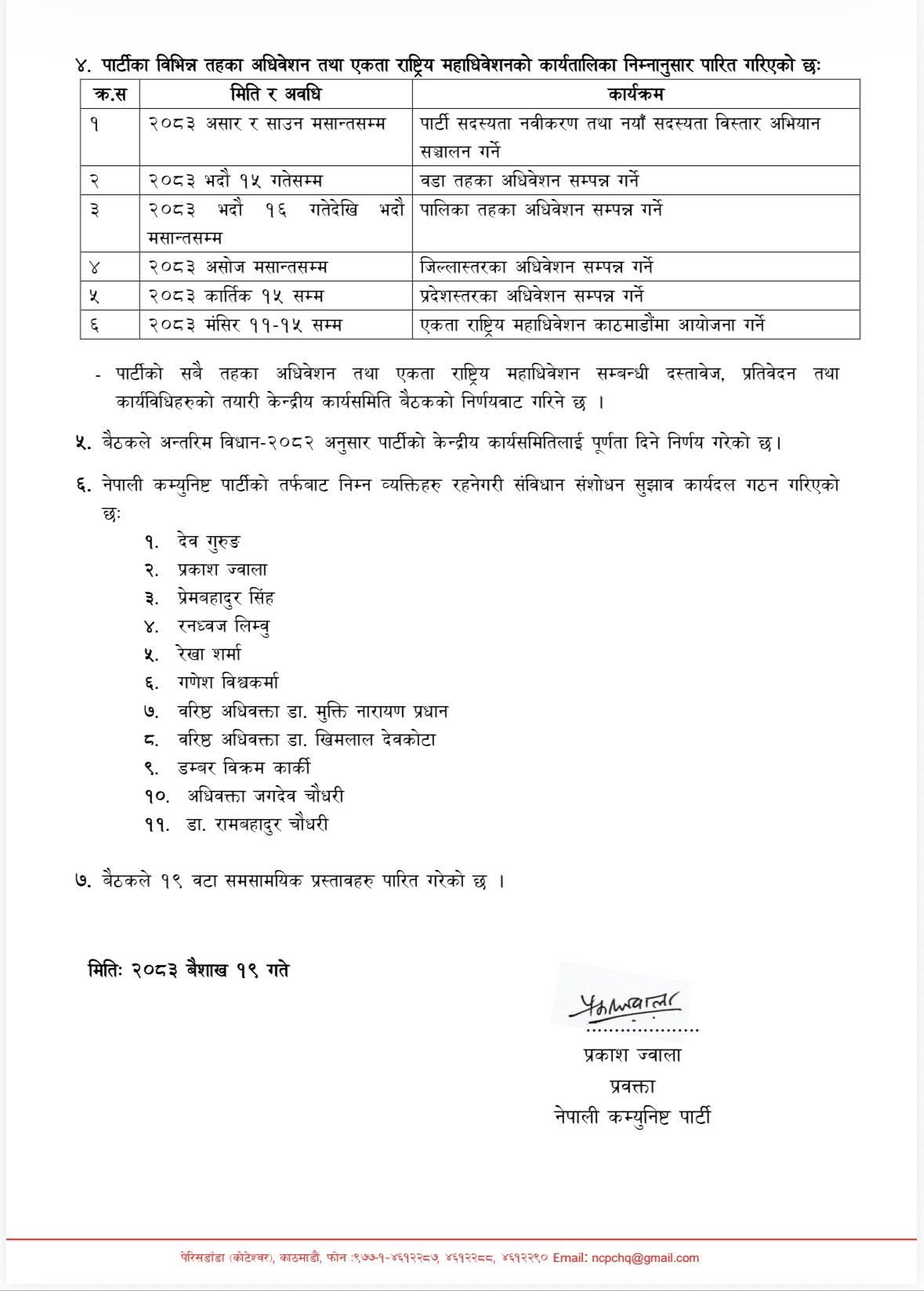
The meeting, which lasted for 10 days, assigned responsibilities to leaders and decided to hold a unification general convention in the second week of Mangsir. However, former Prime Minister and senior leader Jhalanath Khanal has expressed strong dissatisfaction as the party's decision has not been implemented for a month and a half.
Concluding that the leftist movement cannot be reorganized by the current leadership, he has suggested that coordinator Pushpa Kamal Dahal 'Prachanda' and co-coordinator Madhav Kumar Nepal should pave the way.
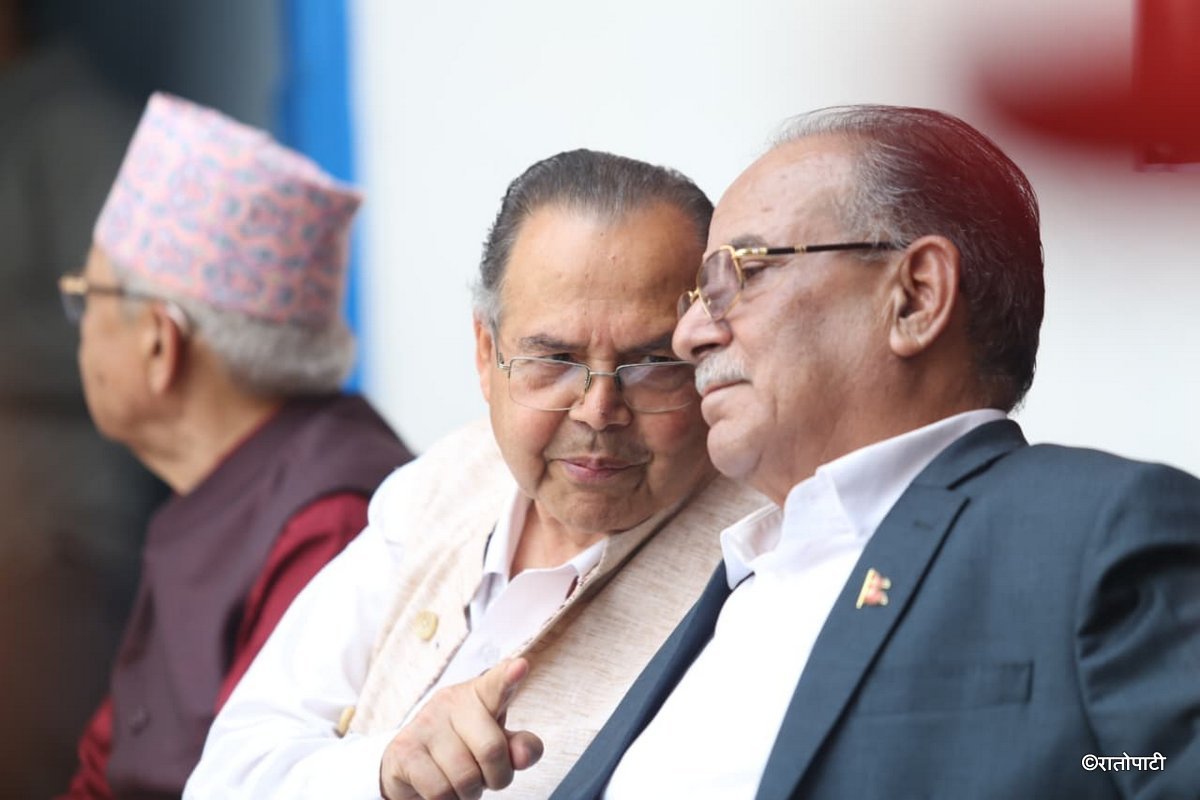
"Prachanda-Madhav cannot solve the growing ideological, organizational, and leadership crisis within the party. The current leadership must pave the way to save the leftist movement," Khanal told Rato pati, adding, "The central committee meeting should be convened immediately for a serious review. Leadership should be handed over to the new generation to resolve the crisis."
He warned that the growing despair and escapist thinking within the party are pushing the NCP towards disintegration. Khanal stated that the lack of enthusiastic participation of cadres towards the leadership is a matter of serious concern.
"The political document and line approved by the work coordination committee cannot achieve the goal of scientific socialism. There is an increasing inclination towards parliamentary status quoism. The goal of building a revolutionary communist party appears weak. Due to the leadership's lack of direction, despair, inactivity, and exodus among cadres are increasing. If this situation continues, the party's future is in grave danger," he said.
Khanal concluded that unity, polarization, and forming a front among all leftist, revolutionary communist parties is the need of the hour to build a powerful party. He admitted to having submitted a written suggestion to coordinator Prachanda focusing on this matter. In the 24-page letter, Khanal has suggested solutions to the ideological, theoretical, and organizational crisis within the party to the leadership.
Specifically, Khanal's dissatisfaction appears to be centered on party positions and the non-fulfillment of agreements made with Prachanda during the unification.
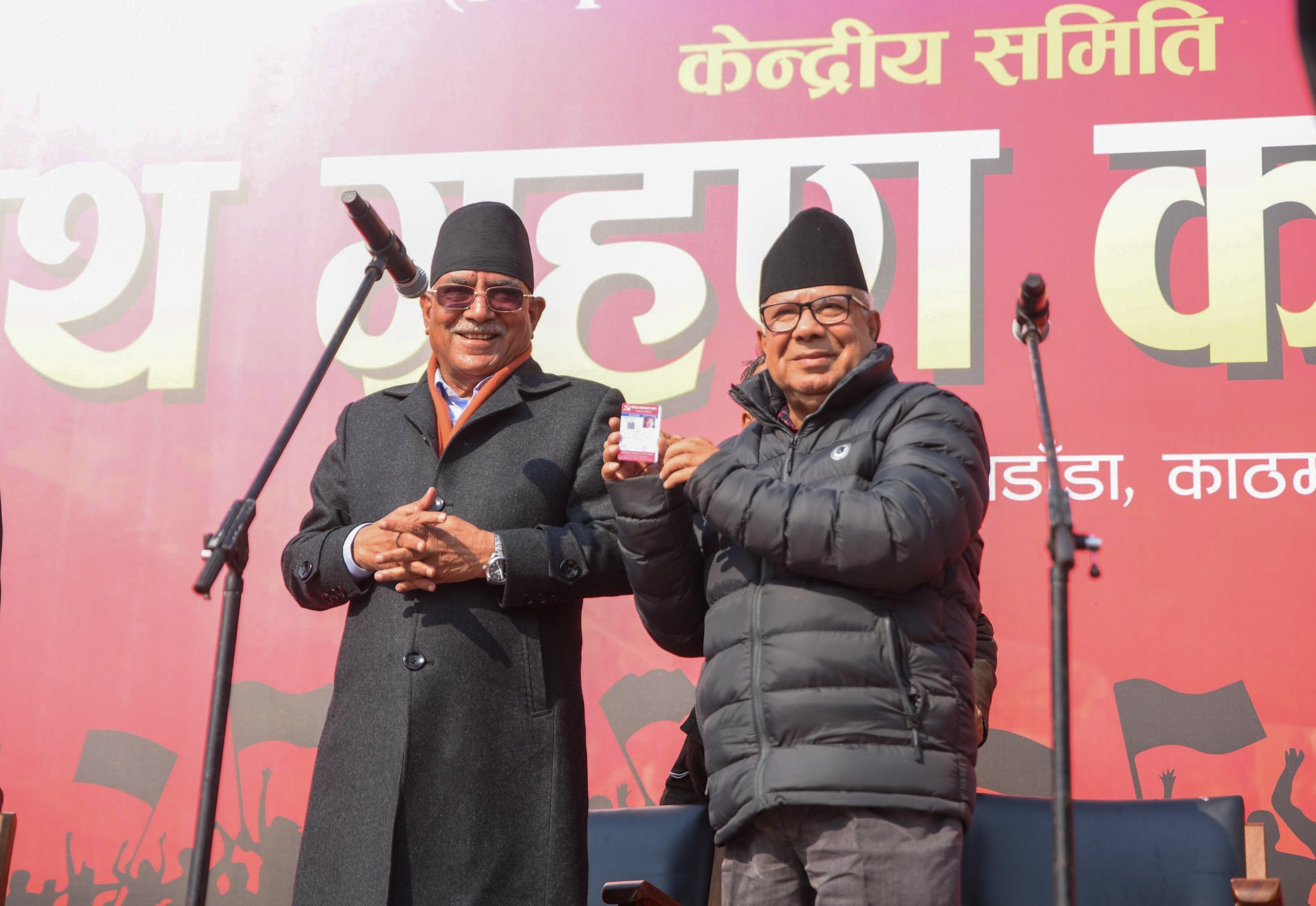
He had opposed the CPN (Unified Socialist) central committee's decision last year on Kartik 14 to unify with the Maoist Centre. Then General Secretary Ghanashyam Bhusal, leaders Kishan Shrestha, Ram Kumari Jhankri, and others stood against the unification. At that time, Khanal insisted that the party should take the lead in unifying not only with the Maoist Centre but also with the UML.
Despite opposition within the party, the party reached an 18-point agreement for unification with the Maoist Centre. Leaders like Ghanashyam Bhusal, Jivanram Shrestha, and Dr. Vijay Poudel, who disagreed with the meeting's decision, launched a party restructuring campaign. Kishan Kumar Shrestha, Ram Kumari Jhankri, and other leaders joined the UML.
Khanal had gone to Chairman KP Oli's residence in Balkot on Kartik 18, preparing to join the UML. After discussions that lasted late into the night did not yield an agreement, he went to Prachanda's residence in Hatiwan the next morning and promised to attend the unification assembly.
He participated in the unification assembly of the Maoist Centre, Unified Socialist, and 10 other factions held at Bhrikutimandap on Kartik 19. After the elections, he met Prachanda and insisted on being given the responsibility of International Department Chief. However, Khanal became dissatisfied when the coordination committee appointed Ramesh Hamal to the position.
Another senior leader, Bamdev Gautam, had claimed the position of Organization Department Chief. However, by agreement between Prachanda and Madhav Nepal, the responsibility was given to leader Barshaman Pun. Khanal received the responsibility of Policy and Foundation Department Chief, and Gautam received the responsibility of Production Department Chief.
Khanal also expressed dissatisfaction with the party's formation of a task force for constitutional amendment. He asserted that he was not informed about the party's decision to form a task force under the convenership of leader Dev Gurung.
"The constitution of a federal democratic republic was formed through the great sacrifices, efforts, and struggles of the Nepali people for 70 years. The current government cannot amend it without the consensus of the political parties that supported the constitution's formation," Khanal said. "It does not have the right to amend the constitution. Tampering with the current constitution is like opening Pandora's box. I am not aware of our party forming a constitutional amendment task force. Such foolishness should not be done. The constitution will not be amended in the current state."
Another leader, Dr. Bhim Rawal, has not attended the meeting after not being given the sixth position in the hierarchy. His proposal was rejected after other senior leaders disagreed with the seniority Rawal demanded. The seniority was determined up to Prachanda, Madhav, Jhalanath, Bamdev, and Narayan Kaji Shrestha, with the remaining leaders arranged alphabetically.
Dissatisfaction is growing within the NCP not only over the division of work among top leaders but also over the formation of the central committee, central working committee, and secretariat.
However, party spokesperson Prakash Jwala states that there is no need for controversy now, as the conclusion reached from the 10-day debate in the meeting stated that the unification general convention would address ideological and theoretical ambiguities, leadership transformation, and reorganization. Jwala asserted that according to the party's decision, the work of unification and adjustment is in its final stages, gatherings and meetings of people's organizations are being held, and party membership renewal and distribution are underway.
"The work of party unification and adjustment is complete. The unification and adjustment of people's organizations/fronts are underway. Membership renewal and distribution are being done. It has been decided that the work of achieving leadership clarity, ideological clarity, theoretical clarity, and party reorganization will be done at the general convention, so there is no point in protesting now," he said.
Spokesperson Jwala informed that preparations are underway to call a virtual meeting of the central committee in the first week of Asar to discuss ideological, theoretical, and internal party disputes.
Jwala said, "A virtual meeting of the central committee will be held within the first week of Asar. Central committee members will express their views there. The agenda will be presented, discussed, planned, and implementation programs will be determined at the meeting."
The NCP, which has a central committee of approximately 25 members, has not yet finalized its 601-member central working committee as per the statute. While the ruling party is moving forward focusing on the upcoming local level elections, the force considered the bearer of the federal democratic republic is getting entangled in one internal problem after another.
The weak presence of the NCP in both parliamentary and street fronts has raised questions about the leadership's capability within and outside the party.
- What was the party's decision?
This specific news has been automatically translated by AI. As a result, there may be some inaccuracies or language errors.
-(2)_QJLjKxR87n.jpg)