
Debate Erupts in Austria as Hitler's Birthplace Converted into Police Station

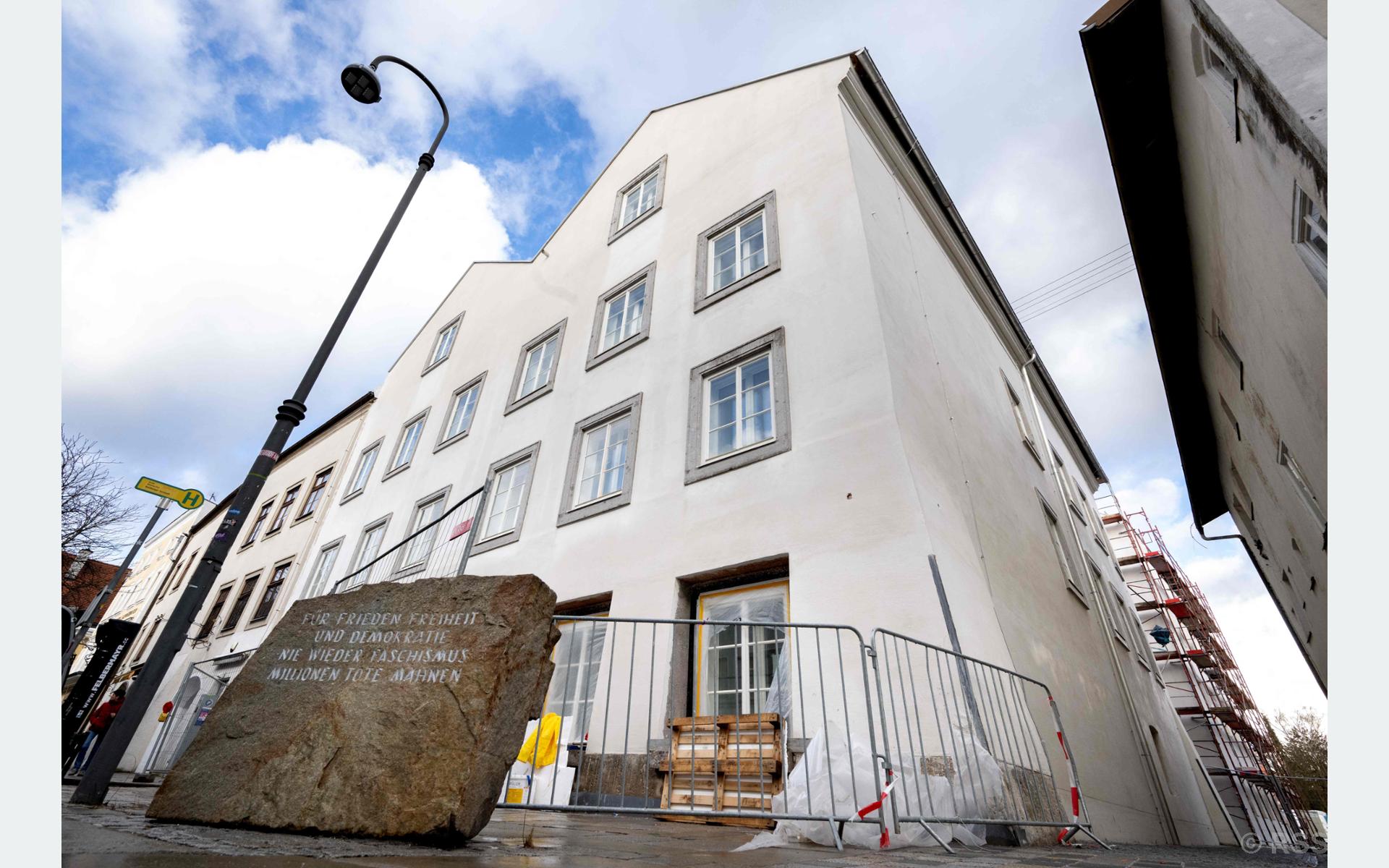
Debate has intensified in Braunau am Inn, the hometown of Nazi dictator Adolf Hitler, following Austria's decision to convert his birthplace into a police station. The government is moving forward with the new use for the building with the aim of preventing it from becoming a center of attraction for far-right extremists.
The house where Hitler was born on April 20, 1889, is located on a narrow street surrounded by shops in the city center. A memorial stone placed in front of the building reads, 'Let us protect peace, freedom, and democracy. Let the fascist regime never return. The death of millions is a warning for this.' During an AFP observation this week, final renovation work was seen underway. According to the Interior Ministry, the police are preparing to move in by the second quarter of 2026.
In 2016, the government passed a special law to take control of the building from its private owner, advancing a policy to render it 'ineffective.' Austria was annexed by Nazi Germany in 1938 and has faced accusations of not sufficiently confessing its role in the Holocaust in the past. Approximately 65,000 Austrian Jews were killed during the Nazi regime, and 130,000 were exiled.
Local resident Sibylle Treiblmayr described the decision as a 'double-edged sword.' According to her, while it might discourage far-right groups from gathering, the building could have been utilized in a different way. Ludwig Lehner, a writer and member of the Mauthausen Committee Austria, which represents Holocaust victims, called the decision to create a police station 'problematic.' He argued that a separate center for memory and peace dialogue would have been more appropriate, as the police operate within the state structure.
Previously, proposals to turn the building into a site for peace-building and historical awareness programs reportedly received wide support. Local shop owner Jasmin Stadler expressed the view that presenting Hitler's birth 'in historical context would be interesting.' Criticism has also been leveled at the approximately two crore Euros spent on the reconstruction.
However, not all reactions are negative. Electrical engineer Wolfgang Leithner expressed confidence that converting the building into a police station would bring 'some peace.' According to him, this usage reduces the likelihood of the building becoming a pilgrimage site for the far-right.
The office of the conservative mayor of Braunau has declined to comment on the matter. Meanwhile, the debate in Austria over how to remember and address its Nazi past and Holocaust history has resurfaced. Although the far-right Freedom Party became the largest party in the 2024 elections, it failed to form a government. Last year, the names of two streets associated with Nazi memory in Braunau am Inn were changed.
Amid the question of how to transform the painful memory of history, the new identity of Hitler's birthplace has reignited debates in Austria concerning memory, responsibility, and the direction of the future.
This specific news has been automatically translated by AI. As a result, there may be some inaccuracies or language errors.


_4uZ7aCRYrO.webp)