US Secretary of State Blinken Warns Iran's Strait of Hormuz Claims Risk Global Economy

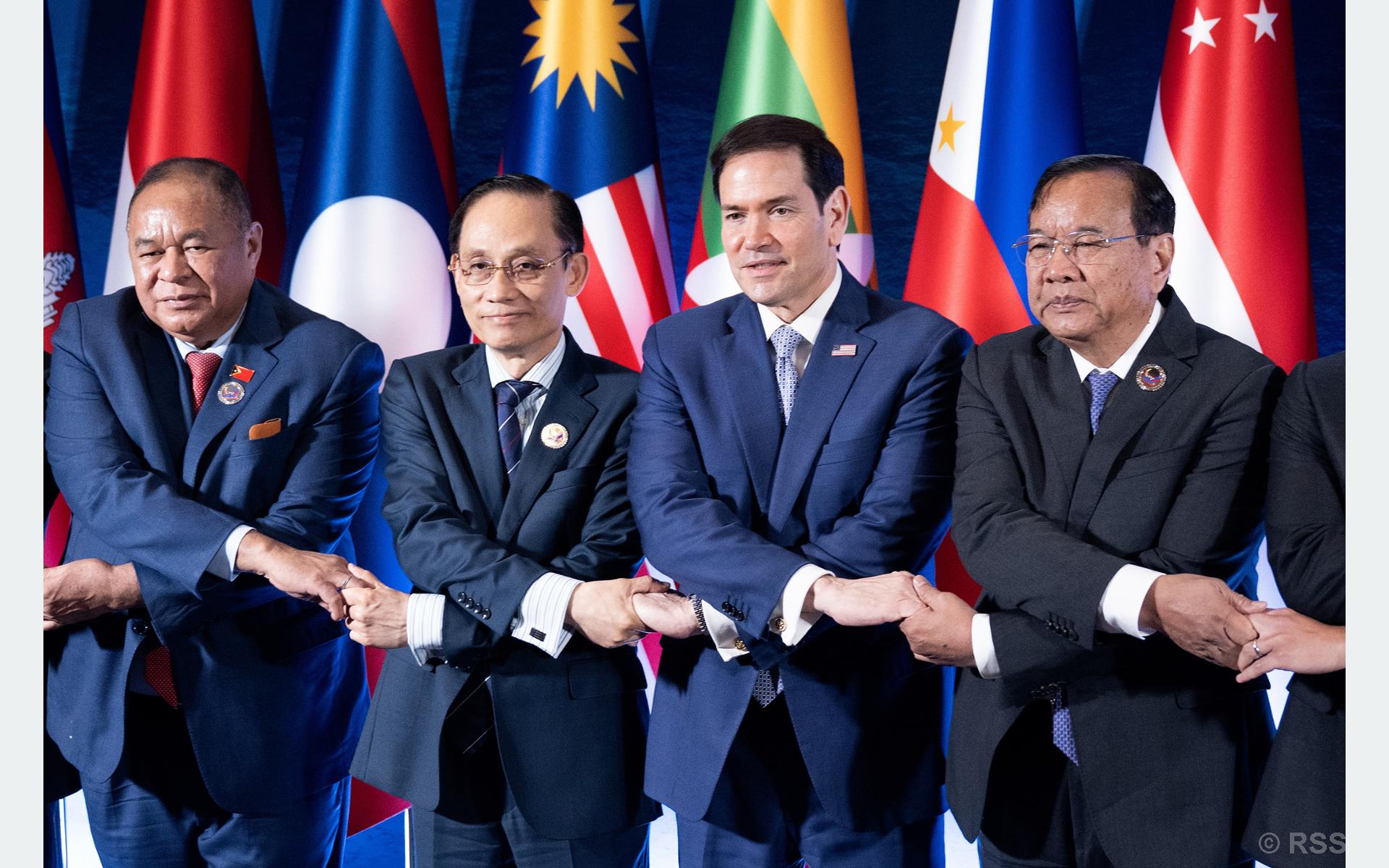
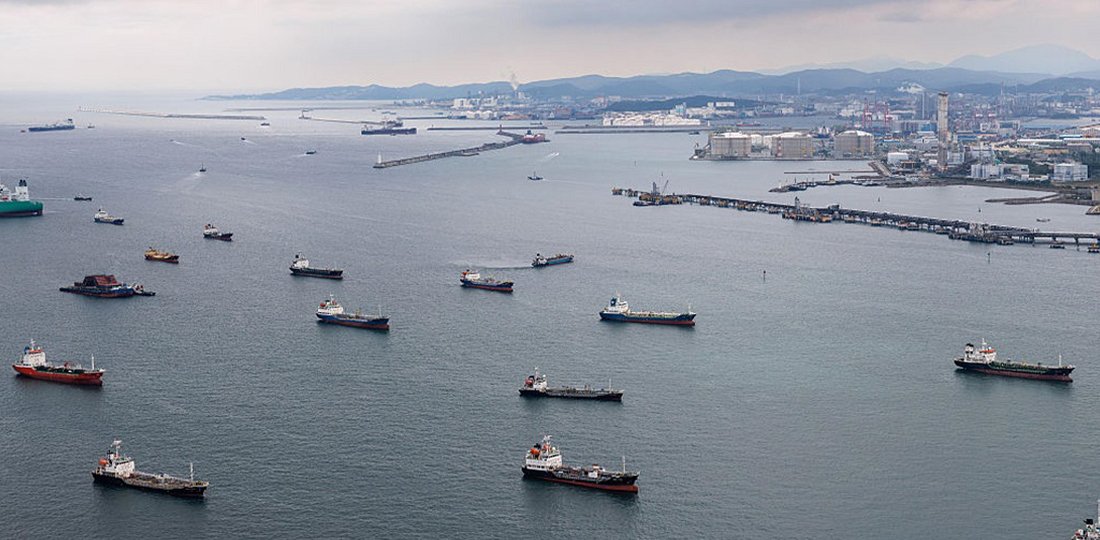
Kathmandu. United States Secretary of State Marco Rubio has warned that Iran's claim to control the Strait of Hormuz and collect tolls there will increase risks to the global economy and set a dangerous precedent.
Addressing the meeting of Foreign Ministers of the Association of Southeast Asian Nations (ASEAN) which began in Manila, the capital of the Philippines, Rubio said that it is unacceptable for any country to control international waterways, collect tolls, or attack ships for non-payment of tolls.
"If such a precedent is set in the Middle East, where any nation can decide to control international waterways, collect tolls, and take action against ships for non-compliance, it will create a dangerous situation that could be repeated in other parts of the world," he said.
Rubio reiterated allegations that Iran has backed away from its commitments under the peace agreement, stating that Tehran is trying to negotiate with the United States and other parties through direct and indirect contact. However, he gave no indication that the United States is preparing to resume peace talks with Iran.
Top diplomats from countries including the United States, China, Russia, and Britain are participating in the ASEAN meeting. Discussions are underway on the ongoing conflict in the Middle East, energy security, and regional stability.
Russian Foreign Minister Sergey Lavrov said that a speedy resolution to the US-Iran tension is necessary. He mentioned that the ongoing conflict is affecting the global economy and energy markets, and that Russia desires stability.
"We want to see this situation end. It is affecting the global economy, and Russia is part of the global economy," Lavrov said.
Southeast Asia's Concern Over Energy Crisis
Australian Foreign Minister Penny Wong expressed concern over the renewed conflict in the Middle East, emphasizing the need for a ceasefire and negotiations. "We want this war to end. We want a ceasefire, we want negotiations, and we want the Strait of Hormuz to remain open," she said.
According to the International Energy Agency (IEA), Southeast Asia is at risk of an energy crisis stemming from the Iran war due to its high dependence on energy imports from the Middle East. In 2025, Asian markets imported about 80 percent of the world's crude oil and about 90 percent of liquefied natural gas (LNG) coming through the Strait of Hormuz.
Discussion with Quad Partners on China's Influence
Rubio also held a meeting with the foreign ministers of the Quad group, comprising the United States, Australia, India, and Japan. A joint statement issued after the meeting reiterated commitment to regional maritime security and the rules-based international order.
Japanese Foreign Minister Toshimitsu Motegi opposed any attempt to change the status quo by force. He expressed concern over activities seen in the South China Sea and the East China Sea.
Australian Foreign Minister Wong also expressed serious concern about destabilizing and risky activities.
Regional countries, including the Philippines, have long expressed concern over China's growing activities in the South China Sea. ASEAN foreign ministers have welcomed progress in talks with China on a proposed 'non-aggression pact' to de-escalate tensions in the disputed waters.
Rubio-Lavrov Meeting to Discuss Ukraine War
Rubio announced that he would meet with Russian Foreign Minister Lavrov on Thursday to discuss possibilities for ending the Ukraine war. He said the United States is ready to play a role if an opportunity arises to resolve the conflict, noting that efforts in recent months have weakened.
Lavrov, however, said he would discuss with Rubio the claims by US President Donald Trump that a deal on the Ukraine war is nearing.
Meanwhile, Rubio has also met with Indian Foreign Minister Subrahmanyam Jaishankar. US officials said that discussions were held on regional security, the Iran war, and US-India trade relations.
Rubio also held a separate meeting with Chinese Foreign Minister Wang Yi at the heavily secured conference venue in Manila.
This specific news has been automatically translated by AI. As a result, there may be some inaccuracies or language errors.