Rastriya Swatantra Party Holds Massive Rally in Karnali, Signaling Challenge to Traditional Parties

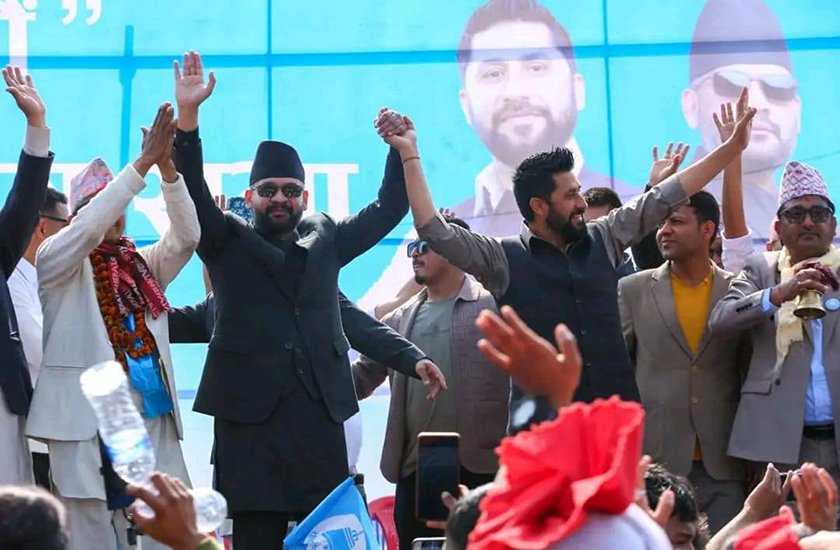
Surkhet. The Rastriya Swatantra Party (RSP) held a 'We Have Arrived,' 'Declaration of Change Rally' on Thursday at the Clock Tower in Birendranagar, the capital of Karnali Province. The turnout at the rally exceeded the expectations of the RSP leaders themselves.
According to security agencies, 10-11 thousand people participated in the rally. DSP Mohanjung Budhathapa of the District Police Office, Surkhet, confirmed that the number was higher than anticipated. However, RSP leaders claimed the attendance was even greater.
RSP Surkhet District Chairman Ramesh Kumar Sapkota told Ratopati at the venue that the number of attendees was unexpectedly high. 'This turnout signals the downfall of traditional political parties; it is a sign of change,' he stated.
As Sapkota mentioned, Karnali is traditionally known as a stronghold of conventional politics. At one time, it was dominated by the Nepal Workers' and Peasants' Party (NWPP), and after the 60s (Bikram Sambat era), the three old parties—Maoist (now CPN), Congress, and UML—held sway. This region was a base area for the Maoist insurgency. Until recently, electoral competition here was strictly among these three political parties. However, Prem Budha from Dailekh, an RSP supporter met at the rally, analyzed that the power demonstration by the new political party, RSP, in Karnali, a region dominated by traditional politics, could deliver a blow to the older parties.
He countered the journalist by asking, 'Look at the field both outside and inside, have people ever gathered so spontaneously?' He added, 'This is the voice of citizens rising against the mismanagement and corruption perpetrated by the old parties against the nation.'
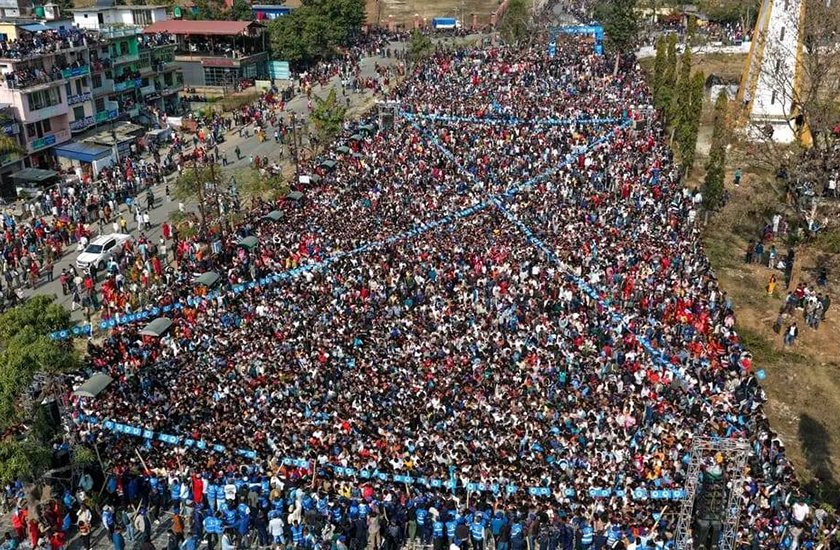
As he said, thousands of people were packed tightly in the inner ground of the Clock Tower, while others were scattered on the west road, near the police station to the east, and around the municipality and university. Many people were observing the rally from the rooftops of nearby hotels and houses. Upon visiting the site, many individuals affiliated with older political parties, employees, and intellectuals were present at the rally. Chandra Bahadur Sunar, 62, from Birendranagar-11, struggled to enter the venue. He said he came to see Balen Shah and Rabi Lamichhane.
'The old ones are finished, we must see the new ones,' he said in his local dialect. 'KP, Sher, Prachanda have ruined the country; maybe the new ones will do something?'
RSP Attacks the Stronghold of Congress and Communists
The RSP's election rally appeared different from the programs organized by other political parties. The program was scheduled to start at 12 PM. All candidates from RSP across various constituencies had arrived. However, the presence of RSP Chairman Rabi Lamichhane, senior leader Balen Shah, and other central leaders only occurred at 2 PM. Before that, Balen's song 'I want to see Nepal laugh' was playing in the background, and the crowd was enjoying it.
As they made their 'entry' in a cinematic style, managing the crowd became extremely difficult. The police had tightened security. Upon their arrival, the same song played again, and they rang the bell. Most leaders gave short speeches. Balen was the center of attraction. Speaking for only 3 minutes, he covered the civilization, history, and potential of Karnali. He expressed happiness at being able to unveil the RSP's manifesto from the feet of Shiva and Kailash.
He discussed King Mahendra's poem 'Celestial Nymph of Heaven' about Rara Lake, the largest lake in the country, interpreting Karnali as an area with immense tourism potential. Recalling the deepest lake, Shey-Phoksundo, and the longest river, Karnali, he said, 'The depth that no government, no party, this country has understood to this day, we want to understand that depth. The party that wants to understand that depth is the Rastriya Swatantra Party.'

He compared the region's herbs to gold and stated, 'Yarsagumba can reach worldwide, but Karnali's apples and Marshi rice cannot even reach Chitwan and Jhapa.' He said that RSP wants to be the party that ensures the region's produce reaches at least the entire country.
Targeting history, he said, 'Sinja Valley itself is a place of civilization, the origin of the Nepali language, the origin of the Khas language; it has its own language, its own script, its own paintings, its own music and dance, its own festivals too. If all this exists, it is considered a civilization. The Rastriya Swatantra Party wants to be the party that preserves that civilization.'
He emphasized that RSP is the party that wants to preserve Karnali's civilization. He also touched upon Karnali's malnutrition and maternal mortality rates. Signaling the old parties and leaders, he said, 'Many leaders have come selling the pain, poverty, and suffering of Karnali; a leader who understands that poverty has not yet arrived.' He stated that RSP is stepping forward as the leader who understands it.
He further said, 'May we be able to increase the tourism, potential, agriculture, farming, and income generation here; may we receive your blessings.'
In the authentic dialect of Karnali, he said, 'Now, Karnali's dreams are our dreams.' His every word contained stories hidden within Karnali's history and present. The audience loved his short and comprehensive speech and applauded.
RSP publicly unveiled its election manifesto, encompassing '100 Bases for Policy Departure for Transformation,' right from Surkhet. Rabi Lamichhane explained the reason: 'A major pillar of making this manifesto public today is the promise not to let the marginalized Karnali remain behind anymore.'
He also recalled his past association with Karnali. He had visited Karnali as a journalist a few years ago. A hospital was built in Rasku, Kalikot, through his initiative.
He recalled that this bond has strengthened today. He also stated that he would face punishment if he failed to fulfill that promise. 'That's why we have come with a contract with the citizens,' he said. 'Therefore, I want to make an offer from Karnali: come via the road or come via the vote. We want change through votes. We do not want to shed a single drop of blood.'
Lamichhane recalled that many mothers in Karnali have been left childless and many sisters widowed, leaving many children orphaned. He said, 'Karnali will not tolerate that anymore.'
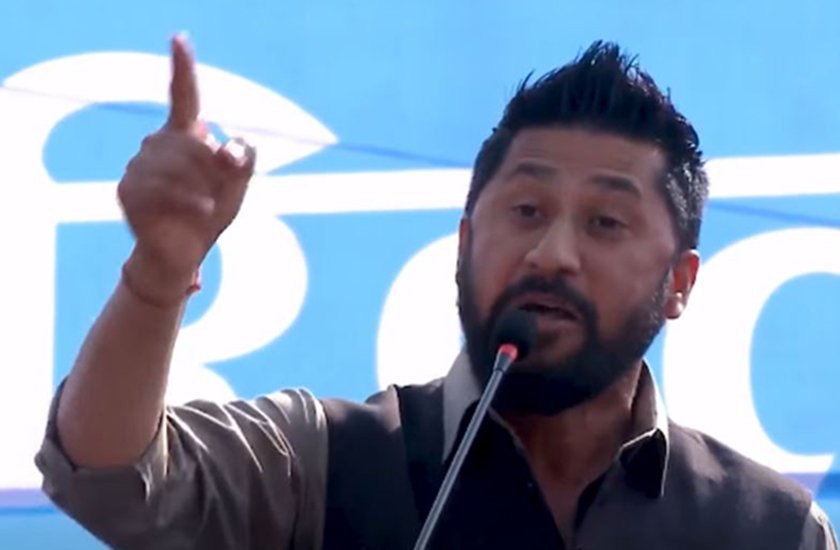
While other RSP leaders avoided naming and criticizing other parties, Lamichhane responded to some publicly raised questions. Three sections of the RSP manifesto address Karnali, indicating RSP's concern for the region. Other leaders also called for votes and support for RSP. They added, 'If we fail to perform in five years, you can ring our bell instead.'
What Impact Will the Public Rally Have on the Election?
The strong turnout seen at the election rally was unprecedented for any political party's program so far. However, Vijayraj Sejuwala from Kalikot, met at the venue, expressed doubt that everyone attending would vote.
'Many people came, some just to watch,' he told Ratopati. 'It only matters if everyone votes; otherwise, they won't.' Nevertheless, he stated that the rally served as a warning to the old parties.
'It will certainly have a big impact on the votes of the old parties, but winning the election in a region like Karnali, where traditional politics is deeply rooted, might be difficult,' he assessed.
Currently, RSP claims to have formed party committees in almost all areas of Karnali. RSP Karnali Province Spokesperson Hari Adhikari says this will also deal a blow to the old parties.
This specific news has been automatically translated by AI. As a result, there may be some inaccuracies or language errors.


_s4UAz3GPxQ.jpg)