Progressive Democratic Party Candidate Amitabh Bachchan Das Discusses Political Journey and Electoral Agenda in Parsa-2


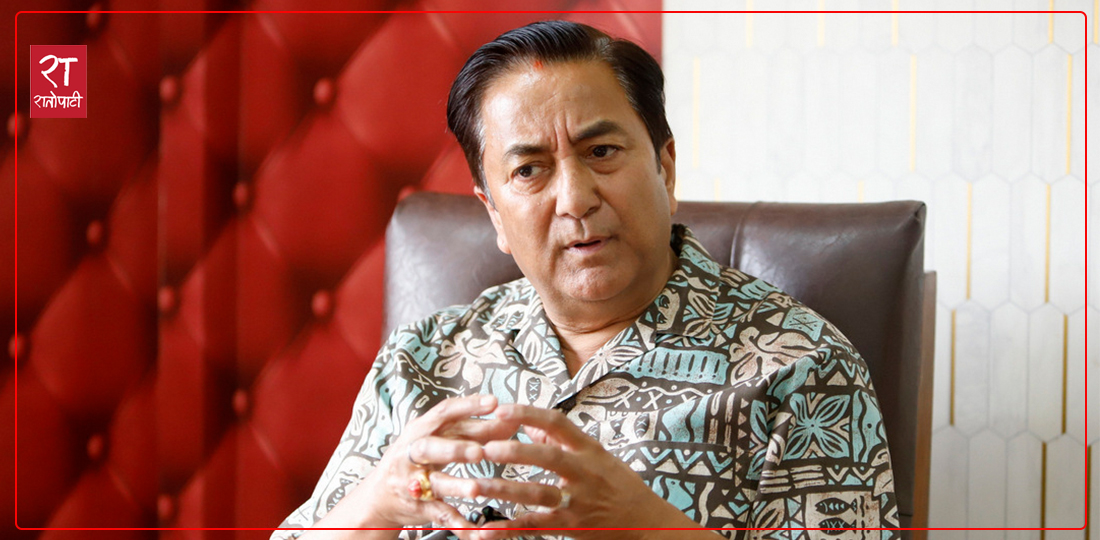
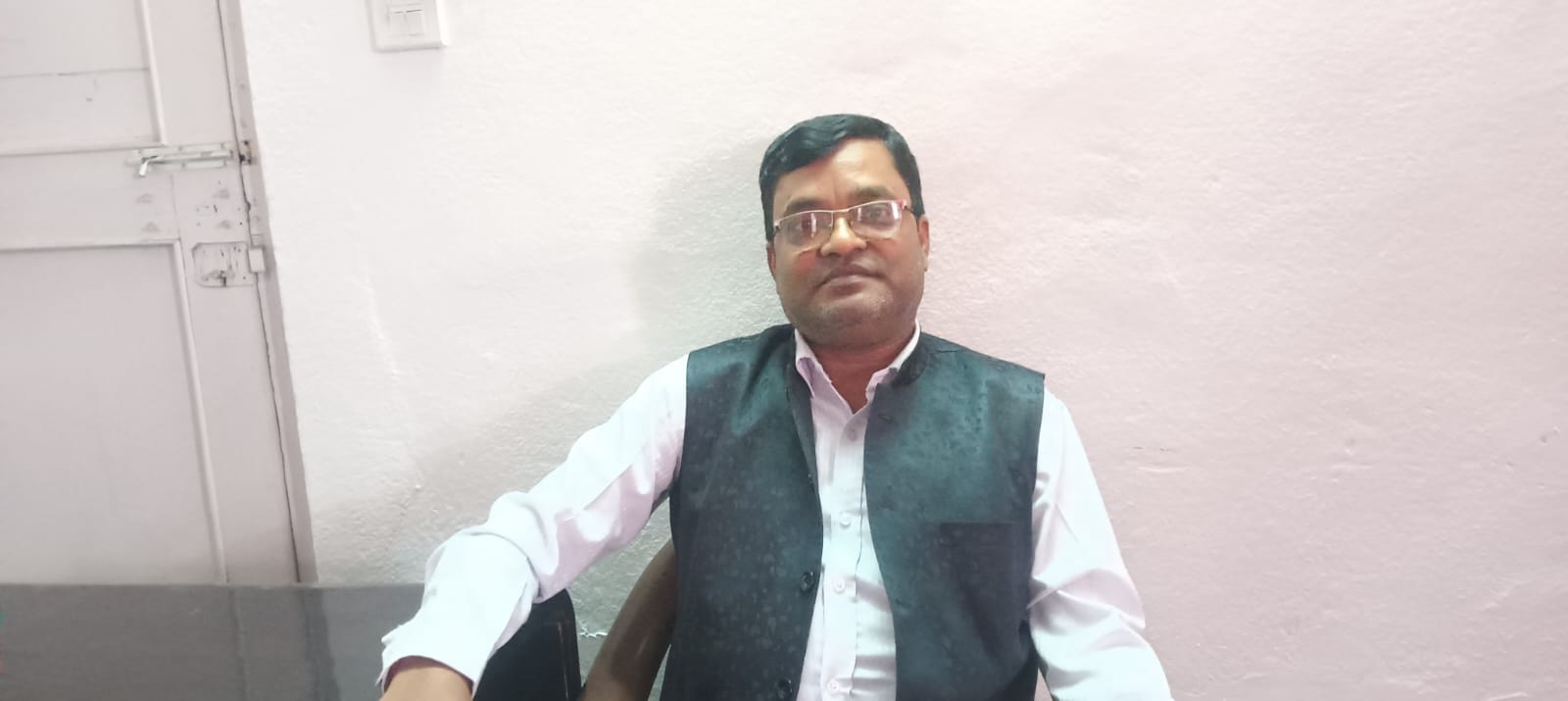
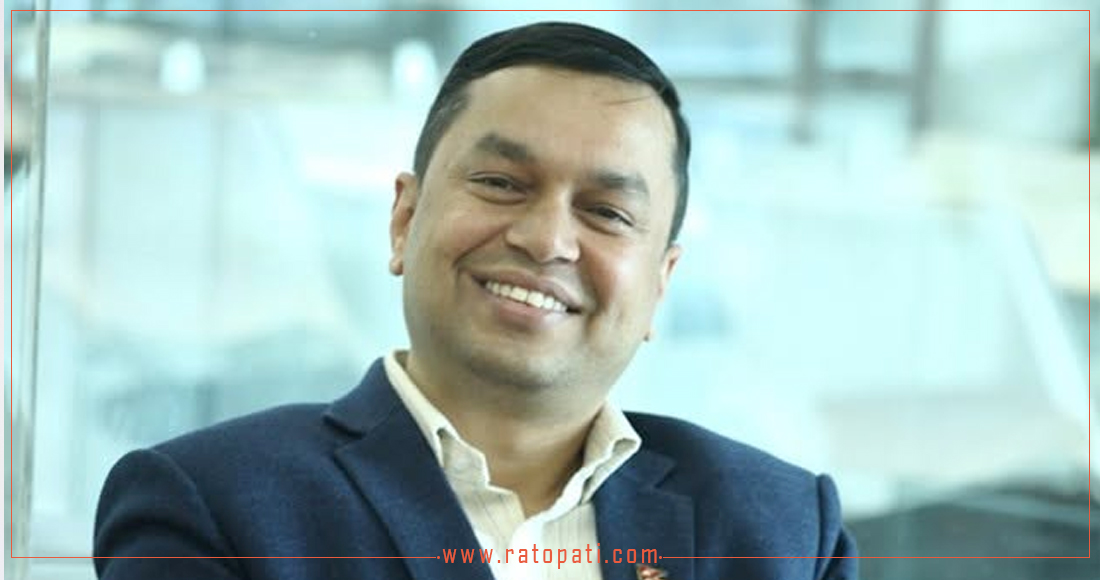
Parsa. Amitabh Bachchan Das is the candidate for the Progressive Democratic Party in Parsa Constituency No. 2. Das is also the Parsa District In-charge and a Central Committee member of this party, which was formed after the Gen-Z movement.
He entered mainstream politics after spending nearly two decades in politics within the All Nepal Revolutionary Students' Union (ANRSU), an organization close to the then CPN (Maoist Centre).
Das, who holds a Master's degree in Mathematics from Thakur Ram Multiple Campus in Birgunj, is currently pursuing a PhD. An edited excerpt of the conversation with Das, who has a long political contribution in the Maoist party, regarding his recent entry into the Progressive Democratic Party and his election activities in Parsa-2 is presented below:
- How did you join the Progressive Democratic Party?
I took membership in ANRSU in 2057 BS. I served from Unit Member to Secretary and then Chairman of Thakur Ram Multiple Campus. During my student political activities in the Maoist party, I was arrested in 2059 BS. I spent 15 months in jail. After the peace process succeeded, we came out. After entering mainstream party politics, I served as the ANRSU Parsa District Chairman, Central Member, and Secretariat Member.
As internal conflicts escalated within the Maoist party, Janardan Sharma initiated a debate for party transformation. We supported that. A decision was made to organize the party at the grassroots level through a general convention and bring in new blood, but before the convention, Chairman Prachanda unified with Madhav Nepal's party, leading Janardan Sharma and other leaders to rebel. We supported that rebellion.
Sharma formed the Progressive Campaign. CPN (Maoist Centre) led by Dr. Baburam Bhattarai also merged its party with it. I am currently serving as a Central Member and Parsa District In-charge of the Progressive Democratic Party. Now that the election schedule has been set, the party has nominated me as the candidate for Parsa-2.
_9yBgO3E4Ml.jpg)
- Did the influence of the Gen-Z movement lead you to leave the Maoist party and form the Progressive Democratic Party?
The Gen-Z movement raised its voice against corruption. We supported that. Our party was founded on the foundation of the Gen-Z movement. We formed this party to end corruption, stop Nepali youth from going abroad for employment, and create employment opportunities within the country.
There is public dissatisfaction with political leaders. This party was established so that we can go to the people to address that dissatisfaction, figure out how to connect with the masses, and solve the common people's problems.
This party promotes identity issues and has put proportional and inclusive principles into practice. If you look at our chairmanship, the Chairman is a youth from the Janajati, women, Dalit, and Gen-Z groups. Ashok Jaiswal is the Chairman from the Madhes cluster. Proportionality and inclusivity are practically implemented in our party.
- What are your election agendas as you approach the voters of Parsa-2?
My candidacy is focused on ending corruption and stopping the situation where youth have to go abroad for employment by creating jobs within Nepal.
Thirdly, Birgunj ranks first nationwide in economic activity. It has various industries, small, medium, and large. Birgunj contributes significantly to the country's economy by collecting substantial revenue. My candidacy aims to declare Birgunj an economic city and an industrial corridor.
I have announced my candidacy to make Parsa District an agricultural hub by providing fertilizer, seeds, manure, and irrigation for agriculture, and ensuring timely marketing of harvested vegetables and crops at fair prices. I will also strive for free education, healthcare, and facilitating land acquisition and housing for the landless.
- What is the reason for choosing Constituency No. 2 of Parsa for the election?
I chose this area because I have been politically and socially connected with the people here since the beginning.
- You are contesting from a recently formed party. How will you compete against candidates from major parties?
The candidates in Parsa-2 include Ajay Chaurasia from the Congress, Rima Yadav from UML, Sushil Sah Kanu from RASP, Manoj Chaudhary from CPN, and Bina Jaiswal from RPP. It is true that we have not had time to build our organization in this area; it is due to a lack of time.
We have reached the people with social and political understanding and have initiated efforts to solve their problems. I have been connected with the people for a long time. I have a good relationship at the grassroots level.
Secondly, our party might be the first to end corruption. My political agenda is different from others. My candidacy is based on the vision of making Bara-Parsa an industrial corridor, Parsa District an agricultural hub, and fully implementing free technical education and free healthcare services in practice. The people trust that Amitabh Bachchan Das is the leader who can achieve this.
I am pro-people both practically and theoretically. Due to my social and political investment, the general public will support me. I consider myself a capable candidate because I am young and have not been tested by the public yet.
_2qZIgMeB75.jpg)
The era of old parties is over. They have all retired. They have only piled up problems in the country. They could not do anything for the people.
There is a public complaint that they only come to ask for votes once every five years and then disappear. There is widespread dissatisfaction and public grievance against parties with strong organizations. The people are rejecting them.
As a youth, everyone will support me. I am eager to win, and I will win. When I go door-to-door, people have promised to give me a chance once. They say I am an educated and hardworking youth. I feel confident about winning the election as a leader emerging from the grassroots.
- What do you see as the main problem in Madhes?
The main problem here is corruption. Secondly, unemployment, and thirdly, the problem of not getting fertilizer, seeds, saplings, and irrigation on time. If an agriculture-friendly environment had been created, this situation would not have arisen. The state invests heavily in education, but nearly 30 percent of citizens here are still illiterate. There are widespread problems in healthcare too. There is no good hospital. Narayani Hospital exists, but for major illnesses, one has to go for treatment elsewhere.
- What do you see as the future of the Progressive Democratic Party?
The old parties are fading after the elections. The people will not give them the same importance as before. They are going to fall far behind. Our party will come forward by securing a good position. We have had to participate in the election with very little time. With the ideology of leader Baburam Bhattarai and the organizational capability of Janardan Sharma, our party will become a national party very quickly.
- What is your comment on the Rastriya Swatantra Party (RSP)?
I did receive an offer for a ticket from RSP, but I did not find the RSP party itself suitable. Perhaps it is because my political investment was in the Maoist party. Janardan Sharma is many times better than Ravi (Rabi Lamichhane) and Balen (Balen Shah). He is not in an executive position in the party. They have given the responsibility of running the party to the youth. I liked his ideology, so I did not want to take a ticket from another party.
Rabi Lamichhane and Balen Shah have popularity, but it will not last long. In India, the Aam Aadmi Party rose rapidly and fell rapidly. I feel that RSP is like a flash flood in the monsoon. Due to the negative working style of the old parties, people are looking for who can be new, which has led to public support for RSP, but I do not believe they will do any better than the old parties.
This specific news has been automatically translated by AI. As a result, there may be some inaccuracies or language errors.