Chinese AI Models Gain Ground as US Tech Firms Embrace Open Source Alternatives


Every month, hundreds of millions of users come to 'Pinterest' to search for new fashions and styles.
There is a page titled 'The Funniest Things,' which features quirky ideas meant to inspire creative people. Examples include Crocs shoes made into flower pots, cheeseburger-shaped eyeshadow, or gingerbread houses made of vegetables.
But many who come here may not know that the technology being used behind the scenes is not necessarily American. Pinterest is using Chinese AI models to sharpen its 'Recommendation Engine' (suggestion system).
The company's chief, Bill Ready, told me, 'We have turned Pinterest into an AI-powered shopping assistant.'
Certainly, this San Francisco-based company could have used any American AI lab to do the work behind the scenes. However, since the release of China's 'DeepSeek R-1' model in January 2025, Chinese AI technology has become an integral part of Pinterest.
Ready considers this a 'DeepSeek moment' or a major leap forward. He says, 'They made it 'Open Source' (open to everyone), which brought about a wave of open-source models.'
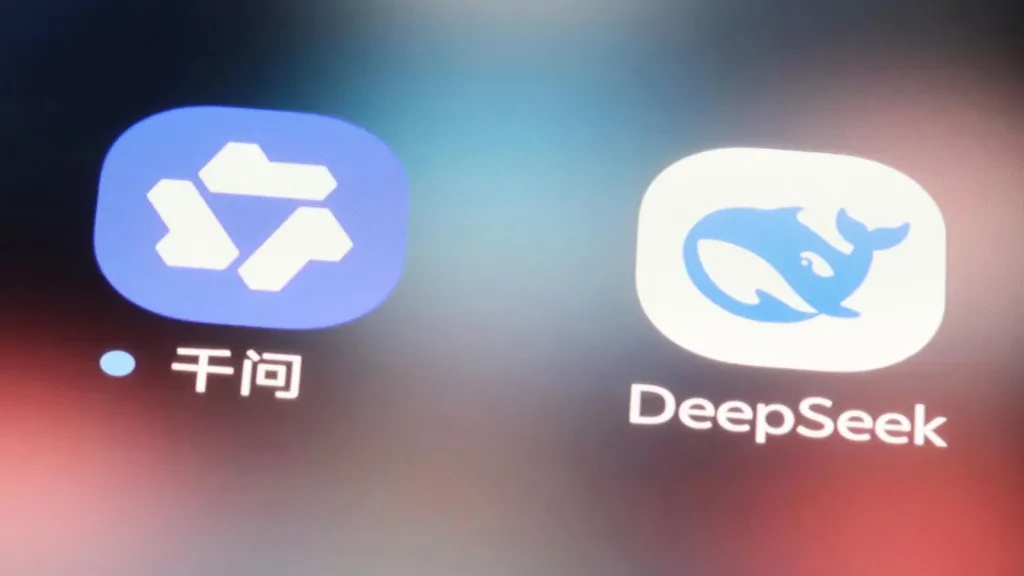
Chinese competitors include Alibaba's 'Qwen' and Moonshot's 'Kimi,' while TikTok's owner ByteDance is also working on similar technology.
According to Pinterest's Chief Technology Officer Matt Madrigal, the strongest aspect of these models is that they can be downloaded for free, and companies can customize them according to their needs. This feature is not available in most models from American companies like OpenAI, which builds ChatGPT.
Madrigal said, 'The open-source technologies we use to train our in-house models are 30 percent more accurate than other expensive models available on the market.'
According to him, the suggestions derived from this come at a much cheaper cost. Sometimes, the cost is up to 90 percent less compared to the 'proprietary models' used by American AI developers.
- Fast and Cheap
Not just Pinterest, other American companies are also beginning to rely on Chinese AI technology. The use of these models is increasing among Fortune 500 companies.
Last October, Airbnb CEO Brian Chesky told Bloomberg that his company relies heavily on Alibaba's 'Qwen' for AI customer service. He gave three simple reasons for this: it is 'very good,' 'fast,' and 'cheap.'
Further evidence of this can be found on 'Hugging Face,' where people go to download ready-made AI models. Models from major developers like Meta and Alibaba are available there.
According to Jeff Boudier, who handles production at Hugging Face, the main reason small startups are attracted to Chinese models over American ones is cost (money).
He told me, 'If you look at the most searched models on Hugging Face—the ones most downloaded and liked by the community—the top 10 list often includes models from Chinese labs.'
'Some weeks, 4 out of the top 5 training models on Hugging Face are from Chinese labs.'
Last September, 'Qwen' surpassed Meta's 'Llama' to become the most downloaded 'Large Language Model' (LLM) family on the Hugging Face platform.
Meta released its open-source Llama AI model in 2023. Before DeepSeek and Alibaba's models arrived, this was the first choice for developers.
However, 'Llama-4,' released last year, did not particularly excite developers. According to reports, Meta is currently preparing a new set of models using open-source models from Alibaba, Google, and OpenAI, which will be released this spring.
Airbnb also uses many models, including American ones, and keeps them secure on its own infrastructure. The company states that user data is never shared with the developers of the AI models they use.
- Chinese Success
At the start of 2025, many assumed that despite spending billions of dollars, American tech companies risked being overtaken by Chinese companies. Boudier says, 'That narrative is gone now. The best model right now is the open-source model.'
A report published last month by Stanford University showed that Chinese AI models are matching or even surpassing other global models in terms of both capability and user numbers.
In a recent interview with the BBC, former UK Deputy Prime Minister Sir Nick Clegg stated that American companies seem solely focused on pursuing AI that will surpass human intelligence.
Sir Nick Clegg left his post as Meta's Head of Global Affairs last year. Meta CEO Mark Zuckerberg has committed billions of dollars to achieving 'superintelligence.'
Some experts have called these ambitions vague—which has given China an opportunity to dominate the open-source AI sector. Clegg remarked, 'Look at the irony here. In a fight between the world's largest autocracy (China) and the world's largest democracy (America), China is democratizing technology (making it accessible to everyone). '
Stanford's report also indicated that government support played a role in China's success in developing open-source models. Meanwhile, on the other side of the world, American companies like OpenAI are under immense pressure to generate profit and increase revenue—and they are now turning towards advertising.
The company released two open-source models last summer—the first time in years. But it has poured most of its resources into 'proprietary models' to generate money.
OpenAI CEO Sam Altman told me in October that they are aggressively investing to secure computing power and infrastructure deals. He said, 'Revenue will grow very fast, but you should expect that we will continue to invest heavily in training the next and subsequent models.'
This specific news has been automatically translated by AI. As a result, there may be some inaccuracies or language errors.




_s4UAz3GPxQ.jpg)