The 1985 Election in Morang: A Study in Stunts Over Ideology

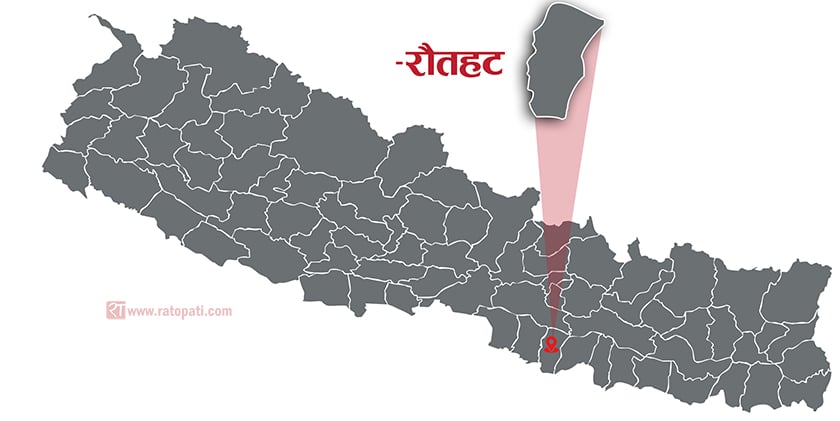
Biratnagar. The 2042 Bikram Sambat National Panchayat election in the political history of Morang is a chapter where stunts and theatrics often overshadowed ideology and principles.
There was a serious debate within the then CPN (ML): 'Should we boycott the Panchayat or utilize it?'
After boycotting the 2038 election yielded little political impact, leader Madan Bhandari put forward a bold and strategic proposal. It was to infiltrate the Panchayat system and strike at its very heart.
That is, to field candidates in the Panchayati elections, gather public mandate, and oppose the system from within the assembly.
Following this strategy, Bam Bahadur Khadka became the candidate from the pro-people side for the Morang constituency, where two members were to be elected. Former Prime Minister Matrika Prasad Koirala, along with Badri Mandal, Umeshjung Thapa, and others, were also candidates.
The pro-Panchayat faction had a plan to secretly ensure the victory of Umeshjung Thapa, who was not widely discussed, and defeat the pro-people candidate Khadka. Following that strategy, Thapa, who had maintained a revolutionary image, suddenly emerged. Umeshjung possessed a unique charisma. He was articulate and had the ability to be popular among the youth, but he was not widely known politically until then.
Some strategic stunts were prepared to establish him. Stories about that electoral battle are still recounted in Morang's tea stalls today.
According to the memoirs of veteran leftist leader Mahesh Regmi, writer Bharat Guragain, and local eyewitnesses, interesting and frightening tactics were employed in the election back then.
Recalling the election, Mahesh Regmi says, 'To establish Umeshjung, the pro-Panchayat side printed and brought a special poster from India, in which one of his fists was raised. That poster instantly branded him as an anti-Panchayat rebel.'
The message of the poster was: This man may be a criminal in the eyes of the Panchayat, but he is a brave warrior in the eyes of the people.
Not only that, the Panchayat government orchestrated the arrest of Umeshjung during a speech at Adarsha School in Biratnagar, intending to make him popular. Exactly when he started spewing fire against the Panchayat during his speech, the police vehicle arrived. Umeshjung shouted even louder, 'You cannot suppress this movement by arresting me; I am ready to go to jail!'
As the police apprehended and took him away, thousands of people wept and ran after the police vehicle, which gave him the image of a messiah. Regmi experienced that incident attracted hundreds of people towards him.
The extent of Umeshjung's electoral fervor was made clear by the experience of Jagdish Bhagat from Gramthan-5. Recalling the heated atmosphere, Bhagat said, 'Umeshjung Thapa was born as a great revolutionary then. When he arrived, all of us left our work to watch him. It felt like he was going to do something extraordinary. While speaking, he would say, 'I will break the wall between the King and the people like this,' and then cut his own thigh with a blade, saying, 'I will break the wall like this.' Seeing his courage, we all believed him.'
According to Bhagat, Umeshjung emotionally connected with the people to such an extent by drawing blood from his own body on stage that people began to regard him as a god.
Umeshjung would lead large processions carrying the plough as his election symbol. 'Thousands of people from Musahar, Batar, and landless settlements considered Umeshjung the messenger of their liberation,' said writer Bharat Guragain, 'Back then, they truly made the Dalit Musahar and Batar people carry ploughs, exhausting them.'
While Umeshjung Thapa was performing 'emotional stunts' on one side, the Panchayat candidate Badri Mandal and his associate Dr. Hiralal Shah employed a different tactic on the other. They used a 'calculator' to intimidate the simple villagers.
'The Panchas would enter the villages carrying calculators in their hands and say, 'This is a machine that shows exactly whom you voted for inside. If you do not vote for Badri Mandal, this machine will call out your name, and you will be jailed later.' The simple people, lacking technical knowledge, feared that ordinary calculator as a magical device and were forced to vote for the Panchas,' recounted writer Bharat Guragain (Barbarik) about those times.
Ultimately, in that election, Badri Mandal came first, and Umeshjung Thapa entered the National Panchayat coming second. However, the major figure and former Prime Minister Matrika Prasad Koirala came fourth. The pro-people candidate Khadka finished third.
According to the analysis by writer Guragain and leader Mahesh Regmi, the 'wave' created by Umeshjung Thapa at that time was more emotional and stunt-based than ideological. His style of shedding blood, showing handcuffs, and delivering fiery speeches won the election, but it failed to bring any change to the lives of the people.
The experiences of eyewitnesses like Jagdish Bhagat give the current generation a single message: the immediate waves and loud stunts seen in politics are not always true. Just as the revolution Umeshjung demonstrated by cutting his thigh withered away, Regmi suggests that in today's politics, seeking ideology and integrity is wiser than chasing cheap popularity.
'Umeshjung Thapa is a figure in Morang's political history who demonstrated how populism works back in 2042 BS,' Regmi said, 'Incidents ranging from printing posters in India to planned arrests made him an icon,' Regmi added, 'As fiery and intense as Umeshjung's rise was, his political descent was not as pleasant. Stunts and hype can win elections, but to secure a place in history, ideology and integrity are essential.'
This specific news has been automatically translated by AI. As a result, there may be some inaccuracies or language errors.