Bagmati Province Government Enacts 69 Laws, Amends 20

Makwanpur. The Bagmati Province Government has so far issued 69 main laws and published a total of 89 laws related to laws by amending various laws 20 times to implement federalism and manage provincial governance.< p>
Similarly, 14 ordinances, 28 regulations (44 including amendments), 61 procedures (76 including amendments), and 15 criteria (17 including amendments) have been issued.< p>
In addition, 11 directives, 9 orders, and 2 bylaws have also been issued, informed Rabita Karki, Information Officer of the Ministry of Internal Affairs and Law. According to her, some laws have been repealed and some ordinances have become ineffective.< p>
The pace of lawmaking has been slow in the second term of the Bagmati Provincial Assembly. Especially, the Provincial Assembly has been focused on government changes and the game of maintaining power, so it has not been able to pay attention to lawmaking.< p>
In the second term of the Provincial Assembly, which started on Poush 18, 2079, 19 laws have been enacted, informed Prakash Chapagain, spokesperson of the Provincial Assembly Secretariat. According to him, the bill was passed by the Provincial Assembly including annual and amendments.< p>
Chapagain said that some new bills have been presented in the Provincial Assembly and some bills are under consideration in the committee.< p>
- Game of maintaining power in parliament
During the 4-year term of the second phase of the Bagmati Provincial Assembly, proposals for confidence votes were presented 5 times. In the Provincial Assembly formed after the general elections of Mangsir 2079, three chief ministers have taken confidence votes 5 times so far.< p>
During this period, one chief minister from Maoist Center and two from Congress took confidence votes from the Provincial Assembly, and most recently, the Chief Minister of Bagmati Province, Indrabahadur Baniyan, took a confidence vote from the parliament on Shrawan 27, 2082.< p>
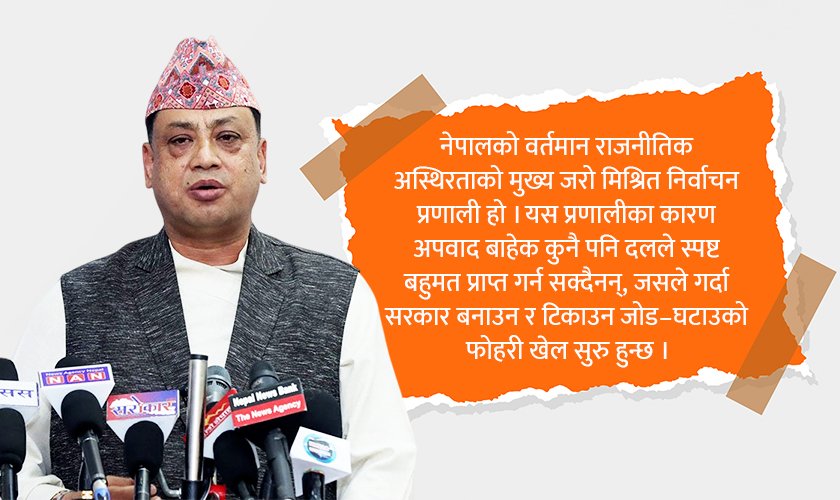
Before that, on Shrawan 15, 2081, the then Chief Minister and then leader of the Congress Parliamentary Party, Bahadur Singh Lama, took a confidence vote from the parliament. He led the government from Shrawan 9, 2081 to Shrawan 20, 2082. On Shrawan 9, 2082, the current Chief Minister Indrabahadur Baniyan filed a no-confidence motion against him to remove him as the leader of the parliamentary party, and the motion was passed on Shrawan 13.< p>
Within one year and 4 months of the formation of the Provincial Assembly, proposals for confidence votes were presented three times. The then Chief Minister of the Province, Shaligram Jhamkattel, took confidence votes from different coalitions. On Shrawan 6, 2081, he was preparing to take a confidence vote for the fourth time, but seeing that the equation was not favorable, he resigned from his post.< p>
- Lawmaking in the dark
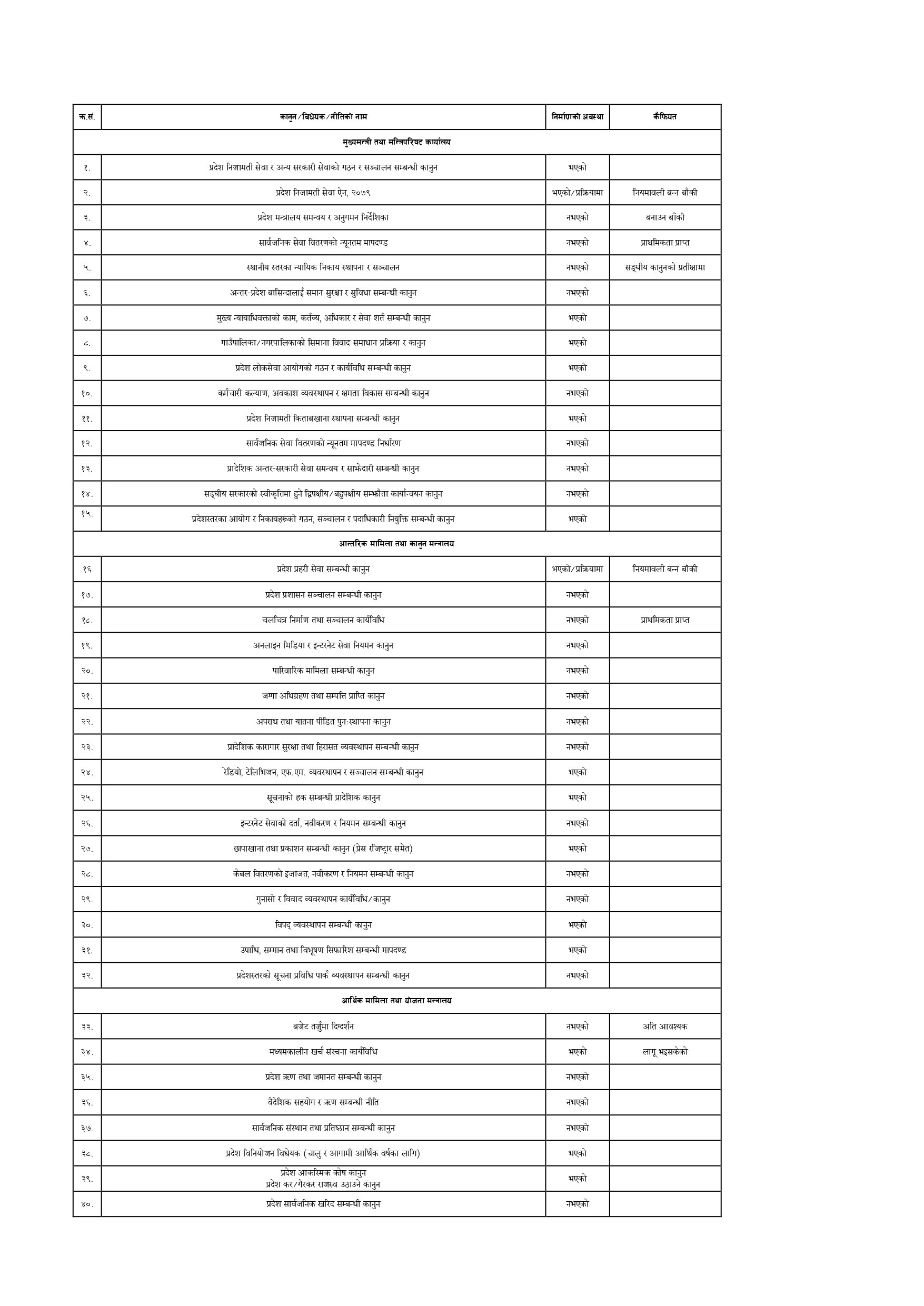
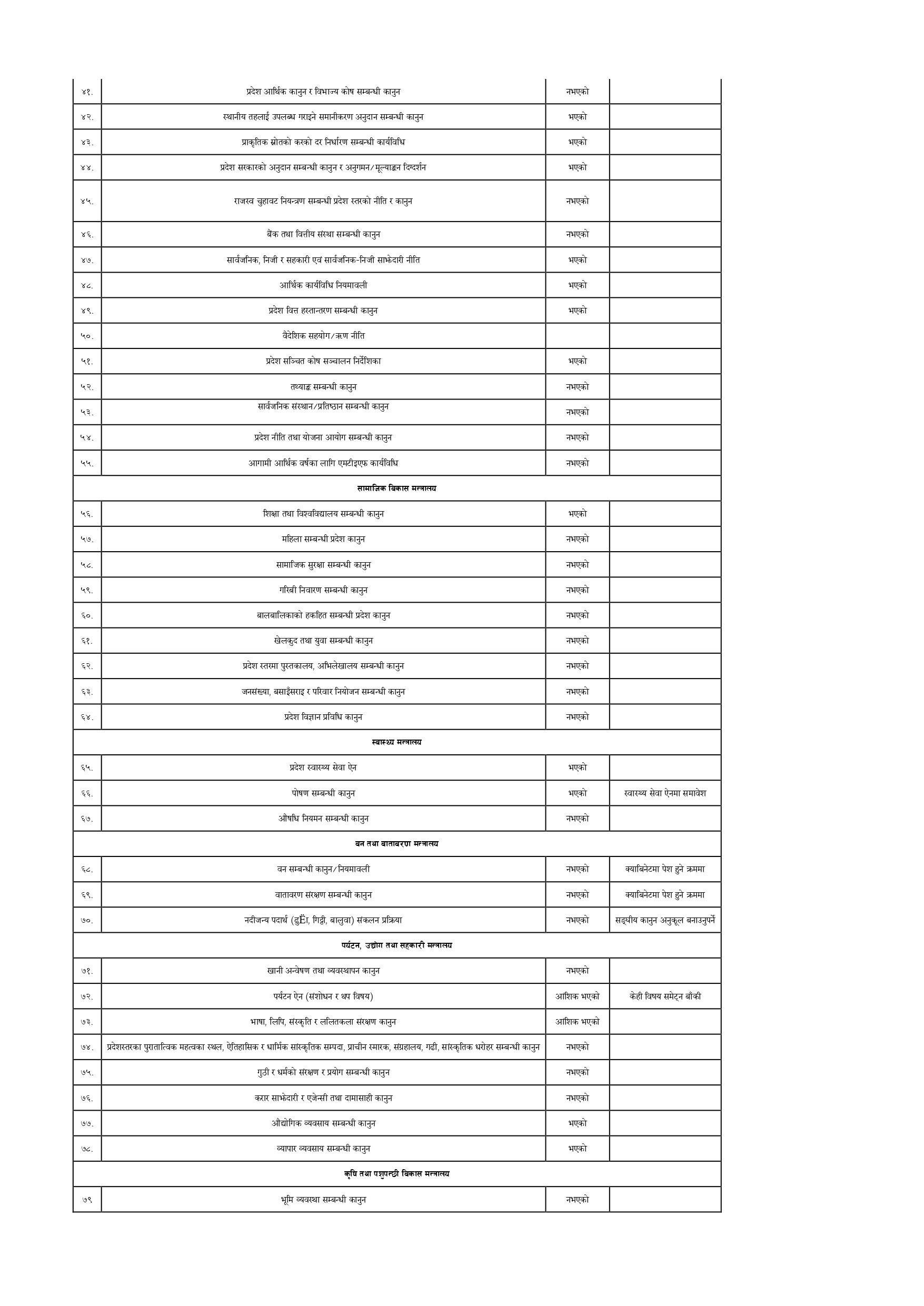
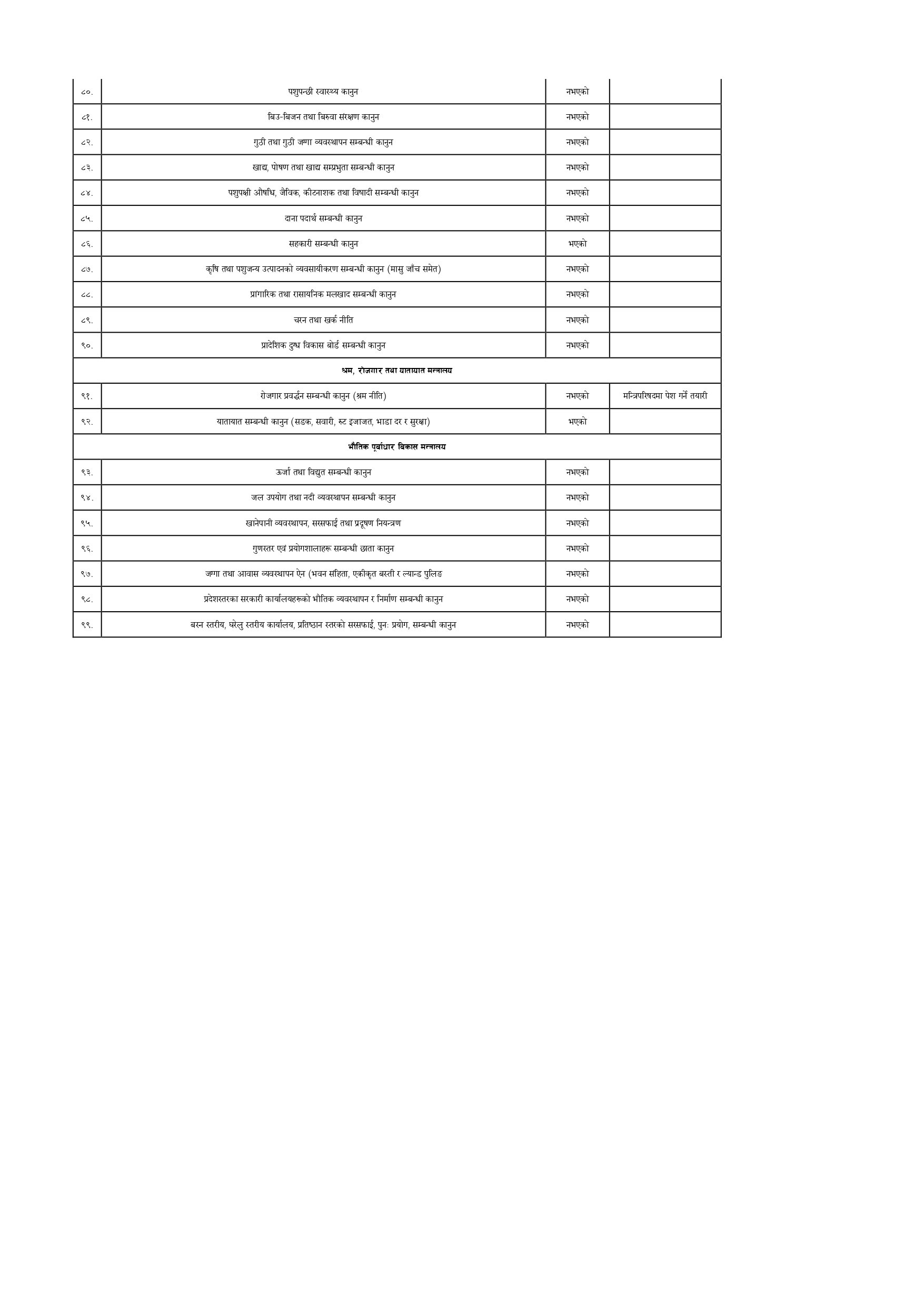
By the second term of the Bagmati Provincial Assembly, some of the 99 laws identified as necessary in the first term could not be enacted. In the second term, after forming a law drafting subcommittee and studying, it was indicated that 52 more laws need to be made.< p>
According to the report recently submitted by the Law Drafting Subcommittee under the Ministry of Internal Affairs and Law, 52 new policies, laws, and regulations essential for the province were identified and their construction priority was set.< p>
The subcommittee formed in 2079 had placed 52 items in the main list based on current needs and priorities among the 99 potential laws identified by the provincial government initially.< p>
- Provincial Assembly Idle: Former Chief Minister Poudel
Former Chief Minister of Bagmati Province, Doramani Poudel, commented that the Provincial Assembly and MPs have become idle due to the government's lack of interest in lawmaking. Mentioning that lawmaking was given top priority in the initial phase of the province's establishment, he said that the pace of lawmaking has slowed down recently.< p>
According to former Chief Minister Poudel, 99 potential laws were identified at the time of the province's establishment. He said that the main reason for the few laws being made by the Provincial Assembly is the government's working style.< p>
He said that recently, the Provincial Assembly has spent more time on issues like government change and passing the budget rather than lawmaking. He clarified that the Provincial Assembly will gain momentum only if the government shows interest.< p>
'Our first priority was lawmaking. More than 55 laws related to service delivery and development construction were made during my first term without stopping work,' said former Chief Minister Poudel, 'Laws that were immediately needed were classified and enacted based on priority.'< p>
According to him, after all the necessary laws are made, amendment and revision work continues. He said that when many laws are yet to be made, bills cannot even reach the parliamentary committees.< p>
Former Chief Minister Poudel expressed dissatisfaction that MPs have the right to bring 'non-governmental bills' but this has not been practiced. He said that MPs are aware of this but it has not been practiced due to lack of willpower.< p>
'During our time, the government itself made laws at a rapid pace. Therefore, there was no problem of bringing bills from outside. But now, when the government is not interested, MPs should create pressure,' he said.< p>
- Why is lawmaking not a priority?
Ratan Dhakal, Chief Whip of the CPN (Maoist Center) Bagmati Province Parliamentary Party, said that the pace of lawmaking has been slow because the government is not providing enough business to the Provincial Assembly.< p>
He said that the enactment of only 19 laws in the four years of the second term of the Provincial Assembly is disappointing.< p>
Chief Whip Dhakal said that the lawmaking and development construction work in the second term is much less compared to the first term. According to him, the Provincial Assembly has only done one-third of the work compared to the previous term.< p>
He said that some bills are still in the process of registration in the parliament, some are stuck in committees, and some are under consideration. In this situation, he accused the government of trying to evade responsibility instead of making the house effective.< p>
Dhakal said that they are continuously pressuring to convene the house and discuss issues of public concern. He said that they have gone to the Chief Minister five times, three in writing and two orally, just to convene the winter session. He said that the effectiveness of the house depends on the government's performance rather than the role of the Provincial Assembly and MPs.< p>
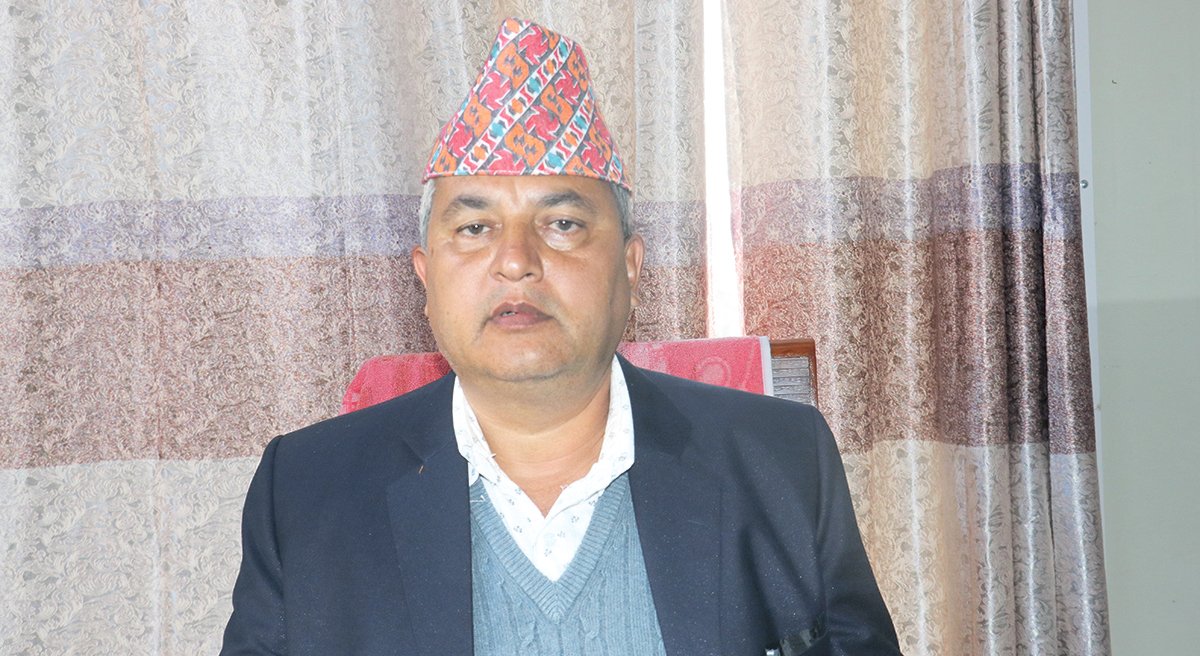
'Laws or bills are brought by the government, but lawmaking is being delayed due to the government itself. The government has not given any business to the Provincial Assembly,' Dhakal said, 'The Provincial Assembly itself can originate non-governmental bills, but governmental bills must be brought by the government.'< p>
CPN-UML Province Assembly member Keshav Prasad Pokharel said that the second term of the Provincial Assembly has been very weak and ineffective compared to the first term. He said that after the formation of the second Provincial Assembly after the 2079 elections, the enthusiasm of the MPs and the government's efficiency have declined.< p>
MP Pokharel said that the intellectual cabinet, limited ministries, and high public attraction seen in the first term have now disappeared. He clarified that the characters and tendencies are mainly responsible for the slow process of lawmaking.< p>
He said that recently, political parties have been more focused on power changes and saving the government rather than lawmaking. He said that the formation of committees after almost a year and the failure to elect a speaker for a long time have also affected the performance, whereas the parliamentary committees should be active.< p>
Pokharel argued that internal conflicts and power-sharing disputes within the ruling parties have hindered the institutional development of federalism. He said that due to more negative aspects of the government coming out than positive ones, public indifference towards federalism and the provincial structure is increasing.< p>
'The Provincial Assembly cannot convene the house on its own without the government providing business. The government is keeping the house from meeting for a long time and making the Provincial Assembly a hostage to indecision,' Pokharel said, 'There is a situation of fighting over the budget, saying yours and mine. Finance ministers and chief ministers have been defamed and criticized at various times. Because of this, a negative message is being conveyed that the province will not do anything.'< p>
Pukar Mahajan, Chief Whip of the Nepali Congress Bagmati Province Parliamentary Party, said that the second term of the Bagmati Provincial Assembly has not achieved the expected results. He argued that in the first five years, there was intimacy and enthusiasm for work between the ruling and opposition parties, but this has been lost in the current term.< p>
Maharjan believes that there is some disappointment in the role of MPs in the current term. He said that while narratives like 'the province is a burden, there is no work' are being created outside, both the ruling and opposition parties need to work together to break them and show the presence of the province.< p>
'We are all in the same boat. If this boat gets a hole, everyone will drown. There are definitely some shortcomings in the role of MPs now. Because of this, the Provincial Assembly has not been effective,' he said.< p>
- Status of enactment of 99 laws identified as necessary
This specific news has been automatically translated by AI. As a result, there may be some inaccuracies or language errors.