Gatekeepers of Culture: Mothers of the Men Who Never Grew Up

There is a significant power imbalance between younger and older women in our society, which often plays out after marriage. Even in ‘progressive’ Kathmandu, women are often expected to live with the husband’s family. In this living situation, the saasu (mother-in-law) and the buhari (daughter-in-law) often become rivals of some sort. Sometimes this is a stereotype, other times it is a reality.
In the most extreme example, the son is a glorified prince, and the role of the mother and the wife are to be in perpetual servitude to him. It is also a silent competition who he favours more, both expecting abundant attention and affection from him. Saasus enforce cultural values by dictating traditional gender roles, household responsibilities, the way the buhari behaves and speaks, and demands to know her whereabouts at all times. Even if these things are not explicitly stated, they are just expected as the acceptable way to behave as a ’good’ daughter-in-law.
Often, the saasu is responsible for perpetuating the same cycle of power that she suffered when she was a buhari. The dynamics exist in both subtle and overt ways and cripple a woman’s self-esteem and freedom within her very home. This domestic injustice existed a lot more strongly in previous generations and is thankfully, slowly evolving.
There are mothers who publicly announce that they are seeking marriage prospects for their sons so that they will finally ‘grow up and become responsible’. Rather than teaching their sons true maturity and responsibility, some mothers hand over this task to an unsuspecting woman who never agreed to parent her husband. I feel furious at older women who followed patriarchy’s wishes and coddled their sons their entire lives, raising them to believe that the whole world was their oyster. This led entire generations of women to sacrifice their dreams and take on overwhelming emotional and economic burdens to help their husbands grow into better men.
Aunties are often seen as conservative, judgmental gatekeepers of culture. With the rise of online feminist discourse, younger women have begun sharing the mental torment and social stigma inflicted by Aunties. However, nothing is black and white, especially when it comes to women’s existence and roles in society.
A part of me deeply sympathises with Aunties. Their judgmental and gossipy nature isn’t entirely their fault, it is the only pastime they were ever ‘allowed’. Denied education, careers or the freedom to explore the world, they were confined to their homes for literal decades. With little else to occupy their minds, perhaps Aunties judge because they envy those who are free, women who had the chance to explore their liberties and sexualities. Trapped by patriarchal norms and driven by deep-seated insecurities, they were conditioned to see other women as rivals. Building feminist solidarity is a challenge when you have spent your entire life in isolation.
Aunties can be really smart, funny and opinionated. It’s just that they have been given such limited space to express themselves, to develop and show their personalities beyond their housework, cooking and parenting their husbands and children. I can’t imagine the rage that women are forced to swallow from being treated like second-class citizens, enduring unpaid servitude inside their homes. These conditions are created by the very people who are supposedly their family. This was the reality for generations of our mothers and aunties. How much pain, belittlement and humiliation are involved in having your entire life shaped this way? How does that deteriorate your sense of self-worth? It chips away at who you are because there is no space, no freedom to be anything more than an obliging wife, mother and daughter-in-law.
I reflect on the injustice of this and think, How are aunties not furious at what has happened to them? Their anger has been stamped out, extinguished over time. They have meekly resigned to the belief that this is the life they are destined for, deprived of true autonomy and independence.
Ask your mother what her dreams were when she was eighteen. Ask your grandmother to imagine a different life story for herself if she had not been given away to arranged marriage. Ask that auntie who judges your choices what she would have done with true freedom. How would your own ideologies and ambitions be different if you were raised by women who had had the choice to fulfill their own ambitions?
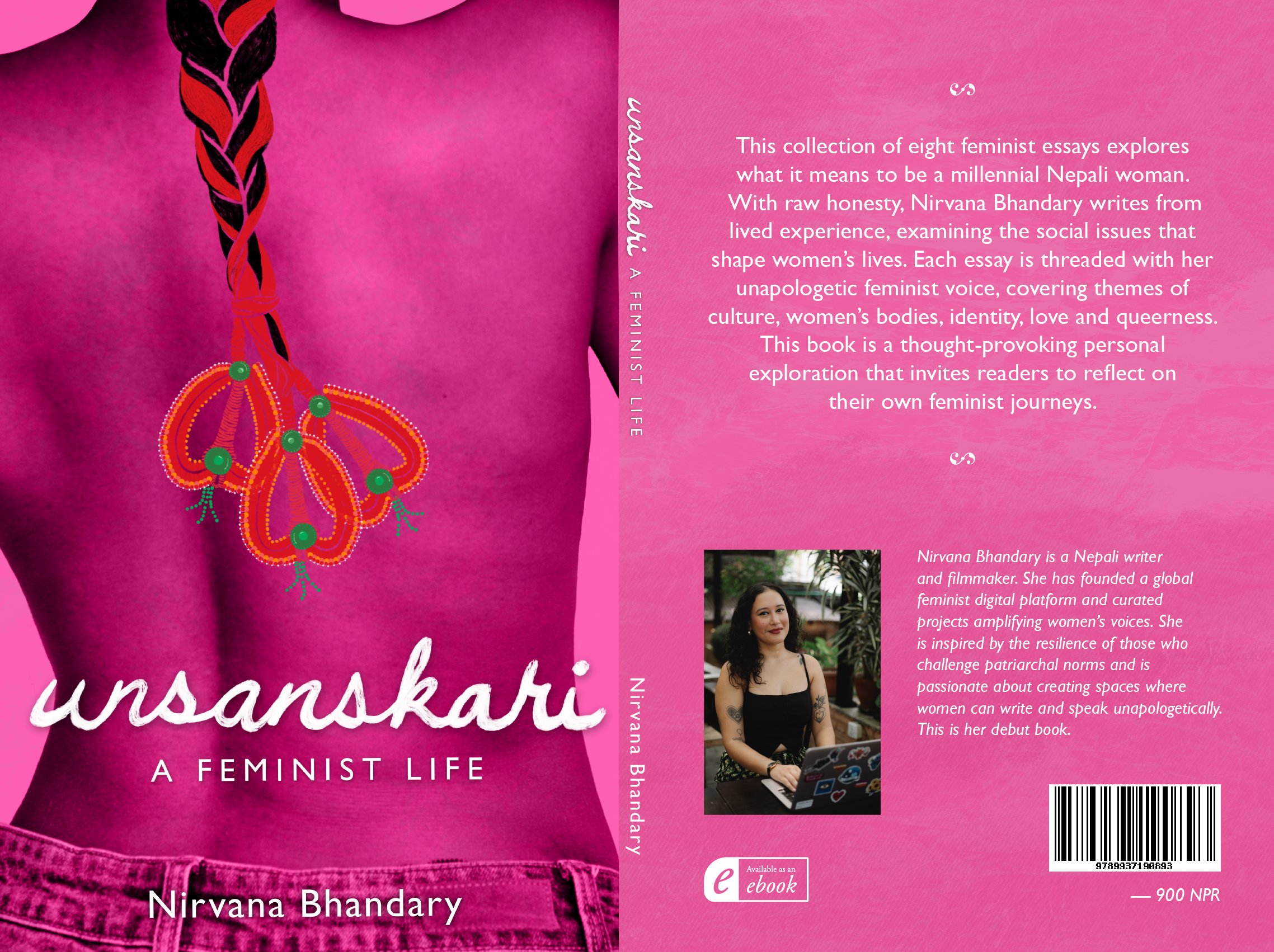
This is an excerpt from Nirvana Bhandary's debut book Unsanskari: A Feminist Life. Available to purchase here: