Nepali Congress Faces Ideological, Organizational, and Psychological Crisis

The Nepali Congress is currently at a critical juncture of ideological, organizational, and psychological transition in its history. From the outside, attractive slogans of 'new generation,' 'energetic leadership,' 'clear politics,' 'reform,' 'digital organization,' and 'change' are heard within the party. However, upon closer inspection, an uncomfortable reality emerges – an attempt is being made to construct an artificial, propaganda-driven, and digitally image-based Congress, displacing its historical soul, collectivism, and political culture.
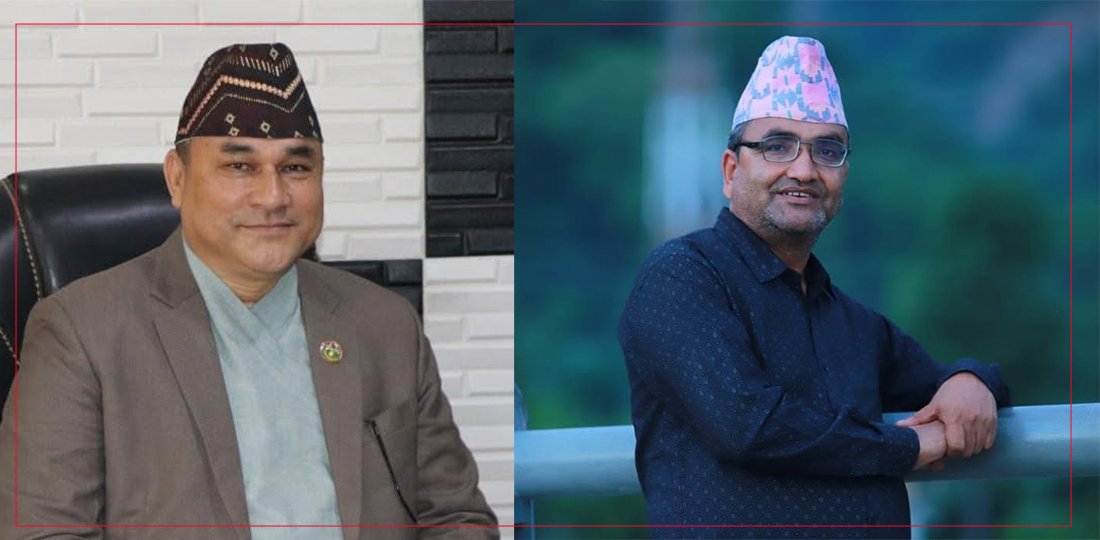
The truth that Gagan Thapa and Bishwaprakash Sharma do not wish to understand or accept today is that the Congress is not a startup company, not a digital brand, and not a 'data-driven' political project. The Congress is a historical consciousness. It is an institution built on the sacrifice, pain, imprisonment, struggle, movements, and emotions of millions of cadres. It cannot be replaced merely by speeches, trending clips, Facebook Live, YouTube views, and digital imaging.
- 'We are the Original Congress, Others are Duplicates'
The most dangerous political psychology of the Gagan-Bishwaprakash trend is their attempt to portray themselves as 'pure Congress' and others as 'corrupt,' 'old,' 'useless,' or 'duplicate Congress.' This perspective is against the fundamental character of the Congress.
The various factions within the Congress were not ideologically separate. Most leaders/cadres stood around a particular leader not due to ideology, but due to opportunities, access, and internal management within the organization. It was not because leaders like Gagan Thapa or Bishwaprakash Sharma were less 'revolutionary' or 'progressive' that other leaders/cadres went to another camp, nor are those who stood with the Gagan-Bishwaprakash Sharma camp less progressive than the cadres who stood with them. Rather, they may be more capable and competent.
In reality, the very leaders whom they now publicly scorn provided them with protection, favor, and political shelter to reach where they are today. The harsh truth of history is that Gagan and Bishwa themselves were political followers, protected figures, and power-sharers within the Congress. To suddenly declare oneself the sole custodian of morality today is a betrayal of history.
- Special General Convention Was Not Universally Accepted
The recent power structure of the Congress was not formed through any universally accepted consensus. It was a structure formed in a special circumstance, under the dominance of a particular group. In past general conventions, there was bitterness between competing factions, but everyone was present. Everyone was given minimal respect, and there was a common basis of organizational legitimacy.
However, the situation is different now. Expecting everyone to readily accept a leadership built without the presence, participation, and respect of people with different viewpoints was itself impractical. The Gagan-Bishwaprakash leadership failed to understand this psychology.
Being in power technically after receiving recognition from the court and the Election Commission is one thing; gaining the psychological and political acceptance of the entire party rank and file is another. To this day, a large section within the Congress does not seem to have accepted this leadership as 'universally acceptable.'
- New Leadership Becoming a Model of Revenge, Exclusion, and Intolerance
After the special general convention, a dangerous trend was observed in the party's activities: gradually sidelining those outside the Gagan-Bishwaprakash group, stripping them of responsibilities, humiliating them, and excluding them.
The most symbolic example of this was the style in which Krishna Prasad Sitaula was removed as the parliamentary party leader in the National Assembly. The treatment meted out to leader Sitaula, who made incomparable contributions to the country in the peace process and constitution-making, without even basic information or minimal decency, shows how low the level of organizational culture has fallen.
This was not just a reshuffling of positions; it was a political message: 'Our existence is the only one that matters.'
After the special general convention, the most keenly felt issue within the Congress was not just the transfer of power; it was the treatment of the opposing faction. The new leadership showed a lack of even minimal political sensitivity towards countless leaders and cadres within the party who stood with different factions, disregarding them. The behavior was as if the message was clear: 'Take it or leave it.'
Generosity is the greatest virtue after victory in politics. Mature leadership turns competition into a new beginning of cooperation, not an end. However, the Gagan-Bishwaprakash leadership did not deem it necessary to utter a single word to reassure, dialogue with, or respectfully include the opposing faction for a long time. This was because they harbored a deep delusion: 'We are the true center of the Congress, everyone else is secondary.'
This very psychology has now become the biggest obstacle to their future political journey. In a multi-faceted party like the Congress, no one can establish themselves in the long run by ignoring a large section. While the insult and neglect of the opposing faction may seem like a display of power in the short term, it becomes a debt that must be paid politically in the long run.
The central committee formed from the special general convention is also, in effect, a one-sided structure. If Chairman Gagan Thapa truly wanted to convey a message of party unity, he could have used his constitutional authority to give respectable positions in the central committee, various committees, sub-committees, and structures to leaders who were absent from the general convention or belonged to different factions. This would have sent a message within the organization that 'this is not just the power of the victors, but a shared Congress.'
However, the opposite was observed. In the Congress structure after Gagan Thapa became chairman, shouting slogans like 'Congress is not a party of slaves and corpses,' only those who blindly support, applaud, and obey orders have been given a place. His message is clear – only slaves and corpses have a place in the party now.
There is a difference between loyalty to leadership and surrender. Conscious support is the strength of democracy; however, a culture of unquestioning, unthinking, and merely 'thumbs up' gradually transforms an organization from a living movement into a lifeless structure.
- Forgetting One's Own Past and Wielding the Stick of Punishment
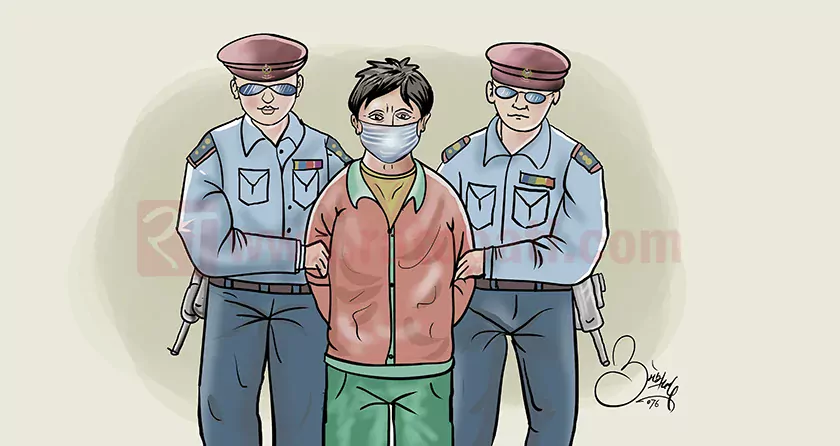
The President of the Nepali Congress Ramechhap district has been suspended based on words expressed during a casual conversation. However, the question arises – if the party considers such limited and informal expressions as serious disciplinary matters, is it not equally necessary to conduct an impartial investigation into the reality of the allegations or comments raised in the same context? If the action is limited to one-sided punishment without investigating the background, context, and truth of the allegations, it is not a judicial process but a decision of revenge. This will ultimately weaken both trust within the party and internal democracy.
Therefore, Gagan-Bishwaprakash, who are now wielding the stick of discipline against cadres based on a few words, are forgetting that if the leadership at that time had applied the same standards to the accusations and aggressive comments they made against the old leadership, their political journey within the Congress would have ended long ago.
The then leadership showed the generosity of viewing their expressions of dissatisfaction, criticism, or sarcasm as part of democratic culture rather than a disciplinary issue. The current leadership suffers from a drought of such generosity.
- Gen Z Movement and Public Outrage Sent a Message
The Gen Z movement of August 23-24 sent a stern political message. On that day, the protestors were not just angry at the old generation; their anger was directed at the entire Congress leadership.
There was an assault on the then President Sher Bahadur Deuba, and his residence was attacked. However, that crowd was not going to Ratopul to search for Gagan Thapa with garlands. The fire of public outrage did not spare his house either. It was publicly discussed that he himself had to escape through the back door for the safety of his family. Not only Bishwaprakash Sharma's house in Jhapa but also his residence in Kathmandu became targets of public anger.
This reveals a serious fact: the public did not see any fundamental moral difference between the old leadership and the new leadership. The public did not accept the narrative of 'old is bad, we are good.' Instead, the public simultaneously expressed dissatisfaction with the entire leadership class.
Therefore, the confidence that 'Sher Bahadur's era is over, now our era begins' was more a propaganda psychology than reality.
- The Election Sent a Harsh Message
The Congress, which went to the public with the slogan of 'New Congress,' presenting Gagan Thapa as a future Prime Minister, suffered its weakest result in history. The party was reduced to 38 seats. Gagan Thapa himself, presented as a contender for Prime Minister, suffered a humiliating defeat from Sarlahi-4.
This was not just an electoral defeat. It was a political commentary from the public. Rejection of the 'speech-centric Congress.' Ultimately, the public looks for work, stability, behavior, and trust; not just eloquent speeches.
In the election fought under the Gagan-Bishwaprakash leadership, the Nepali Congress not only failed to achieve the expected success but was also pushed into its weakest and most helpless parliamentary state in history. The party not only lost seats but also suffered a serious erosion in its political influence, psychological strength, and public trust.
The humiliating defeats in many constituencies, the forfeiture of deposits in some places, and the overall decline in public trust raised a harsh question. If the group claiming leadership change could not expand the party's influence under its own leadership, what was the political basis for that claim? The election results at least showed that simply presenting new faces does not lead the public to accept them as alternative leadership; ideas, organization, results, and credibility are equally necessary.
- The Drama Unfolded After the Defeat
The central committee formed from the special general convention is, in effect, a one-sided structure. Therefore, it was the leadership's responsibility to address the moral and political crisis arising after the electoral defeat in a mature manner. However, the style adopted instead reflected insecurity more than the leadership's confidence.
The announcement of Chairman Gagan Thapa's resignation after the party's weak performance in the election and his own personal defeat seemed more like an emotional and dramatic presentation than a serious expression of political responsibility. Furthermore, the process of having it 'rejected' by the central committee gave the impression of a cheap political stage.
This is because the outcome was already clear: a committee formed from a one-sided structure had no possibility of accepting that resignation. Therefore, this incident gave the impression of a political performance aimed at 'seeing how much the party wants me' rather than self-criticism and responsibility.
In politics, behavior after defeat reveals a leader's true stature. Mature leadership engages in self-reflection after defeat, increases dialogue within the organization, listens to criticism, and tries to build new trust. However, here, the opposite was observed – an attempt to use defeat as a means to generate sympathy.
- Ambition to Displace BP's Legacy
Instead of going to the public by centering on BP Koirala's ideological legacy, democratic philosophy, and historical brand, the Gagan-Bishwaprakash group in the last election tried to establish themselves as a new political brand. During the election campaign, there was a greater tendency to promote the leadership's personal image than to strongly present BP's ideas, philosophy, and political ideals.
Even in many official materials and banners used by the party for publicity, the presence of current faces was prioritized over that of the Congress's founders and historical leaders. It was as if the branding of the new leadership itself was considered sufficient, overshadowing the party's ideological legacy.
However, the strength of the Nepali Congress has never been limited solely to its current leaders. Its real strength lies in the ideological, moral, and historical capital built by leaders like BP Koirala, Ganesh Man Singh, Subarna Shamsher, and Krishna Prasad Bhattarai. This legacy had given the Congress a distinct identity from other parties for decades.
But when the party pushed its own historical soul to the background and prioritized building an individual-centric brand, its original identity began to fade. Emotional connection with the public, historical trust, and ideological continuity are not built solely by new faces or attractive slogans. A connection with history and loyalty to ideas are equally necessary for that. The last election starkly revealed this reality.
- False Promise of General Convention and Politics of Control
Upon being declared chairman after the special general convention, Gagan Thapa announced that the party's 15th general convention would be held within three months. That announcement was then presented as a 'commitment to quickly bring the organization onto the path of legal unity.'
However, months have passed, and there is no clear roadmap for the general convention. Instead, signs indicate that the process will be prolonged under the pretext of re-updating active memberships that have already been renewed online.
Many within the Congress do not consider this a mere technical process. In their understanding, this is a strategic attempt to keep the party membership structure under their control. This is because, in the Congress, membership is not just a number; it is the basis of power in the general convention, representation, and ultimately, leadership.
Therefore, the question being raised now is not just technical but also political – is there an attempt to delay the general convention and take the organization out of shared ownership and into 'digital control?'
If the internal democracy of the Congress is limited to membership control, procedural delays, and group monopoly, it will be the greatest blow to the soul of the Congress.
- Politics of Quotas and Moral Contradiction
Another major contradiction of the Gagan-Bishwaprakash trend is that while they publicly criticized the old leadership as symbols of quotas, protectionism, and opportunism, in practice, they themselves became the most aggressive participants in that very culture.
The events within the Congress, where they exerted extraordinary pressure to establish their own people in ticket distribution, ministerial selection, parliamentary opportunities, and various appointments, while constantly clashing with Sher Bahadur Deuba and the older generation, are not hidden matters.
The incident where an extraordinary struggle occurred with their own chairman for the appointment of a Vice-Chancellor of a health institute, even for a Nepali doctor living abroad, shows the true character of their power-sharing. This raises a question: if the old leadership was 'quota-based,' in what way did the new leadership differ, other than age and personal health?
The party treasurer was appointed by both former chairman Sher Bahadur Deuba and Gagan Thapa as the same individual. If Thapa opposed Deuba appointing him as treasurer, why did Thapa then appoint the same person as treasurer, violating party statutes?
This is because only the faces changed in the party, not the style and culture.
- Politics of Speeches and Construction of Self-Hatred
To make themselves appear superior, the Gagan-Bishwaprakash trend has, for a long time, presented the Congress to the public as a weak, corrupt, failed, and shameful party. By publicly attacking their own chairman, their senior leaders, and their own organization, they tried to portray themselves as the 'good Congress' and everyone else as the 'bad Congress.' But what was the result?
Gradually, the collective morale of the Congress weakened. Cadres lost confidence. Supporters became disillusioned. Even among Nepalis living abroad, the speeches of these leaders played a significant role in creating the narrative that 'Congress should not be voted for.'
Criticism is necessary in politics. However, politics that continuously burns down one's own house to appear 'bright' is ultimately self-destructive.
- The Gap Between Words and Actions
Initially, the public was attracted to Gagan-Bishwaprakash. They liked their speeches, energy, and presentation. They seemed like symbols of hope. But over time, a question began to arise: 'What have they done besides talking?'
Continuous speeches in politics can have an effect for some time, but ultimately, the public seeks results. When the distance between speech and behavior increases, the leader's value in the public's 'political stock market' begins to decline.
The decline in the popularity of Gagan-Bishwaprakash today is not a conspiracy; it is a natural reaction to the gap between expectations and results.
- Where Does the Congress Go Now?
Today, the question is not just about Gagan or Bishwa. The question is about the future of the Congress. Will the Congress return to its historical collective character? Or will it now be limited to the digital brand of a few individuals? In this election, the Congress secured 38 seats based on the prestige of the old generation, organizational influence, and historical legacy. Now the question arises: if this trend continues, does this leadership have the capacity to cross 38 seats in the next election?
Politics does not run solely on 'trends.' A party does not survive on 'image' alone. The power to save a historical organization like the Congress still lies in shared acceptance, coexistence, respect, and collective leadership.
This is the truth that Gagan-Bishwaprakash still needs to understand – the Congress is not anyone's private startup. It is an institution built on the history, sacrifice, and emotions of millions of people. And an attempt to create history anew through 'denting-painting' only changes the color, not the soul.
This specific news has been automatically translated by AI. As a result, there may be some inaccuracies or language errors.