
Fascism: A Multifaceted Analysis and its Manifestations

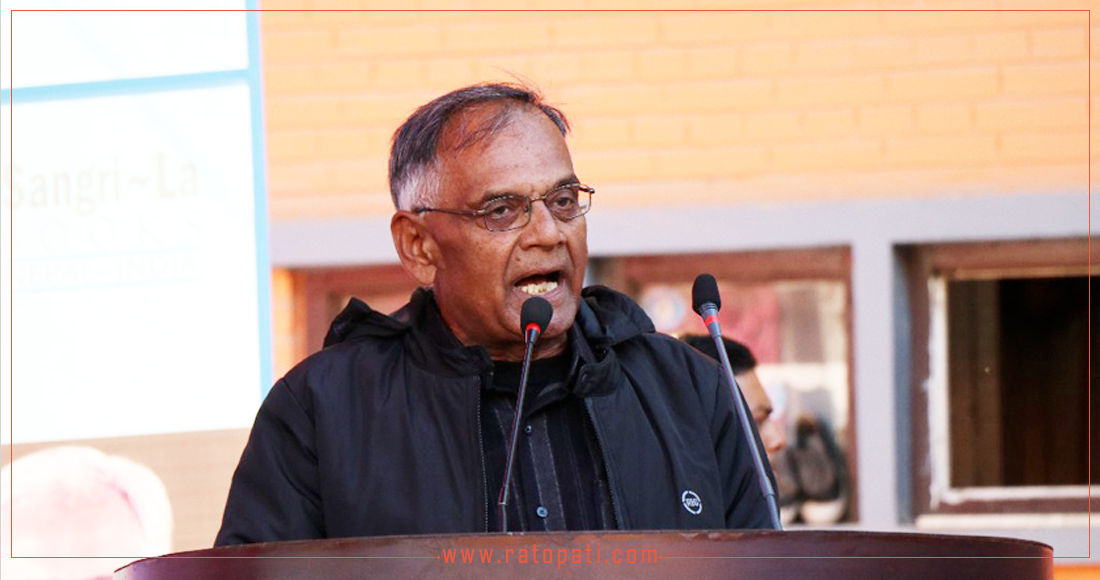
‘I do not think that under the guise of balance, or in the name of not speaking during the honeymoon period, one should give concessions. If an animal walks like a dog, barks like a dog, and looks like it has gone mad, can one leave it, thinking, let it bite first, and then we will move towards a solution?’
As a governmental term, 'fascism' needs to be viewed from five dimensions. First, it involves religious fanaticism. Just as Christ was nailed to the cross; that kind of religious fanaticism, which led to the 'Crusades', which led to injustice against Dalits in Hinduism. What Buddhists have done to Rohingyas in Burma or to Hindus in Sri Lanka. This is all a dimension of religious fanaticism.
The second dimension of fascism is nationalism. Patriotism is a good thing, but nationalistic fervor, which makes one ready not to die for the nation, but only to kill for it; such nationalistic fervor is a political dimension of fascism.
Third, it has a social dimension. That is 'hatred towards the other', which says 'I don't know you, therefore I hate you'.
Then, fourth comes 'demagoguery'. This is expressed as hysteria. It says 'only we can save'.
And fifth, 'populism' is added. The economic aspect is linked to this.
When all these five dimensions are combined, it naturally becomes an extremely autocratic system of governance. In Italy, this was called 'fascism'. In Germany, it was called 'Nazism'. In India, it would have to be called 'Hindutva' rule. In Nepal, the closest term in established vocabulary is 'Ranaism'. This is similar to dictatorship.
However, fascism that appears on the surface of society each time has its own characteristics. The era we are living in now is a commercial era. This can be viewed from two angles. One, if there is demand, there is supply. Another, the supplier creates demand.
Political entrepreneurs always create demand. From a social perspective, the demand for fascism increases in times of increased uncertainty in society. When 'order rather than justice' i.e., 'not justice, but rule and order' becomes more important in society, fascist character gains patronage in society.
Systems operating in the name of military dictators, elected autocracies, hereditary rule, or the plutocracy of big businessmen worldwide are all forms of fascism.
In old-fashioned fascism, disciplined armies were prepared, and it was mainly implemented through military rule by enforcing laws. Today's suppliers do not have to go through so much trouble. Because a group has emerged in society that sees this as an opportunity, who looks like you and me.
The tools of propaganda have become so powerful that suppliers do not have to bother with building organizations for years, disciplining them, or buying weapons. Because economic, social, and cultural inequalities unseen in history are most intense at this very time. And inequality breeds extremism.
Systems operating in the name of military dictators, elected autocracies, hereditary rule, or the plutocracy of big businessmen worldwide are all forms of fascism.
At first glance, it doesn't look like fascism, but its essence is fascist.
Let's look at the socio-cultural basis of what we are trying to discuss as fascism. First, let's look at its foundations in Nepal, and then it will be relevant to look at it in global terms.
Let's look at the current security situation. We have seen that even a shop owner or factory owner, whether ordinary or billionaire, can be imprisoned without basis. That is, there is economic insecurity. There is no need to talk about unemployment. The number or situation of those migrating abroad tells the story.
Even when a bird leaves its nest, it says it will return in the evening. We are like birds who have to leave so that we don't have to return to the nest. There is extreme disillusionment with the state. That is, there is no hope that the state will do anything good. The state of corruption is the same. While greasing and oiling machinery is common to run machines, here one has to pay money to get work done for tax payment.
There is a situation where work doesn't get done without money, and corruption is done by making rules. The tension everywhere regarding caste, religion, region, language, Madhes-Pahad identity does not allow people to live comfortably in their true nature.
Balendra Shah has had to become a Suryavanshi. Tribals have had to say our ancestors were chiefs. That is, they have had to say we are like kings. Federalism has been adopted but is in crisis. Secularism is only in name. And true secularism does not exist anywhere. Amidst all this, one has to say where the republic has reached.
Precisely at this time, the psychology of 'only a strong leader can fix everything', 'a new Jang Bahadur must be born', and 'corrupt people should be hanged in Tudikhel on a Khari tree' (perhaps Tudikhel no longer has a Khari tree, so it must mean hanging on a stage) governs everyone.

Now let's look at the international dimensions of fascism.
I feel that fascism is not a crisis of leaders or parties, but a product of social crisis. This crisis is turned into an authoritarian solution by an ambitious person. He says, 'If you elect me, I will fix everything', 'Trust me'. The insecurity of the middle class adds fuel to the fire, as happened in Italy and Germany.
In fact, the middle class fears pressure from below and the elite from above. For example, until my father's time, if I worked hard to educate my son, or opened a small shop, or accumulated land, there was hope that he would become a little prosperous. But by the time of my son, the middle class no longer feels that way.
In middle-class families, people are starting to feel that their children's future will not be better in this country, not just in Nepal, but even in America. The ability to buy an apartment in America and a house in Nepal with one's honest earnings is becoming increasingly narrow. In India's metropolitan cities, it is almost impossible.
Such utter darkness and uncertainty about the future strengthens fascist practices.
Fascism embraces ethnic nationalism. 'We were great', 'Enemies conspired to ruin us'.
And fascism gets an opportunity to flourish even if social revolutions go astray midway. If you start a social revolution and abandon it midway – the state of disappointment after raising hopes creates an environment for fascist forces to grow.
And what do fascists do? Instead of seeking the real solution to the problem, they create an enemy. It is even better if that enemy is external. If it is internal, it is easier to accuse that relatively smaller community of being of a certain race or being anti-national.
Fascism embraces ethnic nationalism. 'We were great', 'Enemies conspired to ruin us'. 'Everything will be fine after they are dealt with', 'These lice must be killed', and only then will we become 'pure'.
Fascism also benefits from the weaknesses of democracy. In a democracy, many parties compete for elections. In such a situation, votes are divided among many. Everyone thinks they are right in their principles. Precisely at this time, a shrewd political entrepreneur emerges, making this the main issue.
Umberto Eco has identified certain characteristics of fascism. These are the worship of tradition, the unacceptability of critical thinking, fear of difference, conspiracy politics, worship of the powerful, glorification of violence and discipline, and the reduction of complex ideas to simple slogans.
Therefore, fascism today does not return in its old guise. It comes in new forms according to the times – sometimes in the guise of ethnic nationalism, sometimes religious nationalism, sometimes crime control, sometimes anti-corruption, sometimes national security, etc.
In such a situation, the question arises – what is the character of the elected rulers of our country, and what is appropriate to call them?
I think it is better to call Balen Shah's rule elected Ranaism than anything else. For now, let's not weaken the word fascism. He can also be called a dictator, but I don't like that word. I wonder why we should say 'dictator' when there is a word like 'Ranaism' in our country that is similar.
His surname also rhymes with Ranaism. Looking at the character of our Suryavanshi Balendra Shah and his Ranaism, the objective is 'this country is not ready for democracy', 'this country cannot run according to constitutionalism', 'the basis for running this country is a strong ruler'.
If a hereditary strong ruler is brought, the international situation and neighbors will not accept it. But if there is an elected ruler, it has a certain legitimacy. Therefore, they speak in a way that 'this country will be built', 'it will be free of corruption', 'it will be led on the path of development', 'it will be made possible to buy land on Mars'.
Technology today is a 'control multiplier'.
This means maintaining the status quo of capitalism economically, Brahminism socially, and Hinduism culturally. What does all this combine to form? It means that this country should be run through elected Ranaism. Those who agree with this idea are the elites in Nepal. Suryavanshi Balendra Shah seems to have grasped this well.
Today's technology is helpful for that. The strongest example of this – during King Mahendra's time, a telephone had to be shut down in Dhangadhi due to a riot. Mahendra told the Zonal Commissioner, the Zonal Commissioner told the manager of the communication company there. He said he had to ask Kathmandu for this. It took three days to ask Kathmandu and switch off the telephone in Dhangadhi, and by then the riot there had subsided, so the telephone didn't need to be shut down. But today, this matter has become like a story.
Technology today is a 'control multiplier'.
Regarding how fascism works, Ernst Frankel, a scholar from Princeton University who escaped the Holocaust and went to America, stated in his book 'The Dual State' that it works on two levels. For one group of people, it runs the legal administration, courts, and elections. Those who benefit from this feel that everything is fine, normal. That is, trains are starting on time. All employees are coming to the office on time. But along with that, a parallel state is also running.
What is the parallel state like? Whatever the ruler likes happens, whatever he doesn't like doesn't happen. Those he dislikes are killed, and those he likes get positions and make a lot of noise. And the intellectual class of society, so as not to have their livelihood threatened, says everything is fine, good, in the name of balance. This gives the most power to the ruler, or rather, to the Ranaism.
Now, in such a situation, you tell me yourself – under the guise of balance, in the name of not speaking during the honeymoon period, in the name of a ruler who came to power based on popular mandate, do I think one should give concessions? If an animal walks like a dog, barks like a dog, and looks like it has gone mad, can one leave it, thinking, let it bite someone first, and then we will move towards a solution?
(Edited excerpt from the speech delivered by intellectual CK Lal at 'Fascism Manthan' organized at Pragya Pratishthan on Friday.)
This specific news has been automatically translated by AI. As a result, there may be some inaccuracies or language errors.



_cvUCBlwFTZ.jpg)