Mecavity: A Political Metaphor for Nepal's Accountability Crisis
T.S. Eliot's famous poem 'Mecavity: The Mystery Cat' appears at first glance to be the story of a mysterious cat. But upon deeper reading, it stands as a sharp satire on power, deceit, the weaknesses of legal structures, evasion of responsibility, and impunity.
The poem's most famous line, 'Mecavity is not there,' is not merely a description of a fictional character; it is a symbol of the power structure that is present in the shadow of events and consequences, yet becomes invisible at the moment of accountability.
This is why Mecavity has become more of a political and social metaphor than a literary character today. Events occur, damage is seen, victims are seen, investigations are conducted; but when the final question arises, 'Who is responsible?' the answer begins to blur. The culprit's face disappears into the fog. This metaphor of Eliot does not seem unnatural when looking at Nepali society and politics.
Nepali literature has also raised such questions long ago. Bhanubhakta Acharya satirized the administrative delays, influence-based governance, and injustice of the time. Bhupi Sherchan questioned power, opportunism, and directionless leadership through 'Ghume Mechma Anadha Manche' (The Blind Man on a Revolving Chair).
B.P. Koirala's literary characters exposed the moral conflict and crisis of consciousness within people more than external political structures. The common concern of all these works appears to be the same – injustice occurs in society, suffering occurs, but why does the culture of taking responsibility remain weak? Today, this is also an uncomfortable question for Nepali democracy.
- From Narayanhiti to Dasdhunga
The Narayanhiti Palace massacre of 2001 (B.S. 2058) is one of the most mysterious and painful events in modern Nepal. An investigation committee was formed, a report was submitted, and official conclusions were made public. But even after more than two decades, a large section of society still has the question, 'Did the whole truth come out?'
A similar situation is seen in the Dasdhunga incident. Debates have been ongoing for decades regarding the deaths of popular leaders Madan Bhandari and Jivraj Ashrit. Various reports have come out, political parties have conducted their own investigations, and protests have occurred. But even today, that incident has not been completely free from controversy.
The purpose of this writing is not to hold anyone guilty in these incidents. The question is simply this – why do doubts and distrust persist more than official conclusions in such incidents? Why does the question of accountability remain incomplete in the minds of citizens?
- Change Came, Questions Remained
Nepal's armed conflict claimed the lives of thousands of Nepalis. People from all sides – teachers, farmers, security personnel, ordinary citizens – suffered. Political change occurred, a republic was established, and a constitution was drafted. But conflict victims' families still have not felt justice.
The transitional justice process has been ongoing for decades. Commissions have been formed, reports have been prepared, but the questions of truth, justice, and reconciliation remain sensitive.
This is also the situation in famous cases of crimes against women and girls. From the Namita-Sumita case to Nirmala Pant, the system of governance has changed, but the question of why public trust in the investigation and justice process has not been fully established remains alive.
Society remembers the victims' names, but many times the culprits' faces remain blurred.
- Crisis of Accountability
Issues such as corruption, abuse of power, hooliganism, nepotism, cooperative fraud, gold smuggling, misuse of public property, and administrative irregularities have been at the center of public debate in Nepal for decades. Every movement raises these issues. Every new change in power promises to solve these problems.
But citizens have a common experience – issues are raised repeatedly, commissions are formed, reports are prepared, but at the final conclusion, the question of accountability becomes blurred.
The problem is not of one party, one leader, or one system alone. The problem lies in the political culture where criticism is considered uncomfortable. Questions are understood as opposition, and accountability is considered a weakness.
- GenZ Protests and New Questions
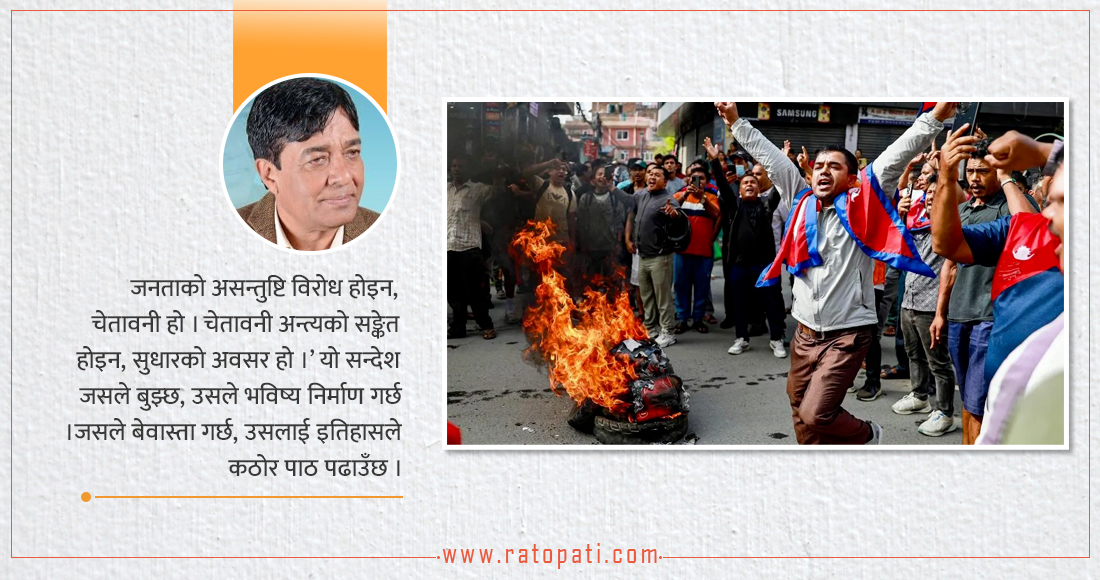
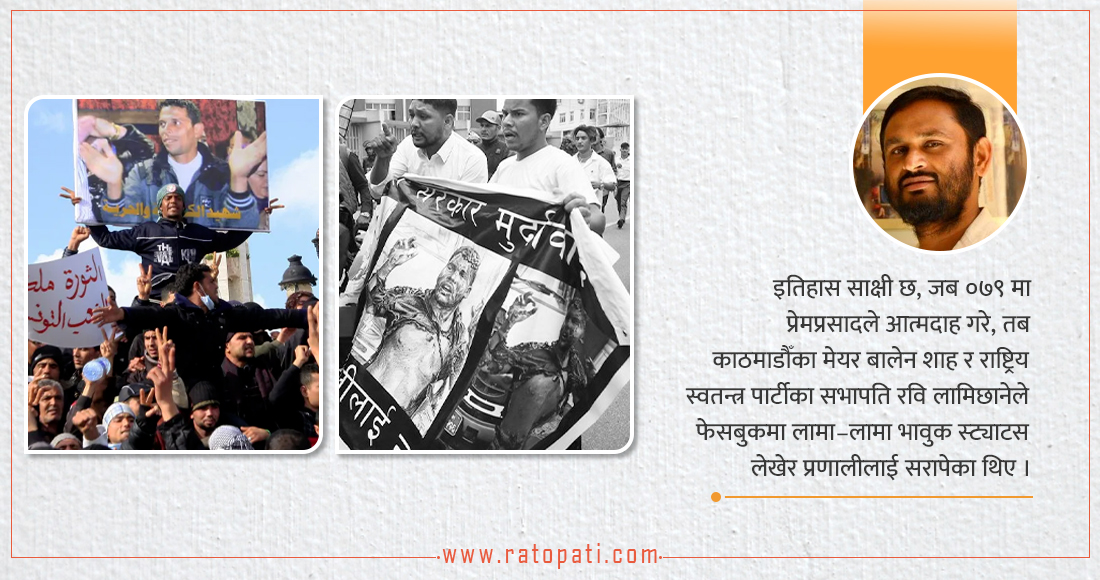
In recent years, the younger generation has participated in various movements expressing dissatisfaction with corruption, unemployment, administrative delays, and traditional political leadership. These movements have generated new debates about the state, politics, and citizen relations.
In such movements, the most important question is not just violence or political outcomes, but also the subsequent accountability. When public and private property is damaged, when institutions weaken, when society is divided, who takes responsibility?
In a democracy, the right to protest is as important as accountability.
- Balen and the Hope of the New Generation
Dissatisfaction with the old political culture has given rise to a search for new leadership. The rise of Kathmandu Metropolitan City Mayor Balendra Shah (Balen) is seen by many youths as a result of this psychology. He became a symbol of direct and results-oriented leadership, different from the old political style.
This also sent a positive signal – the younger generation has not completely abandoned politics. They are looking for new alternatives. But here is also an important democratic question. Is popularity alone sufficient? Can an individual's charisma replace institutional accountability?
In a democracy, the ultimate test of any leadership is not popularity, but accountability. Parliament, media, civil society, and public questions are essential components of democracy. If any leadership rises above criticism, it is not a healthy sign for democracy.
History has shown that hero worship and blind support weaken democratic institutions in the long run. Therefore, citizens need the consciousness to question new leadership just as they question the old leadership.
- The Problem is Structural, Not Individual
Nepal's challenge is not just to remove 'bad leaders'. The challenge is to build a responsible, transparent, and institution-oriented democratic culture.
Democracy begins with elections, but matures only when it reaches accountability. No political change can be sustainable unless the parliament, judiciary, commissions, media, and civil society all perform their roles honestly.
We have seen repeatedly in the past – governments change, parties change, faces change; but if the political culture does not change, the problems remain the same. New figures may also repeat the old tendencies.
Therefore, Mecavity is not an individual. It is any power that seeks to rise above accountability. It is not limited to any party, ideology, or position. Where there is power but no accountability, where there is a decision but no responsibility, where there is influence but no answer, there Mecavity is present.
- Conclusion
Eliot's Mecavity is not just a literary character for Nepal today; it is an uncomfortable mirror of our political culture. From the palace to the street, from commissions to courts, from protests to governments, we are repeatedly asking the same question – 'Who is responsible?'
The success of democracy is measured not only in elections but in accountability. Citizens who ask questions are more essential for democracy than cheering crowds. Transparency should be stronger than popularity, accountability stronger than power, and institutions stronger than individuals.
Because as long as citizens have to repeat the same feeling of 'Mecavity is not there' after every major incident, our democratic journey will remain incomplete. True maturity of democracy is possible only when society builds a culture that ensures accountability, not just finds culprits. This is the deepest political message given by Eliot's poem.
This specific news has been automatically translated by AI. As a result, there may be some inaccuracies or language errors.