Nine Local Levels Fail to Present Budget by Legal Deadline


Kathmandu. The first historic local level election was held in the last week of Baishakh 2074 BS as an important step in the implementation of federalism in Nepal. Since then, local level elections have been held for the second time, and representatives of the second term have taken over their responsibilities.
The legal deadline for the current representatives to present the annual budget for their respective terms has already passed. Despite holding local elections twice and gaining extensive experience in local governance, the inability to finalize a fundamental and sensitive issue like the budget on time indicates that the financial discipline of local governments is still weak.
As stipulated by the Local Government Operation Act, 2074 BS, all local levels in the country must present the budget for the upcoming fiscal year to their respective assemblies by Ashad 10th of each year and must pass it by the end of Ashad. However, by exceeding this clear legal provision and deadline, nine local levels across the country failed to present their annual budget and became budgetless this year, even after the current fiscal year began.
Local Government Caught in Conflict, Now Budgetless
According to official data from the Federal Affairs Branch of the Ministry of Land Management, Cooperatives, and Federal Affairs, the nine local levels that could not present their budget within the legal deadline include one sub-metropolitan city, four municipalities, and four rural municipalities.
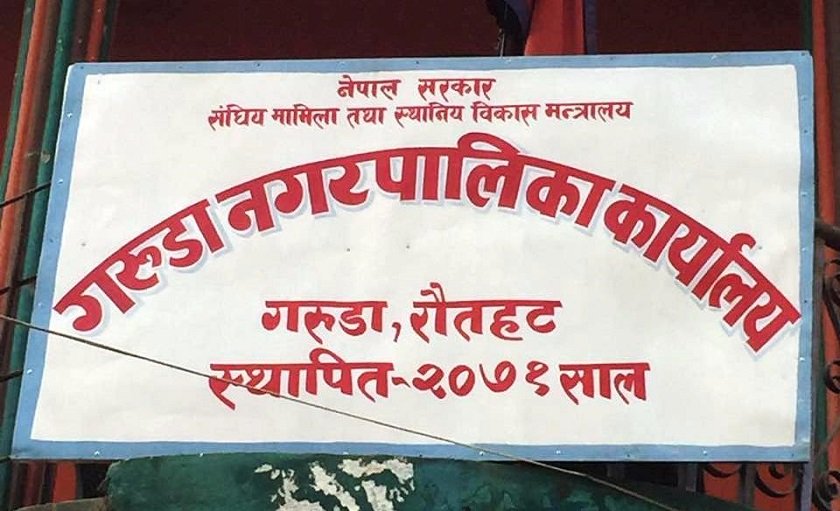
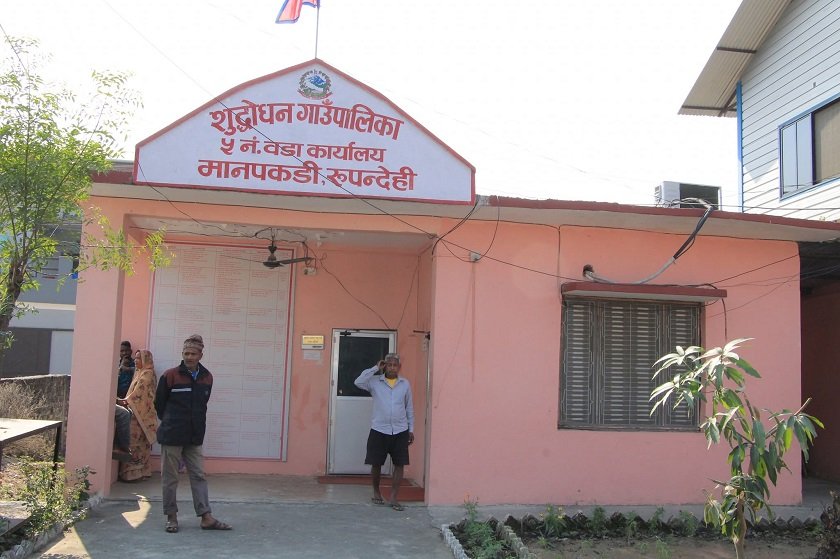
Among the local levels that have not yet presented their budget are Dharan Sub-Metropolitan City in Sunsari district, and in Rautahat district, Maulapur Municipality, Fatuwa Bijaypur Municipality, Garuda Municipality, and Yamunamai Municipality. Dhanusha district's Kamala Municipality is also on this list. Similarly, among the rural municipalities, Kotihimai Rural Municipality in Rupandehi, Shuddhodhan Rural Municipality in Kapilvastu, and Chhipaharmai Rural Municipality in Parsa have not yet presented their budget.

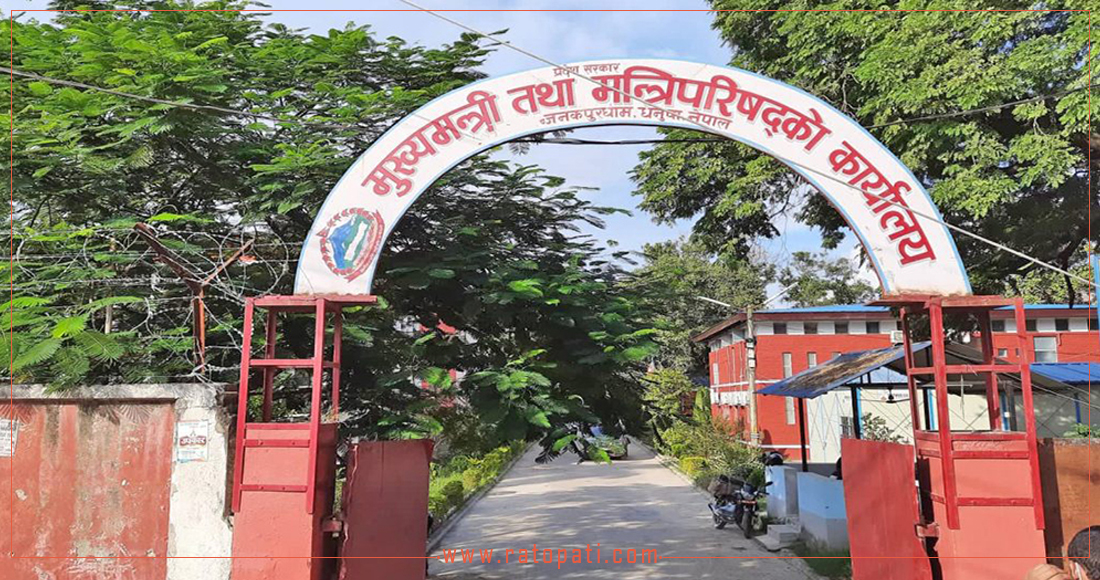
The ministry understands that the reason for the absence of budgets in local levels is not due to any technical difficulties or procedural complexities, but purely due to internal political conflicts and power struggles among the representatives. 'In some local levels, ward chairpersons are adamant about not convening the assembly until their personal and party demands regarding plan and budget allocation are met, while in other places, conflicts between the party holding a majority in the executive and the head of the local level have prevented consensus,' says an undersecretary at the ministry.
In addition, in some municipalities, disputes within the executive have also halted the budget process due to attempts to create budgets by showing unrealistic internal resources without practical and objective evaluation.
Despite Ministry's Efforts, Budgets from All Municipalities Not Received
During the same period last fiscal year, the number of local levels that failed to present their budget on time was 27. To prevent the recurrence of the same problems as last year, the ministry deployed three special teams led by joint secretaries this time to facilitate the process. Last year, a significant lack of chief administrative officers in local levels was considered a major reason for not receiving the budget on time. Keeping this in mind, this year, the ministry appointed chief administrative officers as per the staffing norms in all municipalities except for 18, during the critical budget presentation period. In contrast, during the budget presentation time of the previous fiscal year, more than two hundred local levels were operating with acting chief administrative officers.
With the aim of motivating local levels to present their budgets on time, the ministry continued various creative and administrative efforts this year as well. 'This time, we deployed special teams to resolve various complexities arising in the budget preparation and approval process, and continuously engaged in contact, dialogue, and coordination with the heads, deputy heads, and chief administrative officers of the concerned local levels from the ministry's side,' says Deepak Dhakal, an undersecretary at the Federal Affairs Division of the ministry.
According to him, the ministry also provided necessary consultation services for technical and procedural uncertainties or for formulating the budget framework during budget preparation. Although there has been some positive improvement in the number of local levels presenting their budgets on time this year compared to previous years due to the ministry's continuous follow-ups and intensive facilitation, the budget process in these nine local levels has been completely obstructed due to the inability to resolve mutual misunderstandings and narrow political interests.
A joint secretary from the ministry, who has served as a chief administrative officer in a local level, says, 'Due to the non-passage of the budget on time, new development plans and programs cannot be approved in those local levels, creating a serious risk of halting overall development activities and preventing capital expenditure.' He adds, 'Furthermore, since the legal path to spend from the local level's consolidated fund is closed, there is extreme difficulty and slowness in daily administrative operations, distribution of employee salaries and allowances, and the provision of basic daily services to citizens.'
12 Palikas Have Not Entered Budget in Ministry Portal
Although the number of local levels that have physically not passed the budget is only nine, the number of palikas that have not entered the budget details into the official online portal of the Ministry of Land Management, Cooperatives, and Federal Affairs is still 12. According to the data from the ministry's local level budget update system, out of a total of 753 local levels nationwide, only 741 palikas, or 98.41 percent, have successfully entered their budgets into the system so far, while the budget details of the remaining 12 local levels, or 1.59 percent, are yet to be updated in the system. This numerical difference arises because some local levels have physically passed their budgets in their assemblies but have not entered the details into the ministry's portal on time.
'Financial Indiscipline'
Subash Shivakoti, a joint secretary in the Government of Nepal and an expert in local level financial administration, characterizes the failure of local levels to present and pass budgets on time as 'financial indiscipline.' 'This is purely a state of 'budgetlessness' because a budget holiday refers to a special situation arising from systemic or constitutional changes, but here, the budget has not been presented due to irresponsibility in completing regular and established procedures, so it must be understood as a severe lack of financial discipline,' he says.
According to Shivakoti, the first fundamental aspect of local level financial discipline is to present the budget within the stipulated time, and the second aspect is to spend the allocated budget on time, ending the tendency of late spending, i.e., 'Ashare Bikas' (development in the month of Ashad). 'The failure to present the budget within the stipulated time clearly indicates a deep problem in the internal system of the concerned municipality and signals a significant erosion of accountability to the citizens among the representatives,' he adds. 'Although they may not face direct legal punishment, this is a serious weakness in the scale of accountability because the entire expenditure system is halted due to the lack of a budget, ultimately affecting citizens' right to receive services and development activities.'
He stated that the legal provision requiring the budget to be presented by Ashad 10th has created at least some pressure, leading to the current situation, and if this deadline had not been set, the financial situation of the local levels would undoubtedly have been even more dire and chaotic.
'However, since such problems related to budget and expenditure systems exist at all three levels—federal, provincial, and local—it is not fair to view all local levels negatively by putting them in the same basket, because some local levels have maintained extremely excellent and exemplary financial discipline compared to the federal and provincial governments. In the current situation where even the federal and provincial governments are unable to fully implement their budgets, some municipalities have demonstrated exemplary work,' he said.
This specific news has been automatically translated by AI. As a result, there may be some inaccuracies or language errors.