Andy Burnham to Become UK Prime Minister on Monday
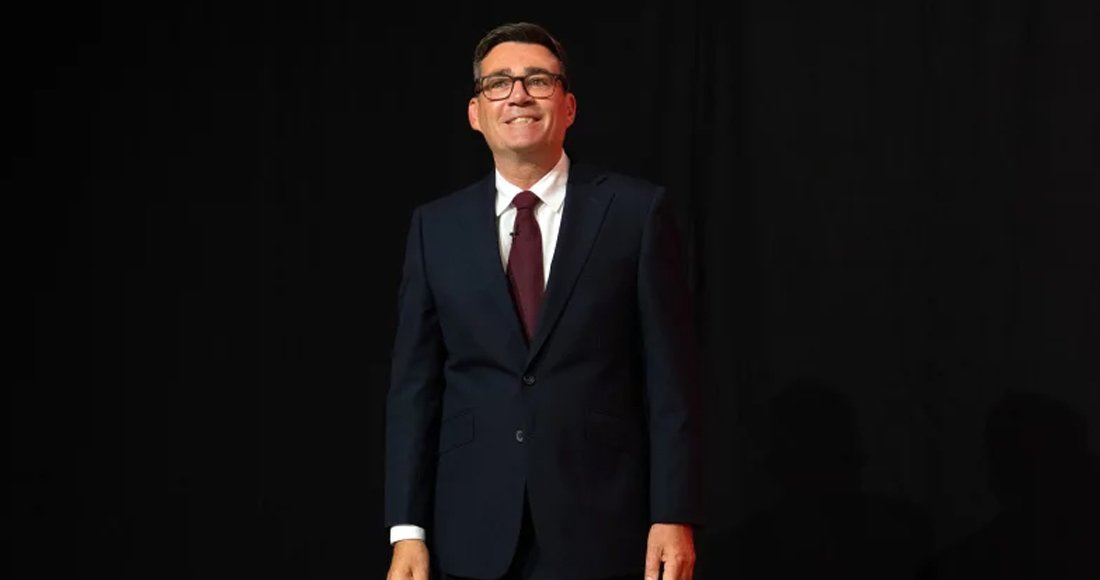
London. Andy Burnham is to become the UK's new Prime Minister on Monday after winning the leadership of the Labour Party. He is set to take over the leadership of the government after former Prime Minister Keir Starmer resigned. Here's how the process of power transfer will proceed:
Burnham, 56, known as 'King of the North', left Westminster almost a decade ago to become Mayor of Greater Manchester. He returned to Parliament just a few weeks ago and immediately won the leadership of the Labour Party. He will be the 59th Prime Minister of the UK and the seventh Prime Minister to reside at '10 Downing Street' in the last 10 years.
- Who is Andy Burnham?
Burnham served as a minister in various Labour governments before leaving Westminster in 2017. He then became Mayor of Greater Manchester.
He became one of the UK's most prominent regional leaders for his vocal advocacy for Northern England during the COVID-19 pandemic and his campaign to boost regional investment. This is why he was given the nickname 'King of the North'.
Known for his accessible and people-friendly style, Burnham has presented himself as different from traditional Westminster politicians. During his leadership campaign, he said, 'I said I would do politics differently, and I have put that into practice.'
According to his supporters, this style has made him one of the most popular leaders in the Labour Party. But now he will have to deal with the same challenges Starmer faced, such as a sluggish economy and high cost of living.
- When will Burnham become Prime Minister?
Burnham will be formally invited to form a government after Starmer submits his resignation to King Charles III at Buckingham Palace. As soon as he accepts that invitation, he will become Prime Minister.
He will then go to 10 Downing Street to deliver his first address as Prime Minister and begin forming his cabinet.
- King Charles will invite him to form a government
After accepting Starmer's resignation, King Charles will summon Burnham to Buckingham Palace and ask him to form a government. Although this traditional ceremony is called 'Kissing Hands', current Prime Ministers only exchange a brief greeting during their private meeting with the King.
- Entry into Downing Street
Burnham will then proceed to the Prime Minister's official residence at 10 Downing Street, where he is expected to deliver his first official statement. This entire process is usually broadcast live on television and completed within a few hours.
While the transfer of power in the US can take months, in the UK, the process of a new Prime Minister moving into Downing Street typically takes only a few hours. Most belongings are usually moved in advance.
Interestingly, the famous black door of 10 Downing Street has no keyhole on the outside. That door can only be opened from the inside by security personnel on duty 24 hours a day.
- Formation of a new government
Immediately after becoming Prime Minister, Burnham will begin forming his cabinet by appointing senior ministers, including the Chancellor, Foreign Secretary, and Home Secretary. In the UK, there is no need for an oath-taking ceremony or parliamentary approval after the appointment of a Prime Minister. The government takes immediate charge.
- Burnham's priorities
According to British media, one of Burnham's first significant decisions may be to place Thames Water under a 'special administration regime'. This will bring the company under temporary public control while it undergoes restructuring.
In his first address after becoming leader of the Labour Party, Burnham pledged to set a 'new course' for Britain. He said, 'Today's change is the most significant moment in our politics in the last 40 years. We will build a country where life is affordable and where all regions and communities of the country are uplifted.'
He also promised to lead equally for citizens in all parts of Britain. 'I will be a leader for the North, South, East, and West, as well as Scotland, Wales, and Northern Ireland,' he said.
- Why no general election?
Under the UK's parliamentary system, a change of leader by the ruling party does not require a new general election. Since the Labour Party has a clear majority in the House of Commons, the party's new leader automatically becomes Prime Minister.
As Labour won the 2024 election, the constitution stipulates that the next general election must be held by 2029.
- Why did Starmer step down?
Keir Starmer announced on June 22 that he would resign as leader of the Labour Party after less than two years in office. Various political controversies had escalated during his tenure. Among them, the decision to appoint Peter Mandelson, who had close ties to the late sex offender Jeffrey Epstein, as British Ambassador to the United States became particularly controversial.
His pressure increased after the Labour Party suffered a major defeat in the local elections in May. Burnham, who returned to Parliament after winning a by-election, was supported by many Labour MPs as Starmer's successor.
To be a candidate in the leadership contest after Starmer's resignation, a candidate needed the support of at least one-fifth (20 percent) of Labour MPs. Burnham easily secured that support, and as no other candidate came forward, he was elected unopposed as the leader of the Labour Party.
(From Al Jazeera)
This specific news has been automatically translated by AI. As a result, there may be some inaccuracies or language errors.