Public Procurement (Second Amendment) Act, 2083 Implemented to Address Chronic Development Issues

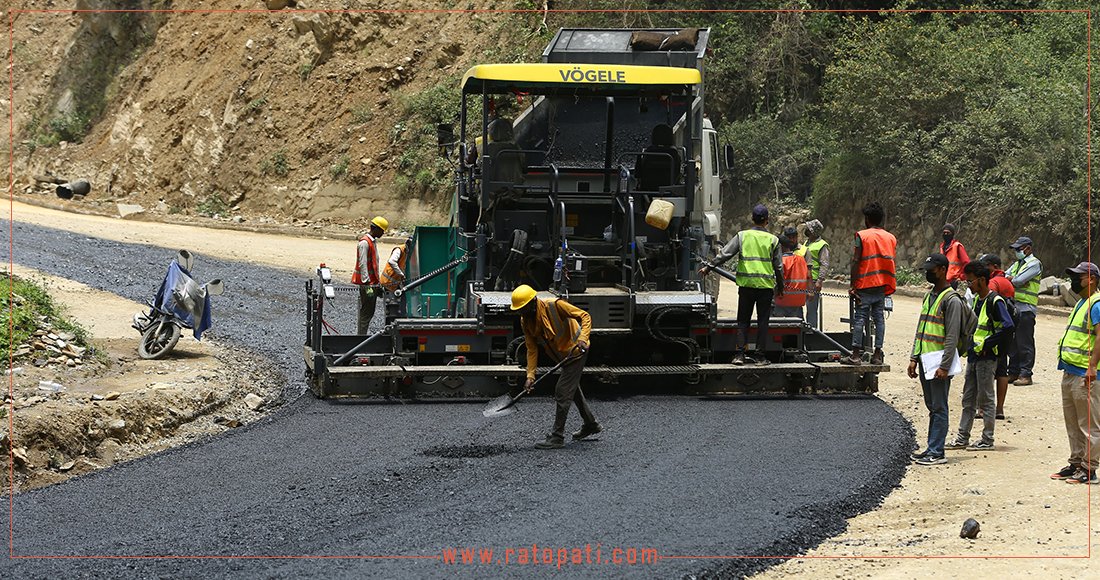
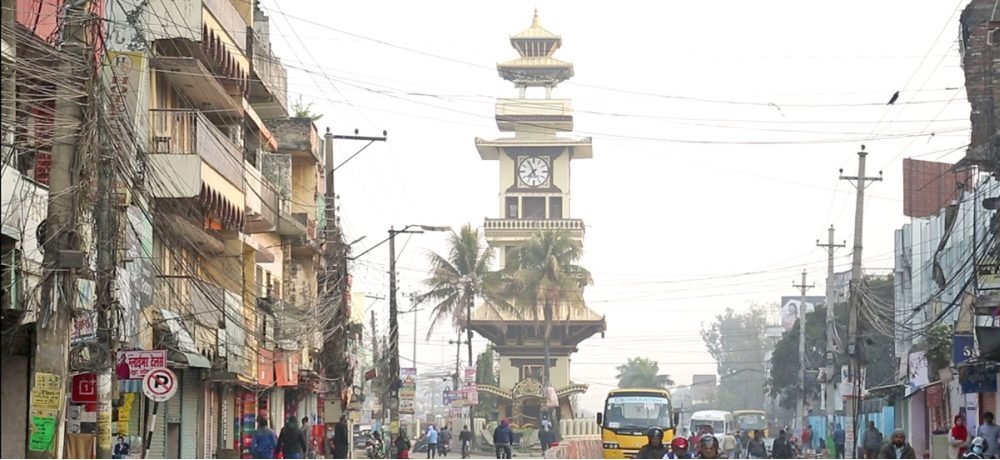
Kathmandu. Whether it is the dust of the Mugling-Pokhara road that flies when the sun shines or the hundreds of bridges across the country that have been left in ruins with only pillars standing for years – these scenes have become permanent 'symbols' of Nepal's development construction.< /p>
Problems such as contractors taking contracts, not completing work on time, taking mobilization advances and disappearing, and workers who work tirelessly not getting paid have prevented Nepal's development construction projects from being completed on time.< /p>
To end such dire scenes, the government has recently amended the existing act and implemented the 'Public Procurement (Second Amendment) Act, 2083'. The government believes that this long-stalled law will seal the loopholes in the contracting system and government mechanisms, ending the 'chronic disease' of overall development.< /p>
Stakeholders say this act will become a powerful 'antibiotic' to revive chronically stalled projects.< /p>
Minister for Physical Infrastructure Development, Sunil Lamshal, said that historic reforms have been made through the Public Procurement (Second Amendment) Act, 2083, to end the practice of development construction projects being left incomplete and delayed. He clarified that the new act will end the tendency to win contracts at low prices and instead select those who offer 'fair prices', not just the 'lowest' bid.< /p>
According to Minister Lamshal, the basis for winning a contract will no longer be just the minimum amount. For this, average bid evaluation methods, quality-cost-based selection, and re-evaluation of the contractor's qualifications and capabilities will be done. Minister Lamshal claims this will end the risk of unrealistically low bids leading to work stoppages, extensions, and reduced quality.< /p>
Minister Lamshal states that the government has made strict provisions in the new law to prevent the tendency of stopping work for various reasons after a project begins. 'The old practice of issuing contracts without budget assurance, site availability, and design and approval has been stopped,' he said. For this, multi-year resource assurance and prior coordination among relevant bodies have been made mandatory.< /p>
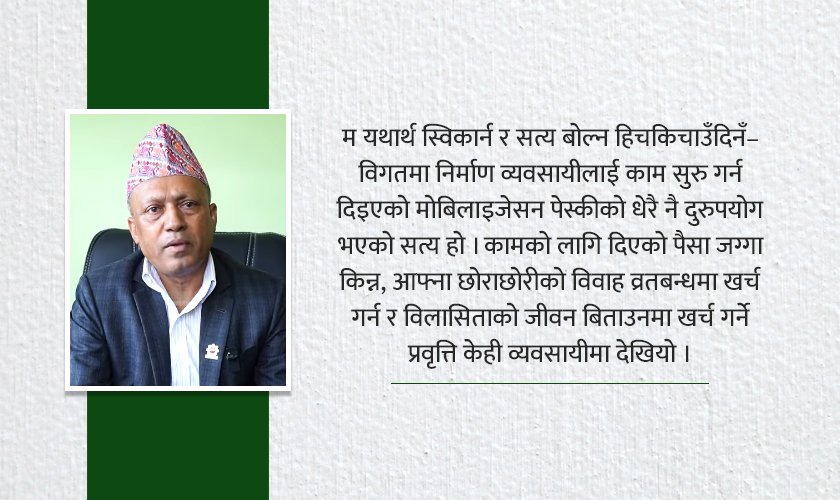
The practice of blaming only the construction entrepreneurs will also end. Minister Lamshal said that the new act will act as a 'legal shield' to prevent construction from stopping.< /p>
- End of 'Low Bidding'
The biggest problem faced by Nepal's infrastructure development sector was unhealthy competition and the tendency of excessively low bidding. It was common to bid 40 to 50 percent below the cost estimate, take a 20 percent mobilization advance after winning the contract, and then leave the project unfinished due to inability to work.< /p>
The Kamalbinayak-Nagarkot road was a victim of this. The tendency of contractors who took the contract at a 35 percent discount to invest the advance amount elsewhere but not work in the field turned this tourist route into the country's infamous road. It had to be re-tendered after 12 years.< /p>
Now, this practice will end, says Ram Prasad Acharya, acting secretary of the Public Procurement Monitoring Office (PPMO).< /p>
He said, 'Due to past unhealthy competition, the number of sick projects increased. To diagnose this, we have now brought the average bid method. Now, along with the technical aspects, economic evaluation will also be done in the construction work. This will help select only qualified, capable, and quality-oriented construction companies.'< /p>
Shivahari Ghimire, general secretary of the Federation of Contractors' Associations of Nepal, also believes that this second amendment will end low bidding. 'Due to the tendency of bidding at half the cost estimate beyond capacity, contractors themselves have become financially distressed,' Ghimire said. 'The federation has long been demanding the average method. The amended act ends the low bidding system and provides for awarding contracts through the average method, so most problems in the construction sector are expected to be resolved. Additionally, limiting the performance guarantee to 5 percent is a great relief for contractors.'< /p>
- Prohibition of Contracts Without Preparation and Break on 'Asare Development'
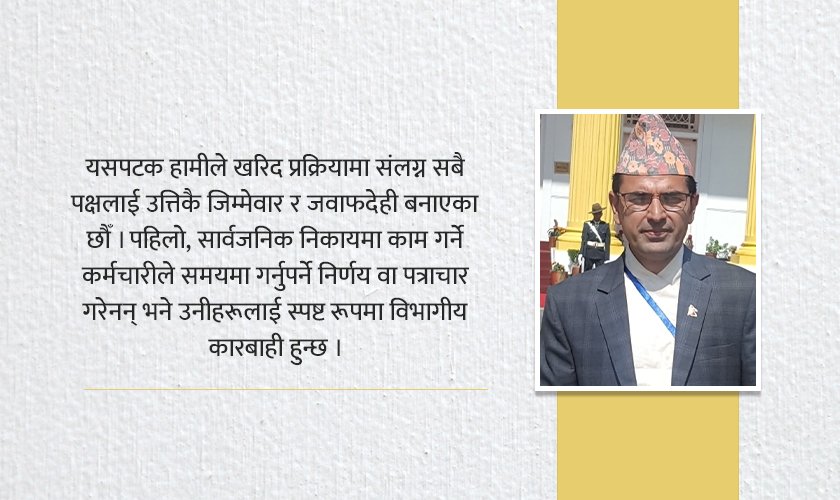
There was a practice in Nepal of issuing contracts in haste without budget assurance and site preparation. Especially in order to prevent budget from being frozen at the end of Ashar and to facilitate commission, contracts were awarded hastily, but work was stopped in the field. Acting Secretary Acharya states that strict provisions have been made in Section 4(a) of the Act to stop this.< /p>
Acharya said, 'Government bodies will no longer be able to issue tenders without land acquisition, compensation distribution, site clearance, and environmental report approval. This will end the situation of contracts on paper and disputes in the field.'< /p>
The Federation believes that this provision will end the practice of making construction entrepreneurs the 'scapegoat'. According to General Secretary Ghimire, contractors had to face undeserved blame due to the hassle of cutting trees and moving poles only after the contract was awarded. Now that the government bodies themselves will resolve issues of compensation and land acquisition, the pace of work will increase.< /p>
- Implementation of Social Security for Workers is Challenging
The most progressive but practically challenging aspect of the new act is the mandatory enrollment of construction workers in the Social Security Fund (SSF). Additionally, it is mentioned that payments to workers and sub-contractors must be made through the banking system.< /p>
General Secretary Ghimire of the Federation points out that while this provision is important, it is very difficult to implement in the current state of Nepal's construction sector.< /p>
'The nature of the construction sector is not permanent. A worker weaving gabion nets today works for a week and leaves, tomorrow another comes for concreting. Moreover, a large number of workers in Nepal are Indian or Bangladeshi, who neither have Nepali bank accounts nor PAN numbers. In such a situation, trying to register all temporary and daily wage laborers in the Social Security Fund risks halting projects.'< /p>
However, the act has provided significant relief to domestic industries. To control mafias who import foreign goods, put 'Made in Nepal' stickers on them, and sell them in government contracts, a provision has been made to consider only goods with at least 30 percent value addition as domestic goods. This will encourage Nepali industries and the use of local resources.< /p>
- End of Dozer Menace in Consumer Committees
The concept of 'consumer committees', developed to mobilize local public participation and construct small infrastructure, has been the most politicized and misused sector in Nepal. It was prevalent across the country for local leaders and their associates to form consumer committees and then rent out their own dozers and excavators in the name of the committee, creating a 'dozer development' menace.< /p>
To stop this malpractice, Section 44 of the new act completely prohibits consumer committees from using heavy machinery. Now, consumer committees will only be allowed to undertake work that is technically simple and uses local labor and skills. This is expected to create real employment at the local level and break the monopoly of bulldozer operators and financial irregularities occurring under the guise of consumer committees.< /p>
- Digital Age in Government Procurement and the Web of Commissions
It is not uncommon for employees and suppliers to collude to create bills three times the market price when purchasing ordinary stationery, laptops, or printers in government offices. To combat this, the government has introduced the concept of 'e-marketplace'.< /p>
Acharya says this is a very modern and digital platform being introduced for the first time in public procurement. 'We put the details and quality of the goods required by government offices on an online portal, and suppliers quote competitive prices there. This completely displaces the procurement process that used to happen through backroom deals and keeps a digital record of decisions,' he said.< /p>
General Secretary Ghimire of the Federation also considers this a major technological leap, but the question of how this digital mechanism will control the informal economy of 'PC' (percentage commission) deeply rooted in the infrastructure sector remains unanswered. Businessmen believe that digital platforms alone are not sufficient for good governance until the cycle of informal commissions that must be paid at every step, from contract signing to payment, is broken.< /p>
- Consultant Accountability and Purification of JV
There was a historical malpractice in Nepal's infrastructure engineering – consultants would make incorrect designs for bridges or roads, but only contractors were blacklisted when structures collapsed during construction. Engineers or consultants who made faulty designs were easily absolved.< /p>
The new act corrects this flaw by bringing consultants under strict scrutiny. Now, if problems arise in construction or structures collapse due to design flaws, the entire legal and financial responsibility will have to be borne by the consultant who made the design.< /p>
Similarly, to break the web of 'ghost contracting' where large companies lend their qualifications to smaller ones in the name of Joint Ventures (JV) and disappear after taking advances, all JV partners have been made equally accountable. Now, one partner cannot escape by the other fleeing, which will make the procurement system organized and responsible.< /p>
Similarly, in Nepal's bureaucracy, the tendency to 'not make decisions to avoid mistakes' and to keep files pending due to fear of the Commission for Investigation of Abuse of Authority or other regulatory bodies is deeply ingrained.< /p>
The new act brings employees who delay files without making decisions and delay payments under departmental action. Along with this, provisions have been made to provide certificates of appreciation and bonuses to construction entrepreneurs who complete work with quality ahead of the contract period, and to provide incentive facilities to excellent employees.< /p>
Similarly, Section 58(a) addresses the tendency for court-issued interim orders to halt development work, clarifying that courts or other bodies must give mandatory consideration to public interest, project continuity, and service delivery when issuing orders. A provision for 'special price adjustment' to save projects during crises like earthquakes, blockades, or international crises (such as unusual shortages of fuel or raw materials) has also been included in this amendment.< /p>
- What is the preparation for implementation?
With the implementation of the 'Public Procurement (Second Amendment) Act, 2083', the Public Procurement Monitoring Office (PPMO) has intensified its technical and legal preparations. The office has reached the final stage of revising the necessary regulations, procedures, and Standard Bidding Documents (SBD) to put the progressive provisions of the new act into practice.< /p>
Acting Secretary Acharya of the Public Procurement Monitoring Office informed that further legal and technical infrastructure required for implementation is being built. 'The act itself is a legal document; to implement it in practice, we are drafting amendments to the Public Procurement Regulations in line with the spirit of the act,' he said. 'Our technical team is working on revising the sample bid forms according to the new standards brought by the act.'< /p>
Similarly, the new act has legally recognized modern digital procurement technologies such as 'e-marketplace' and 'reverse auction' for the first time. The office has stated that work on building digital platforms and software is underway to implement these provisions.< /p>
The office is developing a separate procedure for operating the e-marketplace, where government offices can purchase small items needed by them online at competitive prices, similar to private sector 'Daraz'. The development of the necessary software and technical system is underway. Similarly, a separate procedure for special procurement related to facilitating the purchase of fertilizers needed by farmers and medicines related to human health is also being developed.< /p>
Furthermore, along with technical and legal preparations, a conclusion of the PPMO is that changing the mindset and working style of the concerned parties is the main aspect of implementation. Secretary Acharya clarified that the act makes employees involved in the procurement process, construction entrepreneurs, and consultants equally accountable, and strict monitoring will be carried out.< /p>
The provision in the act that departmental action will be taken against government employees who do not make timely decisions and shirk responsibility, consultants who make design errors will be punished, and contractors who leave work unfinished may face criminal charges, will be strictly enforced. Furthermore, arrangements have been made for all bodies to mandatorily implement decisions made by the Public Procurement Review Committee (PPRC).< /p>
'We have mobilized our full capacity, resources, and means to implement the provisions of the act in a timely and orderly manner,' said Acting Secretary Acharya. 'If government bodies, construction entrepreneurs, and consultants all honestly fulfill their responsibilities, the new act will make Nepal's procurement system completely good governance-oriented and transparent.'< /p>
- What subjects are missing from the amendment?
Although the Public Procurement Act was recently amended and certified, construction entrepreneurs have stated that some very important issues in the infrastructure development sector have not yet been addressed. According to Ghimire, General Secretary of the Federation of Contractors' Associations of Nepal, although the act has resolved many issues, some points essential for long-term infrastructure development are missing from the act.< /p>
According to the Federation, issues that have not been amended in the Procurement Act but must be amended in the future include foreign investment and tax exemptions, legal hassles in repatriating funds, riverbed materials and quarry zones, and the limit for low bidding.< /p>
The act does not clearly include provisions for tax and VAT exemptions to attract foreign investors and international construction companies for large infrastructure projects in the country.< /p>
There are still legal hassles for foreign companies to take their money/profits abroad after working in Nepal or to bring foreign investment into Nepal, which the Procurement Act has not facilitated.< /p>
The issue of easy availability of riverbed construction materials (stones, gravel, sand) essential for infrastructure construction and the designation of specific 'quarry zones' have not been included in the act. This leaves construction entrepreneurs facing material shortages and hassles at the local level.< /p>
Businessmen had demanded a provision that they should not be allowed to bid more than 15 percent below their 'overhead' costs. However, the act has a provision that bidding more than 30 percent below is not allowed, which is still wider than the demand of the businessmen.< /p>
According to General Secretary Ghimire, these legal obstacles must be addressed through amendments in the future to accelerate infrastructure development in the country and achieve international standards of work.< /p>
This specific news has been automatically translated by AI. As a result, there may be some inaccuracies or language errors.