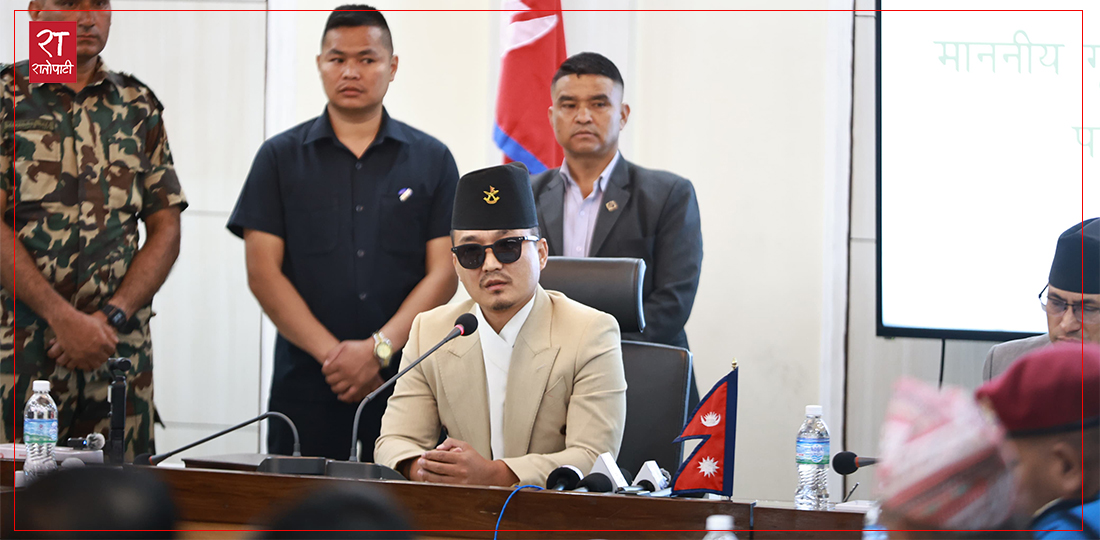
Prime Minister Balen Shah Defends Attorney General Appointment in Supreme Court Response

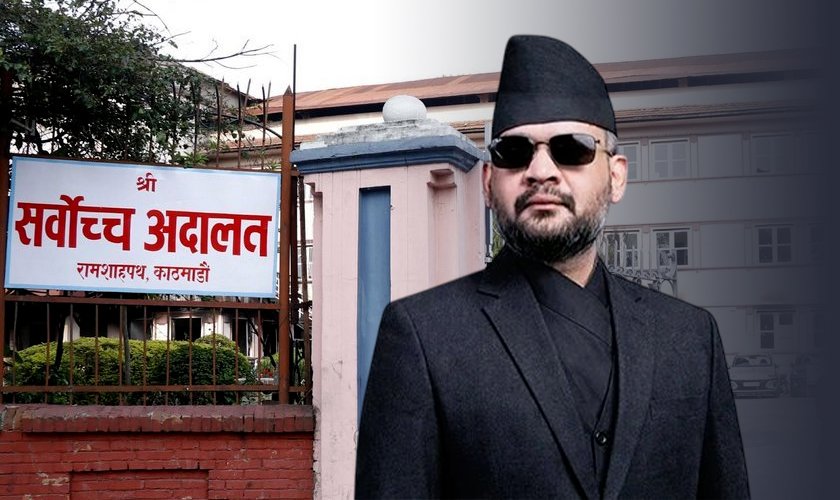
Kathmandu. Prime Minister Balendra Shah (Balen) has submitted a written response to the Supreme Court stating that the authority to appoint the Attorney General rests with him. He sent the response mentioning that the appointment of Attorney General Dr. Narayan Prasad Kandel was constitutional.
Responding to the writ filed by advocate Madhav Kumar Basnet, the Prime Minister claimed that the selection of the Attorney General is his 'executive prerogative'. The petitioner had claimed that Dr. Kandel's actual advocacy period was only about three years and that he did not meet the qualification of 15 years of continuous advocacy as he had stayed abroad for a long time. Countering that, the Prime Minister said, 'Continuous advocacy means not only the time physically spent in court but also the state of being active in the field of law while the advocate's certificate remains valid.'
The Prime Minister mentioned that Dr. Kandel obtained his advocate's certificate in 2060 BS and has been continuously involved in the field of law for 22 years. 'Pursuing higher education abroad or gaining legal experience in international forums is an additional strong aspect of qualification. This does not create a professional void,' the response stated.
The Prime Minister called the claim that Kandel's previous advocacy for cases against ruling party leaders would create a conflict of interest as contrary to the principle of 'professional neutrality'. 'Which case was handled in the past does not affect the current constitutional responsibility. If a conflict of interest arises in a particular case, it is sufficient for the concerned person to recuse themselves from the process,' the response stated.
Prime Minister Balen stated in his written response, 'I have recommended Dr. Kandel based on his legal background, academic expertise, and loyalty to the state. The Prime Minister has the right to select a suitable and qualified person to manage the competent administration related to government lawyers. This decision has been taken with the belief that the appointment of the Attorney General will strengthen the country's legal system and help in adapting international legal practices to the Nepali context.'
He reminded that according to Article 157 (2) of the Constitution of Nepal, the Attorney General is appointed by the President on the recommendation of the Prime Minister. 'The right to choose a person whom one trusts and who is constitutionally qualified to provide legal advice should not be curtailed,' he argued. The Prime Minister claimed that judicial review of such discretionary decisions made by the executive 'hastily' would be contrary to the principle of separation of powers.
The Prime Minister termed the question raised about Dr. Kandel's national loyalty as a 'misinterpretation'. He stated that obtaining education or experience abroad by any Nepali citizen cannot be considered a basis for questioning their loyalty to the nation. Furthermore, he clarified that constitutional qualifications cannot be measured based on social media and LinkedIn profiles.
This specific news has been automatically translated by AI. As a result, there may be some inaccuracies or language errors.