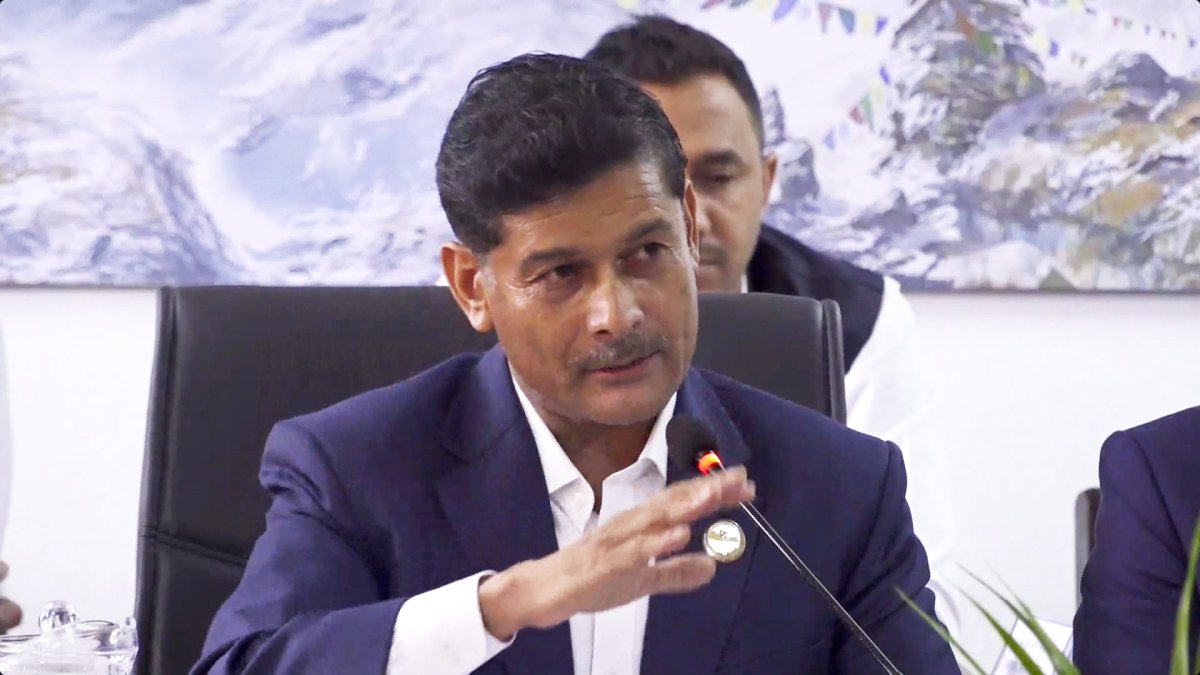
Proposed Election Commissioner Dr. Rajiv Subba Proposes Technology-Friendly and Paperless Election System

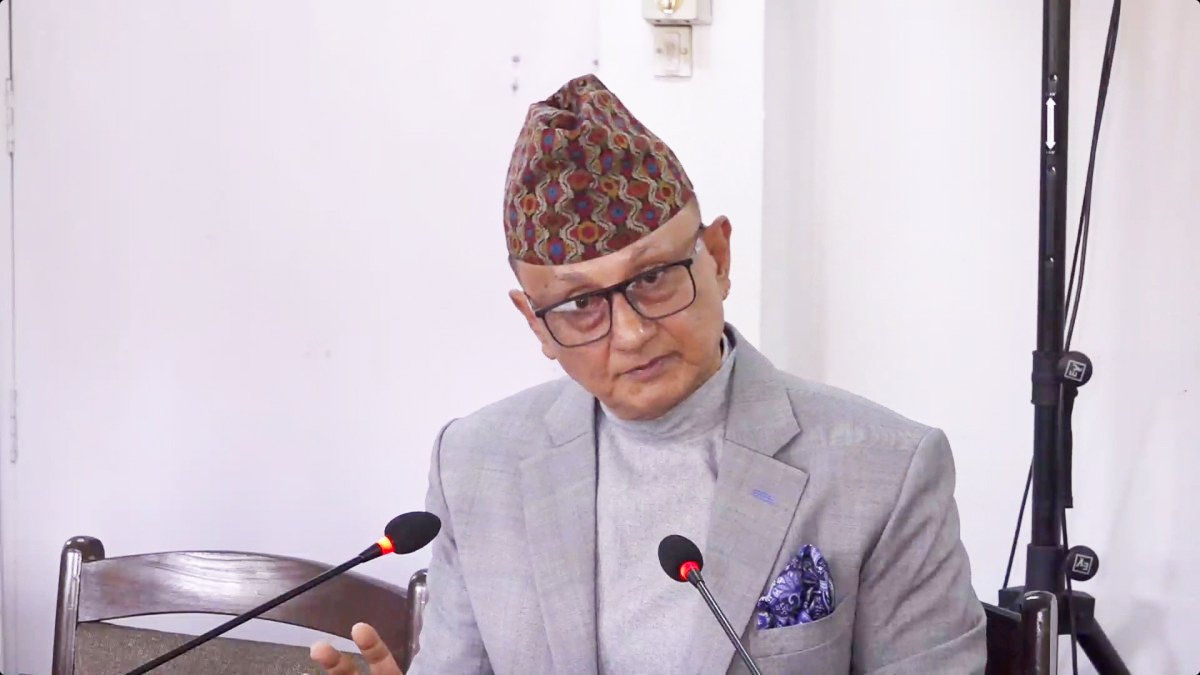
Kathmandu. Proposed Election Commissioner Dr. Rajiv Subba has stated that the election system will be made technology-friendly and gradually 'paperless'.
Presenting his work plan during the hearing in the Parliamentary Hearing Committee (Joint) on Tuesday, he emphasized the need to maximize the use of technology to conduct elections in a timely manner.
He stated that legal reforms are necessary to arrange for Electronic Voting Machines (EVMs), internet voting, postal voting, and 'NOTA'. He claimed that legal amendments would be sufficient to involve Nepalis living abroad in voting. Presenting the example of Bangladesh, he said that after the 'IT assisted postal voting' system was implemented there, more than 1.2 million expatriate voters participated in the voting.
Dr. Subba stated that the Election Commission's information system should be interconnected with the national identity card, voter list, immigration, political parties, GIS, and other government data to develop a 'real-time' decision-making system. For this, he proposed strengthening cybersecurity by establishing an 'Election Cybersecurity and Digital Integrity Center'. He mentioned that the election process can be gradually made 'paperless', reducing paper processes by up to 80 percent. He claimed that the digital system would significantly reduce administrative costs.
Proposed Commissioner Subba stated that before implementing EVMs and internet voting nationwide immediately, pilot testing, independent technical and security testing, and phased implementation would be carried out. He mentioned that Nepal has the necessary digital infrastructure, national identity card, digital voter list, data center, government cloud, mobile internet access, and cybersecurity capacity. He stated that internet voting would be possible within the next few years if legal arrangements and system integration are achieved. He claimed that although the initial investment in the digital voting system would be high, with an expenditure of approximately 1.5 billion to 1.7 billion in each election, the cost would be recovered within two election cycles.
During the hearing, Dr. Subba said, 'Now the whole process has to go paperless. It may not be possible to go paperless initially, but we can go less paper. We need to build a real-time election management and decision support system, that is our Sanjay vision.'
Clarifying his work plan, he added, 'The first KPI for this is a single source of truth, I have said. All information will be obtained under a one-window policy. That information will come from a single source, which will ensure we have proper data, reduce search time, and we can reduce paper processes by 80 percent.'
Sharing his experience in the Nepal Police, he said, 'Now the question will arise, how 80 percent? The system I developed in the Nepal Police, a system run by a total of eight computers, saves 1.8 million rupees annually. In five years, about 10 million rupees are saved. It's all less paper, we cannot go fully paperless, but we must go less paper.'
Dr. Subba also informed that he has prioritized election security, cybersecurity, control of misinformation, voter education, youth participation, and the development of voting centers that are friendly to persons with disabilities and the elderly in his work plan.
This specific news has been automatically translated by AI. As a result, there may be some inaccuracies or language errors.
_lIMLW7ml3A.jpg)