Maitighar Flooding Caused by Technical Errors, Urbanization, Encroachment

_k9zhVvl7Mq.jpg)
Kathmandu. The perennial severe flooding and drainage problems in Kathmandu's Maitighar area have been concluded to be a combined result of technical errors, disorganized urbanization, and structural encroachment.
The findings are based on a report submitted by a four-member joint technical team, formed under the coordination of the National Disaster Risk Reduction and Management Authority, after conducting an on-site inspection on July 22.
According to the report, in the past, the low-lying and vacant land adjacent to Maitighar Chowk used to serve as a natural reservoir. Floodwaters flowing from higher grounds like Thapathali Height, Singhdarbar, and Babarmahal would accumulate in that vacant land. This would temporarily halt the high flow of rain and allow the water to seep into the ground.
Later, multi-story buildings of the District Police Complex Kathmandu and the District Government Attorney Office Kathmandu were constructed on that vacant land, completely destroying the natural reservoir. With the low-lying area covered by concrete structures, the absorption capacity became zero, and as soon as it rained, all the water started accumulating directly in Maitighar Chowk.
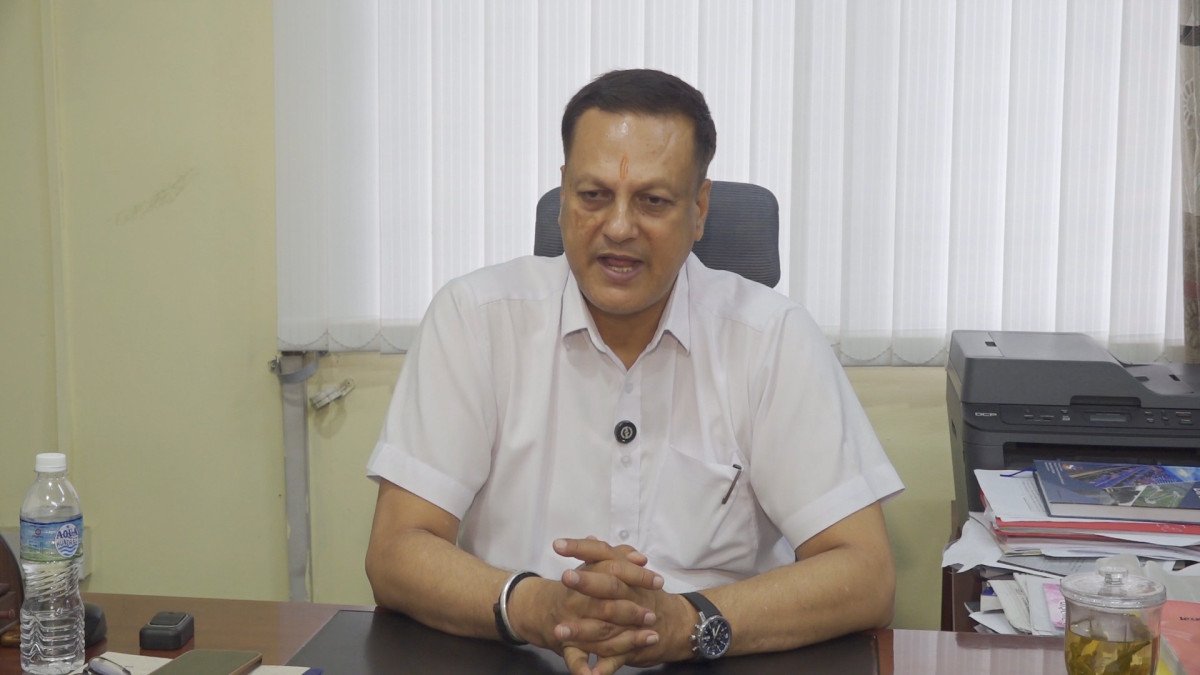
The report considers the serious imbalance in the size and capacity of the drainage as the second major reason. Although the upper part and outlet of Maitighar's main drain are 900 mm, a section in the middle reduces to only 600 mm. Subodh Devkota, Chief of the Road Division Kathmandu, stated that a bottleneck is created because the 90 cm diameter outlet pipe narrows to 60 cm by the final point, causing water to accumulate.
Since both domestic waste from newly built houses and floodwaters from the complex are connected to the old drain, the drain cannot handle the volume of water. This creates negative hydraulic gradient within the drain, obstructing water flow.
The rise in the water level of the Tukucha River and the backflow further exacerbate the flooding. The main drain of Maitighar and the new storm drain constructed by Thapathali Campus are connected and merge into the Tukucha River. During heavy rainfall, the water level of the Tukucha River rises significantly, and the increased hydraulic pressure of the river blocks the drainage. This causes a backflow of water from the manholes and drains in the lowest part into the road, leading to flooding in Maitighar.
During the study, extensive encroachment was found along the path of the drain. Physical structures of Thapathali Campus, Rastriya Banijya Bank, and National Statistics Office have been constructed directly on the drain's path. In some places, shops and toilets have been built by covering the drains. It was found that the pipe for drain outlets within the Nepali Army's barrack area has been covered.
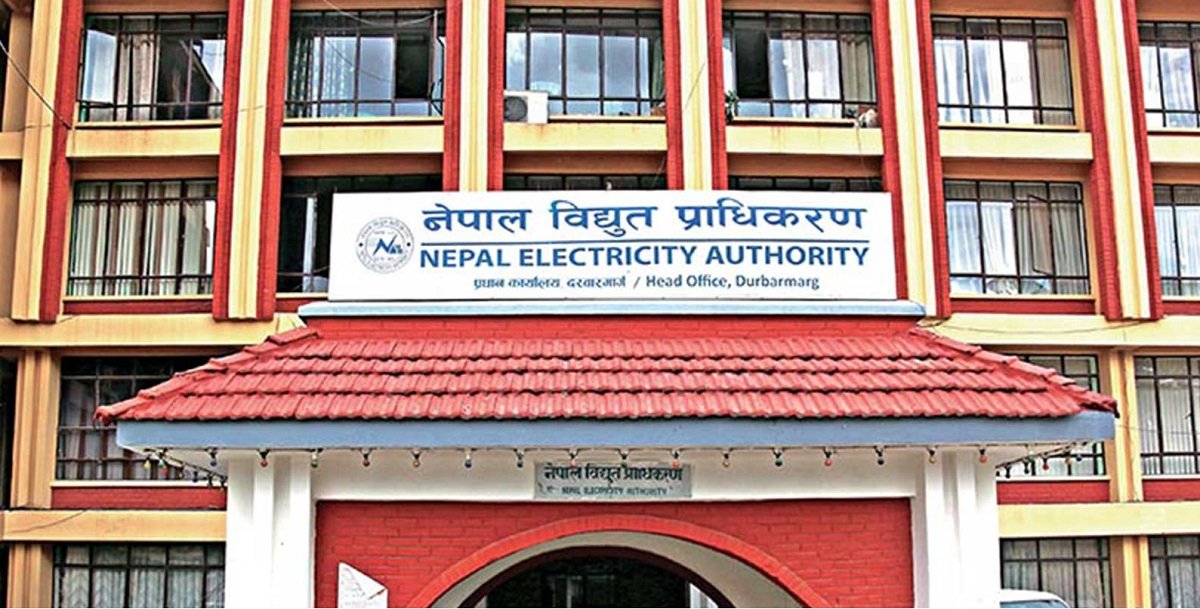
Plastic items, clothes, bottles, and solid waste accumulating inside the drain cause blockages even during normal rainfall. The drain system has been further damaged due to uncoordinated digging and filling by bodies like the Nepal Electricity Authority, Nepal Telecom, and the Department of Roads.
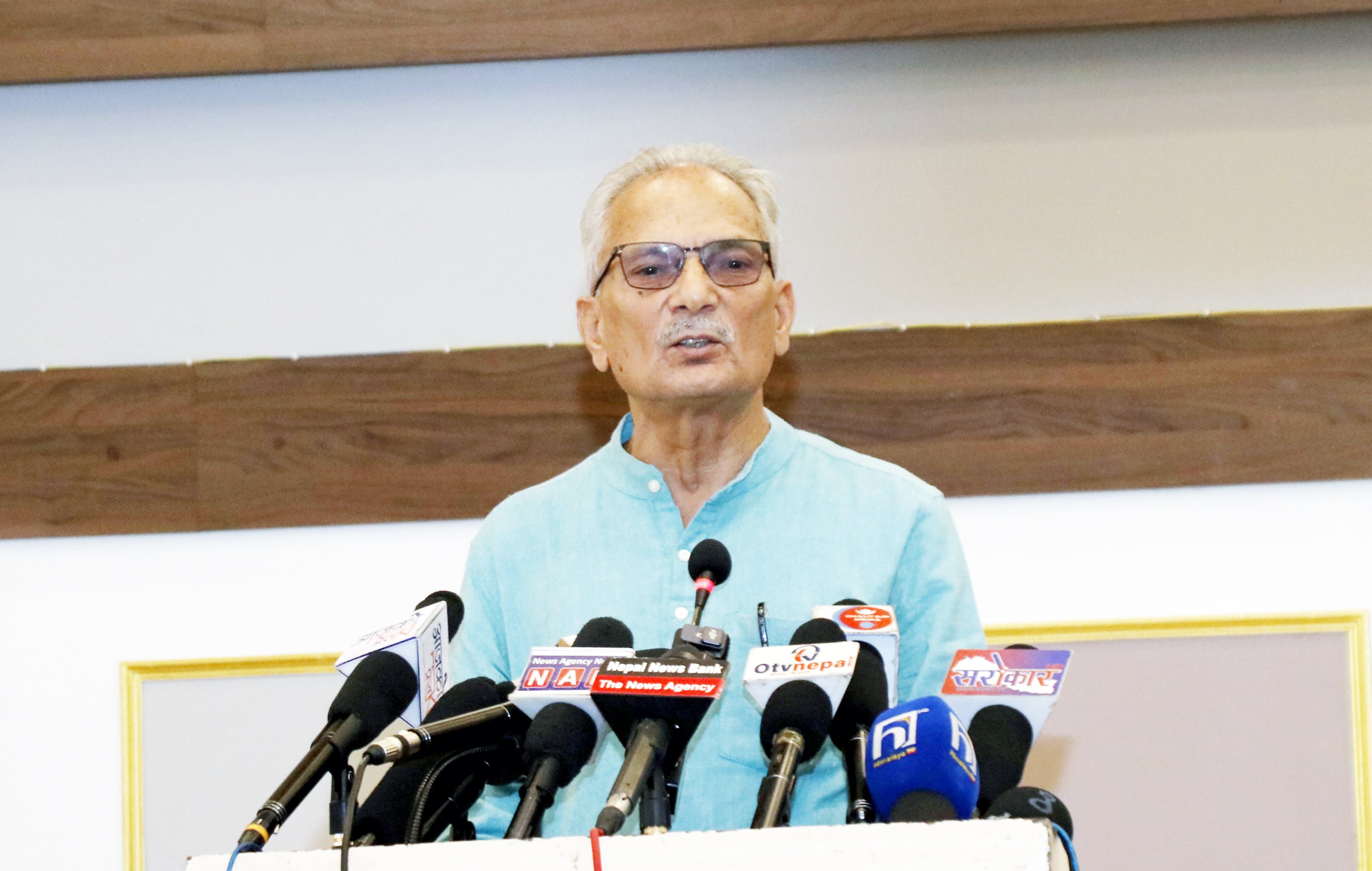
Devkota informed that obstructions have been created in Maitighar's natural drainage due to structures from various bodies and technical errors.
To solve the problem, the technical committee has submitted six immediate and four long-term recommendations.
For immediate action, it has been advised to remove encroaching structures, clean the bottom of the internal drains and Tukucha, widen the banks, uncover covered manholes, and activate the coordination mechanism. For the long term, it is recommended to conduct GIS mapping of the entire drainage network, build underground water retention tanks beneath Maitighar to compensate for the former natural reservoir, install one-way check valves and flap gates in Tukucha, and redesign the drain capacity according to new return periods after studying the watershed area.
A coordination meeting among stakeholders was held at the District Administration Office Kathmandu on Thursday to resolve the flooding problem. Representatives from the Nepali Army, Rastriya Banijya Bank, Thapathali Campus, and National Statistics Office were present at the meeting. As per the decision of the meeting, a joint team from the Road Division and Kathmandu Metropolitan City will start removing drain blockages and encroaching structures from the upcoming Saturday.
Devkota stated that the natural drainage before the culvert on the road leading to the Army headquarters will be completely cleared without affecting the culvert. The Road Division has stated that the immediate priority is to clear the blocked drains to allow water to flow, after which long-term solutions will be implemented.
This specific news has been automatically translated by AI. As a result, there may be some inaccuracies or language errors.