Middle Eastern Nations Accelerate Oil Export Route Diversification
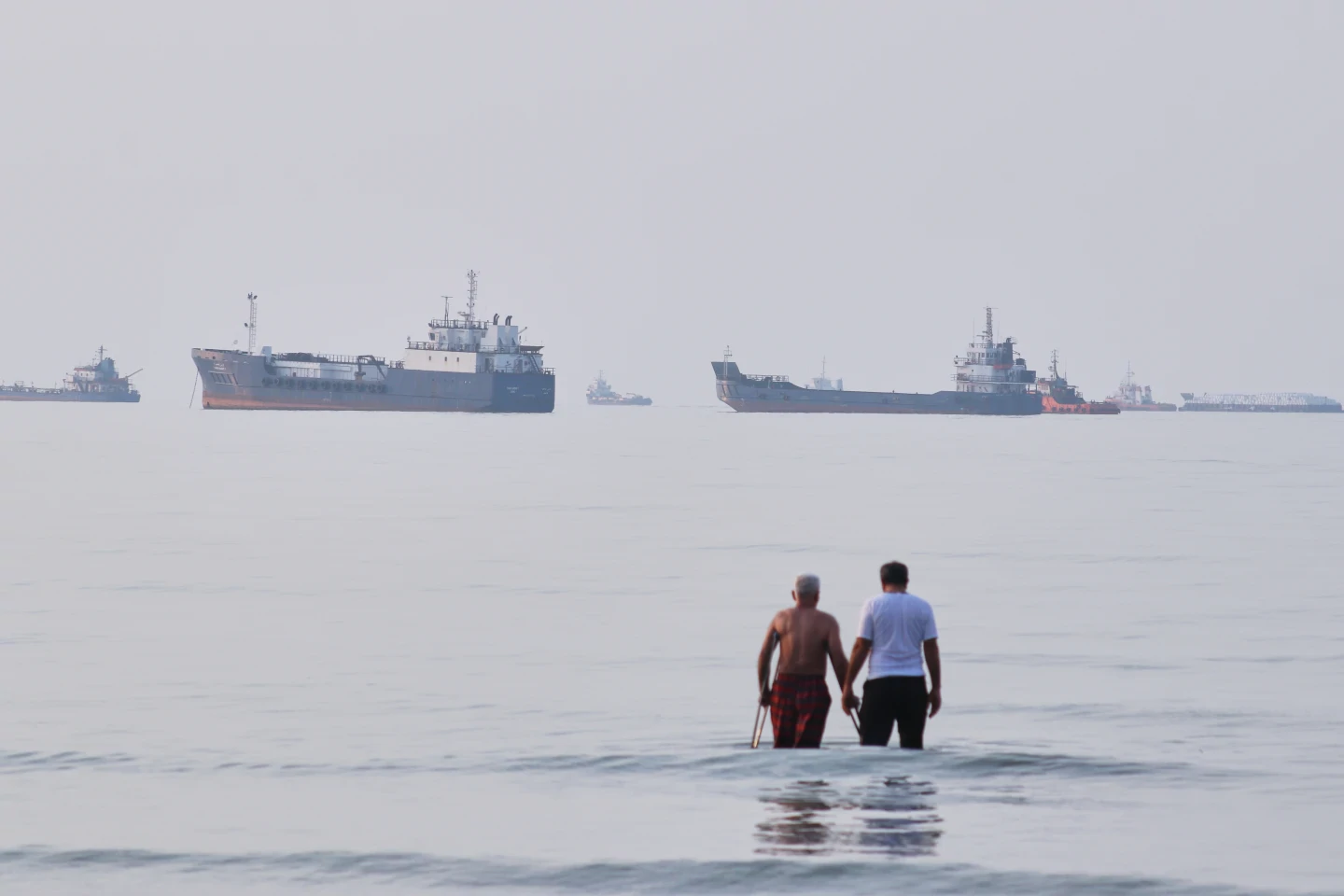
Dubai. Before the war with Iran, about 15 million barrels of crude oil per day used to reach the world market through the Strait of Hormuz from the Persian Gulf. But Iran tightened control over the sea route, and the price of oil in the world market started to rise rapidly. In such a situation, oil-producing countries in West Asia have intensified the construction of new routes to export oil by bypassing Hormuz.
Countries including Saudi Arabia, the United Arab Emirates (UAE), and Iraq have put forward plans to invest billions of dollars for the expansion of pipelines to carry oil to the Arabian Sea, the Red Sea, and the Mediterranean Sea. According to government officials, oil companies, and analysts, at least seven major pipeline projects are currently under construction, in the planning stage, or under discussion.
According to analysts, the war with Iran has made the Gulf countries realize that relying too much on Hormuz is not a safe long-term strategy. However, alternative routes are also not completely safe. On Thursday, Iran-backed Houthi rebels in Yemen claimed to have attacked two Saudi oil tankers in the Red Sea. This shows that alternative routes are also at risk.
Saudi Arabia's East-West pipeline, built during the Iran-Iraq war in the 1980s, has now become the most important alternative. Through this pipeline, oil is transported from Abqaiq to Yanbu on the Red Sea coast, and from there it is sent to the world market by tankers. Similarly, the UAE is also increasing oil exports through the port of Fujairah in the Gulf of Oman, south of Hormuz. Although it was estimated that these two pipelines had an additional capacity of 3.5 to 5.5 million barrels per day before the war, they are now operating at almost full capacity.
The UAE's state-owned oil company has accelerated the construction of a new pipeline about 300 kilometers long reaching Fujairah. This project, costing about 3 billion US dollars, aims to supply more than 1.2 million barrels of additional oil per day to Fujairah. This project is expected to be completed by 2027.
Iraq has also put forward a plan to build a new pipeline from the southern Basra region to the Turkish Mediterranean port of Ceyhan. There is also a proposal for another branch of this pipeline to reach the Syrian port of Baniyas, through which an estimated 2 million barrels of oil per day can be transported. Discussions are also underway between Iraq and Jordan for the construction of another pipeline from Basra to Aqaba, through which oil will be sent to the Asian market via the Red Sea.
According to analysts from the American multinational investment bank Goldman Sachs, if all these projects are completed, an additional 3.8 million barrels of oil per day can be exported without using the Strait of Hormuz by the end of 2027, and 7.3 million barrels of oil per day by the end of 2028. In that case, it is estimated that about 60 percent of the total 23 million barrels of oil exported from the Gulf region before the war can be sent through alternative routes.
However, using new routes will increase both transportation distance and cost. Pipelines going to the Mediterranean Sea require oil for the Asian market to go around the southern part of Africa, which further increases time and expense. Also, the route through the Red Sea is at risk of attack by Houthi rebels. In 2019, Saudi Arabia's East-West pipeline was shut down for some time due to a Houthi drone attack.
This specific news has been automatically translated by AI. As a result, there may be some inaccuracies or language errors.