Researchers Develop Self-Wearing Robotic Clothing

Seoul. Researchers from South Korea's Korea Advanced Institute of Science and Technology (KAIST) and Stanford University in America have developed a new type of clothing that can be worn on the body without human assistance.
Like self-driving cars, this robotic clothing will also wear itself on the body of the person wearing it. This technology, named Self-Wearing Adaptive Garments (SWAG), is expected to particularly help the elderly, disabled, and physically limited individuals to easily wear clothes.
The main basis of this technology is the 'vine robot'. The vine robot was developed by Stanford University researcher Allison Okamura. Like plant vines, this clothing expands from the front. It was previously used to reach inside debris or narrow parts of the human body. Later, researcher Kim Nam-gyun came up with the concept of using this technology in clothing.
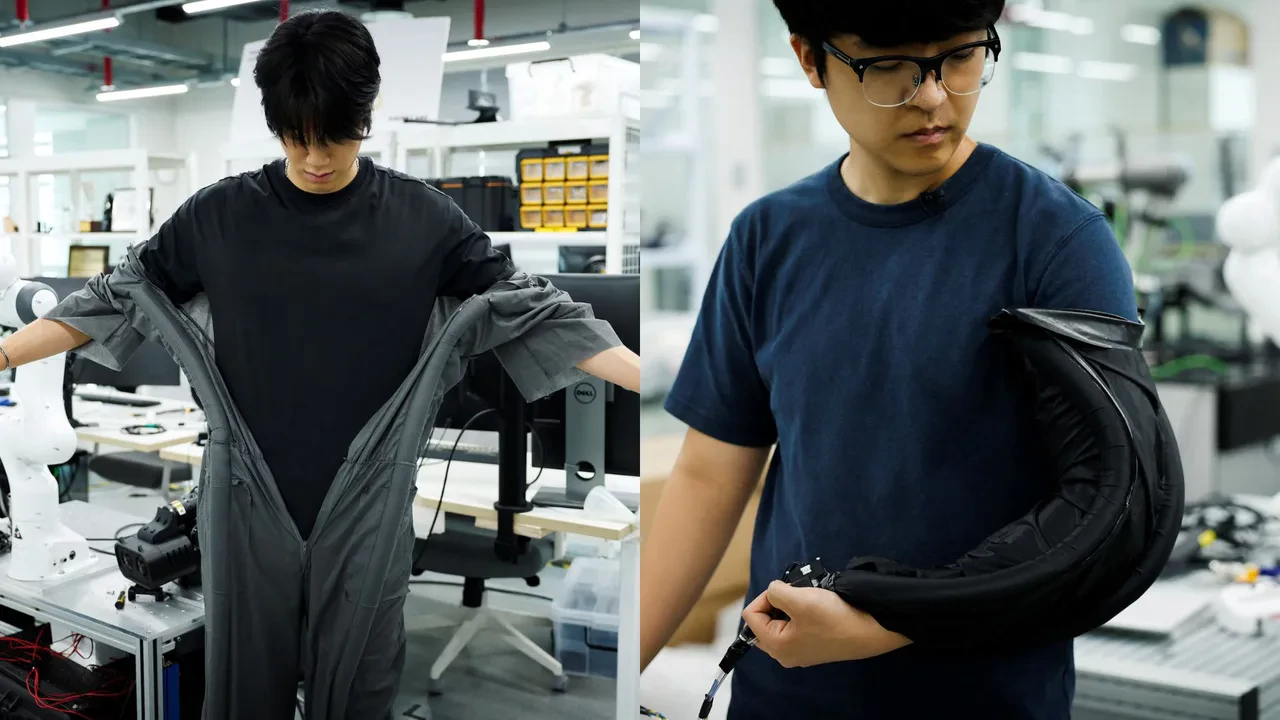
'One day I was riding a bicycle, and suddenly it started raining.... I thought how useful it would be if a raincoat could wear itself on the body,' he said. Kim said that based on this idea, such clothing was developed. In this technology, air-powered vine robots inside the clothes inflate and expand according to the body's shape. As they expand, they turn the clothes inside out and spread them over the body, putting on the clothes in a few seconds. Depending on the air pressure used, it can take up to about 10 seconds to put on a full outfit.
The research team has already prepared various samples including sleeves, pants, and full-body outfits using this technology. Although the robotic structure inside the clothes is still visible, according to the researchers, it can greatly facilitate the daily lives of people with limited physical abilities. Researchers have presented the Self-Wearing Adaptive Garments technology as an example that not only artificial intelligence (AI) but also mechanical engineering can bring significant changes to human life.
This specific news has been automatically translated by AI. As a result, there may be some inaccuracies or language errors.