
Youth Use Social Media Humor in Delhi Protests

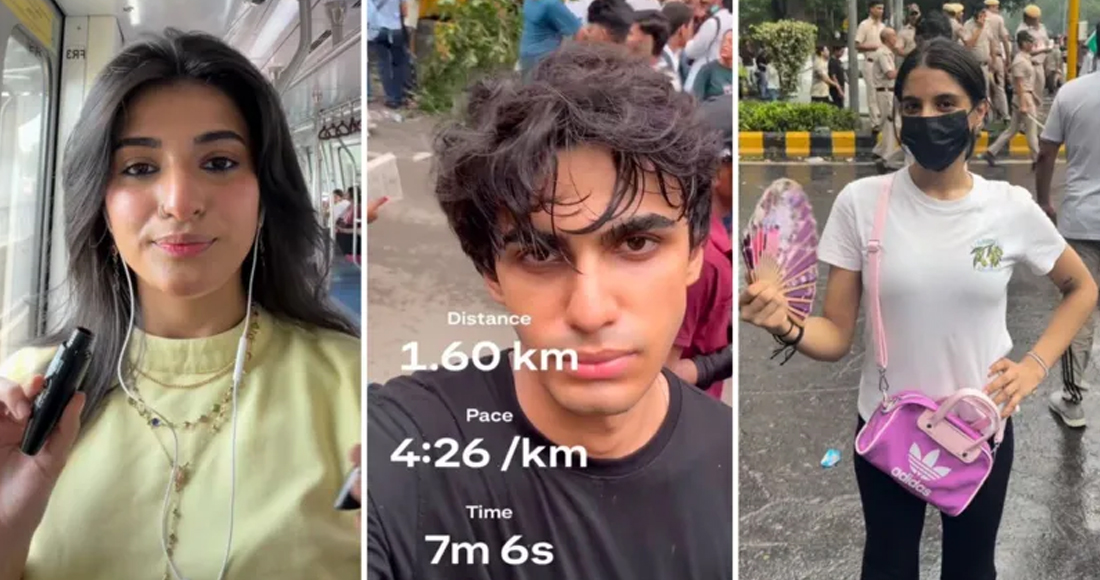
On Monday, 20-year-old Chhavi (name changed) paused outside a Delhi metro station.
Chhavi had come to participate in the ongoing protests against Prime Minister Narendra Modi's government.
She propped her phone against a railing, took a few steps back, and recorded a short 'outfit check' video. In it, she showcased her attire before heading to the protest.
Smiling at the camera, she said, 'Friends, I am going to get beaten up by the police.'
Hours later, police fired tear gas and resorted to lathi-charge. During this, thousands of supporters of the Kukurroch Janata Party (CJP) were marching towards Parliament.
This youth-led movement, which began in protest against irregularities in examinations, has evolved into a larger campaign demanding government accountability.
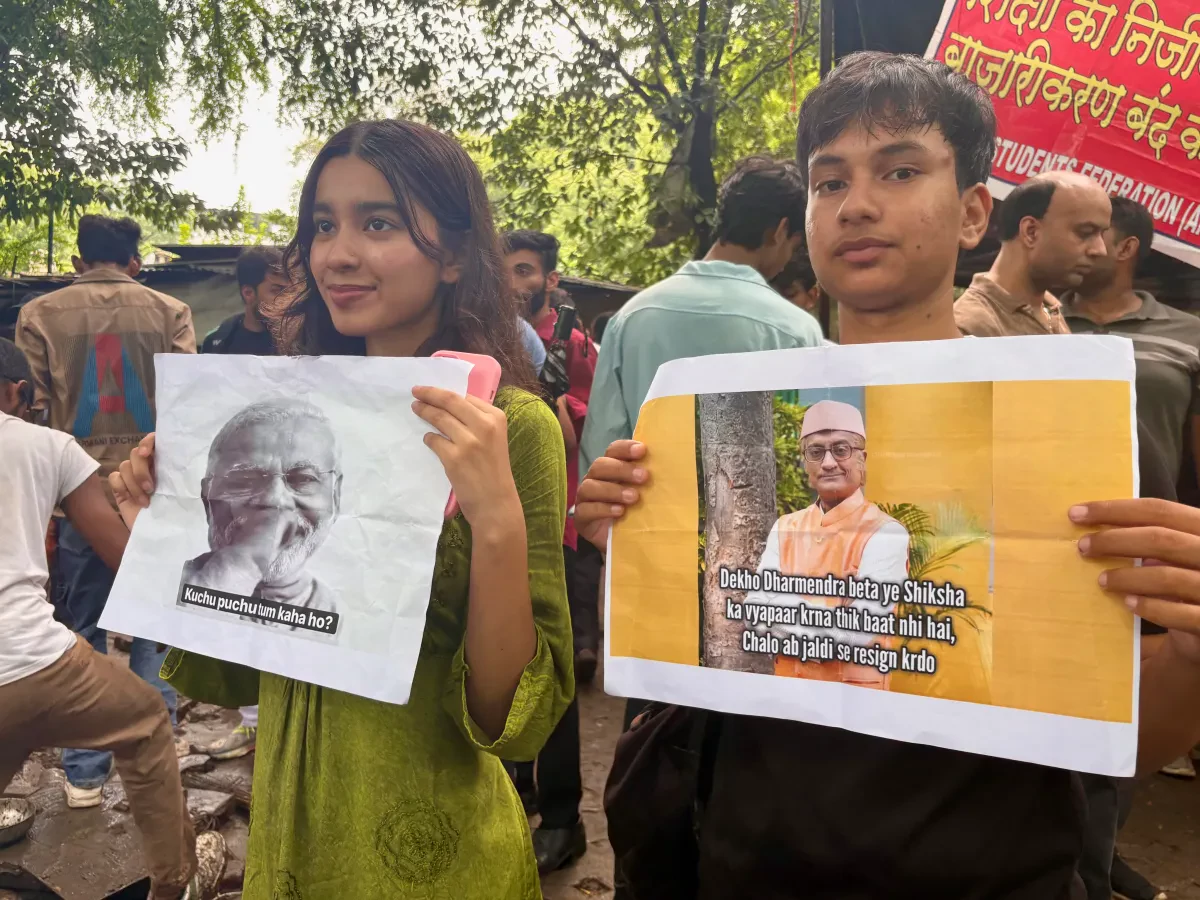
Protesters are demanding the resignation of Education Minister Dharmendra Pradhan over the alleged leak of examination papers. Pradhan, however, has refused to resign.
He alleges that the opposition is using students for political gain.
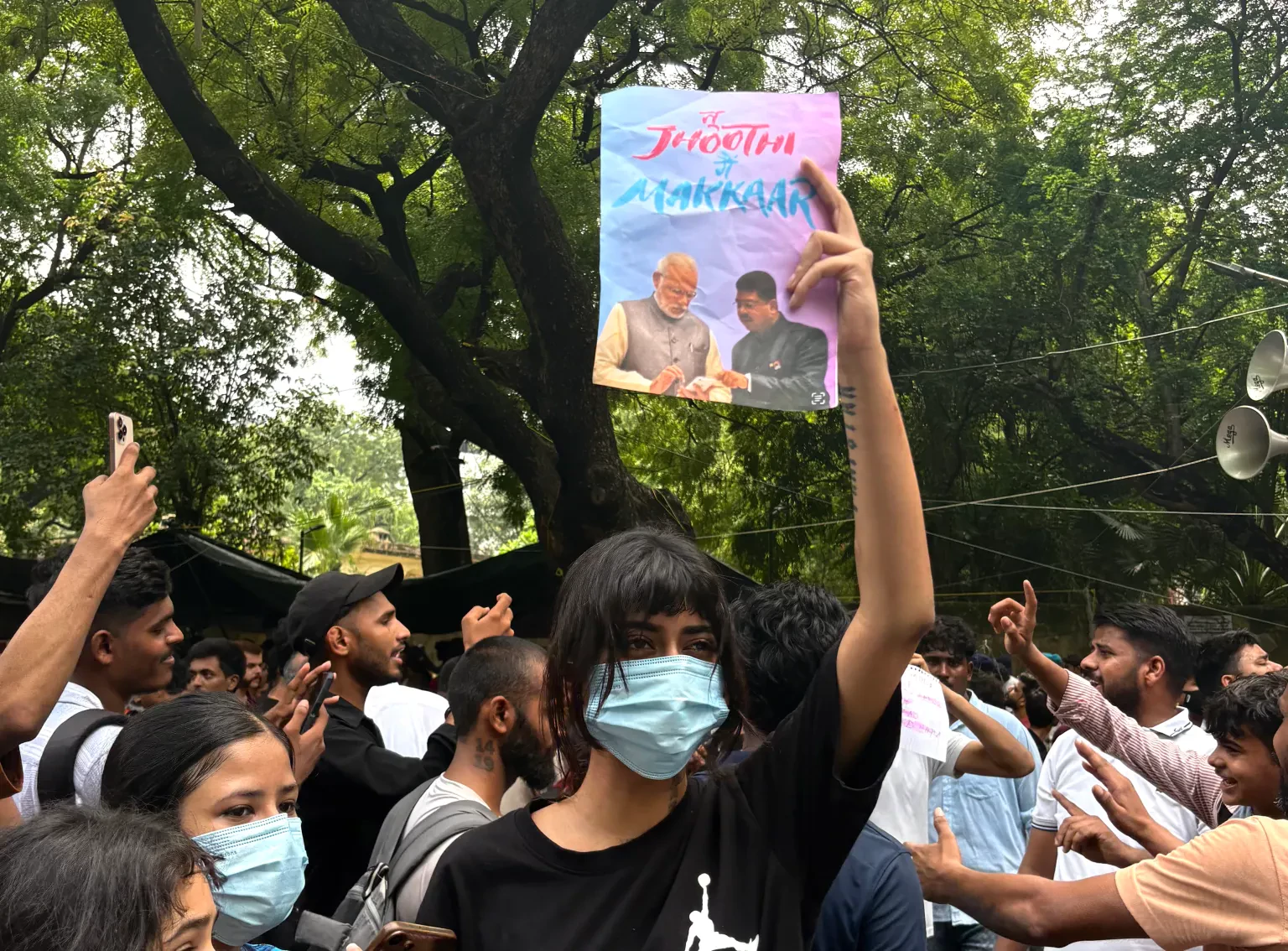
On Monday, the administration suspended mobile internet services around the protest site. By evening, protesters claimed that many people had been beaten up by the police. The police, on the other hand, stated that many of their officers were also injured.
When Chhavi uploaded her videos that evening, one thing stood out. Before the march began, she had joked about being beaten by the police.
In the evening video, she was smiling. Chhavi was seen posing for pictures with police officers, flashing a victory sign, recording videos amidst the crowd, and even interviewing an injured protester.
These videos were among thousands of reels and meme videos flooding Instagram.
Some expressed anger. Some were filled with anxiety, fear, or quiet resistance. But what often grabbed the most attention was their satirical style.
- Users having fun on Instagram
One young woman stood in front of the police, calmly applying her lipstick.
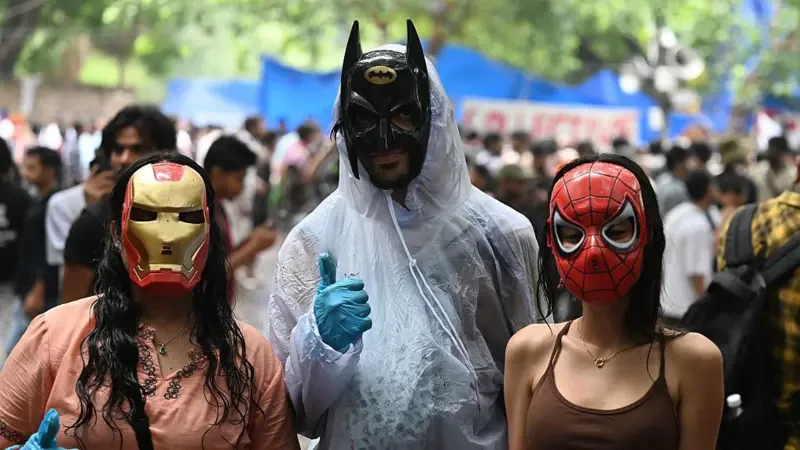
Another young woman jokingly said that since the government was not delivering justice, she was 'trying to look good at the protest'.
One reel started like a typical 'outfit reveal' video, but the scene suddenly shifted to protesters running to escape tear gas.
Another reel reviewed tear gas as if it were a review of a new restaurant.
To many watching online, this seemed like a disconnect between humor and violence. But for the young people who made these videos, there was no contradiction.
None of the protesters interviewed for this report spoke of algorithms, engagement, or going viral. Recording videos, they said, was an integral part of the protest itself.
And when they resorted to humor, it was almost always self-deprecating.
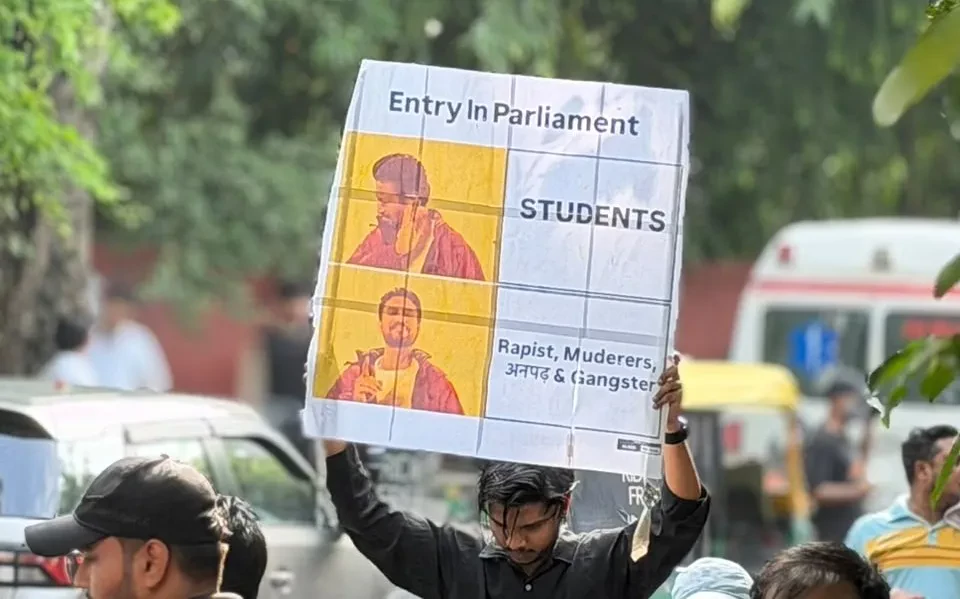
For instance, joking about having to run for kilometers to escape a lathi-charge, or laughing about recording an 'outfit reveal' moments before running from tear gas. These jokes did not eliminate the fear. Rather, fear and humor coexisted.
- The confluence of reels, memes, and politics
This trend shows how a generation that grew up in the internet age experiences protests, according to experts.
Joyojeet Pal, a professor at the University of Michigan studying technology and society, says, 'Older generations used to differentiate between political life and daily life.'
He adds, 'The new generation grows up in an environment where politics is intertwined with their memes, family photos, and daily commutes.'
In other words, protests also become another moment to be recorded.
Chhavi continued recording videos even after the police action began. Later, some people accused her of presenting violence as 'content'.
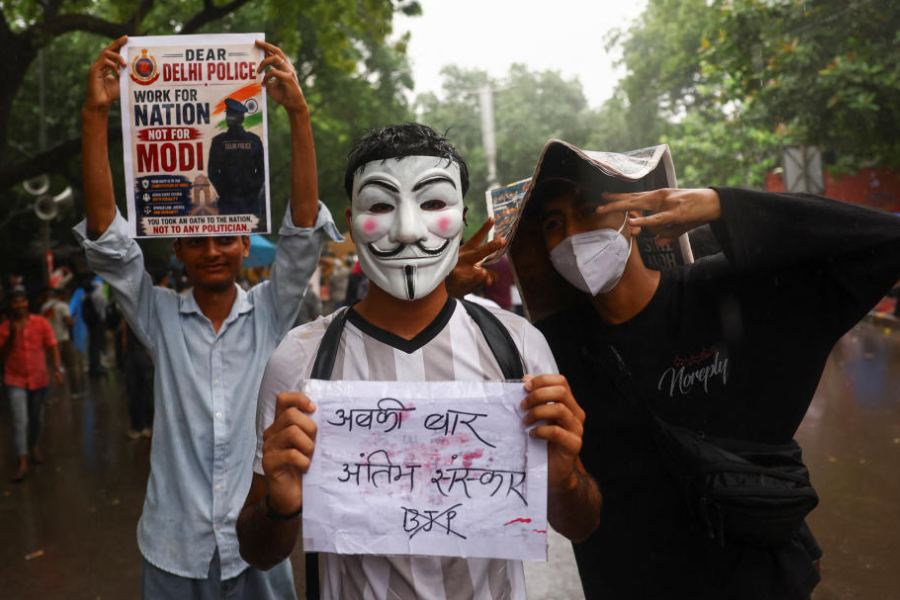
She said, 'But at that time, I was high on adrenaline. I was scared, I was anxious. I only had two options: to laugh or cry in the face of fear.'
This tendency to continue recording even when the situation becomes violent is becoming increasingly common worldwide, says Payal Arora, a digital anthropologist at Utrecht University.
Smartphones have turned ordinary citizens into recorders of political upheaval. They are documenting moments that might otherwise have been lost.
She says, 'Recording a protest itself becomes a purpose. Their message is something like, 'This happened. We were there. We will remember this.''
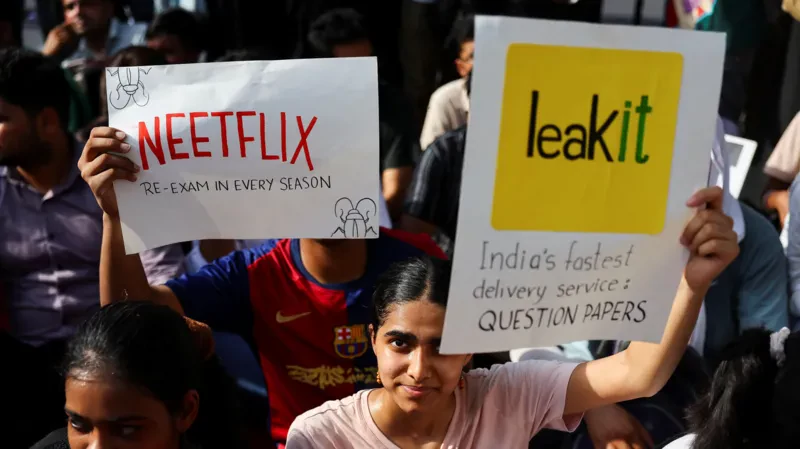
Humor also emerged in a specific pattern. No young protester described the day as fun. They spoke of the confusion when tear gas, lathi-charge, and peaceful marches suddenly turned into a stampede.
The jokes came later, almost naturally, as a way to carry those experiences with them.
- 'Politics is now part of daily life'
Nishant Shah is the director of the Digital Narrative Centre at the School of Journalism and Communication at the Chinese University of Hong Kong.
People often mistakenly dismiss this humor as indifference or apathy, says Nishant Shah. According to him, the intention is quite the opposite.
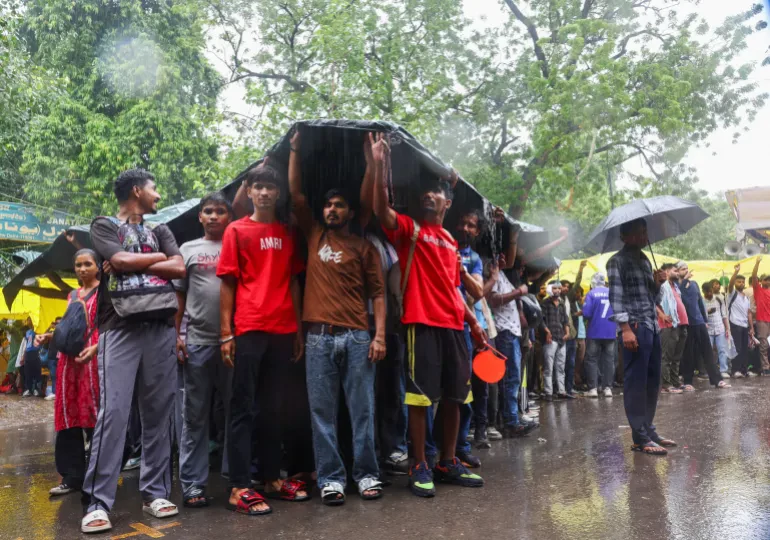
He said, 'Politics is part of daily life. It is emotional and connected to experience.'
Humor has long been a part of protests. It can build solidarity, reduce tension, and help people cope with frightening moments.
Shah said, 'No matter how difficult the objective and how intense the struggle, there will always be joy, laughter, songs, and hope. Without these, a movement cannot last long.'
- New ways for a new era
21-year-old Ishan (name changed) came to Delhi for the first time to participate in a protest.
When tear gas shells landed near him, he thought about leaving for a while.
But then he took out his phone.
In the reel he later posted, white smoke was visible spreading on the street. It had a simple caption: 'Delhi Police doesn't know I am from across the Yamuna.'
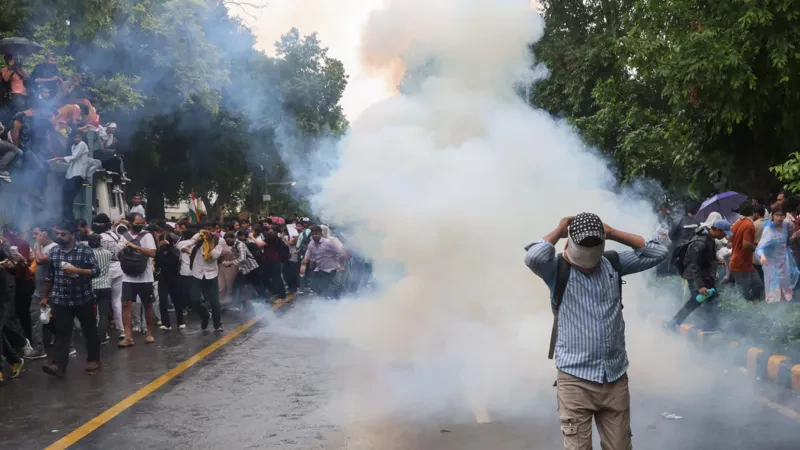
Ishan says with a laugh, 'The smell there is stronger than tear gas.'
He told the BBC that the purpose was not to pretend that nothing was happening.
He said, 'The purpose was not to let fear dominate the memory of that day.'
Protests have always found a way to put fear and hope in the same frame.
Songs and speeches were part of the independence movement. Trade unions marched with banners. Student movements adopted posters and street plays.
In recent years, protests against citizenship laws were identified by graffiti and public readings of the constitution, while the farmers' movement was known for tractor rallies and livestreams from Delhi's borders.
Like many CJP protesters, Ishan speaks the language of a generation that grew up in the internet age. Shah says that dismissing this language as superficial means not understanding its true purpose.
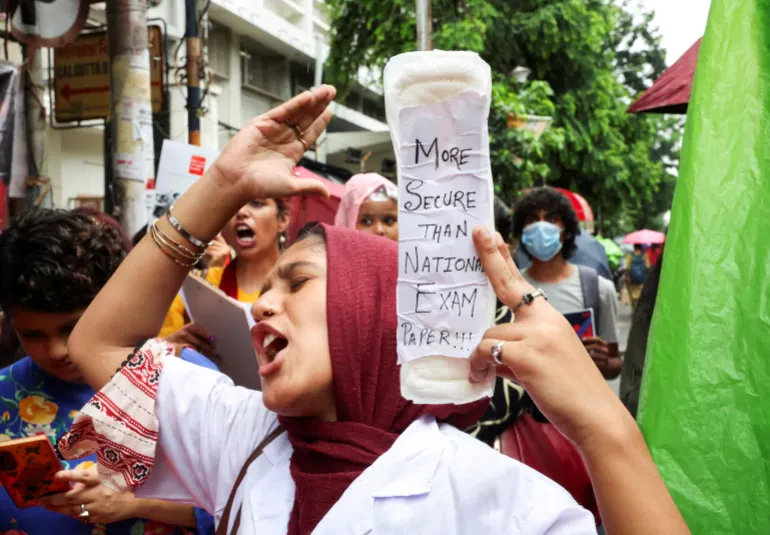
Shah said, 'We often make the mistake of understanding new technologies through old thinking.'
But according to him, a meme is not just a modern form of a political poster. When people recreate it, parody it, and share it with others, its meaning also changes. Sharing it becomes a way of participating in the protest.
The same happened with 18-year-old engineering student Manit. It was his first protest, and he had almost decided not to record any videos.
He said, 'I was scared.'
Then he looked around and said, 'Everyone was recording, talking to the camera, just in their own world. So I asked my friend to record my video.'
His reel also looked like the workout videos he usually posts. But at the end of the reel, his fitness app shows that it recorded his running activity while escaping from the police.
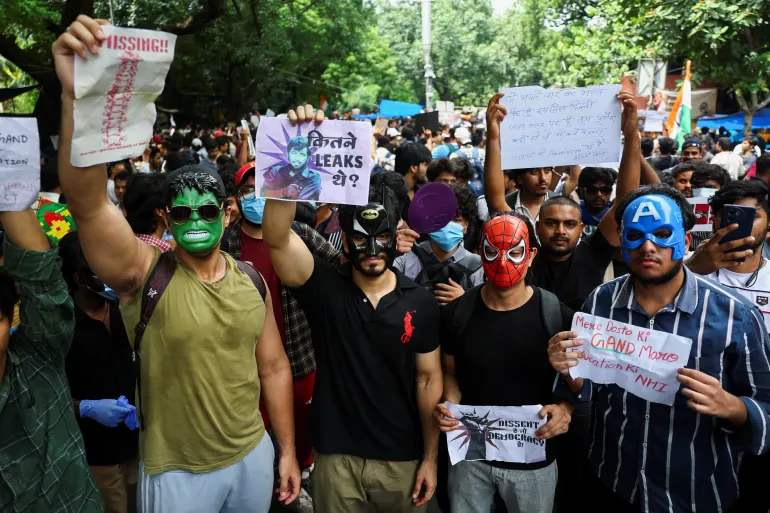
He says with a laugh, 'I escaped from the police. I was running, and in the process, my workout was also completed.'
For Manit, this irony was the most significant.
He said, 'Not every youth reads the news. If humor can take important conversations to more people, why shouldn't we use it?'
(The names of some individuals have been changed to protect their identity.)
This specific news has been automatically translated by AI. As a result, there may be some inaccuracies or language errors.

_acbIbW97AK.jpg)