Nepal Communist Party Founding and Internal Disputes Explored

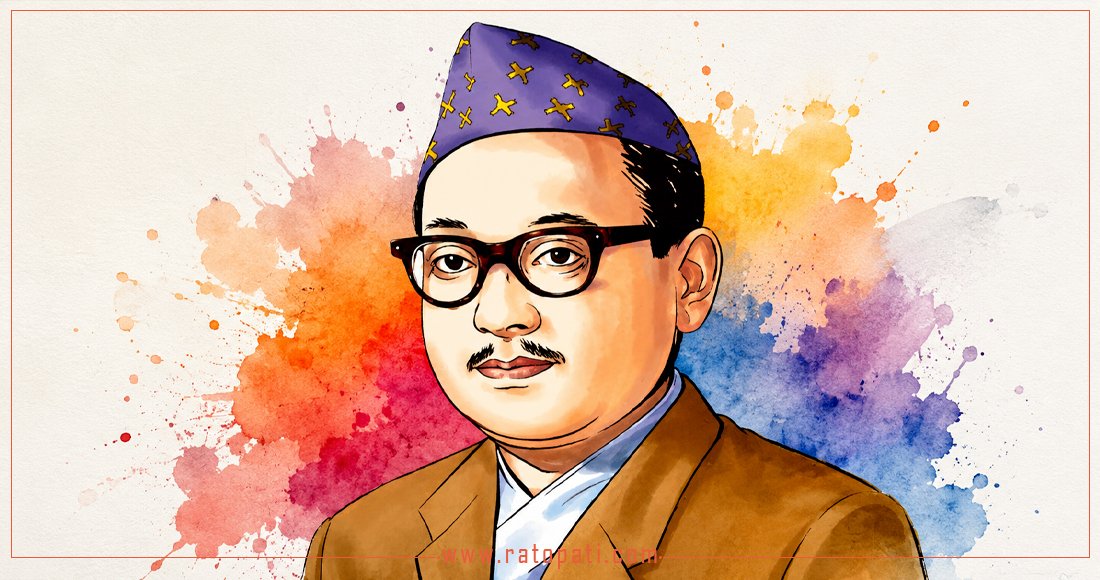
Kathmandu. On the occasion of the founding of the Nepal Communist Party (NCP) on April 22, 1949, corresponding to Baisakh 10, 2006 BS, in Navin Lane, Shyam Bazaar area of Kolkata, India. The NCP was founded under the leadership of founding General Secretary Pushpa Lal Shrestha.
Founding members included Nar Bahadur Karmacharya, Niranjan Govinda Vaidya, and Narayanvilas Joshi. According to Pushpa Lal's opinion, Durga Devi (Motidevi) from Kathmandu also participated, so he considered her a founding member. However, the other three founding members did not agree with Pushpa Lal's view. There is still a division among communists regarding whether Motidevi is considered a founding member.
NCP UML, Nepal Communist Party, former NCP Unified Socialist (currently Madhav Nepal group of Communist Party of Nepal), NCP United, among others, who consider only Karl Marx and Lenin as guiding principles, consider Motidevi as a founding member.
Former NCP Maoist Center (currently Prachanda group of Communist Party of Nepal), NCP Maoist, Revolutionary Communist Party, NCP Masal, among others, who consider Maoism as a guiding principle, consider only four people as founding members.
NCP leader Lilamani Pokharel argued that if Motidevi is to be considered a founding member, then Birendralal Shrestha 'Kaila Ba' must also be considered a member. He stated that Kaila Ba was in an examination at that time and therefore did not attend the meeting.
'If Motidevi is to be considered a founding member, then Birendralal Shrestha must be considered. The founding date of NCP is stated as April 22, 2049 BS,' Pokharel said. 'That day he could not attend the meeting due to his examination. In the evening, they discussed the party's founding. At that time, it became a normal event.'
Communist leader Bishnu Hari Sharma also states that there is a difference of opinion on the issue of considering Motidevi as a founding member. According to Sharma, revolutionary communist parties consider only four people as founding members.
The fact that the Communist Party of Nepal had a direct influence from the Communist Party of India is confirmed by the fact that CPI leader Ayodhya Singh (Bhai Sahab) was in the Politburo of NCP until 2008 BS, some time after the formation of NCP, he argued.
Interestingly, Pushpa Lal was elected General Secretary at the first conference of NCP on October 5, 2008 BS. However, within a few months, a central committee meeting held in Mahottari removed Pushpa Lal and appointed Manmohan Adhikari as General Secretary. With Manmohan coming to leadership, the then government led by Matrika Koirala banned the NCP. The main reason for removing Pushpa Lal from the post of General Secretary was the ideological dispute within the Communist Party of India at that time, argued communist leader Bishnu Hari Sharma.
Sharma wrote in his book 'A Brief History of the Communist Party of Nepal', 'The reason for removing Pushpa Lal from the post of General Secretary and bringing in Manmohan seems to be the influence of the ideological dispute within the Communist Party of India, where P.C. Joshi, a moderate, became the General Secretary of CPI, replacing V.T. Ranadive, who held revolutionary views, also affected the NCP.'
Because the Communist Party of Nepal had a direct influence from the Communist Party of India, it is confirmed by the fact that CPI leader Ayodhya Singh (Bhai Sahab) was in the Politburo of NCP until 2008 BS, some time after the formation of NCP, he argued.
Sharma believes that reformist thinking appeared in the party due to the change in leadership. He wrote in the book that in Manmohan's political proposal presented at the first convention from the General Secretary's side, under the title 'Why amend the party's program?', the revolutionary ideas and struggle programs previously adopted by the party were criticized as 'mistakes', and the slogan of the Constituent Assembly was abandoned in favor of the slogan of the Political Conference. He accused that the idea of a republic was abandoned and monarchy was openly accepted by stating 'the head of state should not be given any special rights'.
Amidst the ban, the first general convention held underground in Patan, Lalitpur from January 13-17, 2010 BS elected Manmohan as General Secretary. That convention suspended Tulsilal Amatya and DP Adhikari. The convention decided to institutionalize the achievements of the 2007 BS revolution. As the convention approved the party's policy of Pushpa Lal and leadership of Manmohan, differences grew. However, Pushpa Lal did not engage in party splitting games to seize leadership.
NCP Masal General Secretary Mohan Bikram Singh commented on the removal of Pushpa Lal from the first national conference and the election of Manmohan as General Secretary at the first general convention as a 'normal process'.
'Who becomes or is removed as General Secretary in the party is a normal process. It is not right to take it as a serious problem. Pushpa Lal made his best contribution in his time. Differences occur in general conventions, and leadership changes accordingly,' Singh said.
According to Masal General Secretary Singh, there was a major difference of opinion within the party regarding the issue of republic and constitutional monarchy at the second general convention.
At the second general convention of NCP held at Fohora Durbar in Darbar Marg, Kathmandu in 2014 BS, Dr. Kesharjung Rayamajhi was elected General Secretary. The party's policy and Pushpa Lal's documents regarding the Constituent Assembly and republic were passed. At that time, General Secretary Manmohan was in China for treatment and did not attend the convention.
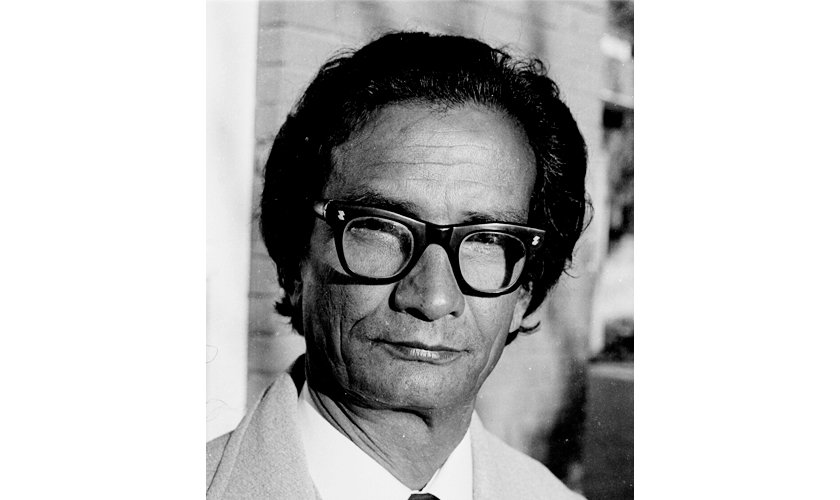
With Rayamajhi coming to leadership, differences within the party intensified. On December 15, 2017 BS (January 1, 1961), then King Mahendra Shah dissolved the elected parliament and overthrew the government led by BP Koirala. At that time, NCP General Secretary Rayamajhi supported the King's move, which was a suicidal step contrary to party policy.
According to Masal General Secretary Singh, there was a major difference of opinion within the party regarding the issue of republic and constitutional monarchy at the second general convention. 'Rayamajhi was in favor of constitutional monarchy. Pushpa Lal, Manmohan, and other friends were also initially in favor of constitutional monarchy with reforms. Rayamajhi's view was slightly different - to make reforms but not in writing, only verbally. At the convention, Tulsilal Amatya, Shambhuram, and others strongly advocated for a republic,' Singh said.
_58a0Nwlgw4.jpg)
According to Singh, Manmohan was in China for treatment at that time. Later, Pushpa Lal also changed his views and stood in favor of a republic, he said. 'The convention passed the proposal for a republic, but Rayamajhi secured a majority in the central committee election,' he said. 'Rayamajhi had captured leadership by using regionalism (the sentiment that people outside the valley are looked down upon by those in the valley). This was not a theoretical victory. Rather, it was leadership obtained through un-political means.'
As differences between policy and leadership grew within the NCP, the party split at the third general convention held in Varanasi, India, in 2019 BS. That convention passed the 'National Democracy' program presented by Tulsilal Amatya, and he himself was elected General Secretary. After the third convention, the communist movement was shattered. The NCP was divided into various factions and sub-factions.
In 2025 BS, Pushpa Lal reorganized the party by holding the third conference in Gorakhpur, India. On December 5, 2028 BS (November 20, 1971), Manmohan Adhikari, Shambhuram Shrestha, Mohan Bikram Singh, and other leaders proposed the formation of a central nucleus by including Pushpa Lal, with the aim of unifying the communist parties divided into various factions. However, Pushpa Lal did not join any faction. Pushpa Lal, who played an important role in taking the communist movement of Nepal to new heights ideologically, theoretically, and organizationally, passed away on July 23, 2035 BS (August 7, 1978) at the age of 54 during treatment in New Delhi, India.
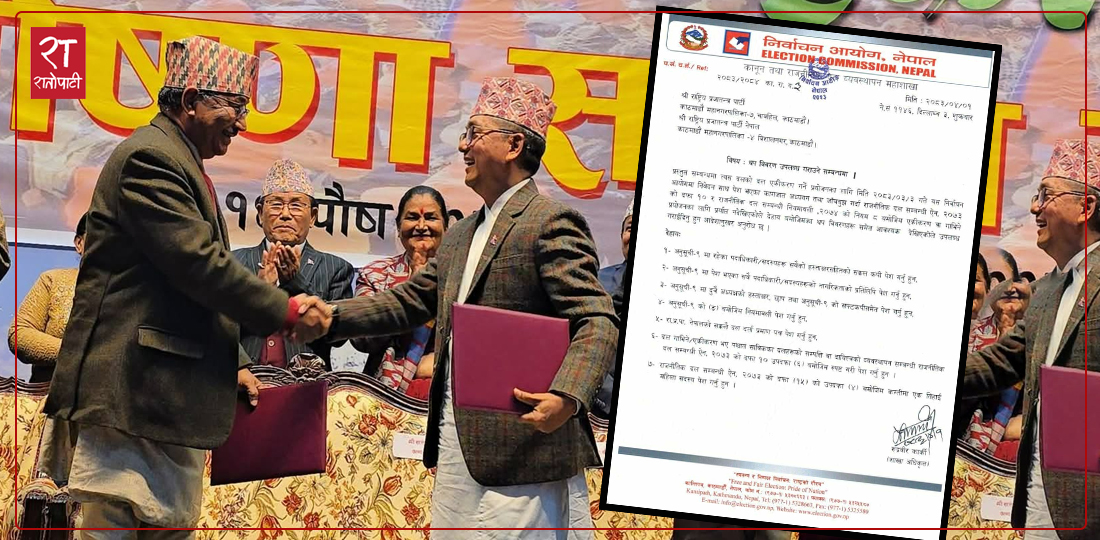
After Pushpa Lal's death, his wife Sahana Pradhan reorganized the NCP. In 2043 BS, NCP and Manmohan's party NCP (Marxist) merged to form NCP (Marxist). In 2047 BS, NCP (Masal) and NCP (Marxist) merged to form NCP (UML).
This specific news has been automatically translated by AI. As a result, there may be some inaccuracies or language errors.
_kQrfKzBJ0m.jpg)
_2y2oKCdivD.jpg)
-_nRNW8mHqYh.jpg)