AI's Physical Embodiment: TDK Aims to Bridge the Gap Between Intelligence and Real-World Application

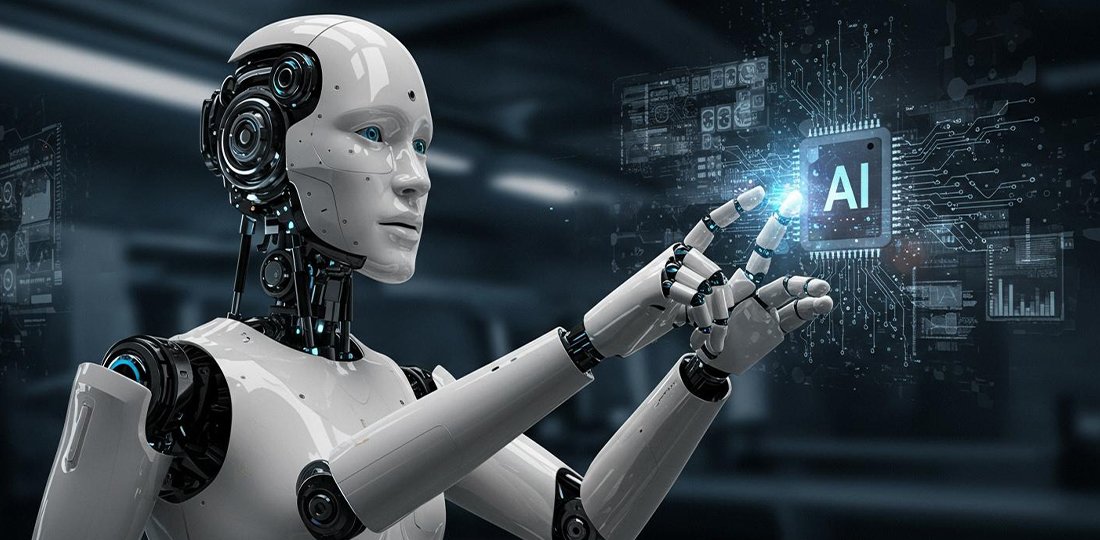
Over a decade, AI has rapidly developed as the 'brain,' achieving remarkable progress in learning, reasoning, and problem-solving. However, its 'body' has not evolved at the same pace. According to Taro Ikushima, Corporate Officer and General Manager of the Corporate Strategy Headquarters at TDK (a Japanese multinational company in technology), the development of its physical aspect is crucial for the next generation of AI. TDK's technology can play a significant role in bridging this gap.
'AI innovation is not just happening in cyberspace; it's expanding into the physical world,' he stated.
Ikushima, speaking at the 'Reuters Next' forum in Singapore on July 9, noted that significant challenges remain before AI-powered robots reach human expectations. 'It would be exciting to have robots that can think for themselves and operate independently,' he said, 'but there are many problems to solve before that becomes possible. We would be very happy if TDK could contribute to solving those problems through its technologies and help build more reliable and secure robots.'
Ikushima emphasized that collaboration with partners is key to finding such solutions. He also presented data showcasing AI's rapid growth: computing power for AI models increased tenfold from 2012 to 2022. Global data production is projected to reach 600 zettabytes by 2030, about ten times the 2020 level (one zettabyte equals one trillion gigabytes).
As AI enters the physical world, energy consumption, connectivity, sensors, security, and reliability have emerged as key challenges for next-generation intelligent systems.
More Than Just 'Thinking' Ability Needed
Ikushima explained that intelligence alone is insufficient for AI to operate in the real world. While much focus is on AI as a 'brain,' the primary challenge now is enabling its reliable operation in physical environments. He stated that better batteries, more sensitive sensors, and high-quality components are needed before autonomous robots become widespread. 'You wouldn't want your robot to shut down after just 30 minutes due to a dead battery, or misinterpret its surroundings,' he remarked.
Energy Savings Through Photonics
Photonics is a key technology supporting AI's future. Ikushima noted that the industry is moving beyond server-to-server or rack-to-rack connections within data centers to optical connectivity closer to the chip. This shift can reduce energy consumption and increase data transmission capacity. TDK is developing photonics devices to support this transformation. He highlighted energy efficiency as crucial for AI's physical expansion. The growing demand for AI computing puts immense pressure on data centers, making electricity consumption and cooling major industry challenges.
He added that technologies like advanced thermal management and photonics play vital roles in saving energy and enhancing computing power.
Building Physical AI
TDK is focusing on developing technologies that provide AI systems with better information about the physical world through advanced sensing. To this end, the company established 'TDK Sensei' in July 2024. This company specializes in developing predictive maintenance systems using cutting-edge sensors and software. This technology is already being used in the industrial sector, analyzing data in real-time through highly sensitive sensors that detect even minute changes, enabling immediate responses to potential issues. For example, it can detect subtle abnormal vibrations in factory motors, warning of impending equipment failure. Problems caused by high temperatures, sound, pressure, or vibrations can also be automatically identified and managed in real-time.
A New Era of Smart Glasses
TDK's developing smart glasses are an example of the company's rapid progress. These glasses hold potential for communication, instant translation, navigation, and spatial computing, aiming to make daily life easier. Following the acquisition of 'Softie,' TDK gained technology for eye-tracking and identifying what the user is looking at. Combined with AI, this could enable more natural user interfaces, reducing the need for voice or touch commands.
According to TDK, smart glasses require a laser optical engine. Based on nano-precision alignment technology developed from hard disk drives (HDDs), this new concept utilizes the company's proprietary retinal projection technology, displaying information directly onto the user's retina in ultra-high 4K resolution. The device is designed to be lightweight, energy-efficient, and suitable for mass production.
From Cyberspace to the Physical World
TDK's goal is not just to supply individual components. As AI expands from the digital to the physical world, the company is focusing on providing integrated solutions by combining its expertise in batteries, sensors, electronic components, and photonics, Ikushima explained. He believes the first generation of AI robots will likely be used in controlled environments like factories and warehouses for testing and refinement. 'If AGI (Artificial General Intelligence) becomes available, robots will operate independently and make their own decisions,' he said. However, challenges remain: robots might shut down within 30 minutes after the battery dies, misinterpret instructions, or be disrupted by noise from other devices, behaving abnormally.
Ikushima stated that solving these issues is essential. 'Robots need better sensors, longer-lasting batteries, reliable parts supply, and high-quality components. These are the solutions we can provide.' He concluded that the next phase of AI will be determined not just by the development of intelligence, but by technologies enabling AI to operate safely, energy-efficiently, and reliably in the real world. At the Reuters Next Forum, he remarked, 'Many people see AI as just a brain. But when AGI becomes available in the market, it will enter the physical world.'
From Reuters
This specific news has been automatically translated by AI. As a result, there may be some inaccuracies or language errors.