Supreme Court Issues Mandate for Effective Kathmandu Valley Waste Management

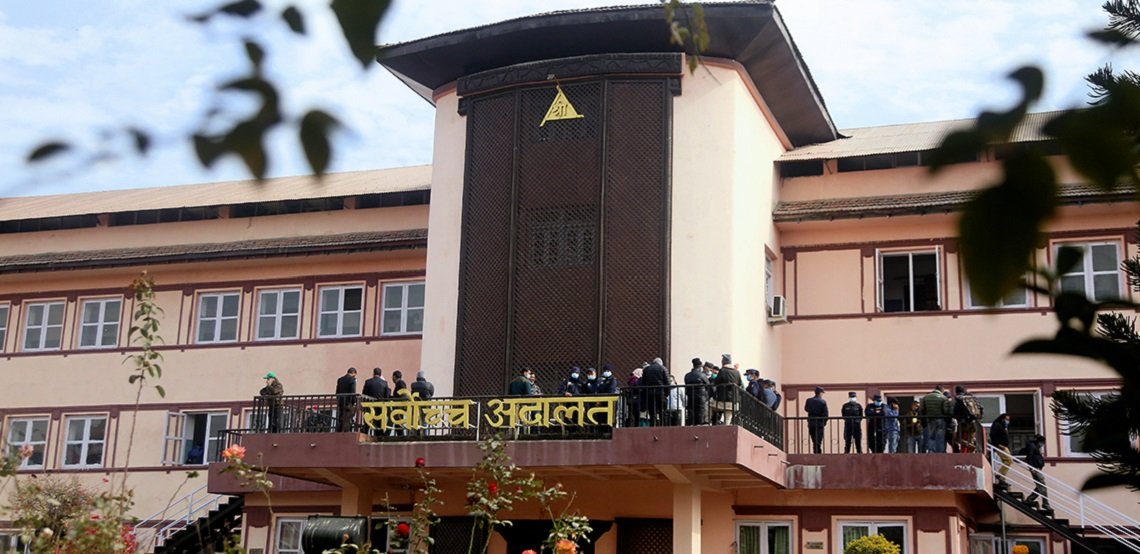
Kathmandu. The Supreme Court has issued a directive order with various instructions to the government for making waste management in the Kathmandu Valley scientific and effective.
The court has ordered the formation of a coordination committee under the convenorship of the Chief Secretary of the Prime Minister's Office, which will include secretaries of the concerned ministries and chief administrative officers of the valley's municipalities, to remove policy and practical hurdles in waste management.
The joint bench of Justices Dr. Kumar Chudal and Mahesh Sharma Poudel, addressing the extreme negligence seen in the Kathmandu Valley's waste management, has ordered the respondents to submit a progress report on the implementation status of the order to the Supreme Court's Decision Implementation Directorate every three months. Hearing a writ filed by senior advocates Padam Bahadur Shrestha and Deepak Bikram Mishra, the court reminded that it is the state's duty to protect the fundamental right of Nepali citizens to live in a clean environment.
The court has determined that approximately 1,000 to 1,200 metric tons of waste are produced daily in the Kathmandu Valley, and although 80 percent of it can be reused, the city is polluted due to improper management. The court has also suggested using technology to turn waste into 'wealth' and producing compost fertilizer from biodegradable waste for distribution to farmers.
The Supreme Court has also suggested measures for waste management in its mandate. The first point mentions the need for effective implementation and monitoring of the Waste Management Act, 2068, and other related prevailing laws, as well as strategies and policies formulated by the National Waste Management Policy, 2079.
Stating that the federal, provincial, and local governments have a significant role in the long-term solution of landfill sites and related problems, the Supreme Court has also indicated in its order that the problem can only be addressed through mutual cooperation and coordination. The Supreme Court's order states, 'Form a Kathmandu Valley Waste Management Cooperation and Coordination Committee comprising the Chief Secretary of the Government of Nepal as the convenor, the Secretary of the Ministry of Urban Development, the Chief Secretary of the Bagmati Province Government, and the administrative heads of all municipalities in the Kathmandu Valley, and manage land and carry out other necessary tasks in this regard.'
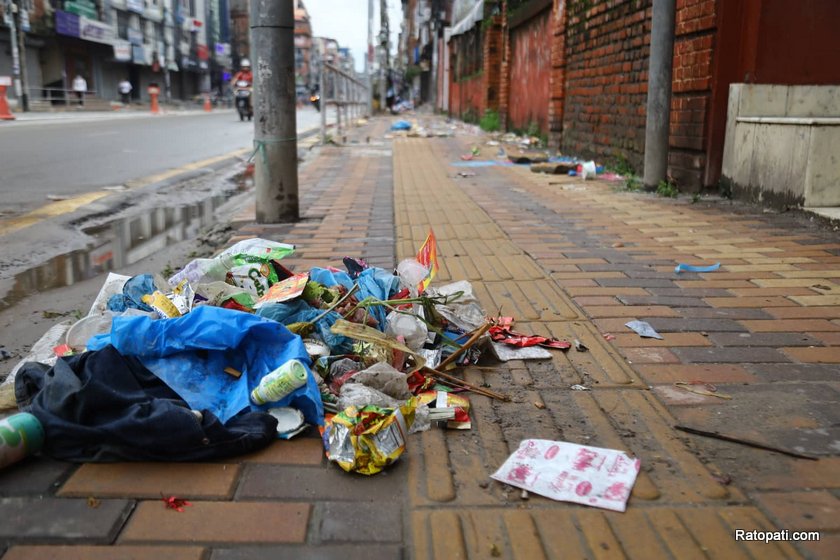
The Supreme Court has also directed all municipalities in the valley to conduct awareness programs to compulsorily separate biodegradable and non-biodegradable waste at the source from residences, businesses, schools, offices, organizations, and public and private places, and to arrange for collection after such classification.
The order also states that the fixed day, time, and location for waste disposal should be confirmed and publicly announced. It has also been ordered to take necessary initiatives for processing, fertilizer production, and reuse by collecting organic and inorganic waste separately using different vehicles.
'All municipalities in the Kathmandu Valley should prepare short-term, medium-term, and long-term action plans regarding waste management and implement them effectively, continuously monitoring and evaluating them,' the Supreme Court stated in another point, 'Efforts should also be made to enhance mutual cooperation and coordination among all municipalities in the valley for such action plans.'
The order also mentions the need to create a common mechanism for cooperation and coordination between the federal, provincial, and local levels in the upcoming act. It has also been directed to establish separate mechanisms in the offices of the Chief of each municipality, the Chief Secretary of the Province, and the Secretariat of the Chief Secretary of the Prime Minister and Council of Ministers to address public grievances regarding waste management in the Kathmandu Valley. Arrangements should also be made to inform the residents of the valley about this matter through public media.
The Supreme Court has also stated that waste management from the Kathmandu Valley has been taking place at the Sisdole landfill site in Okharpauwa, Nuwakot, and has emphasized considering the health and right to live in a clean environment of the people residing in that area. 'Take necessary actions with sensitivity to minimize and address potential risks to their health that may arise due to waste,' the final point of the mandate states, 'Respondents and all municipalities in the valley must provide information on the implementation of the present order to the Supreme Court's Decision Implementation Directorate every three months.'
The Supreme Court has also directed that the said mandate be sent to the municipalities through the Office of the Attorney General and correspondence be made with the relevant government bodies. The Supreme Court's Decision Implementation Directorate has also been ordered to continuously monitor its implementation.
This specific news has been automatically translated by AI. As a result, there may be some inaccuracies or language errors.

_acbIbW97AK.jpg)