Sir Garfield Sobers, Cricket Legend, Dies at 89

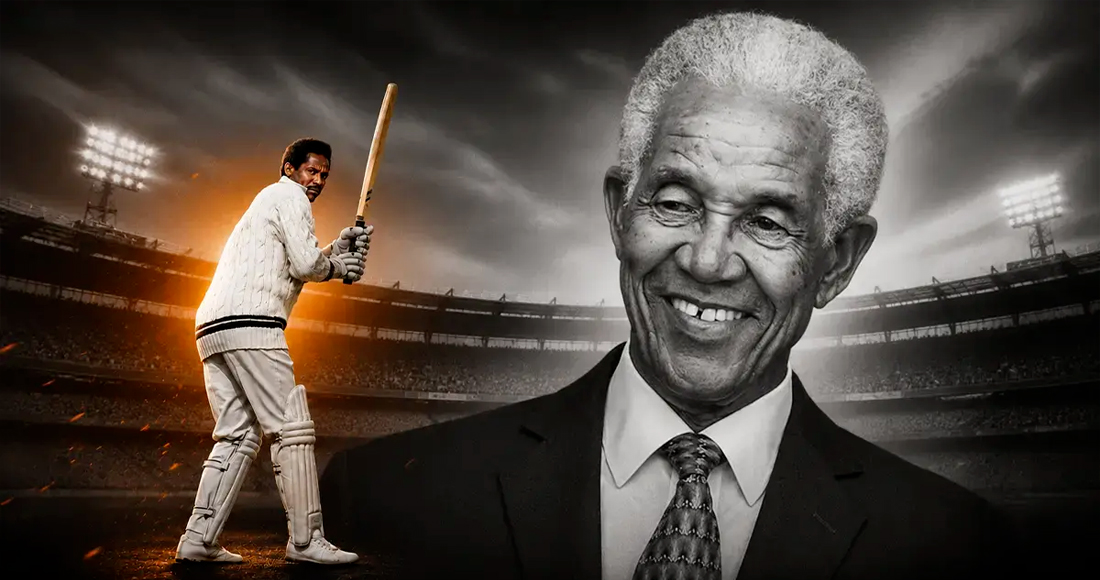
Sir Garfield Sobers, who was chosen as one of the five greatest cricketers of the 20th century, has passed away at the age of 89. He will always be remembered as the greatest all-rounder in cricket history.
A national hero of Barbados, he became a star of West Indies cricket due to his 20-year-long Test career. He was honored with a knighthood immediately after retiring.
He will also be fondly remembered in England for playing for the county team Nottinghamshire. While playing for that team, he set a record by becoming the first player to hit six sixes in a single over of professional cricket.
Decades before cricket coaches emphasized that their players should not be limited to just one aspect of the game but should be multidimensional, Sobers was already a complete all-round player.
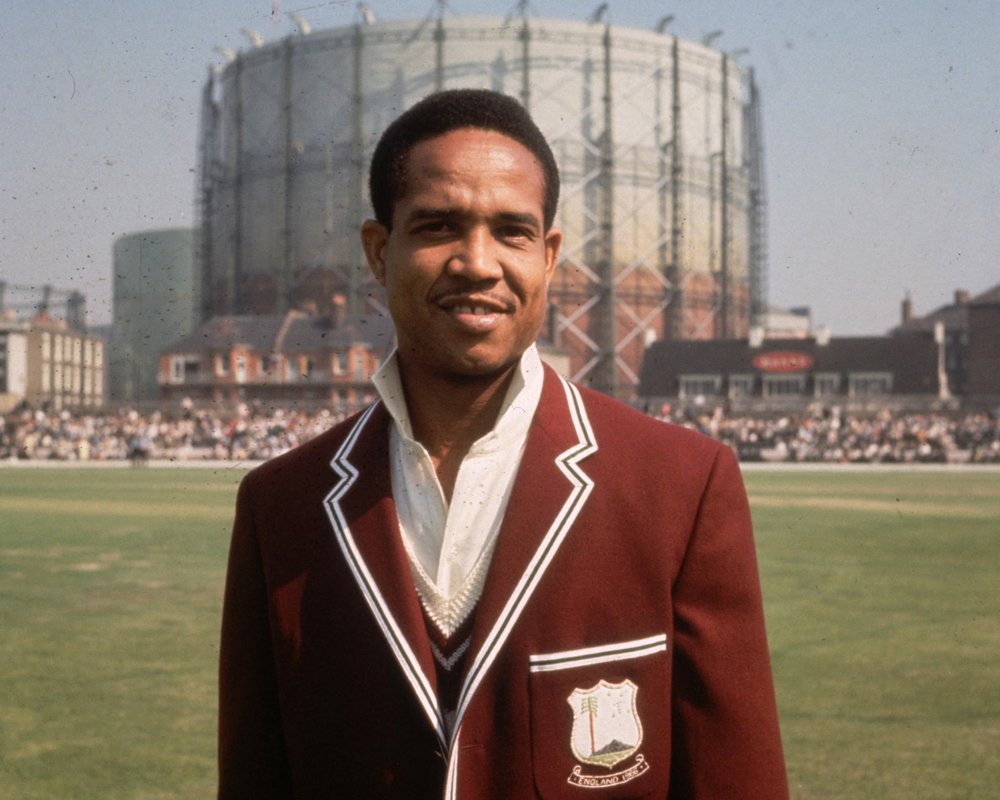
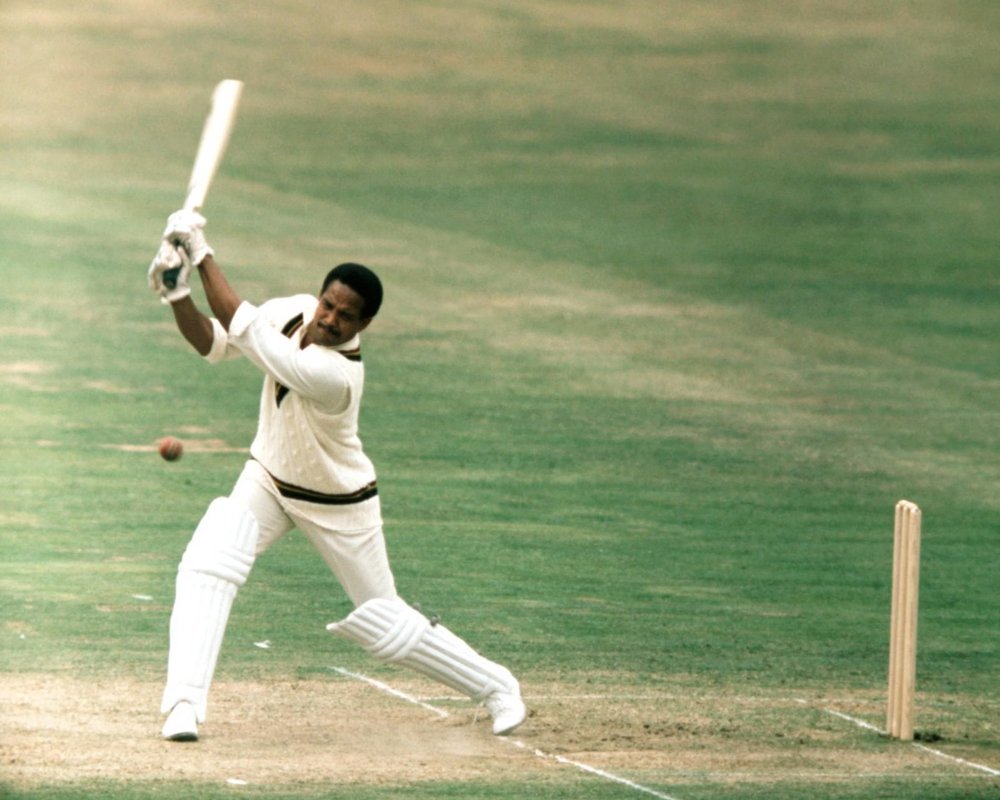
He was an aggressive left-handed middle-order batsman. He could bowl in three different styles. In addition, he was also an agile fielder and an excellent close catcher.
In fact, he often bowled left-arm fast-medium with the new ball. In the latter part of the innings, he would switch to traditional left-arm spin or left-arm wrist-spin bowling. Adding his batting and fielding, he was like any captain's dream, meaning he had the qualities of five players in one.
- From Barbados to the World Stage
Garfield St Aubrun Sobers was born on July 28, 1936, in Bridgetown. His father, who worked on merchant ships, died in World War II when he was five years old.
After that, his mother Thelma took on the responsibility of raising six children. As a child, Gary had an extra finger on each hand, which was removed in childhood.
After excelling in many sports during his school years, he was introduced to local club cricket in his early teens. He made his first-class cricket debut at the age of 16 against the touring Indian team at his hometown's Kensington Oval. Later, the pavilion at the same ground was named after him.
Sobers was selected to bat at number nine and bowl spin in a Barbados team full of renowned players. Eight players in that team were current or future Test players, at least four of whom later received knighthoods. Sobers took four wickets in the first innings and three in the second of his debut match.

After playing just one more first-class match, he made his Test cricket debut 14 months later at the age of 17. He was chosen for the final Test against England in Jamaica in early 1954 after West Indies' regular left-arm spinner Alf Valentine fell ill. He took four wickets in his Test debut as well.
The famous 'Three Ws' (Clyde Walcott, Everton Weekes, and Frank Worrell) were established middle-order batsmen. However, when Australia toured in 1955, Sobers was promoted to bat at number six in his next Test. There, he quickly showed signs of his all-round ability.
After scoring 47 in the second Test, he came in as an emergency opening batsman in the fourth Test. There, he hit fours off the first three balls from Australia's great all-rounder Keith Miller.
In 1957, Sobers toured England for the first time. Although he scored only one half-century in five Tests, he caused a sensation by scoring an unbeaten 219 against his future county team Nottinghamshire at Trent Bridge. This ground later became the center of his best performances.
- Record in Jamaica
He was a player of unlimited potential. But it was only in his 17th Test, four years after starting his Test career, that he scored his first century. In doing so, he completely rewrote the record books.
Batting at number three against Pakistan at Sabina Park in Jamaica, Sobers shared a massive 446-run partnership for the second wicket with Conrad Hunte. Hunte was run out for 260. But by the time West Indies declared their innings on March 1, 1958, Sobers, only 21 years old, was unbeaten on 365.
This broke the previous record of 364 runs set by England's Len Hutton in 1938. This record stood until 1994. This innings also marked the beginning of Sobers' best batting form. He scored five more centuries in the next five Tests. His seam bowling also improved, and he became the world's best all-rounder in the 1960s.
Sobers' demand grew significantly. He played for Radcliffe in the Central Lancashire League from 1958 to 1962 in England and for Norton in the North Staffordshire and South Cheshire League from 1964 to 1967. Meanwhile, after success in Australia in 1960-61, he was invited to play for South Australia in the Sheffield Shield for the next three seasons.
However, a tragic incident occurred while playing for Radcliffe. The car he was driving collided with a truck carrying cattle in Staffordshire. His West Indies teammate Collie Smith, who was sleeping in the back seat of the car, suffered spinal injuries and died three days later. Sobers was found guilty of reckless driving and fined.
- Captain of the West Indies, Hero of Notts
Worrell was the first black captain of the West Indies. When he retired in 1965, the 28-year-old Sobers took over the captaincy.
In the summer of 1966, while hosts England celebrated their World Cup victory in football, Sobers led the West Indies to a 3-1 Test series win. This included two innings victories. He himself contributed 722 runs, three centuries, and 20 wickets.
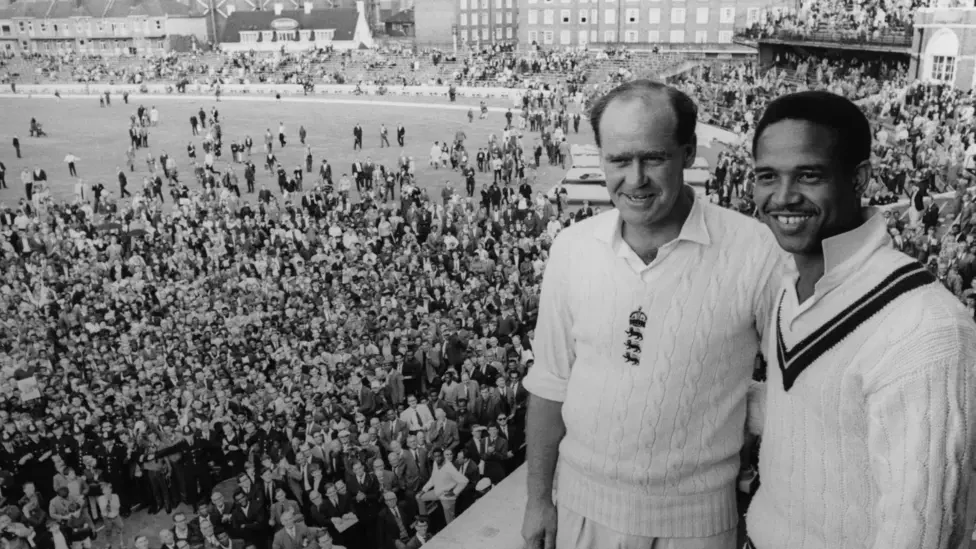
Later, South Africa was banned from sports due to its government's apartheid policy. Instead of touring South Africa, Sobers was chosen as captain of the Rest of the World XI to play against England and Australia.
However, in 1970, he made a politically insensitive decision to play in a double-wicket competition in Rhodesia (now Zimbabwe), which was ruled by a minority white government, drawing significant criticism in the Caribbean. He later apologized for this.
But on the field, he remained unique. In 1972, his double century for the Rest of the World against Australia in Melbourne was described by legends like Sir Donald Bradman as possibly the greatest batting performance ever seen in Australia.
By this time, he had also become a hero in the East Midlands as captain of Nottinghamshire. With the rule on residential qualifications for overseas players abolished, county teams competed to sign world-class superstars like Barry Richards and Greg Chappell for the 1968 season. Notts (Nottinghamshire) won the tough competition to sign Sobers.
He continued to thrill crowds at Trent Bridge until 1974. But his first season with Notts saw the most famous and historic moment.
- Six Sixes and the Ball Controversy
On August 31, 1968, in Swansea, Sobers was looking to score quick runs before Notts declared their innings. He decided to attack Glamorgan's fast bowler Malcolm Nash, who was practicing left-arm spin bowling.
Coincidentally, a camera crew from BBC Wales ignored instructions to stop filming. As a result, that historic moment of Sobers hitting six consecutive balls for six was captured on camera forever.
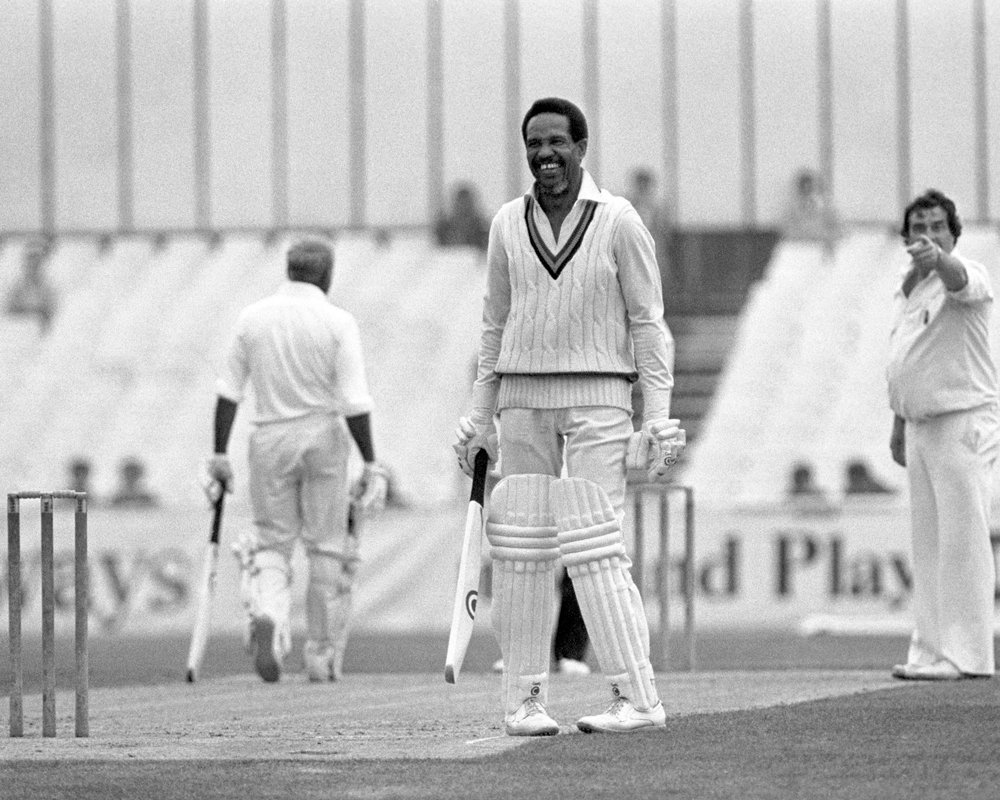
On the fifth ball, Sobers was caught by Roger Davis at long-off. However, as the fielder fell over the boundary rope while taking the catch, it was also signaled as a six.
By hitting the sixth ball out of the ground, Sobers set another world record. This record in first-class cricket was only equaled by Ravi Shastri in 1985, while it has been repeated a few times in limited-overs games.
Sobers and Nash remained good friends. When bowler Nash passed away in 2019, Sobers was at the forefront of those paying tribute.
However, there is an interesting aspect to this incident. The ball, or the ball that Sobers certified as the one, was sold at a Christie's auction for £26,200.
However, extensive research by journalist Graham Loyd and a subsequent book strongly suggest that a ball from a different company was sold in error. Nevertheless, the auctioneers have maintained that there was no mistake.
Retirement and Legacy
Rohan Kanhai replaced Sobers as captain of the West Indies. Under the new captain, he played two more Test series against England and retired from his first-class career at the end of the 1974 county season.
Sobers' career ended long before the advent of limited-overs cricket. If he had played during that time, he would have been exceptionally successful. In his only One Day International match, played in 1973, he was out for zero.
However, his Test record of 8,032 runs (average of 57.78) with 26 centuries and 235 wickets over a 20-year period can be easily compared with all the great all-rounders who came before or after him.
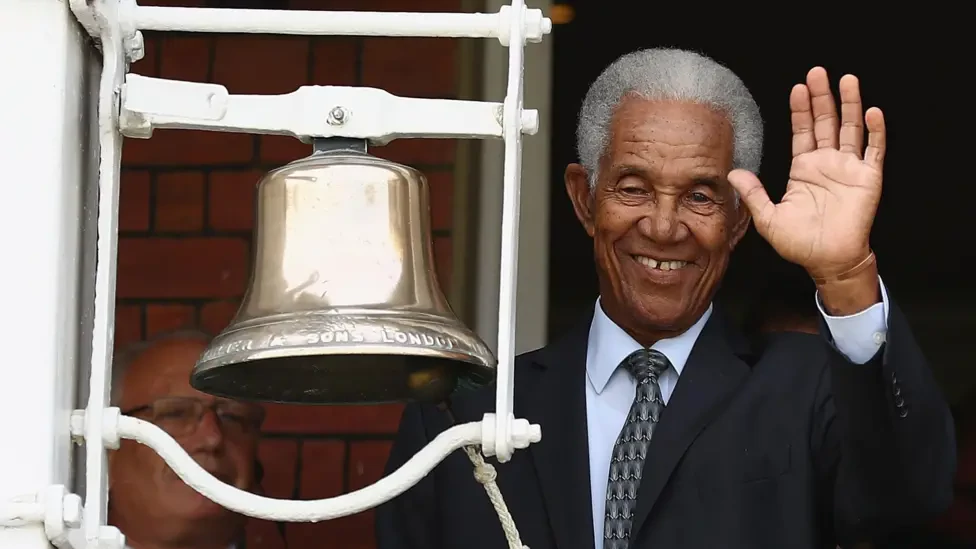
Another legendary player, Richie Benaud, gave Sobers the title of cricket's greatest all-rounder, a title that perhaps only South Africa's Jacques Kallis could challenge, as he played many more Tests than him.
Did he have any weaknesses? He was very fond of betting on horse racing. In 1968, in Trinidad, he was criticized for his gambling habits, which led to the West Indies losing the series after England successfully chased the runs when he declared the innings closed as a gesture of sportsmanship.
Less than a year after retiring, Sobers was knighted in the 1975 New Year Honors. This honor was conferred by Queen Elizabeth II during her royal visit to Barbados.
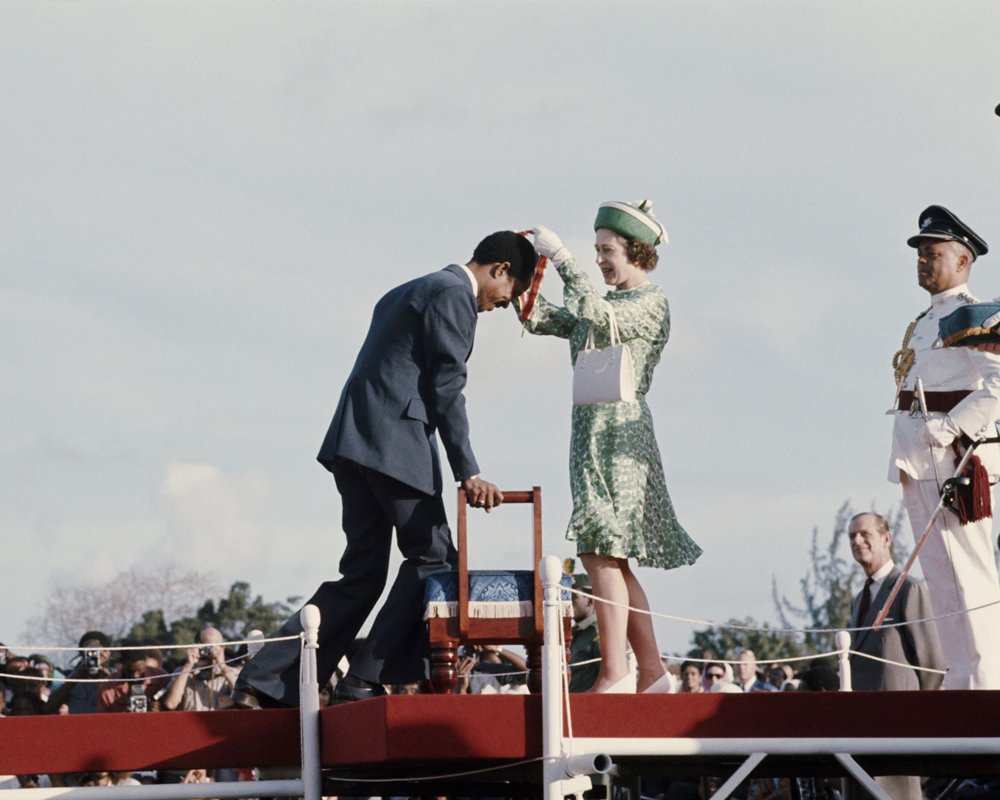
His other honors include being declared an official national hero by the Parliament of Barbados and becoming an Officer of the Order of Australia. He obtained dual Australian citizenship due to his marriage to Prudence Kirby. The couple, who later divorced, had two sons and a stepdaughter.
In the early 1980s, Sobers served as a coach when Sri Lanka was making its debut as a Test team. He also maintained his passion for golf. He started playing golf at the age of 25 and at one point reached scratch handicap level.
In 1986, an annual international school cricket competition was established in his name. Brian Charles Lara, a schoolboy from Trinidad who participated in that competition, was on the verge of breaking Sobers' Test batting record on April 18, 1994.
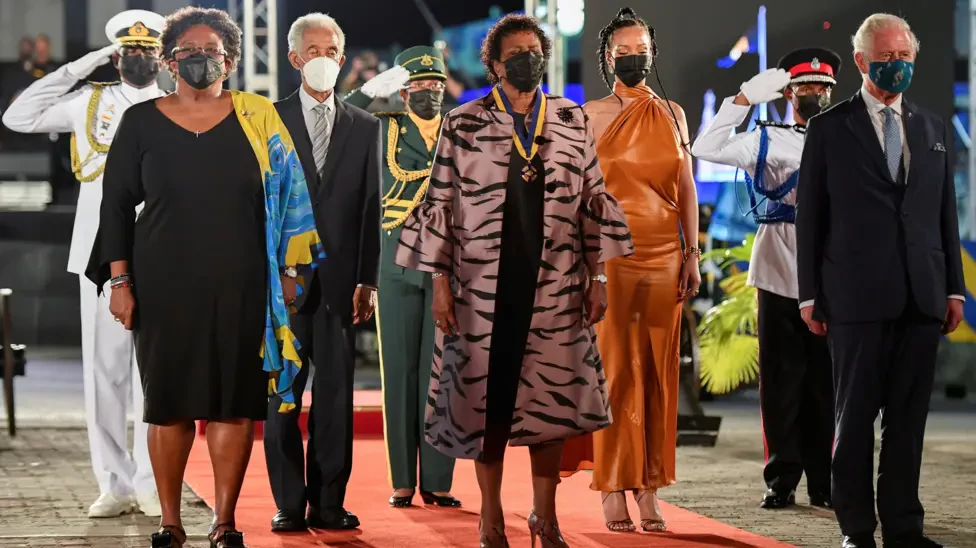
When Lara surpassed Sobers' record of 365 runs, a crowd thronged the Antigua Recreation Ground. Sir Garfield, who had played golf with Lara at 6 am that morning, himself walked onto the field to shake hands with the new record holder.
When Wisden, considered the bible of cricket, selected the five greatest cricketers of the 20th century, the panel unanimously chose Bradman. But Sobers was second on the list with 90 out of 100 votes. He was ahead of Sir Jack Hobbs (30 votes), Shane Warne (27 votes), and Sir Viv Richards (25 votes).
Later, the International Cricket Council (ICC) also honored him and named their annual World Player of the Year trophy after him. He formally inaugurated the first World Cup held in the Caribbean region in 2007. He was also one of the first players inducted into the ICC Hall of Fame.
Cricket fans worldwide, who line up to take photos with his statue outside Kensington Oval when visiting Barbados, are now mourning the loss of a true great. He served as a highly successful sports ambassador for that island nation.
This specific news has been automatically translated by AI. As a result, there may be some inaccuracies or language errors.



_mKzzIyOWNL.jpg)
_kE6hmvuewe.jpg)