Minister Chaudhary Stresses Need for International Cooperation for Climate-Smart Agriculture

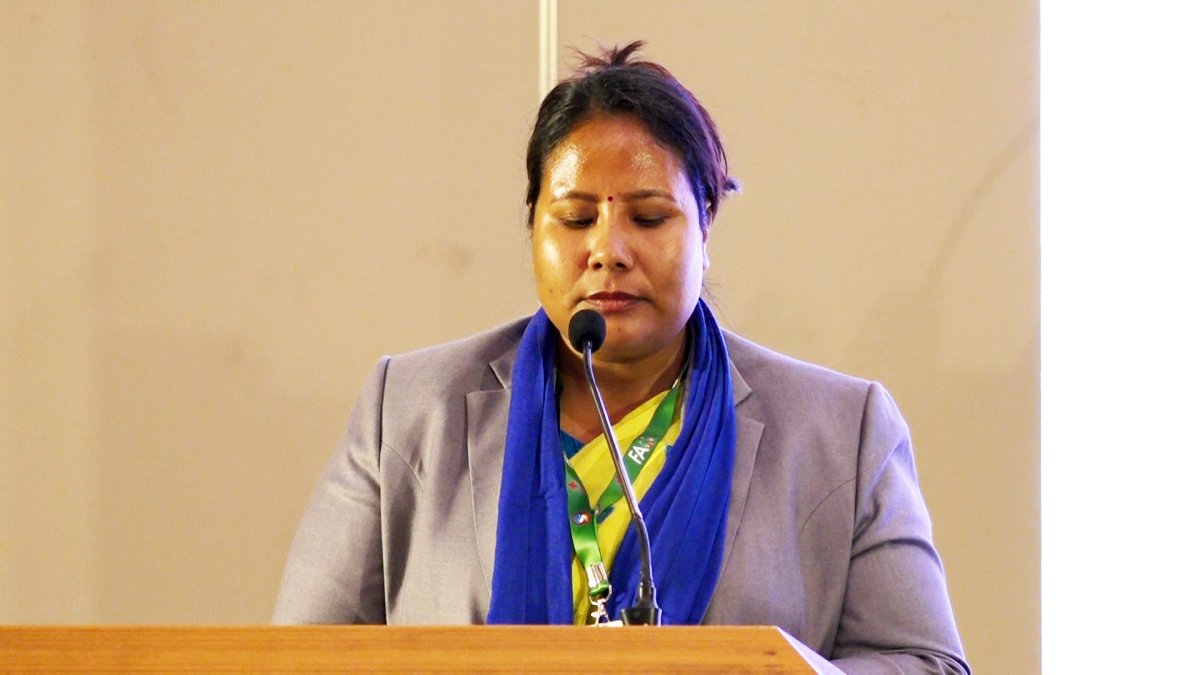
Kathmandu. Minister for Agriculture, Forest and Environment, Gita Chaudhary, has stated that international cooperation is necessary to expand climate-smart agriculture in Nepal.
She said so while addressing the inaugural workshop of the Nepal Agricultural Food System Strengthening Project.
Mentioning that the government's goal is to transform the agricultural sector through modernization, commercialization, and climate-smart technology, she said that the cooperation of the Chinese government, SIDA, FAO, and other development partners is necessary to achieve these goals. She informed that agricultural production will be increased, food sovereignty will be ensured, and sustainable value chain development will be achieved by constructing modern infrastructure with international partnership.
She mentioned that Nepal's agricultural sector is affected by structural challenges such as low productivity, increasing effects of climate change, natural disasters, foreign migration of youth dependent on agriculture, and limited access to modern technology and markets. Stating that there is a problem in the export of Nepali agricultural products due to the lack of internationally recognized testing laboratories, she informed that the government has prioritized the construction and expansion of modern testing laboratories.
During her address, Minister Chaudhary said, 'The agricultural sector is not only the backbone of Nepal's economy but also the basis of the livelihood, culture, and identity of our majority population. But today, our agricultural sector is facing complex structural challenges such as low productivity and the serious and increasing risks of climate change, natural disasters, foreign migration of youth dependent on agriculture, and limited access to modern technology and markets.'
Speaking about the lack of laboratories, she added, 'Due to the lack of modern internationally recognized testing laboratories in Nepal, there is a problem in promoting the export of agricultural products. Transforming these challenges into opportunities, the Government of Nepal has made the modernization, commercialization, mechanization, and construction and expansion of modern testing laboratories its high policy priority to ensure sustainable development of the agricultural sector and food sovereignty.'
Clarifying her national goal, she said, 'Our main national goal is to increase production through the maximum use of innovation and climate-smart technology, develop a sustainable value chain, empower women and marginalized communities, and achieve inclusive economic growth. I expect cooperation from the Chinese government and donor countries and organizations including SIDA and FAO in this goal.'
Regarding the project operated with SIDA's support, she said, 'I have full confidence that this project, which is going to be implemented from today with the support of SIDA, is directly linked with these national priorities and policy directions of the Government of Nepal. Through the promotion of climate-smart agricultural practices and improvement of nutrition, expansion of market access, and strengthening of local institutional capacity, this project will make a long-term contribution to making Nepal's overall agricultural food system more capable and sustainable.'
She stated that this project, launched with the support of the Chinese government, China International Development Cooperation Agency (SIDA), and the Food and Agriculture Organization of the United Nations (FAO), is directly linked with the national priorities of the government. Mentioning that the relationship between Nepal and China is historical, cordial, and problem-free, she expressed the view that China's experience in agricultural modernization and poverty reduction will be useful for Nepal. She stated that the exchange of knowledge, technology, and good practices will play an important role in the transformation of the agricultural sector.
This specific news has been automatically translated by AI. As a result, there may be some inaccuracies or language errors.