Pakistan Signs Multi-Year Deal With US Lobbying Firm

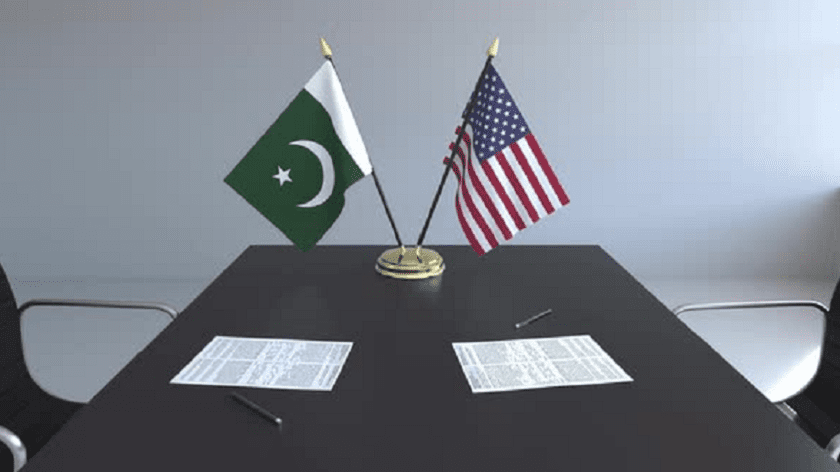
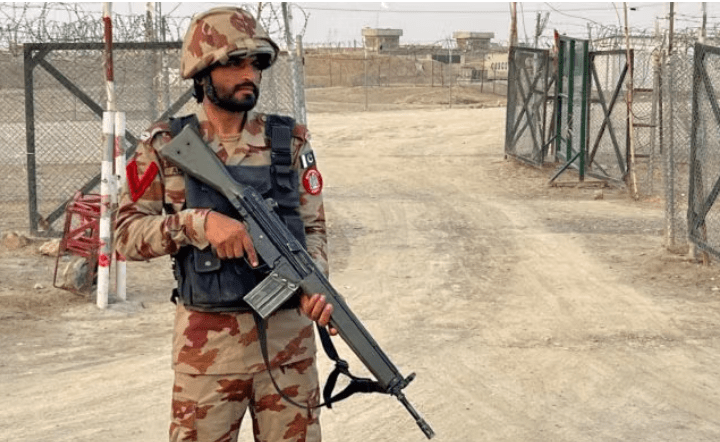
Islamabad. Pakistan, which is trying to strengthen its relationship with the United States institutionally after playing a mediating role in the Iran-US talks, has signed a multi-year agreement with an American lobbying firm with the aim of expanding defense cooperation, attracting US investment in important mineral sectors, and taking bilateral relations to new heights.
However, analysts say the long-term success of this effort is still uncertain. According to public records, Pakistan has signed a two-year agreement worth 1.2 million US dollars with the American lobbying firm Irvine Graves Strategic Group.
The agreement, effective from May, has tasked the company with arranging direct coordination and high-level meetings with the US Congress, Pentagon, National Security Council, and other government bodies.
This agreement is an extension of a short-term collaboration between Pakistan's embassy in Washington and the same company in October last year. Under the new agreement, the monthly remuneration has been doubled to 50,000 US dollars.
Former Ambassador of Pakistan to the US, Maleeha Lodhi, said that although there seems to be a possibility of improving relations between the two countries, its stability is still uncertain. According to her, the US-Pakistan relationship has been fluctuating since the past, and it remains an open question whether the current positive atmosphere will continue beyond the Trump administration.
A spokesperson for the US State Department said that efforts are continuing to identify opportunities for cooperation in trade, security, and other areas that would benefit both countries. Pakistan's Foreign Ministry has not yet commented on the agreement.
The agreement, disclosed under the US Foreign Agents Registration Act, also clarifies Pakistan's strategic priorities. It includes objectives such as reactivating the defense cooperation mechanism that was active during the Afghanistan war, attracting US investment in important mineral sectors, and strengthening cooperation against terrorism.
Elizabeth Threlkeld, head of the South Asia program at the Stimson Center, said the agreement gives special importance to critical minerals and counter-terrorism cooperation, which were priorities of the Trump administration. According to her, Pakistan also appears to be seeking to expand relations within the US Congress.
The agreement also prioritizes increasing US support for Pakistan's counter-terrorism campaign and security challenges arising from Afghanistan. However, the Taliban government in Afghanistan has stated that it has no connection with terrorist activities occurring in Pakistan.
According to analysts, the personal relationship developed between Pakistan's Army Chief Field Marshal Asim Munir and former US President Donald Trump has also given new momentum to bilateral relations. It is said that the closeness between the two leaders increased after Trump mediated an incident between India and Pakistan last year.
Meanwhile, according to an informed source, Pakistan also played an important role in facilitating the interim agreement between the US and Iran in June.
According to that source, Pakistan now wants to strengthen its relationship institutionally so that bilateral cooperation continues even with changes in government, rather than relying solely on personal relationships.
The US-Pakistan relationship had weakened somewhat after the withdrawal of US troops from Afghanistan in 2021. Now, Pakistan has also tasked the lobbying firm with reactivating the Defense Consultative Group (DCG). During the Afghanistan war, security cooperation between the two countries used to be conducted through this mechanism.
Shuja Nawaz, a fellow at the Atlantic Council and author of 'The Battle for Pakistan', said that the DCG had become almost inactive with the reduction in US security assistance. According to him, Pakistan is now trying to revive defense relations through the same mechanism.
Although direct US financial assistance has almost ended, according to a Pakistani security source, security cooperation, including intelligence sharing, has not completely stopped. He cited the intelligence cooperation between the two countries as effective in apprehending a suspect of the Islamic State related to the Kabul airport attack in 2021.
The agreement also gives special priority to critical mineral sectors. According to analysts, if American companies succeed in entering Pakistan's mineral sector, the strategic relationship between the two countries could be further strengthened.
This specific news has been automatically translated by AI. As a result, there may be some inaccuracies or language errors.