Madhesi, Progressive, and Leftist Parties Face Electoral Setbacks

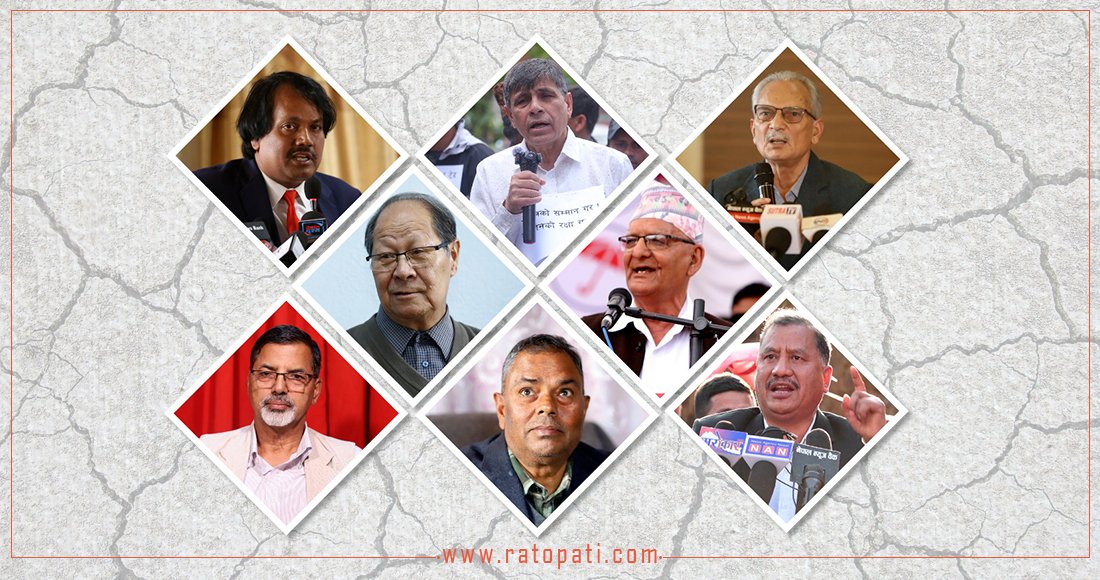
Kathmandu. Madhesi, progressive, and leftist parties swept out in the House of Representatives elections held last February have appeared to be in oblivion. The Janata Samajwadi Party Nepal, Loktantrik Samajwadi Party Nepal, and the Janamat Party, which came to power in the previous election, were badly defeated in the elections held last February. The Nepal Mazdoor Kisan Party (NMKP), which has had representation in parliament in every election since 2048 BS, and the Rastriya Janamorcha could not save their legacy. The elections dealt a major blow to other new and old leftist and democratic parties. However, these parties have not yet accepted the election results easily. Some parties have accused foreign conspiracies of being behind the 'Gen Z' movement and claimed that the new party Rastriya Swatantra Party (RSP) gained strength due to its influence. Some parties have considered corruption, mismanagement, factionalism, nepotism, and family politics within the party, and power-centric politics as the main reasons for defeat. With their complete defeat in the elections, some parties have opened up in favor of strengthening, adjusting, and uniting their organizations. Internal conflicts within some leftist and progressive parties have reached the point of division. Even though the parties are small, major disputes are visible. The Janata Samajwadi Party (JSP) Nepal and Loktantrik Samajwadi Party (LSP) Nepal, which merged before the elections, have not yet been able to unite and adjust. In the 2064 BS Constituent Assembly elections, these two parties won a total of 75 seats, 54 and 21 respectively. But for the first time in 18 years, JSP Nepal could not win a single seat. In the proportional representation category, the party received 182,285 votes, or 1.68 percent of the total valid votes. Leader Dr. Surendra Jha claimed that the process of party unification and adjustment is underway. 'The party unification has not been completed. Preparations for adjustment are underway. There is a disagreement between LSP and JSP Nepal regarding unification, adjustment, and office bearers. The adjustment procedure has been passed. Due to many development-related works in Asar, we could not pay attention to party work,' Jha told RatoPati. According to him, the adjustment process is moving forward with patron Mahantha Thakur and chairman Upendra Yadav remaining in executive roles. He stated that the central executive committee, central committee, office bearers, and secretariat will be formed as needed. Jha raised some questions about why Madhesi parties appear weak. 'Why did Madhesi parties join the federal government? Even after splitting the party and joining every government, they could not justify it. They could not dispel the confusion about mismanagement and corruption. They became ethnic parties instead of political parties. Madhes became fragmented into ethnic clusters,' he said. Jha claimed that the central leadership was not untouched by corruption and that nepotism and family politics were rampant. He said that the leadership failed to understand the spirit of the Madhes movement. Kulman Ghising-led Ujyalo Nepal Party (UNP), which merged with RSP before the elections, separated from the unification process after 13 days. The unification agreement between RSP and UNP broke down as the deadline for party registration in the proportional representation category at the Election Commission had passed. Ultimately, UNP participated in the electoral process in alliance with Rastriya Parivartan Party. Kulman's party won neither a seat in the direct election nor crossed the three percent threshold in the proportional representation system. In the elections, UNP received 172,489 votes, or 1.59 percent. The party suffered a major setback due to Kulman's failure to take a clear policy in time. He said he is focusing on strengthening the organization by expanding it nationwide. 'We suffered a big loss due to not making the right decision at the right time during the elections. Learning from that, we have been visiting districts for party strengthening and organization building. Looking back now, we feel it was good that we did not merge with RSP,' he said. The Janamat Party led by Dr. CK Raut, which unexpectedly emerged in the 2079 BS elections, won 6 seats. Within three years, the Janamat Party could not win a single seat. In the last election, the party received 79,435 votes, or 0.73 percent. The 'Balen tsunami' in Madhes also swept away the Janamat Party. Disputes had escalated within the Janamat Party even before the elections held last February. As the disputes grew, some leaders left the party. Recently, it has become difficult for this party to maintain its credibility. The Nagarik Unmukti Party (NUP), which emerged strongly as a regional party in the previous election, was divided just before the elections. The dispute between Chairman Ranjita Shrestha and patron Resham Chaudhary caused a major setback. Even when participating in the elections in alliance with three parties in the last election, it received 62,079 votes, or 0.57 percent. The stronghold of the Nepal Mazdoor Kisan Party (NMKP), which has been elected from Bhaktapur in every election since 2046 BS, was broken by RSP this time. The NMKP's stronghold, which was not defeated in Bhaktapur-1 even when forming alliances with Maoists in 2064 BS and with UML and Maoists in 2074 BS, was broken after 34 years. Despite the popularity of the socialist model in Bhaktapur, the rise of RSP could not leave that area untouched. Chairman of the Communist Party of Nepal (NMKP), Narayanman Bijukchhe, argued that as long as leaders do not have the spirit of serving the people selflessly, the country will continue to be ruined. He accused the people in government of being the main cause of the country's ruin. Prem Suwal, who was defeated by the RSP candidate, argued that the 'Gen Z' movement held on August 23 and 24 was not for social change and nation-building but for vandalism. Suwal said that work is being done to strengthen the party further through organization building and by educating the general voters. In the last election, NMKP received 42,299 votes, or 0.39 percent. The Rastriya Janamorcha faced a similar fate as NMKP. In the elections held last February, the party received 29,456 votes, or 0.27 percent. Rajmo had been winning elections from Pyuthan or Baglung constituencies since 2048 BS. Chairman Chitra Bahadur KC said that internal programs are currently underway. 'Internal programs are being carried out vigorously. Efforts are being made to cooperate with leftist and patriotic parties in favor of nationality, independence, and people's livelihood,' he said. The Pragatisheel Loktantrik Party (PrLoPa), formed by the merger of the Maoist Center, a group separated from RSP, and Baburam Bhattarai-led Naya Shakti after the 'Gen Z' rebellion, received a total of 24,676 votes, or 0.23 percent, in the elections. The party, whose patron Bhattarai, a candidate from Gorkha-2, withdrew his candidacy, leading to intense controversy, supported candidates from UML, Nepal Communist Party, Congress, and Shram Sanskriti Party in various places. After the elections, Durga Sob, chairperson of the presidium, resigned. Suden Kirati joined the Shram Sanskriti Party, leaving the party. Chairman Santosh Pariyar stated that a dispute arose after the presentation of a report on the party's ideological line of 'Socialist Democracy'. The Baburam faction stood in favor of scientific humanism and advanced socialism. Due to disputes over this, the party has split. Chairman Pariyar said that the party is focused on district tours to strengthen and reorganize the organization. 'Discussions and debates are necessary to determine a new ideological direction. They have gone on district tours to expand the organization. Discussions are underway with socialist and leftist parties to unite the party,' he said. The CPN (Maoist) led by Biplav, which split from the Unified Maoist led by Prachanda in 2069 BS, received 23,867 votes, or 0.22 percent, in the last elections. The Maoist party, which had boycotted elections since 2070 BS and was engaged in the Unified People's Revolution, decided to use elections by changing its party policy. However, opposing this policy, a group including Dharmendra Bastola, Chiranjeevi Pun, Chiranjeevi Dhakal, and Karna Jit Budhathoki separated from the party. In a secretariat meeting held on Asar 1, Uma Bhujel, a famous jailbreaker, was punished. Expressing dissatisfaction with the punishment, Bhujel reorganized the Nepal Communist Party under her own leadership. A 91-member National Gathering Organizing Committee has been formed under her convenership. Meanwhile, the Maoist party is currently busy with farming. Leader Sher Bahadur Bishwakarma said that the coming and going of individuals in a vibrant party is a natural process. 'Sometimes there are problems when reality is on one side and consciousness on the other. It is not right to say the party is finished just because the election results were disappointing,' he said, 'We have seen the state of UML and Nepal Communist Party, which received several hundred thousand votes.' Ghanshyam Bhusal, who became the general secretary of the Unified Socialist Party, joined the CPN (United) just before the elections. Bhusal's group had separated, disagreeing with the decision of the secretariat meeting chaired by Chairman Madhav Kumar Nepal to unite with the Maoist Center. In the elections, CPN (United) received a total of 4,515 votes, or 0.04 percent. Bhusal, considered a leftist thinker and intellectual leader, has been in oblivion recently. The CPN (Maoist) led by CP Mainali, which separated from the then UML in 2054 BS in protest against the Mahakali Treaty, is on the verge of existence due to fragmentation and division. In the last elections, the Maoist party received 6,172 votes, or 0.06 percent. General Secretary Mainali said that there will be no unity with anyone until a serious review of the shortcomings since the establishment of the Communist Party is done.
This specific news has been automatically translated by AI. As a result, there may be some inaccuracies or language errors.