Nawalpur Transport Office Introduces Tablet-Based Driving License Written Exams

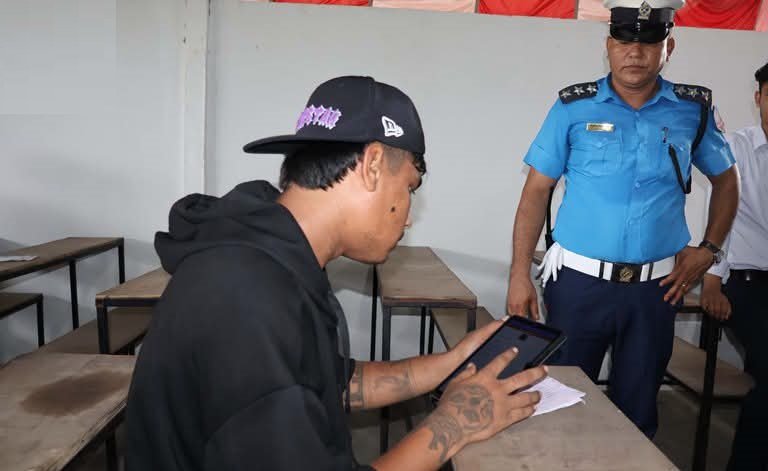
Pokhara. Nawalpur's Kawasoti Transport Management Office, under the Gandaki Province, has conducted the first-ever written driving license examination using tablets in Nepal. The office has adopted tablet technology to make the written examination transparent and modern after it became notorious.
The tablet technology was formally inaugurated by the Gandaki Province's Minister for Physical Infrastructure Development and Transport Management, Govinda Bahadur Nepali. With its implementation, it is claimed that the transport sector's service delivery will become efficient and disciplined.
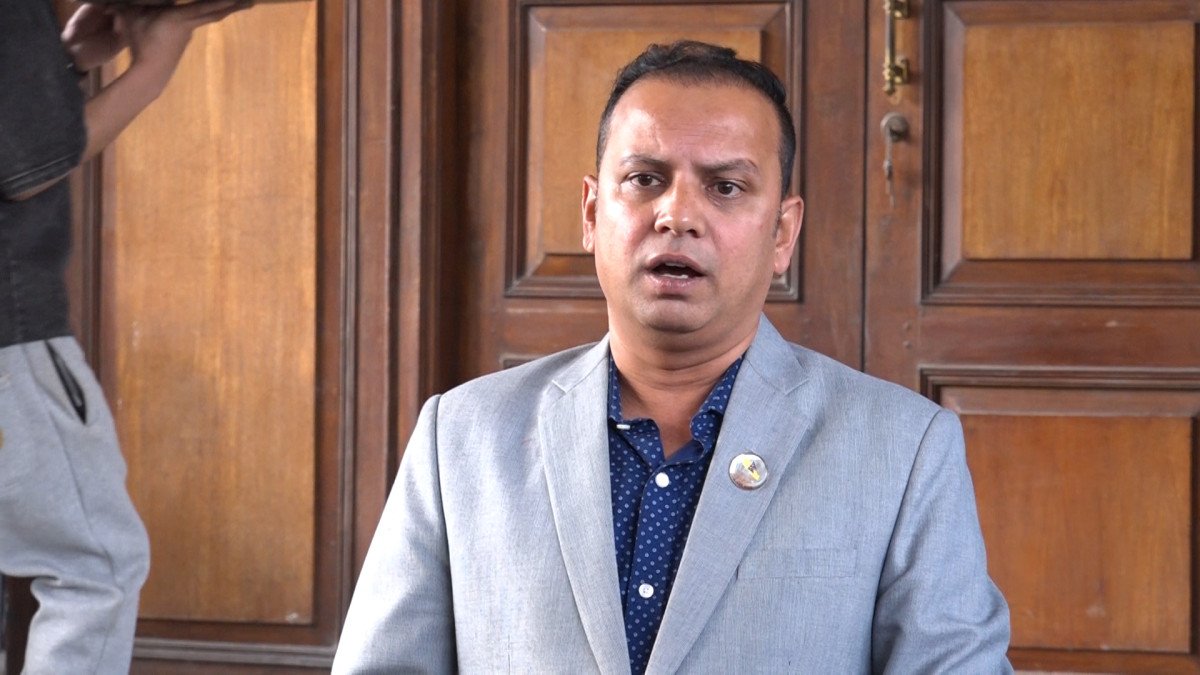
'In the past, during paper-based examinations, there were technical challenges such as unclear photos on citizenship or entrance cards and the participation of fake examinees,' said the office's Information Officer Pradip Sapkota. 'Now, with the implementation of the tablet system with AI and face-matching technology, it has become easier to identify the actual examinees.'
For now, examinees have to be present at the office to take the exam. However, preparations are underway to allow them to take the exam from home gradually, he added. The office stated that the problem of taking time to check answer sheets and examinees failing due to confusion from erased answers will no longer exist.
With the system's implementation, the possibility of undesirable activities and human interference within the examination hall has also decreased, said acting office chief Tek Bahadur Nepali. 'Even with a shortage of staff, it has helped to complete the examination quickly and safely with limited manpower,' he said. Considering security sensitivities, the office has arranged for the tablets used in the examination to remain under the office's control.
The office has stated that security mechanisms have been put in place to ensure this technology does not work outside the examination hall. The AI system installed in it identifies the examinee through face matching. Information Officer Sapkota said that the system automatically records photos and audio during the exam, which helps maintain the impartiality of the examination.
However, the office has also made alternative arrangements for examinees who are not accustomed to using technology. He said that for examinees who find it difficult to operate tablets, the facility to take the exam using paper by printing the same question paper is also available. 'Our main objective is to provide hassle-free service to the service recipients and to provide the examination results immediately. To make it easier for examinees who are not accustomed to using technology, we have kept the alternative arrangement of being able to take the exam through paper by immediately printing the same question paper available on the tablet,' he said.
Since the service started, 53 examinees have already taken the exam via tablet. Among them, 40 passed and 13 failed. Although 30 minutes were allocated for the exam, examinees completed it within 4 to 22 minutes. The system's development was successful through Sapkota's efforts.
This specific news has been automatically translated by AI. As a result, there may be some inaccuracies or language errors.

_6BsDewPY2j.jpg)