Govinda Karki Appointed Chief Secretary Amid Controversy

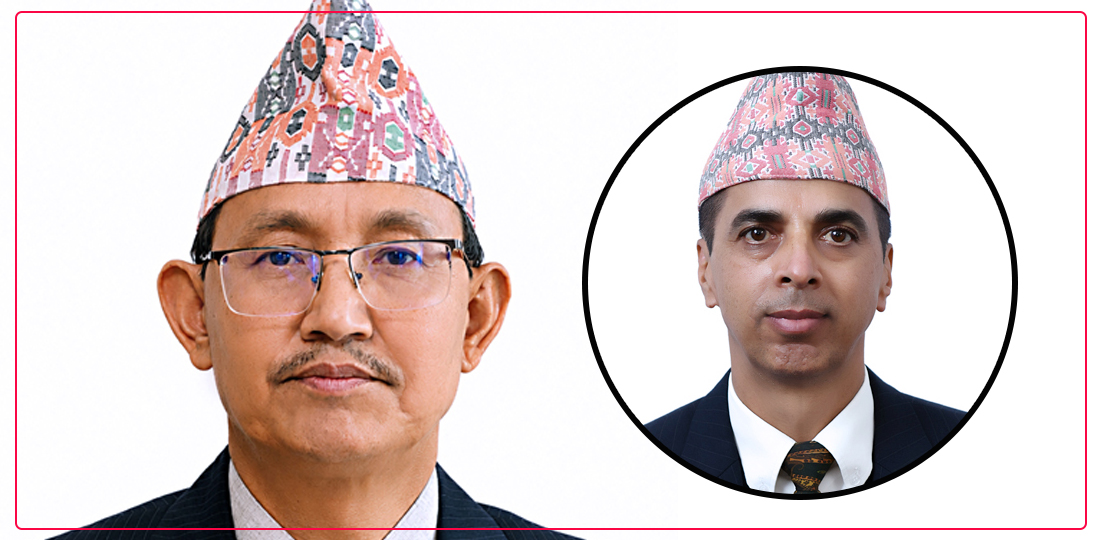
Kathmandu. Controversy has erupted after Govinda Karki, ranked 35th among the 57 working in the specific category (Secretary) of civil servants, was appointed Chief Secretary. The Council of Ministers, in its meeting on Asar 24, decided to appoint Karki, who was working in the Prime Minister's Office and Council of Ministers and ranked 35th in seniority, as the Chief Secretary before the then Chief Secretary Suman Raj Aryal went on mandatory retirement from Asar 26. Subsequently, secretaries who were ranked higher than him and had hopes of becoming Chief Secretary became dissatisfied. Currently, the seniormost secretary in the administration service, Kiran Raj Sharma, is on leave. According to the National Archive (Civil Service) records, Sharma, who is due to go on mandatory retirement on Saun 4 due to completing a 5-year tenure as secretary, is on leave until Saun 3. Sharma, working in the Prime Minister's Office and Council of Ministers, has been granted leave from Friday until Saun 3. He will go on mandatory retirement during this leave. Hemraj Aryal, the spokesperson and joint secretary of the Prime Minister's Office and Council of Ministers, confirmed that Secretary Sharma is on leave. "He (Kiran Raj Sharma) has been on leave from Friday until Saun 3," spokesperson Aryal told Ratopati. Sharma not only went on leave but also did not attend the swearing-in ceremony of the newly appointed Chief Secretary Karki on Friday. Sharma, who led various administrative tasks including the preparation of the government's policy and programs, and was ranked first in seniority among secretaries, had presented his claim for the Chief Secretary position. However, not only was Sharma not appointed, but the government led by Balendra Shah, a senior leader of the Rastriya Swatantra Party, did not deem it appropriate to appoint 33 other secretaries who were ranked higher than Karki as Chief Secretary. Who were senior to Karki? According to the National Archive (Civil Service) records, Karki was ranked 35th in the overall seniority of secretaries. He was ranked 24th in the seniority of secretaries in line to become Chief Secretary. Looking at the tradition so far, the government has not appointed secretaries from the judiciary, government lawyer, and parliament services as Chief Secretary. Based on that, Karki surpassed 23 senior secretaries to become Chief Secretary. Secretaries Kiran Raj Sharma, Hari Prasad Mainali, Dilliraj Sharma, Rajkumar Shrestha, Gopal Prasad Sigdel were senior to him. Similarly, other secretaries including Rabilal Pantha, Krishnabahadur Raut, Rameshwar Dangal, Mukund Prasad Niroula, Suraj Kumar Baidya, Dr. Deepak Kafle, Narayan Prasad Sharma Duwadi, Ghanshyam Upadhyay were also ahead of Karki. Laxmi Kumari Basnet, Dinesh Kumar Ghimire, Bishwababu Pudasaini, Radhika Aryal, Sarita Dawadi, Chudamani Poudyal, Kedarnath Sharma, Baikuntha Bahadur Adhikari, Rajendra Prasad Mishra, Loknath Poudyal were behind Karki when he ascended to the highest position in the civil service, Chief Secretary. Secretaries Kiran Raj Sharma, Hari Prasad Mainali, Dilliraj Sharma, Loknath Poudyal are senior to Karki in the Prime Minister's Office itself. Secretaries in Collective Discussion Unlike previous Chief Secretaries who used to call meetings of secretaries after assuming office to understand how to move forward and what the problems are in the bodies where secretaries are posted and what needs to be done for their solution, Karki has not called a meeting of secretaries so far. The Prime Minister's Office and Council of Ministers has informed that Karki has not held meetings with secretaries since becoming Chief Secretary. Spokesperson Aryal informed on Thursday that since all secretaries were present at the farewell of the previous Chief Secretary Suman Raj Aryal, a meeting of secretaries has not been called immediately, keeping in mind their time. "All secretaries were present at the farewell of the Chief Secretary on Thursday. Calling them again immediately would take an hour and a half. Therefore, they have not been called," said spokesperson Aryal, "A regular meeting of secretaries will be held after Saun, and discussions are planned there." Meanwhile, a secretary who is in discussion about how to move forward, informed Ratopati. "Contribution and work evaluation in employee administration have not been done. We are discussing how to move forward," said the secretary, "Not just one or two, but the dignity of about two dozen secretaries has been insulted. How to work under a junior?" Another secretary stated that the selection of leadership, seniority, and administrative tradition in civil service has been ridiculed. He said that the environment for secretaries to work with dedication is no longer there. However, apart from Sharma, no other secretary has gone on leave or expressed dissatisfaction and resigned. "No resignation has been received so far. It is uncertain about future resignations," said a source from the Prime Minister's Office. Karki has experience running one ministry. Chief Secretary Karki has experience running only one ministry and serving as Chief Secretary in one province. Karki, who was promoted to secretary on Bhadra 20, 2081, has experience working as Chief Secretary in the Chief Minister and Council of Ministers' Office of Bagmati Province and as secretary in the Ministry of Industry, Commerce and Supplies. After that, he was transferred to the Prime Minister's Office and Council of Ministers. He was working there until now. Born in Bhojpur, Koshi Province on Poush 25, 2027, Karki entered civil service on Poush 7, 2053. He was to remain in civil service until Poush 25, 2085, while in the post of secretary. Karki had worked in the administrative restructuring and reform task force promoted by the Shah-led government. Immediately after the formation of the Shah-led government, the one-hundred-point action plan approved by the Council of Ministers included a reduction in the number of ministries. In the Council of Ministers meeting on Chaitra 22, prior approval was given to conduct an Organization and Management (O&M) survey of all ministries, secretariats, commissions, and subordinate bodies under the Government of Nepal. A six-member restructuring management secretariat was formed under Karki's leadership to implement that decision. Former Chairman of Administration Reform Commission Dahal says - The result of not creating a succession plan. Former Chairman of the Administration Reform Commission, Kashi Raj Dahal, says that governments are arbitrarily appointing Chief Secretaries due to the lack of a succession plan in Nepali law. Dahal states that the administration of Nepal has been deteriorating due to this attitude of governments since the past. "The legal provision in employee administration is flawed. There is no succession plan in the law," Dahal told Ratopati on Monday, "My Administration Reform Commission had recommended implementing a succession plan. No government has implemented it, hence our administration has been deteriorating since the past." Dahal said that until this plan is implemented and the transfer, promotion, and career development of employees are made predictable, such chaos will continue in the bureaucracy. "As long as the transfer, promotion, and career development in employee administration are not made predictable, such chaos will continue," said Dahal, "Who will be the next Chief Secretary after the incumbent Chief Secretary, it should be predictable. If that happens, institutional development will occur. Otherwise, such arbitrariness will continue." Dahal also stated that the problem has arisen due to appointing secretaries from the judiciary or foreign service as Chief Secretary due to the lack of clear provisions in the law. Dahal says that due to the lack of law, previous governments have been selecting individuals favorable to them as Chief Secretary, and the current government is also following the same footsteps. He argued that to make the administration efficient and institutional, a succession plan should be implemented with the consideration of how to make it good, not just ours.
This specific news has been automatically translated by AI. As a result, there may be some inaccuracies or language errors.