Two Self-Immolation Incidents Highlight Systemic Failures

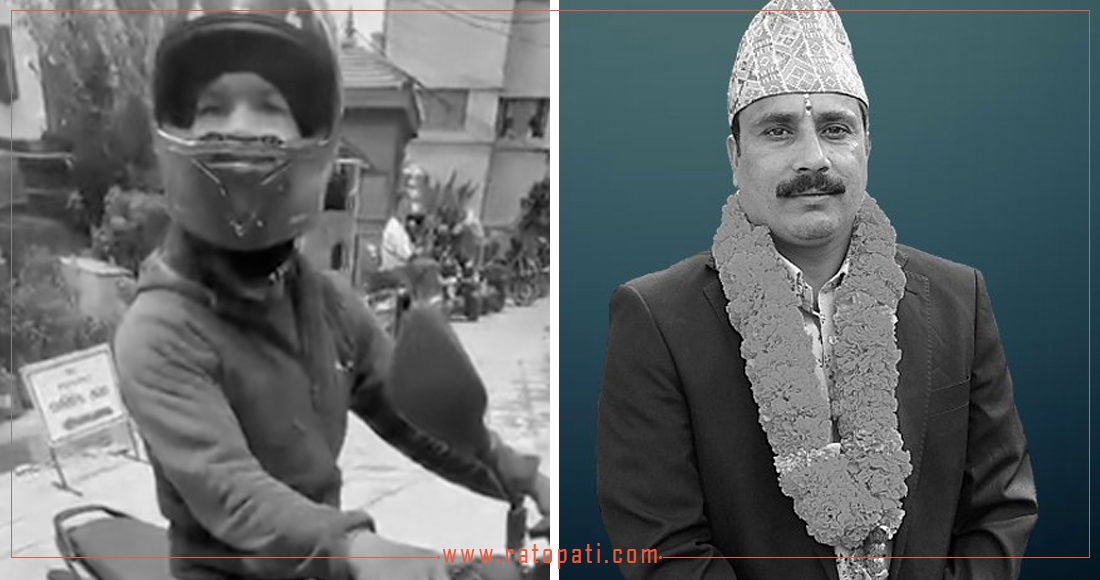
Kathmandu. Three years interval, two different geographies, but the same fate and the same cry - one cannot earn an honest living in this country.
On January 26, 2023, Premprasad Acharya of Ilam set himself on fire with petrol in front of the Federal Parliament Building in New Baneshwor. Exactly three years later, on February 23, 2024, 25-year-old Ganesh Nepali of Mugu chose the same path in front of the Department of Passports in Tripureshwor, Kathmandu.
Although the characters in these two incidents are different, the issue they raised and the nature of the anger they expressed towards the state are the same. The fire that Prem and Ganesh set on their bodies was not just an attempt at suicide by an individual, but a gruesome rebellion against the state machinery, policies, and behavior.
Their rebellion and pain were the same - to be able to earn a living while staying in this country.
Four governments have changed in the last three years, chairs have changed, but the people's suffering has not changed. After the 2022 elections, there was a government led by Pushpa Kamal Dahal Prachanda. KP Sharma Oli of CPN-UML became Prime Minister by changing the equation of Prachanda's government, but a year after he became Prime Minister, the Oli government fell due to the Gen Z movement on August 23 and 24 last year. After the fall of the Oli government, an interim government was formed under the leadership of former Chief Justice Sushila Karki. The election conducted by the interim government has brought a government led by Balendra Shah, a senior leader of Rastriya Swatantra Party, with nearly a two-thirds majority.
It is not important that the government and chairs change, it is important that the people's lives change. The rulers and governance of the country have changed, but the faces of the poor people have not changed with hope. The government formed with the overwhelming mandate of the people with great expectations and hopes for the country to change and to be able to earn a living within the country has adopted policies that make the lives of the people difficult.
The Balendra government, which the people had placed great trust and hope in, has also created a situation where ordinary people have to face the same fate. There is widespread protest against the government in the parliament, on the streets, and in digital media.
- That Wheel Lock in Tripureshwor and Ganesh's Broken Dream
Ganesh Nepali, an ordinary young man from the remote Sorukhola rural municipality of Mugu, came to Kathmandu with dreams. His only means of survival was his Pulsar motorcycle, which he used for ride-sharing (Pathao).
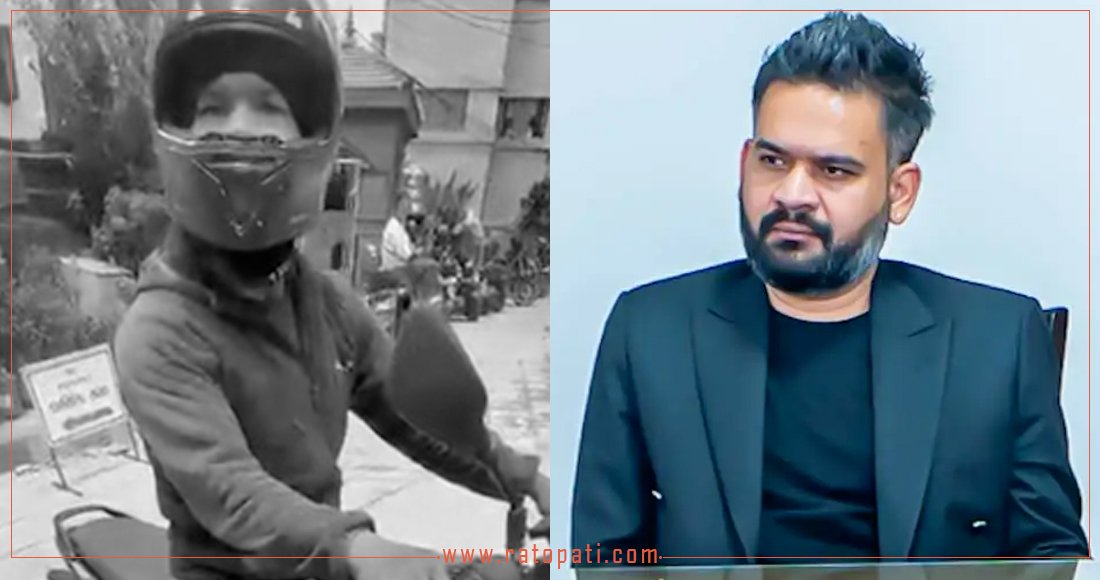
At 1:45 PM on Thursday, the wheel lock was placed on his motorcycle, the most important basis of his life, by the metropolitan police at gate number 3 of the Department of Passports.
_Ko5h6xwKub.jpg)
For Ganesh, who was waiting for someone at the corner of the street or had stopped for a moment, that lock was not a metal key, but a lock on his hunger and future.
The dispute began when the metropolitan city police locked his motorcycle, citing 'no parking'. According to eyewitnesses and public videos, Ganesh had a heated argument with a female city police officer on duty.
Ganesh questioned why his motorcycle was locked even though he had parked it on a raised area off the road.
"Are you looking down on people?" Ganesh's question reflected both anger and pain. While the city police reprimanded him for breaking the rules, Ganesh protested, asking why his motorcycle was locked and not others.
In a fit of rage due to that rude behavior and the closure of his means of livelihood, Ganesh took petrol from his motorcycle, doused himself, and set himself on fire. He died during treatment.
- Prem Acharya's 25-Point Death Wish
Ganesh Nepali's act brought back the horrific scene from three years ago when 36-year-old Premprasad Acharya self-immolated in front of the Parliament Building. Premprasad had also not committed any crime. He had tried to start a business.
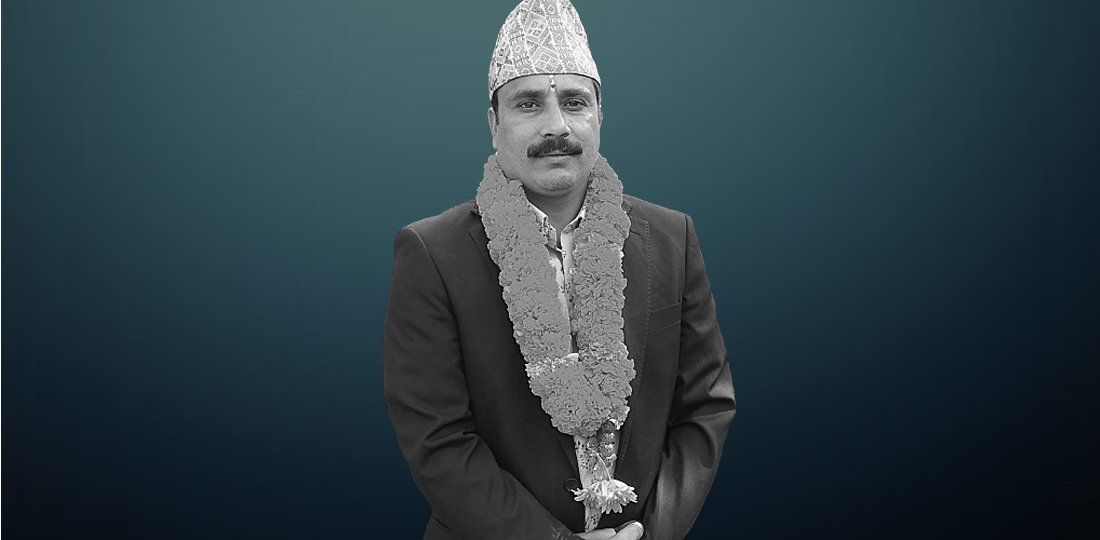
In a long Facebook post before his death, Prem painted a stark picture of Nepal's economic system, business syndicates, and government policies. Prem, who had ventured into everything from travel agencies to agricultural industries, expressed his pain over large business houses taking goods on credit without payment, the state not protecting small entrepreneurs, and being crushed by bank interest.
His 25-point demands included basic things like zero VAT and a ban on buying goods on credit, and easy access to health and education. He wrote, "I am financially ruined due to my business, and government policies are to blame for it."
Seeing no other option, he finally chose the path of self-immolation.
- Different Behavior When In and Out of Power
When Premprasad Acharya self-immolated, Balendra Shah (Balen) was just making his mark as the Mayor of Kathmandu Metropolitan City. After Acharya's death, Balen wrote an emotional and angry post on social media.
Prime Minister Balen Shah, as the Mayor of Kathmandu Metropolitan City, had written after entrepreneur Premprasad Acharya's self-immolation, "If anyone is forced to self-immolate, it is a sign of the state's extreme failure."
He further wrote, "In such a situation, it is understood that the state has failed in every aspect of the self-immolating citizen's business, despair, plea for help, safety, rescue, and every step they went through. All levels, bodies, and organs of the state are considered to have failed."
He stated that such incidents indicate that everyone, including citizens, representatives, leaders of power, and the media, is failing. Balen clarified that those in power lack the awareness to fulfill their basic responsibilities to the citizens, and those in representative roles lack the courage to follow and enforce rules with a clean intention.
"A citizen informs everyone they know about their past and future before attempting suicide. A citizen sets themselves on fire by pouring petrol in front of the Parliament Building," Balen wrote. "There may be many reasons and many signs for that self-immolation, but the biggest reason is the state. The most terrible sign is the extreme failure of the state."
However, he has remained silent about the incident that occurred when he himself was Prime Minister.
Similarly, at that time, Rabi Lamichhane, the chairman of Rastriya Swatantra Party, was the Home Minister of the then government. At the same time, Rabi Lamichhane, the chairman of RSP, apologized to Premprasad Acharya for not being able to instill hope even with their arrival. However, he stated that the reason for Premprasad Acharya's self-immolation, even after joining the government, was "long-standing despair and pain."
"What is left to describe the situation where a citizen has to self-immolate?" Lamichhane wrote. "It is due to such circumstances that we entered politics yesterday and the government today through a peaceful protest. I know that the decision to self-immolate is the result of long-standing despair and pain."
Lamichhane, who claimed that they entered politics for change, further wrote, "Even the arrival of newcomers like us could not add enthusiasm to you, could not instill hope, could not change the decision to self-immolate. We are guilty of this, I am guilty."
However, many leaders of RSP have not spoken about Ganesh Nepali's self-immolation. Today, another youth has self-immolated after a dispute with the metropolitan city police. Balen, who declared the state a failure yesterday, is now at the center of power and authority himself.
There has been criticism of Prime Minister and RSP Chairman Lamichhane since Thursday afternoon, with allegations that the anger that was evident yesterday has disappeared since reaching power.
- The Same Nature of Two Incidents: System or Situation?
There is a common thread in both incidents of Prem Acharya and Ganesh Nepali - the demand to be able to earn a living.
Prem sought systemic reform and economic justice, while Ganesh sought the dignity of being able to earn a living through labor on the streets.
The response of "Are you going to put a garland on me?" from the police when a young man from a poor family tried to explain his problem amidst the crowd of thousands of people coming to the Department of Passports raises questions about the state's insensitivity.
The government must enforce the rules. There is no doubt about that. However, in the name of enforcing rules, hurting the self-respect of citizens and pushing them to the brink of death is a matter of shame for a democratic state.
As in the past, state agencies have failed in citizen security and rescue today. If the state cannot create a mechanism to listen to the pain of small entrepreneurs and laborers, the fire that Prem and Ganesh set on their bodies may burn down the entire system tomorrow.
This specific news has been automatically translated by AI. As a result, there may be some inaccuracies or language errors.
_cyIwPxobmj.jpg)


_LvPybJAXm4.jpg)