Man Dies After Self-Immolation Attempt Outside Department of Passports

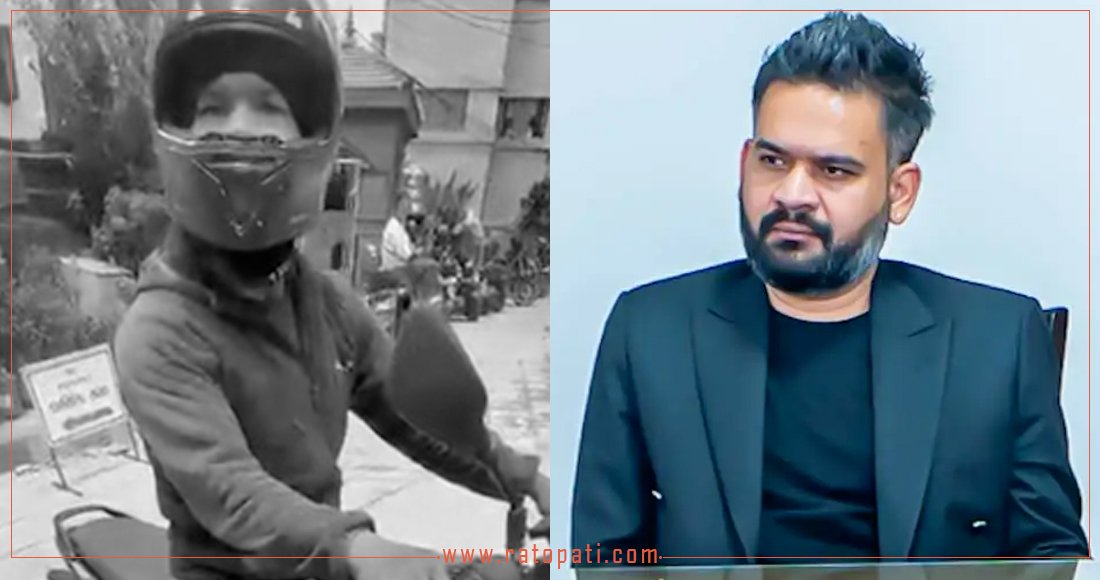
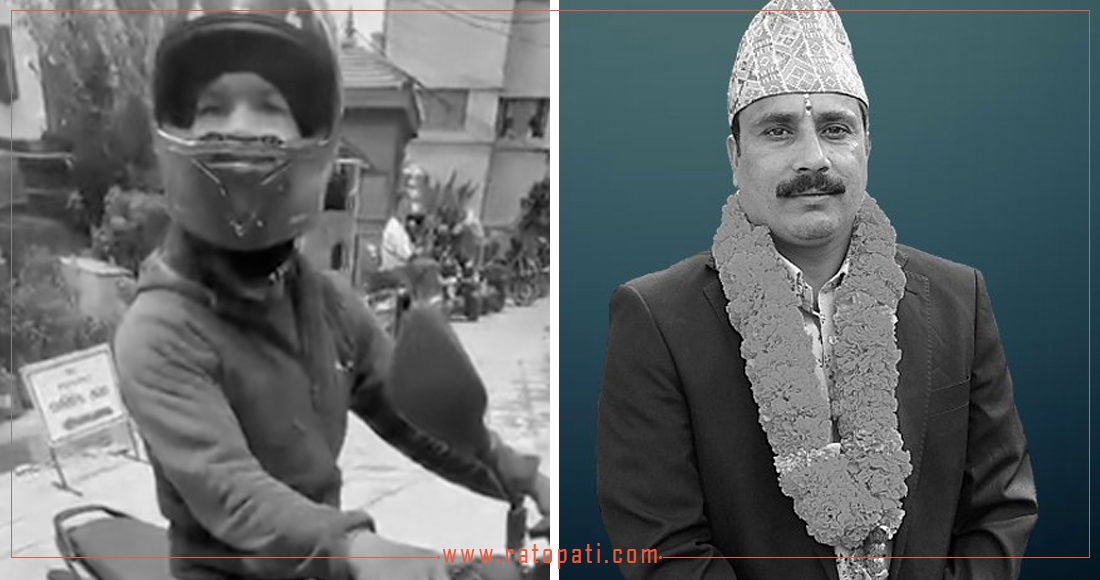
Kathmandu. Ganesh Nepali, who attempted self-immolation by splashing petrol in front of the Department of Passports in Tripureshwor, has died. Nepali, 25, a permanent resident of Soru Rural Municipality-1, Mugu district, had attempted self-immolation on Thursday.
Prior to the incident, Nepali had a heated argument with members of the Kathmandu Metropolitan Police Force over the issue of 'wheel lock'. Amidst the dispute, Nepali attempted self-immolation by splashing petrol on his body. He died during treatment at the 'Burn ICU' of Bir Hospital on Friday.
The police rescued him and admitted him to the hospital when about 55 percent of his body was burnt. The government is facing widespread criticism over this incident.
Earlier, on January 24, 2023, Prem Acharya had self-immolated by splashing petrol in New Baneshwor. The death of Nepali, before the tragic demise of Acharya could fade, has raised serious questions about the character of the state. Even leaders of the ruling party, Rastriya Swatantra Party (RSP), have criticized the government.
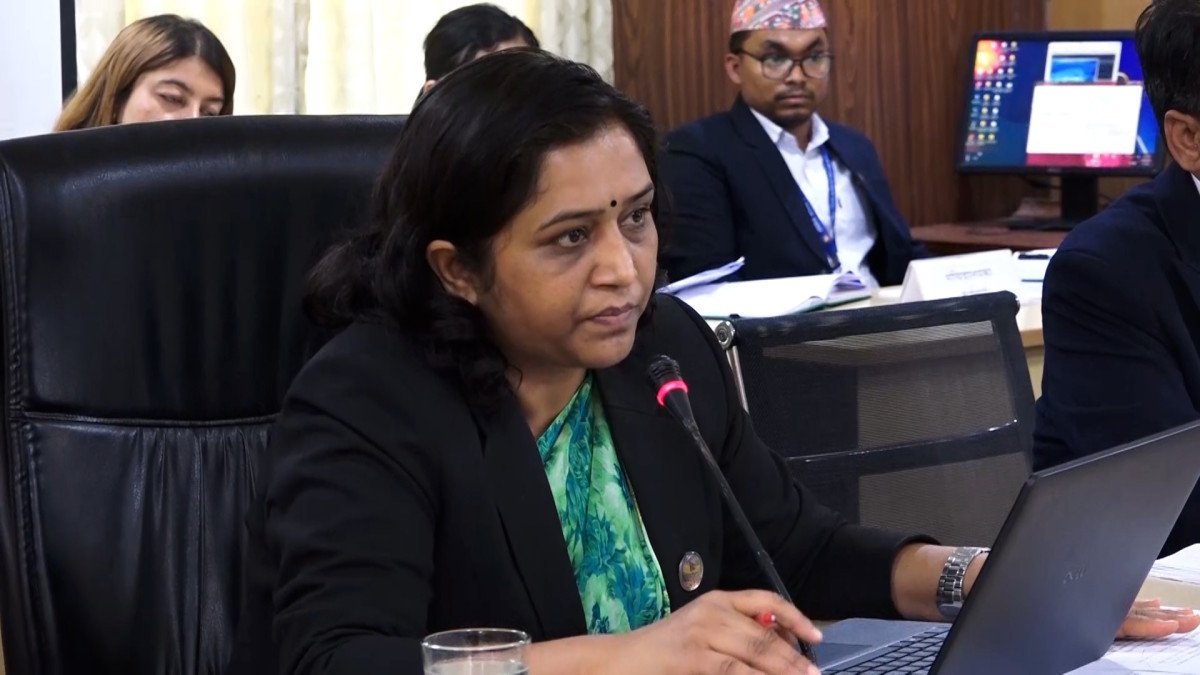
RSP MP Samikshya Bastola shared photos of Acharya and Nepali on social media Facebook and wrote 'Speechless'. She stated that the question raised by Acharya's burning yesterday has been reiterated by Nepali's burning today. She wrote, 'The only difference is time, not the problem. The pain is the same. Fire burns not only the body but also holds society's sensitivity and the state's responsibility accountable.'
She raised the question of when it will be possible to find a balm for that burning, or rather, to end the situation where anyone has to burn like this.
Another RSP MP, Ganesh Karki, said that a person dying or being killed is a sad and sensitive matter in every situation. 'There is no side or opposition in this. If anyone argues to justify this, it is inhumane. If this happened due to someone's fault, an investigation and appropriate action must be taken,' Karki wrote.
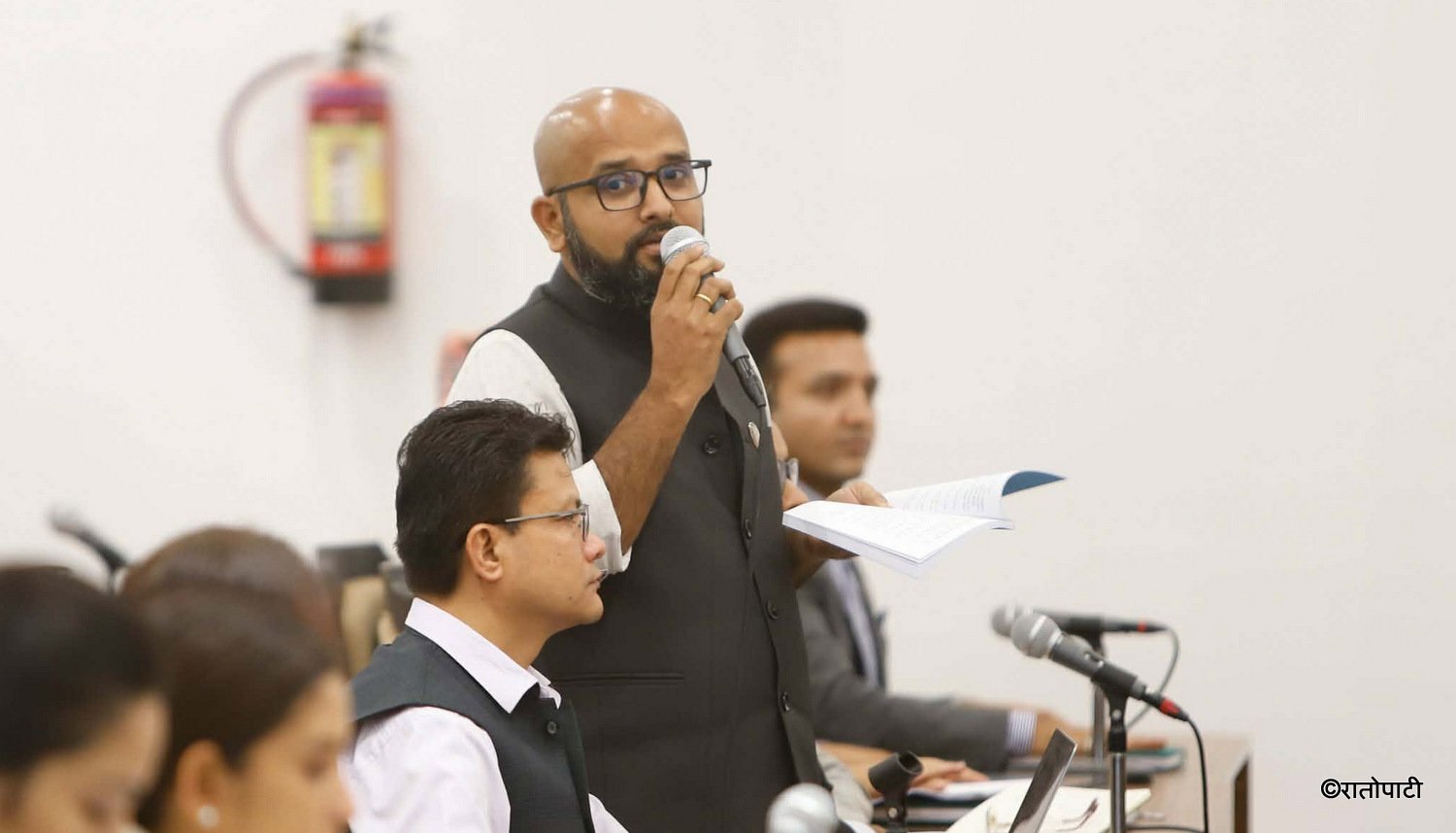
Karki stated that this is the most important issue of the current time for the government and all levels, bodies, and agencies of the state, and that this should not be normalized by showing statistics that 80 people attempt suicide in various places in various ways every day in Nepal, and an average of 18 people commit suicide daily.
Karki writes, 'Yesterday, a woman in Kathmandu jumped into the Dhobikhola and died, her body was found in Balkhu. Similar incidents have happened across the country yesterday. Some incidents may have already happened today, and more than 50 people may be in line to commit suicide today. This is what we need to stop. It is the main job every day. It is the state's job to save every person.'
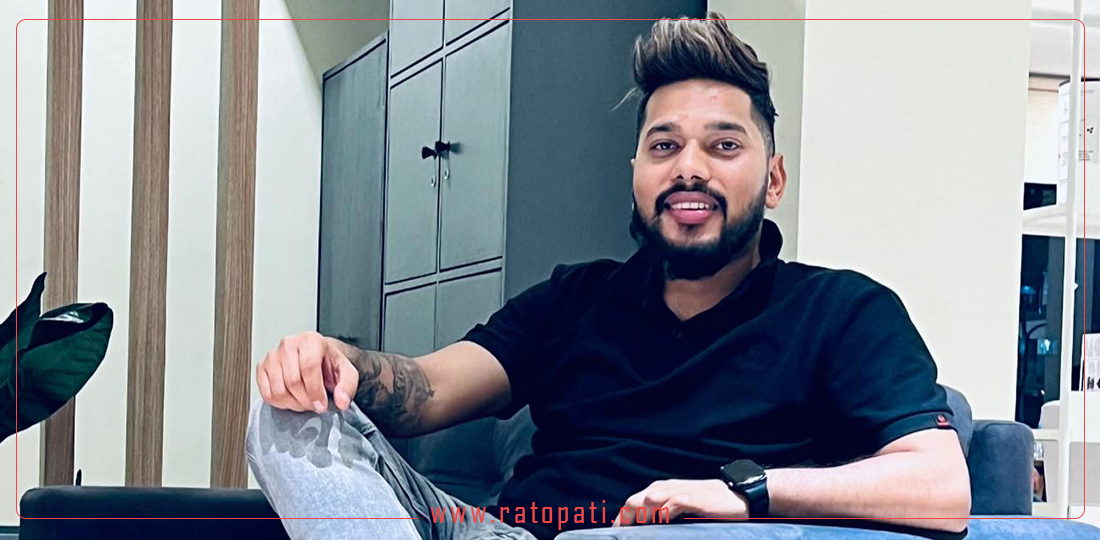
Central member Himesh Panta said that the situation where a citizen has to decide to set themselves on fire is the biggest failure for society, the state, and politics. Panta writes on social media Facebook, 'Ganesh Nepali's decision did not happen in a moment. It is an explosion of accumulated pain, despair, humiliation, and helplessness over a long time. It is sad that even we, who entered politics with the hope of change, could not assure you that life is greater than any pain. Our hope was weaker than your despair.'
He emphasized that the state must listen to how many times a citizen's mind burned before their body burned, and that the state should have humanity in its hands before the rod of law.
MP Ranju Darshana said that the tears shed in sorrow, grief, and hunger are not false. She stated that she had repeatedly spoken in the parliament so that mothers breastfeeding, new mothers, and elderly mothers would not be treated similarly in the issue of squatter management.

'Yesterday, in the issue of squatter management, point 92 was moved before point 91 of the 100-day agenda. I repeatedly raised my voice in the parliament so that mothers breastfeeding, new mothers, and elderly mothers would not be treated similarly. I also submitted requests to the concerned bodies. This work was not done properly by the government,' Darshana expressed her dissatisfaction.
She argued that Ganesh Nepali's self-immolation cannot be limited to bearing his treatment costs. She stated that it is necessary to investigate why he reached the point of burning himself and that the government should draw inspiration from that investigation in its work.
'One Ganesh physically burned himself, but the government needs policies that make life somewhat easier for the millions of youths who think 'I can't, should I die?' every day,' Darshana writes, 'The feeling of 'I can't' is not just weak morale, it comes from reality after people are pushed to the limit by the social-economic structure. Psychological counseling alone is not the solution to this situation! Fulfilling basic needs in life is the greatest security for the mind.'
Dissatisfaction is gradually growing within and outside the party against the government led by RSP, which gained power with the force of Gen Z rebellion arising from the narrative that old parties did nothing for the past 35 years. The situation where a youth has to embrace death in broad daylight gives the feeling that society is moving towards despair again.
Four years ago, when Prem Acharya self-immolated in front of the parliament building, RSP Chairman Ravi Lamichhane and Prime Minister Balen tried to gain sympathy from the public for the despair seen among ordinary citizens. His status update on social media at that time, criticizing the government, is going viral.
Ravi and Balen, who raised serious questions against the state at that time, appear unusually silent now that they are in positions of accountability. The government is accused of bulldozing squatters who have been living on the banks of rivers in Kathmandu for years without any arrangement, and pressuring them to make their own arrangements by giving them 25,000 rupees per family after keeping them in holding centers.
Indra Bahadur Rai, who was under stress after his house was demolished, committed suicide near the Balkhu River. Opposition parties accuse the government of ruling by decree based on the arrogance of numbers rather than the constitution, law, and rule of law. It appears that all sectors of society are becoming fearful due to state terror. If state terror is not controlled in time, there is a risk of a major explosion in the country again.
This specific news has been automatically translated by AI. As a result, there may be some inaccuracies or language errors.


_LvPybJAXm4.jpg)