Ministry of Energy Prepares to Amend Water Resources Bill 2083 Amidst Private Sector Concerns

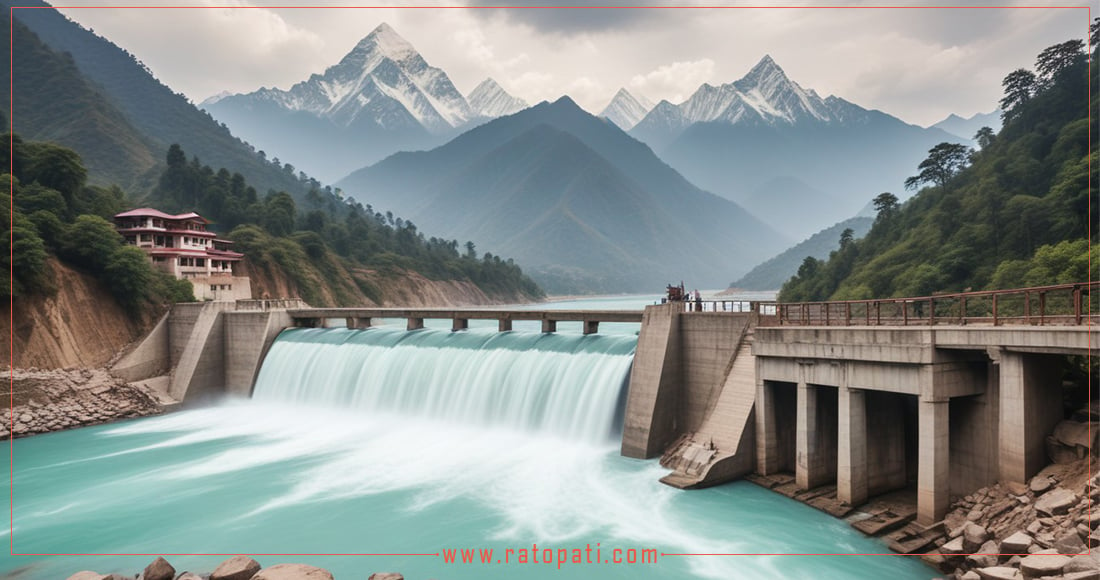
Kathmandu. The Ministry of Energy, Water Resources and Irrigation is preparing to amend the 'Water Resources Bill 2083' introduced by the previous government.
The Water Resources Bill introduced by the previous government was passed by the House of Representatives and reached the National Assembly. The bill was under discussion in the committee of the National Assembly.
The current government has withdrawn all bills and is preparing to amend them. The preliminary draft of the bill was registered in the parliament by the then Energy Minister Shakti Bahadur Basnet on Jestha 31, 2081. At that time, the then Prime Minister KP Sharma Oli had expressed concern after suspicions of foreign interests were raised regarding the bill.
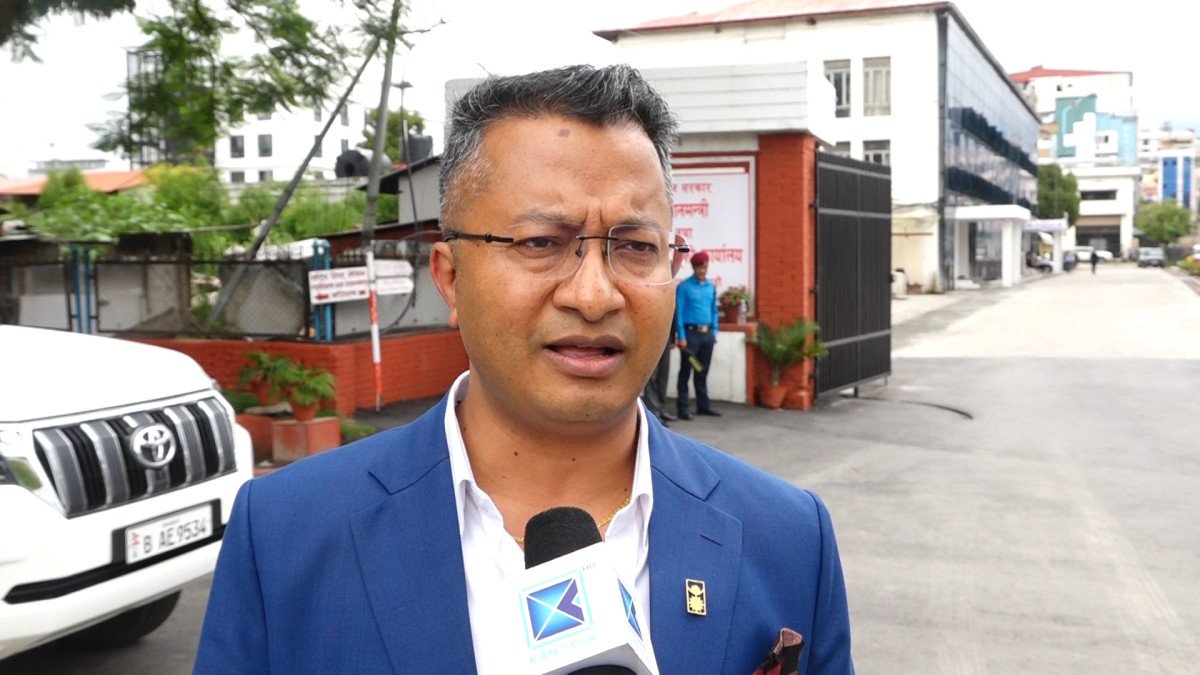
Under the direction of the current Energy Minister Biraj Bhakta Shrestha, the ministry has prepared a new draft of the bill and sought suggestions from stakeholders.
The current government has stated that the draft has been prepared with the objective of amending and consolidating the existing laws related to water resources. However, energy producers have started complaining that the provisions in the bill, which the government with nearly two-thirds majority is amending, are not conducive to the private sector.
Private sector energy entrepreneurs have expressed concern that some provisions of the bill will put the investment in hydropower projects at risk.
The government has put forward an ambitious target of generating 30,000 megawatts of electricity in the next 10 years for the development of the energy sector, but on the other hand, the laws and other policies formulated by the government are hindering the target.
The government's upcoming Water Resources Bill 2083 and the Electricity Authority's recently issued Electricity Power and Energy Schedule Determination Method-2083 have raised concerns among the private sector that their billions of investments will be at risk. Although the public expected policies from a stable government with nearly two-thirds majority to be business-friendly, energy producers say that the current government has not performed as expected.
Despite the government's preparation to bring an integrated Water Resources Bill, replacing the long-awaited Water Resources Act, 2049, the Independent Power Producers' Association, Nepal (IPPAN) has expressed serious dissatisfaction, stating that some of its clauses are not investment-friendly.
Energy entrepreneurs claim that the new policies will weaken the technical and financial feasibility of hydropower projects and discourage private investment.
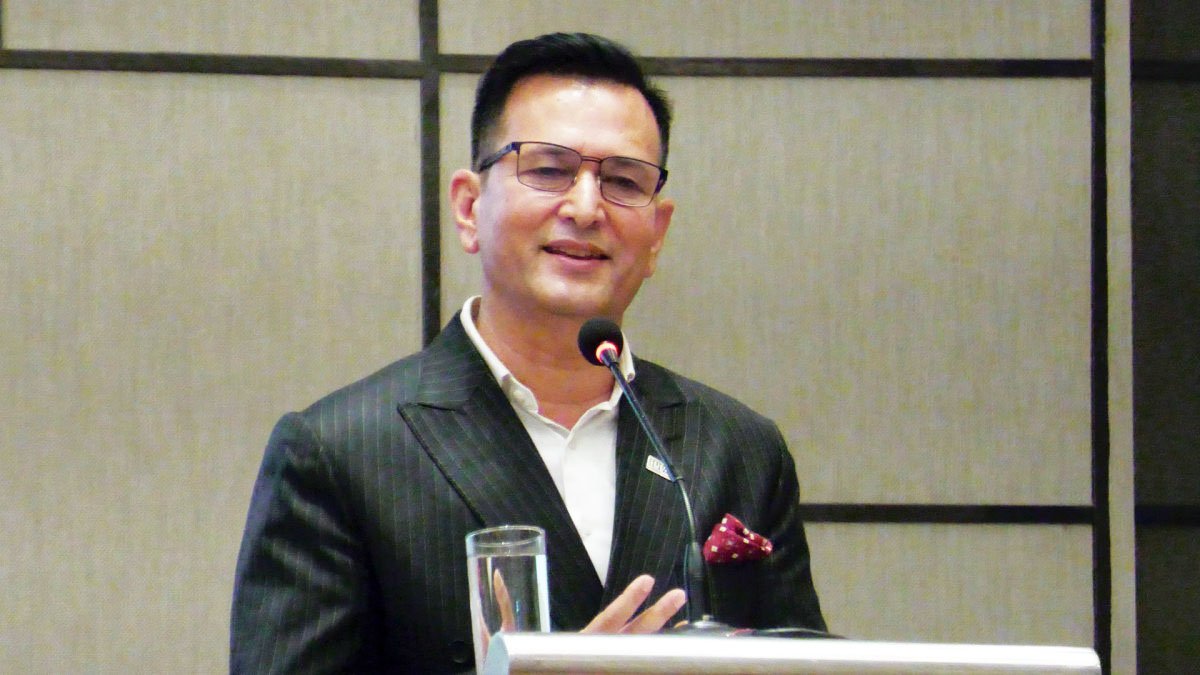
Former Chairman of IPPAN, Ganesh Karki, says there is a lack of coordination between the government's goals and its working style. According to him, although political parties make grand promises in their manifestos, in practice, they are creating hardships for the private sector.
"On one hand, the government sets a target of 30,000 megawatts, and on the other hand, it is scaring investors by mandating the release of 15 percent water and bringing strict rules for PPAs," said former chairman Karki.
According to Karki, the proposed Water Resources Commission in the Water Resources Bill will definitely create more procedural hassles for the private sector. "If the ministers and secretaries worked according to the party's vision, such confusion would not exist. We have met with the Prime Minister and the Energy Minister to draw their attention to these issues," he said.
IPPAN Chairman Mohan Dangi said that the policies brought by the government are not business-friendly. He said that the expectation was for the government to facilitate energy producers, but every policy taken by the government to tighten the screws on businesses will create problems in investment.
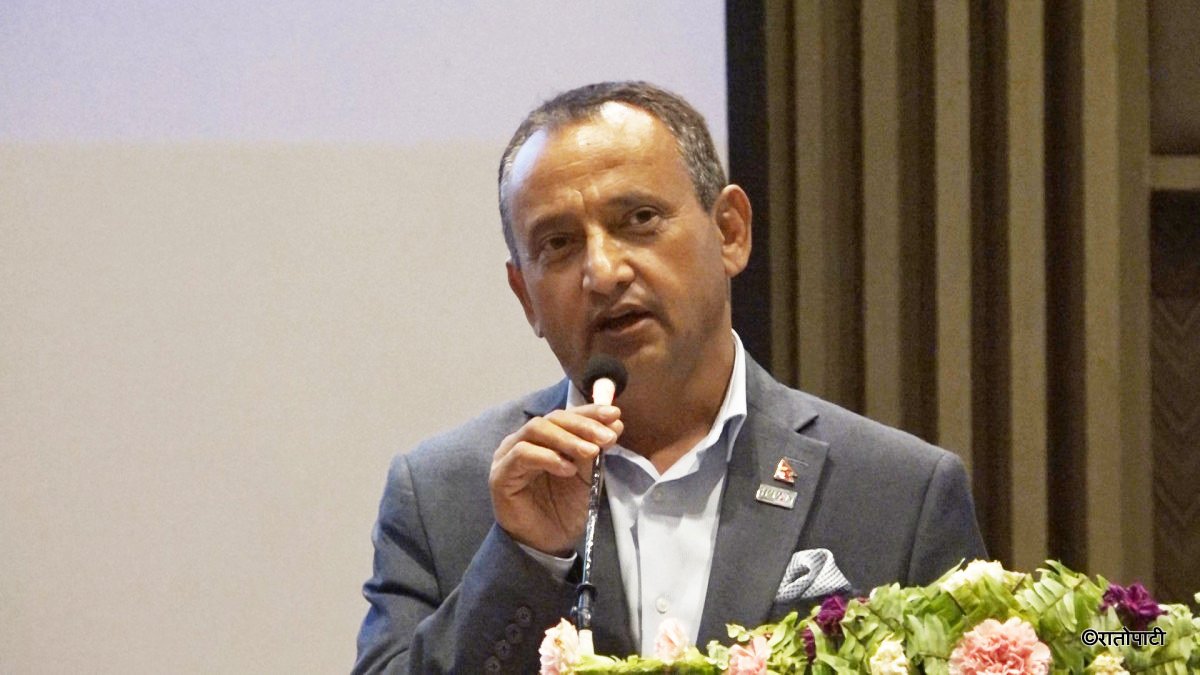
He said, "The government seems to be moving forward with policies that are more restrictive than facilitative for energy entrepreneurs. The new provisions of the Water Resources Bill and the work schedule will not allow the government to achieve its goal of generating 30,000 megawatts of electricity in 10 years."
- Centralized Authority and Ambiguity in Water Accounting
The proposed Water Resources Bill introduces new provisions for water resource utilization and availability details (water accounting) and water resource testing (water audit). According to Section 14 of the bill, the Water and Energy Commission must maintain details of available water resources and their utilization in each river basin.
However, the private sector alleges that Section 16 of the bill seeks to centralize authority, contrary to the spirit of federalism. Subsection 2 of Section 16 states that before granting permission to any person, organization, or entity to utilize water resources, mandatory consent must be obtained from the Commission.
IPPAN Vice President Prakash Chandra Dulal objects to this provision. According to him, as there is no representation from the provincial or local levels in the commission, it risks weakening the federal structure itself.
"Although the constitution has created three tiers of government, the provision of seeking consent from the commission seeks to re-centralize authority," he said.
- Provision to Release 15 Percent Water
The most controversial issue of the bill appears to be the provision related to environmental flow in Section 23.
The proposed bill proposes that a minimum of 15 percent of the water must be released downstream of the dam of any project built on a river or stream throughout the year. Previously, according to the Hydropower Development Policy 2058, this amount was only 10 percent.
According to Vice President Dulal, this increase of 5 percent will significantly affect the production capacity of the project. "It is stated that 15 percent or the amount recommended by the environmental impact assessment report, whichever is higher, must be released. This reduces the project's production capacity by an average of 5 percent," he said.
According to him, this will cause significant financial damage to projects that have already invested under the old law and will also affect PPAs (Power Purchase Agreements).
- Ambiguity in Dam Safety and Financial Burden
Chapter 9 of the bill mentions the classification and safety of dams. Section 31 states that the safety of the dam will be the responsibility of the Government of Nepal, but subsection 3 of the same section stipulates that the dam operator will have to bear all the expenses incurred in making security arrangements.
Energy entrepreneurs have termed this a vague provision. Vice President Dulal raises the question of why the operator should bear the cost again if the government is responsible for security. "If the operator is to bear the expenses, what is the justification for seeking security from the government? This provision has caused further confusion for investors," he said.
- Energy Schedule Determination Method: A Hindrance to Technological Development
It's not just the bill. The private sector is also unhappy with the Electricity Power and Energy Schedule Determination Method-2083 recently issued by the Nepal Electricity Authority. IPPAN has demanded the immediate suspension of this method, calling it impractical and restrictive.
IPPAN has stated that the new method sets strict standards requiring turbine efficiency to be 91 percent, generator efficiency to be 97 percent, and transformer efficiency to be 99 percent, which it believes will hinder the adoption of new and more effective technologies available in the global market.
Similarly, a condition has been set that proposals for increasing project capacity must be at least 15 percent more than the previous capacity. According to IPPAN, the capacity increase in most projects' detailed designs is only around 10 percent. In such a case, the 15 percent condition will permanently block minor improvements, leading to the wastage of identified additional energy.
The private sector believes that it is unfair to place the entire responsibility for data solely on the promoter and consultant and to insist on the use of only one method.
- Contradiction Between Government Policy and Practice
Energy entrepreneurs have stated that these new strategies and bill provisions introduced by the government will reduce the production capacity of under-construction and operational projects and put billions of investments at risk.
IPPAN has demanded the immediate suspension of the Electricity Power and Energy Schedule Determination Method-2083 and the formation of a working group comprising technical representatives from stakeholder bodies.
Its demands include the abolition of the cumbersome provision of obtaining commission consent for water resource utilization and decentralizing authority according to the federal structure.
IPPAN also demands that the provision requiring the release of 15 percent water in the name of environmental flow be reconsidered and maintained at 10 percent, and that the responsibility and cost-sharing for dam safety and protection be made clear and investment-friendly.
The private sector demands that the minimum limit of 15 percent set for capacity enhancement be removed and that increases feasible from a technical standpoint be allowed.
The active participation of the private sector is essential to achieve the government's goal of generating and exporting 30,000 megawatts of electricity in 10 years. However, energy producers claim that the policy ambiguity and strict provisions created by the Water Resources Bill 2083 and the new Energy Schedule Determination Method will significantly hinder the achievement of this goal.
This specific news has been automatically translated by AI. As a result, there may be some inaccuracies or language errors.
_2r7cGHlo8q.jpg)

_cyIwPxobmj.jpg)